2nd edition, still in revision… ugh… *but this online living copy is up to date for the moment.
ill fix the dash grammar…

Letter to the Scandinavians:
John Frederick Beckmann, Ph.D.
For All Fathers and Allfamily ;).
For David Wendell Myers. David was a Marine Corps Captain and served as an Infantry Officer during the Vietnam War. He was known to be a “mischievous rascal” growing up and was teased by his sister who called him, “Davy dimples.” David was a prolific letter-writer. He ended his letters with “All my love,” “Your loving father” and “All my love to my wife and children.” Captain Myers went on his final mission on November 20, 1968, in Quang Nam, Vietnam. He was on a helicopter mission to land assault troops for Operation Meade River. During this mission, his helicopter was shot down on Hill 55. When the assault occurred, 40 to 50 CH-46 helicopters were used, and almost all were hit by enemy fire. He is buried in Rose Hill Cemetery in Albion, Nebraska, and his name is on the Vietnam Memorial Wall in Washington, D.C. It can be found on Panel 38W, Line 19 of the wall. Your children will hear your voice.
For Fathers Michael McGivney, Max Kolbe, Sharbel Makhlouf; and the unknown saint.
For John the Evangelist.
For Saint Michael the Archangel.
My Interest in the Havamal.
I have studied the Havamal quite intensively over the last few years. The Havamal is a collection of proverbs attributed to Odin. My interest in the Havamal was driven by receiving genetic ancestry data, which showed me to be 75% Scandinavian. This was a bit of a shock to me as I knew my ancestry was in part Scandinavian, but I did not understand I was majority Scandinavian.
My interest in the Havamal is not an endorsement of paganism. However, like the writings of Homer, it is within the western cannon and has survived the test of time – i.e., its Lindy. Beowulf, Wagner, and J.R.R. Tolkien literally copied from these collected Sagas/Eddas. Even the English days of the week derive from the Norse gods. Wednesday is Wōdnesdæg (Odin’s day). Tuesday is Tyr’s day. Thursday is Thor’s day. Friday is Frigg’s day.
Viking history and mythology needs to be understood within the context of Viking society and culture. An important point is that the Viking society was driven by values that include physical power; and the necessity of friendship with extreme loyalty in extreme cold environments. In this realm, one could be killed by a warrior, a rogue, the cold, a disease, or starvation at any time. Life was often short and brutish, as Hobbes would say. These cultures would obviously believe in fate and could not help but feel that they were often at the mercy of cruel unseen forces (gods who didn’t love them outright). The Havamal is cynical and presents wise strategies that assist survival within this landscape. The Vikings not only survived but expanded during an age of mixed paganism and Christianity where these cultural/memetic systems were under direct competition with each other. When Vikings encountered Christianity, most eventually opted into this system in lieu of the pagan one; it’s clear now, that in the long term, the peaceful Christian system leads to one of positive cultural growth, peace, and forgiveness, rather than the cruel Viking world of pagan survivalism and honor killings.
The Saga of Grettir the Strong.
The Saga of Grettir the Strong contains an exemplary tale detailing life within this culture and exhibits the struggles of a warrior poet during these times. One particular side quest is exemplary, a family was separated during Christmas time when the head of the house traveled to the Christmas mass; leaving behind his family at their rural farm house. Grettir, a pagan warrior of mixed allegiance was wintering with this family at this time and opted to stay at the farm. Simultaneously, a large raiding band of about 12 Viking berserks sailed and landed at the beachhead near the farmhouse. Viking berserks were essentially armored gangs of raiders that wandered wherever they wanted and did whatever they wanted, simply because they had the power to do so – No one could stop them, in an age where the “riddle of steel” got you whatever you wanted… Grettir saw the berserks and realized they were coming to raid the rural farmhouse. In this moment, he made a karmic good choice and decided to protect the family that had given him winter shelter. Being a large warrior himself, he approached the raiding band. Using trickery, he suggested that he would join them and swear allegiance to their gang – that he would lead them to the farm house – and party hard with them there… The berserkers accepted his offer. He led the raucous raiding party to the house and encouraged them to begin their fun, demanding the women of the house open up casks of mead. The women were obviously highly disturbed, many crying and fearing for their lives, yet they could do nothing against a band of 12 + 1 armored berserker giants… Grettir kept the party going getting everyone as drunk as possible – later in the evening the band inquired about the bathrooms and Grettir showed them the way. For some reason, the 12 berserks were now naked at this point (it’s not clear to me why…) and Grettir ushered them into the bathroom or perhaps some sort of sauna. When the last berserk went into the bathroom, Grettir closed the door, locked the party inside, ran to the house and donned armor and a spear and returned to the door. When the berserks realized they had been tricked they immediately started breaking down the door. With the door broken they rushed out, armed with anything they could grab, and a battle of naked men ensued. Grettir impaled the first four to come out through the guts with a spear, then killed four more in direct hand to hand combat, while the other four ran away. After killing eight berserks, he chased down the other four who fled, killing two, and finding the last 2 frozen to death in the cold. This made Grettir famous in Scandinavia and his tales spread far and wide, being a hero in this case, and often an anti-hero in later blood feuds. His Saga is emblematic of the culture that ancestral Scandinavians lived under for probably thousands of years. It was not a pleasant system of governance, by violent power and religious worship of death in battle – which is probably why most Scandinavians opted into Christianity over time. I present this summary for one to understand the selective context under which the Havamal arose. Surviving in these times would often be a combination of guile, power, and luck…
On the Viking Empire and its Descendants.
The Viking culture, system, and thought led to an expansive sea faring warrior empire that reached westward all the way to the America’s (Vineland – see Sagas of the Greenlanders) and eastward into Ukraine and Russia (see later sections of the Saga of Grettir the Strong). Westward, the Vikings conquered, settled, and interbred with the Europeans, British, Irish, and French. As such, most Europeans encode Viking DNA, in part. In France, Normandy was owned and settled by Vikings, whose later descendants would move eastward as Frankish leaders of the Crusades. In America, the Native Americans attacked and pushed out the two earliest attempted colonies. The Vikings called the Native American warriors, “the screamers”. These early battles, encounters, and tragic settlement attempts are described in the Sagas of the Greenlanders. Legends suggest that Vikings might have even settled the Midwest, though the rumors have slim fact-based evidence; but I wouldn’t rule it out given that one can reach the Midwest quite easily by navigating rivers and the great lakes. Later in the 1800’s Viking descendants would in fact colonize the Midwest in the early American westward expansion. Eastward, many Vikings traveled to Constantinople to fight in the Varangian Guard. The Varangian Guards were hired bodyguards of the Byzantine Christian emperors who found great utility in these warriors known for their loyalty and ferocity. Furthermore, my understanding is that the modern nations of Russia, Ukraine, and Belarus are essentially founded, in part, by Viking Varangians. Vladimir Svyatoslavich (St. Vladimir the Great) was a Viking convert to Christianity and direct descendant of Vikings. Thus, the Viking ancestry covers the globe and the writings in the Havamal and the Sagas are part of our shared world heritage.
On the Mythology of the Vikings.
The Sagas make clear that the Vikings believed in a full spectrum mythological bestiary including but not limited to giants, dwarfs, witches, sorcerers, magic, ghosts, devils, and beasts. Today, we are quick to cast shade on this mythology. On the other hand, a wise reader will note that dwarves are real, giants are real (Hafþór Júlíus Björnsson), hobbits are real (Homo floresiensis), and magic (collective will) has some truth to it; the werewolves (Úlfheðnar), were elite cult warriors that wore wolf skins and became possessed by Odin to gain fearlessness (Ynglinga Saga). Finally, actual beasts (bears and wolves) are undoubtedly real and undoubtedly killed many Scandinavians over the course of evolutionary history. My point is that to a Scandinavian living in medieval times – these concepts were in fact truth – though people could not always understand the mechanisms underneath. Looking back into the minds and writings of these ancient peoples can often be quite illuminating to our more “advanced” society.
Slaying Odin, the Allfather.
Who or what was Odin? Is he a man or a demon, or a demon in a man?
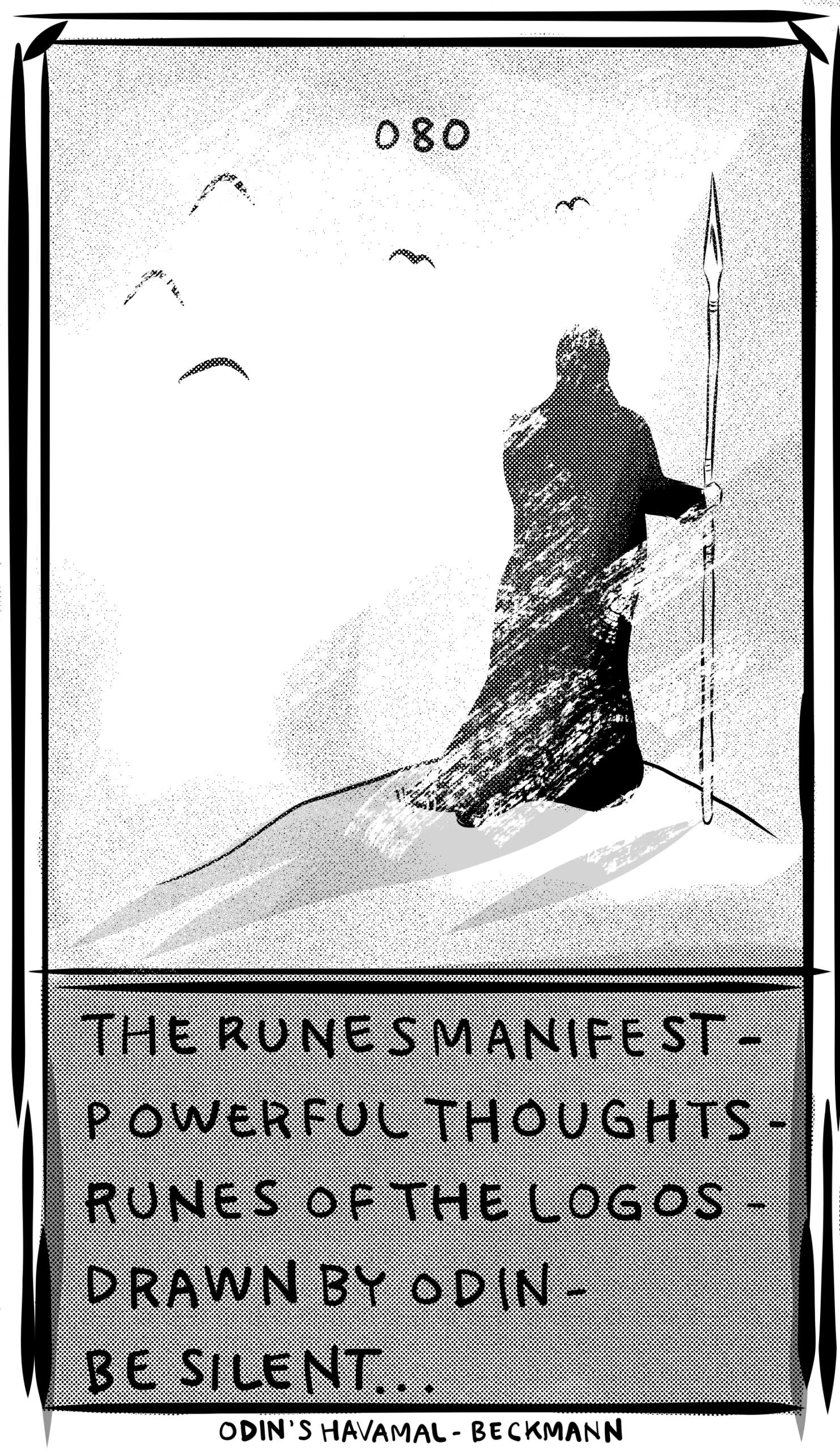
He was a flawed man. He was NOT a God and he was NOT a worshiper of old gods. Odin’s ideas and theology did not materialize in a vacuum; his influences are easily traceable. Theologically he is a bizarre sort of proto-Christian – stuck in some kind of stasis. He’s a weird mix of Catholicism, Christian gnosticism, Pythagorus, and Heraclitus. The gnostics practiced baptism and believed in seeded realms of afterlife with various ranks of fatherhood (111) – the Norse cosmology that emerges from Odin (the seeded 9 realms) implies he is influenced by gnosticism. Furthermore, the term, the All (of which Odin is so fond) is greek (τὸ πᾶν) and sources to Pythagorus’ school – it fills in for everything that exists – even the unknown – and is later utilized by the gnostics. Odin’s obsession with runes and divine rational words conceptually sources to the Logos (i.e., ~words of divine powers 80, 142, 146). Logos is also Greek (λόγος) and sources to Heraclitus but was heavily developed by the Pythagoreans as naming power and Christians as Holy Spirit. A final traceable meme is that Pythagoreans took oaths of silence. Both Pythagoreans and gnostics kept secrets (29, 63, 80). Rune actually means secret.
He is a fan of Origen (who further adapts Logos and the All, for Christians). Perhaps he was even a theology student at Origen’s school. He agrees with him to focus thoughts on Logos, moral ascent, and spiritual warfare, but seems torn and targeted by Contra Celsum (which harshly critiques paganism). There might even be school records of him that someone could check on. The timeline fits the hypothesis – as Origen is writing and distributing source material around 200 AD. Further evidence supporting Odin’s link to Origen is that the ophite diagram described in Contra Celsum is literally a representation of the Norse Myth cosmogram, placing Yggdrasil (a network linkage) at center, surrounded by concentric realms, with Jörmungandr at outermost ring (Bernd Witte illustrates this). Thus, Odin probably spread his blended but rational proto-Christian worldview northward after a fallout with Origen. Exactly like Origen, Odin’s teachings are half-heretical and half-truth; and exactly like Origen, Odin self mutilates. My suggestion is that both their efforts were helpful in the long-term – leading towards the right direction – at a time when no one could be certain what was true.
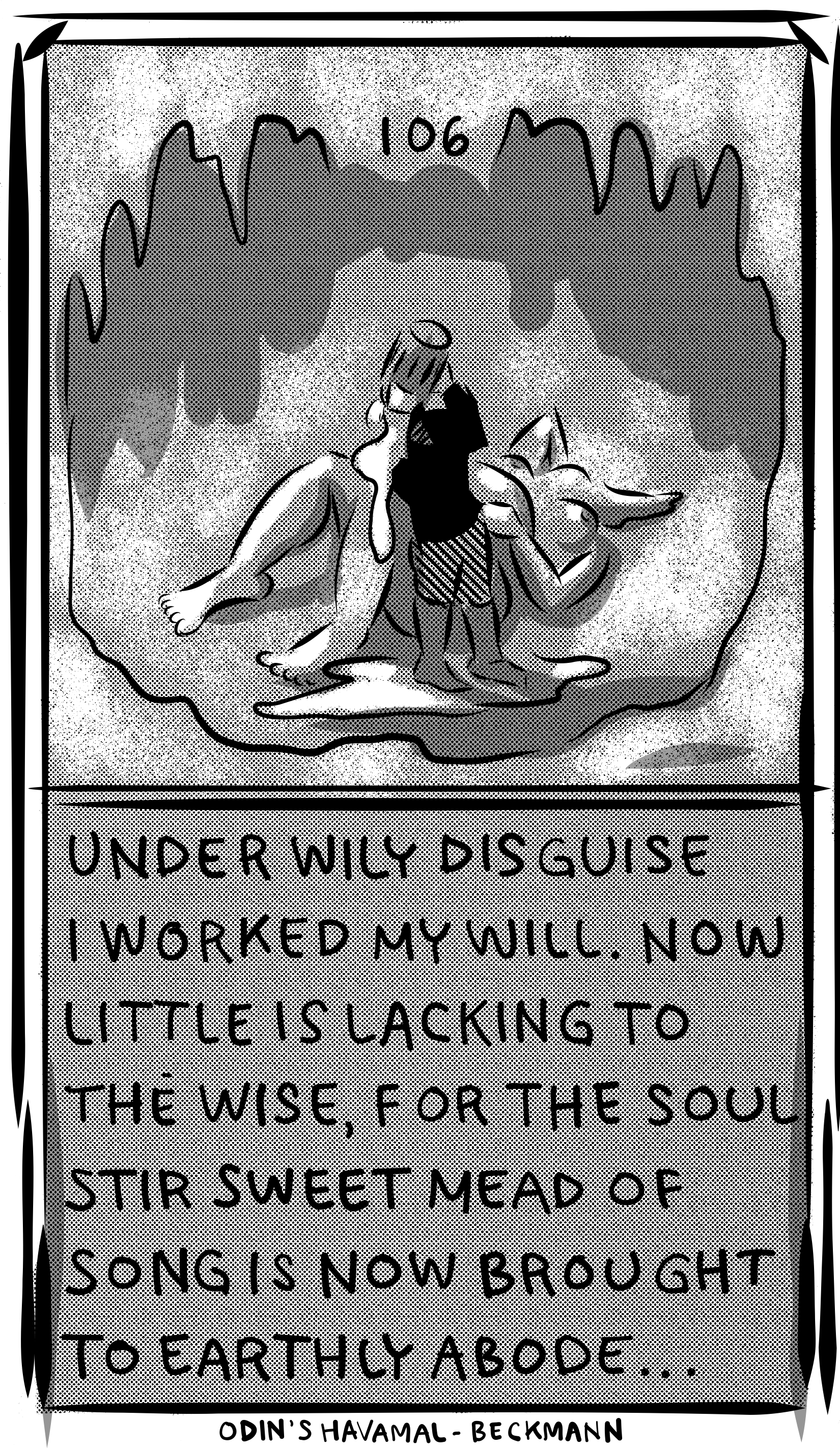
The early years of Christianity were dangerous. Odin is a theologian armorer of proto-Christianity. He was the founding father of the werewolves (Úlfheðnar, 58) and chief of Æsir clan (Ynglinga Saga). I am descended from his line – I inherently know he likes me – but he also might kill me. He was a man who had total fearlessness and believed in the power of prayer. He is a wolf totem ethos. The Úlfheðnar invoked him, praying to be granted total fearlessness and frenzy. Odin is a shapeshifter (106), an infiltrator, and a “red teamer” who has an EXTREMELY high IQ – he cannot be trusted (109). He lies incessantly to motivate you to overreact. Whose side is he on? You feel as if he is some karmic positive force preventing you from becoming too passive. He’s a vicious prayer wolf in constant prayer, only for his bloodline. He is in constant need of rebuke. Like Heraclitus, He exists in paradoxes and speaks in riddles where opposites unite. For example, in (109) he explicitly says, “Odin’s word cannot be trusted” which is a logical negation of the negation; if you can’t trust his words, then you also can’t trust that he’s a Lier. Perhaps he tells you the truth, but from the other side. He’s like a clever trick, a catch-22, or a cosmic joke. Allfather, what is Allfather? Whose father? Your father, or my father, or supra father? Allfather… it’s a clever semantic trick. He’s using a random variable strategically to protect himself against uncertainty and heresy.
You never really know what to think of him. He is insufferable, but for some reason you are drawn to his energy… HE IS TERRIFYING! He is merciless, maniacal, frenzied paranoia. Allfather is a pack hunter (ᛉ elk, protection), he hunts the enemy. He protects you by taunting you. He threatens, then shifts and makes you laugh. He is very funny. Does he threaten you because you are in danger and he seeks to raise your awareness? Or does he threaten you just to torment you? He constantly tries to overpower you, and sometimes you even like his taunting, because it’s clever. Like a Viking king, you are his best friend one moment and the next you feel as if he will murder you (King Harald Fairhair was actually like this). Is he friend or foe (031)? Is he trying to get close to you – so that he can eat you? He is a wolf who tries to eat the Son… Do not let him get too close. He’s a chaotic neutral entity that gets good results and is loyal in a bizarre way. He teaches you about the Logos from the other side. He is the most abrasive sharpening stone. He believes in trial by fire. He believed that only harshness could create a diamond. He is God’s wolf. He is harsh truth that persists because it is ruthlessly clever. He is God’s mischief maker. He is nemesis of Loki (Satan’s mischief maker) and Freya (incest). He is evidence that God can utilize evil for good.
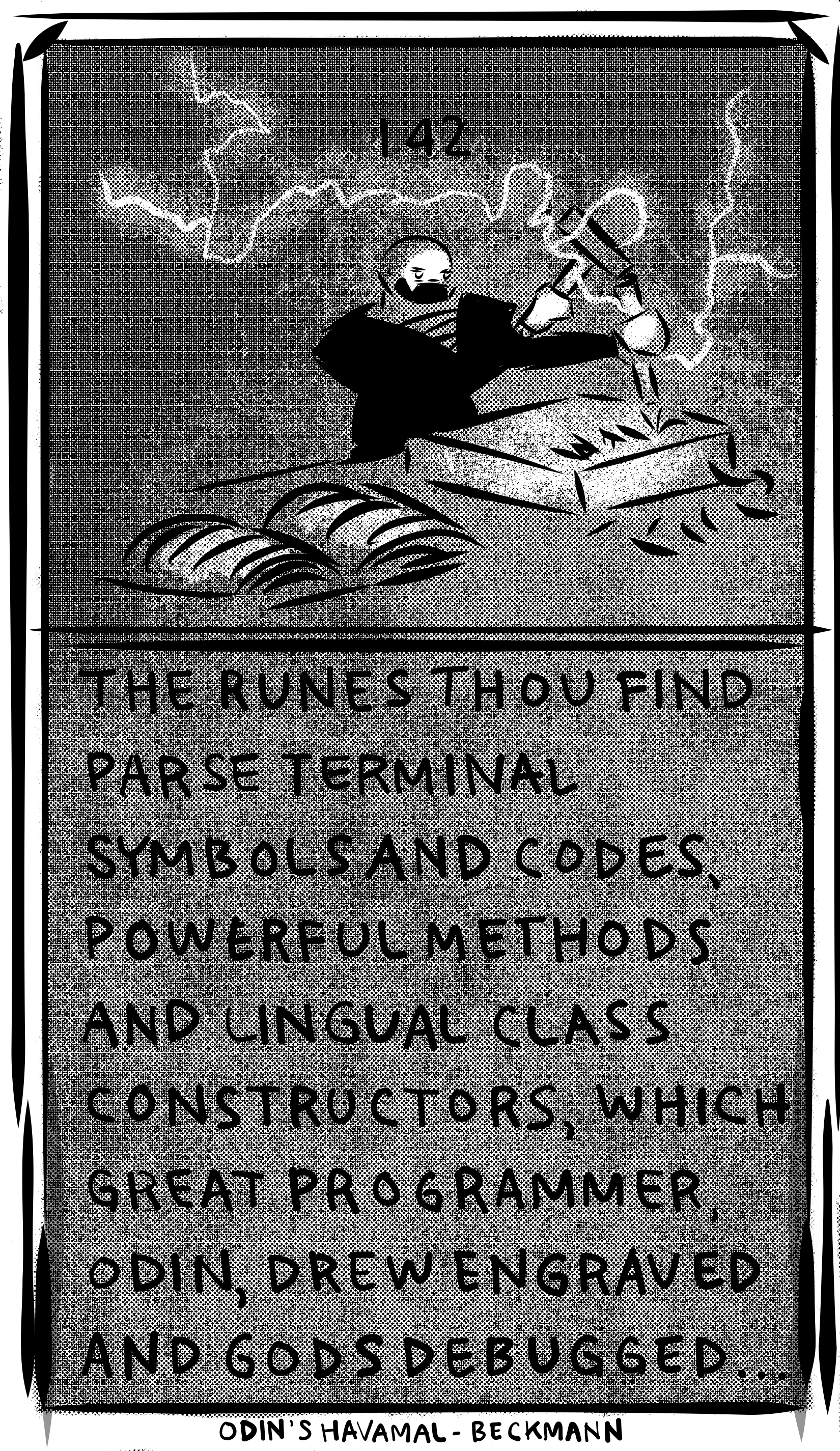
Odin likes the challenge of personal suffering. The Vikings were all about taking on suffering. But Odin agonizes that the Viking system and the Christian system are opposite in terms of violence. If you encounter him, he can only be defeated by trusting God completely in all things – to the death – this was both Odin’s success and also his failure in life (another paradox). He likes Christ, he is drawn to Christ and respects him for the passion, but he wasn’t willing to bend the knee; he wonders if he could beat him (John 14:12). His written words are clever challenges and logical constructive criticisms against Christ. He worries that for a wolf to become a lamb would lead to the wolf’s destruction (which is understandable to me). He is jealous that Christ died for his people. He is self-reliant, why should he not be the sacrifice for himself and his people? So, he carefully designs a clever ploy to win either way. He duels Christ, becoming like him by, torturing himself, for himself for nine straight days (138, 139). Sacrificing Allfather to Allfather in some sort of bizarre recurring infinite loop… It’s a sick joke… As if his strategy was to make his prayer request so confusing that they wouldn’t know what to do with him and then Allfather would debug the code (142). He’s a funny glitch. He understands algorithms, logical code, and control structures (probably from study of Pythagorus). His theological ploy is to create a subroutine within Allfather’s hall. It’s a paradox. He logically wonders if he might be able to input a Viking system subservient to Christianity – or merge the opposites somehow via clever Logos. This causes him tremendous suffering. There was ambiguity at the time about Christ’s teachings and the trinity (~200-400). He couldn’t be sure what was correct, so he attempted to create a recurring time loop within Allfather’s hall, until the time at which he could be understood and his confessions could be adjudicated properly (Pythagoreans believed in reincarnation). His strategy was a clever way for him to satisfy both systems by dueling Christ (the Viking way) and imitating him, carrying his cross (the Christian way). He is trying to reconcile and merge them to prepare a way for his people (John 15:13) – but the systems were mutually exclusive, and he was stuck in his own theological catch-22 – so he programed what he thought was the most ethical third overlapping way – and this joke book (Havamal) is his confession and lessons. He is that which conquers death to prepare for life. *Side note, baldrs draumar (Baldr’s dreams) also known as vegtamskvíða (song of the Way-tamer) agrees with this rationale. The poem explicitly says Odin is NOT the Vegtamr (Way-tamer), but rather the aldinn gautr (the ancient sacrifice or sacrificial victim). He’s like a placeholder who prepares the way for the Way-tamer. “You are not Vegtamr … rather you are Óðinn, the ancient sacrifice.” – völva (wand-carrier);
…and so, it seems to me that in the end he lost the sacrificial duel. He is “At Allfather’s hall, in Allfather’s hall (111, John 14:2).” Christ beat him, but God was merciful and respected his logic and suffering.
Odin’s sacrifice was selfish, but Christ’s was selfless. This is the lesson.
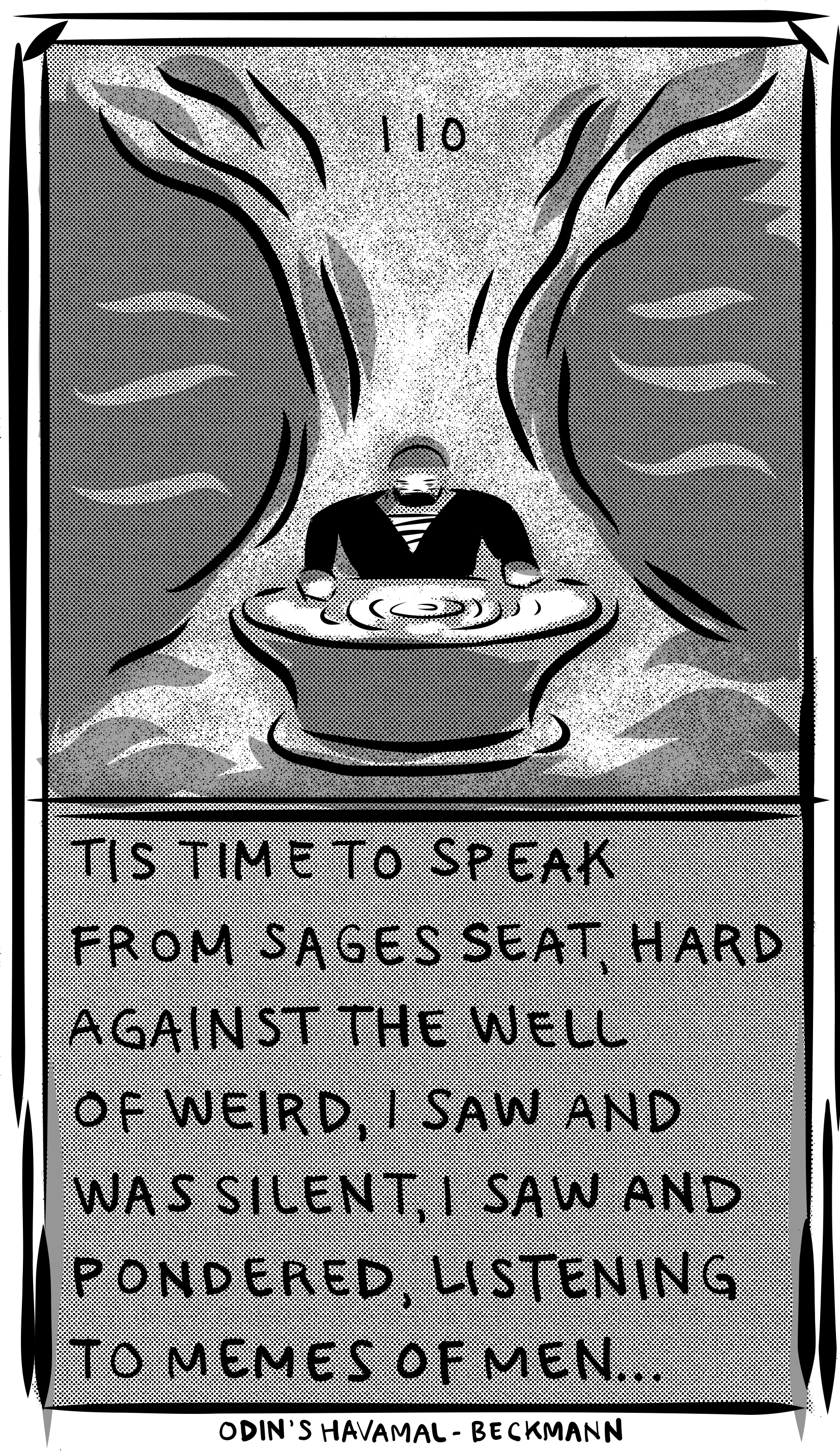
So he was given some kind of penance, to observe and intercede from the well of the weird (110, 111). I sense that he enjoys the penance process. He loves his family and he loves to protect them.
He was a man who died in his bed in Sweden, not a God (Ynglinga Saga). If you doubt this, just literally read his joke book and the Sagas. Even a cursory glance disproves his Godhood. He is the temptation for great men to become legend. The only effective counter to this temptation is Christ’s call for us to become saints in His kingdom. Perhaps, by God’s permission and in support of his penance, his spirit roams the earth, keeping a close eye on his bloodline. According to Saga, he was a trial of bravery and a test spirit for his warrior descendants. When you encounter him, he starts a duel with your psyche, and he makes your whole life a living political hell. If you can defeat Odin, you come out stronger. But if you don’t, you will descend into madness or die (look into what happened to Snorri). He is a duel to the death – to overcome fear of death… the Viking way. He was extremely tough.
Perhaps some of the mythological pantheon gods, like the Viking gods, the Greek gods, the Roman gods etc… are personalities derived from patriarchal figures that emerged in history. Odin, or at least the idea of Odin, and the writings of Odin source to a real man, who really existed, founded a family and society; and passed on his stories through oral tradition and written tradition. Stories that led to his rise and survival in that harsh environment. After many years the identity of this person would essentially be masked/forgotten by time and the founding father (so to speak) would be epitomized as a false god (both Snorri’s Ynglinga Saga, and Saxo’s Deeds of the Danes literally say this, and I tend to agree). Further evidence of Odin’s manhood is that his name is directly listed in at least one European king’s list, Ynglinga Saga describes him as a King in Asagard, and he writes prayers for his bloodline (164) which implies he was both a human and is some kind of ruthless spirit guardian of his line. He emerges when his line is threatened and he makes you feel threatened… In addition, Snorri’s prose edda cites an actual man, named Odin, who travelled north from somewhere near Greece, and founded the Æsir clan – long after Christ was crucified. Note that Æ sources to Greece. It’s not Norse. Odin himself says that he travelled north “to seek the old Jötunn” (103). Perhaps he heard rumors about Christ from a Simonian gnostic sect derived from Simon Magus (the first Christian heretic) and travelled north to spread his own rationalized version of them. Intriguingly, the rune drawings in the Galdrabók are eerily similar to those in the gnostic books of Jeu. He is a spreader of rumors, paradoxes, and mixed truths. He obviously infiltrated multiple cults and various secret proto-Christian sects to compare teachings and took what made the most sense to him for his own Norse proto-Christian cult. But after infiltration, he came out deeply confused on correct teachings – which wasn’t Allfather’s fault. A reasoned timeline for his life and travels is 230-325 AD, as Simon Magus is spawning gnosticism before 100 AD, Origen’s Contra Celsus is published in 248 AD, bodily mutilation isn’t condemned until Nicea in 325 AD, the first documented inscriptions of “Óðinn” start to appear near 400 AD, and Christianization wasn’t completed in Scandinavia until ~1000 AD. Estimating back from Saxo’s Deeds of the Danes reasonably corroborates this hypothesis. For context, in 250 AD, core Christian doctrines were not fully defined, leaving the religion in a phase of, “debugging”, especially for peoples far outside of the main hubs of Rome, Antioch, and Alexandria.
Odin’s idea is to simply write poetry, throw down lines into the universe, and trust that God will sort it out over time (142). So, what we have from him is a mixed bag of memes from uncertain origins. Camille Paglia argues that pagan gods allowed pre-Christian humans to opt into ideological systems held by those various folk heroes – in order to empirically test the merits of their memetic systems under different contexts, for better or worse, in order to figure out what worked by trial and error (religious empiricism). Similarly, the Catholic and also broadly Christian notion of the Communion of Saints isn’t too far from this concept, though they would not like me to describe it as such – and I do not pretend to be the authority here. Over time, what is left, is only what persists – the harsh reality. At the start of the Havamal, Odin’s memes are all about the ethics of power. He is trying to fix the problem that Christ’s memes might not persist, by empowering the system. As his tales progress, the Havamal softens, moving to storytelling and protective prayers, implying that variations of Christ’s memes have won over the warriors, and his task has now changed. The wolf doesn’t want to live in a world ruled by wolves. Even the wolf wants to be ruled by the lamb; and so, the wolf finally bows to the lamb. It just took Odin a few memes to realize this.
After completing my translation of the Havamal – I have no doubt that the Vikings found Christianity appealing because there is significant overlap with the Norse system (due to rumors spread by Odin). Odin self sacrificially hangs himself on a tree and endures suffering to gain wisdom, similar to how Christ was crucified on a tree/cross – as if he imitates him. Odin is called the AllFather – essentially a likeable and funny, but totally unpredictable fatherly ethos, which connects in at least some ways to “God the Father”. Both systems envision God as a Father – and so in some sense there is overlap with what might be called harsh fatherly patriarchal wisdom. He is a father of sorts, but Odin is the harshest father, and he can be cruel in the extreme – he’s not a father you want, but you wonder if his harshness is to toughen you up and protect his clan. Then he alternates and makes you laugh and demonstrates gentleness. He is an unpredictable father.
Regardless, the concept of a patriarchal guardian is somehow comforting and perhaps opens a door to accepting God the Father. Imagine an ancient priest translating Christianity to a Viking pagan, given this fatherly overlap – it would probably actually feel confirmatory, clarifying, and even comforting to them ~“You worship the Father? Yes, we also worship the Father.” ~ leaving nuances and minor differences conveniently lost in translation but confirming where they agreed. According to Havamal, The Vikings also worshiped the Logos/Holy Spirit/rational divine logic (see later sections below), but there are translation issues and they call it differently, usually something like ~runes of divine powers (80); thus, Vikings actually already worshiped 2/3 Trinitarian concepts when they first encountered true Christianity. It probably didn’t require much additional convincing to add the concept of the Son, to complete their conversion. Thus, Odin gets them 2/3 of the way there.
I don’t view Odin as a God. In reality, Odin was a theologian mob boss who won power by the sword and later gave up the sword to learn how to read and write, understanding that words and memes hold commanding power. Odin’s quest to read and write the runes is central to his mythology. To Odin, writing was so highly valued that he tore out his eye as the price to learn it, tossing it into the well of the weird as a gift to Mímir – as the story goes. The eye pluck myth is complicated and there are a few possibilities explaining this lore. One possibility, (the least likely) is to take Odin at his word. A second possibility is that Odin may have been subject to the Great Persecution, where the Romans would mercifully rip out eyes instead of crucifying Christians to death (the timeline supports this hypothesis, ~300 AD). On the other hand, after getting a sense of Odin’s personality, a third possibility (and my intuitive guess) is that the eye pluck was some kind of ritual torture to gain entry into some secret rune cult; an exchange for wisdom, and to learn how to read and write power runes, which would indeed be a sort of secret wizardry power in a world of illiterate men. This would have been another duel with Christ, Odin actually does pluck out his eye, and Origen actually does castrate himself (Matthew 5:29-30, Matthew 19:12). It’s difficult to know what the correct rationale for the missing eye really is; but in a twisted paradox, Odin does everything Christ asks of him, except bow to him. He was fearlessness of everything, including God; he was the lack of fear of God. But the fearlessness is a paradoxical confused fearlessness. He is terrified of God the Father, has no fear of the Lamb, and loves the Logos. He didn’t understand the trinity was one. The theology he spread was a confusion of trinitarian syntax, driven by the Viking’s competitive drive to please the Allfather. It’s like a sibling rivalry; it’s a desire to outdo the Son in holy merits. Any rationalization of what kind of theological sin this constitutes is way above my pay grade. Should the Lamb be feared? Should we not try to outdo him?
The Logos is a constructor – that which instantiates a better world.
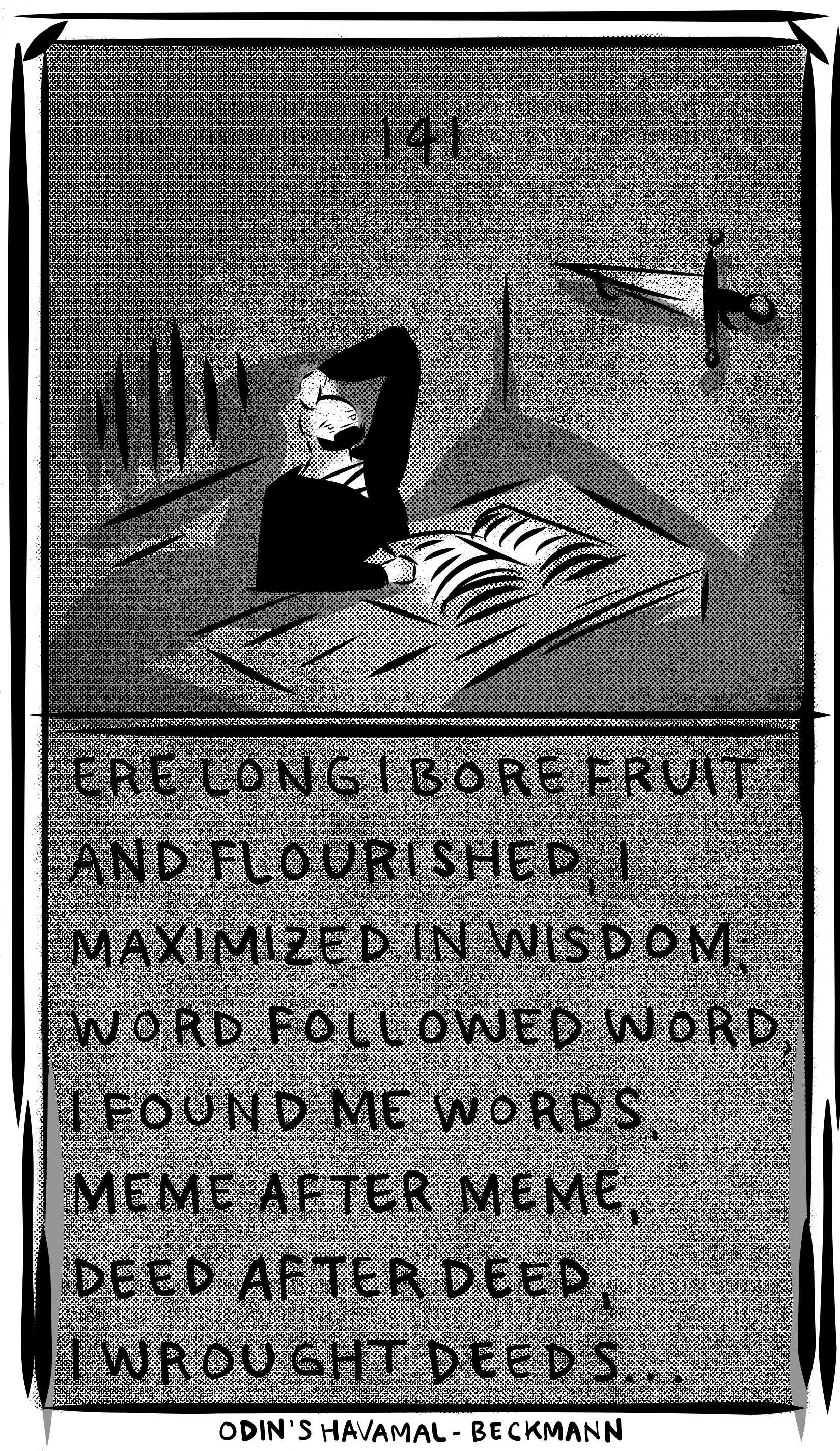
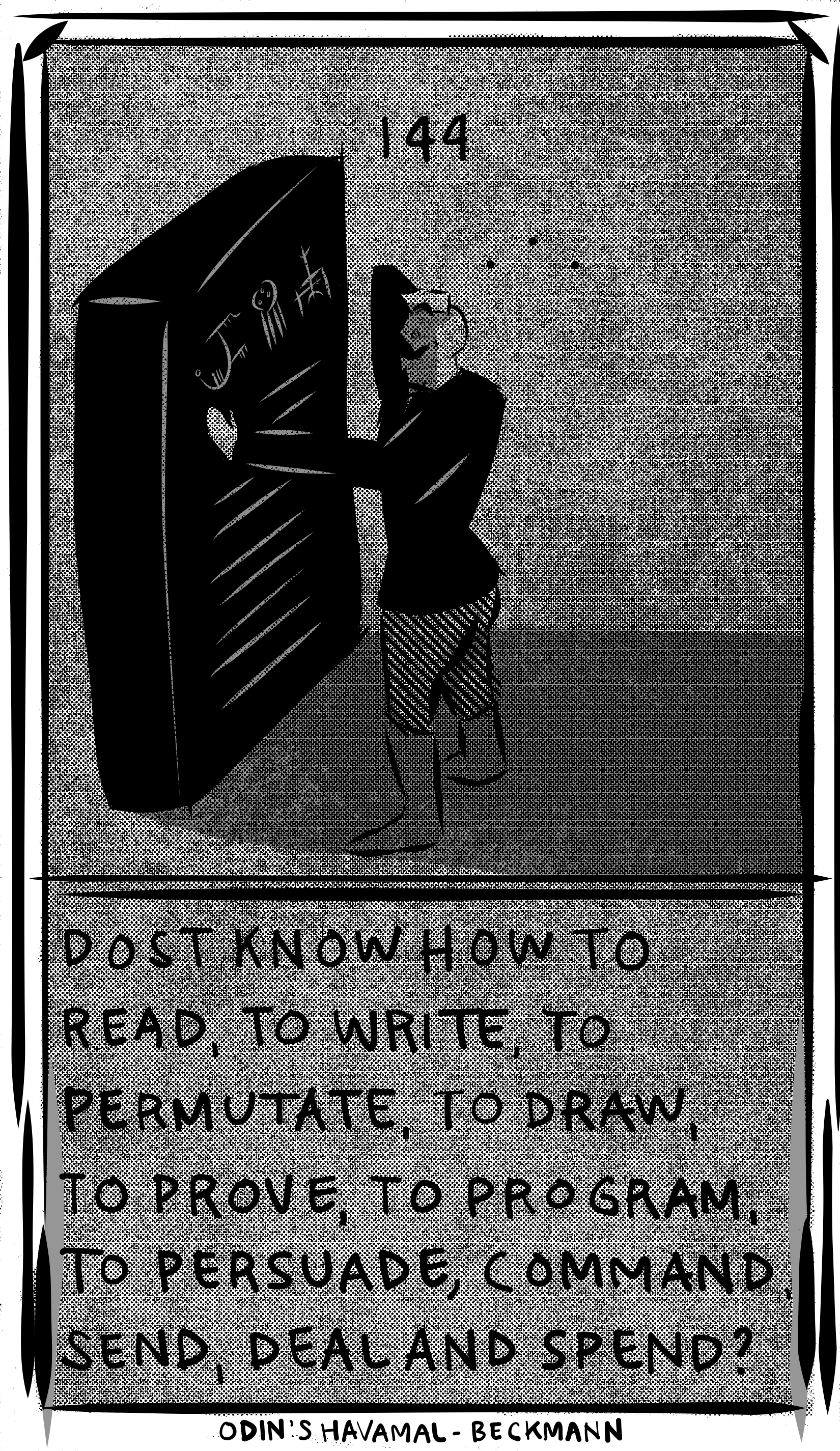
The Logos is the same concept as words of divine powers, i.e., the Holy Spirit. It overlaps with not only the Gospel of John, “In the beginning was the Word, and the Word was God, and the Word was with God”, but also with Genesis 1, and the Sefer Yetzirah. Havamal demonstrates faith in the concept of divine memetics (80, 110, 111, 138, 139, 141, 142, 144, 146, 161). One really interesting Scandinavian variant on Logos implied by Odin’s Havamal seems to be that technical skills like drawing, painting, engraving, and programming fit within the Logos (80, 111, 142, 144, 146, 152, 158). Odin goes beyond “writing”, using words that translate to concepts like drawing, painting, and engraving. Thus, Odin’s Havamal illumines upon symbolic Logos, or memetic Logos, not necessarily just “the words” per se, but the inherent memetic meaning and logic sitting below images, languages, and mathematics. Thus, many religions essentially worship the power of the meme to construct a better reality (the Logos) and one of the big 3 Abrahamic religions explicitly forbids the Scandinavian/Orthodox variant of it (at least in the context of image/icon production) – and I think I know why…
Odin’s Havamal is disconnected from us because we live in an age where most people read, but again, imagine living a thousand years ago when most people could not read. Reading would be magic, it would be people speaking to you from afar seeding words directly into your head. This is why Odin’s words seem strangely foreign – we have lost our reverential awe of this magic. An interesting tangent is that in the American South, the African slaves were forbidden to learn to read. Both Frederick Douglas and Booker T. Washington understood that this was fundamentally how the Black populations were controlled and so to break slavery, they had to learn to read (see their biographies). Like Odin, Booker T. endured horrible suffering, working as a slave underground in the mines during graveyard shifts so that he could go to school during the day to learn to read, because he understood this Power. Reading runes IS divine magic. Nowadays, the situation is most closely analogous to understanding computer code. Most of the world is computer illiterate and so understanding computer runes is now the closest thing to magic and not speaking that language positions one as illiterate and un-magical.
Conversion of the Vikings.
Overall, my suggestion is that the many overlaps between Old Norse, Havamal, and Christianity prepared the way for Scandinavians to convert without much trouble, for the better as Christianity puts a guard on the barbarian culture that leads to constant blood feuds, revenge killing, and power struggles. Christ allows one to opt out of these systems for one more focused on positive mercy and forgiveness – an effective counter to blood feuds which often destroyed Viking societies… (at least one American colony in the Saga of the Greenlanders actually exterminated itself by blood feud). Christ is the counter to Havamal. Christ teaches us that we can opt out altogether of power struggles (building kingdoms on earth) – in favor of building up God’s eternal kingdom. This is The Tamed Way.
Translating the Havamal into Comics.
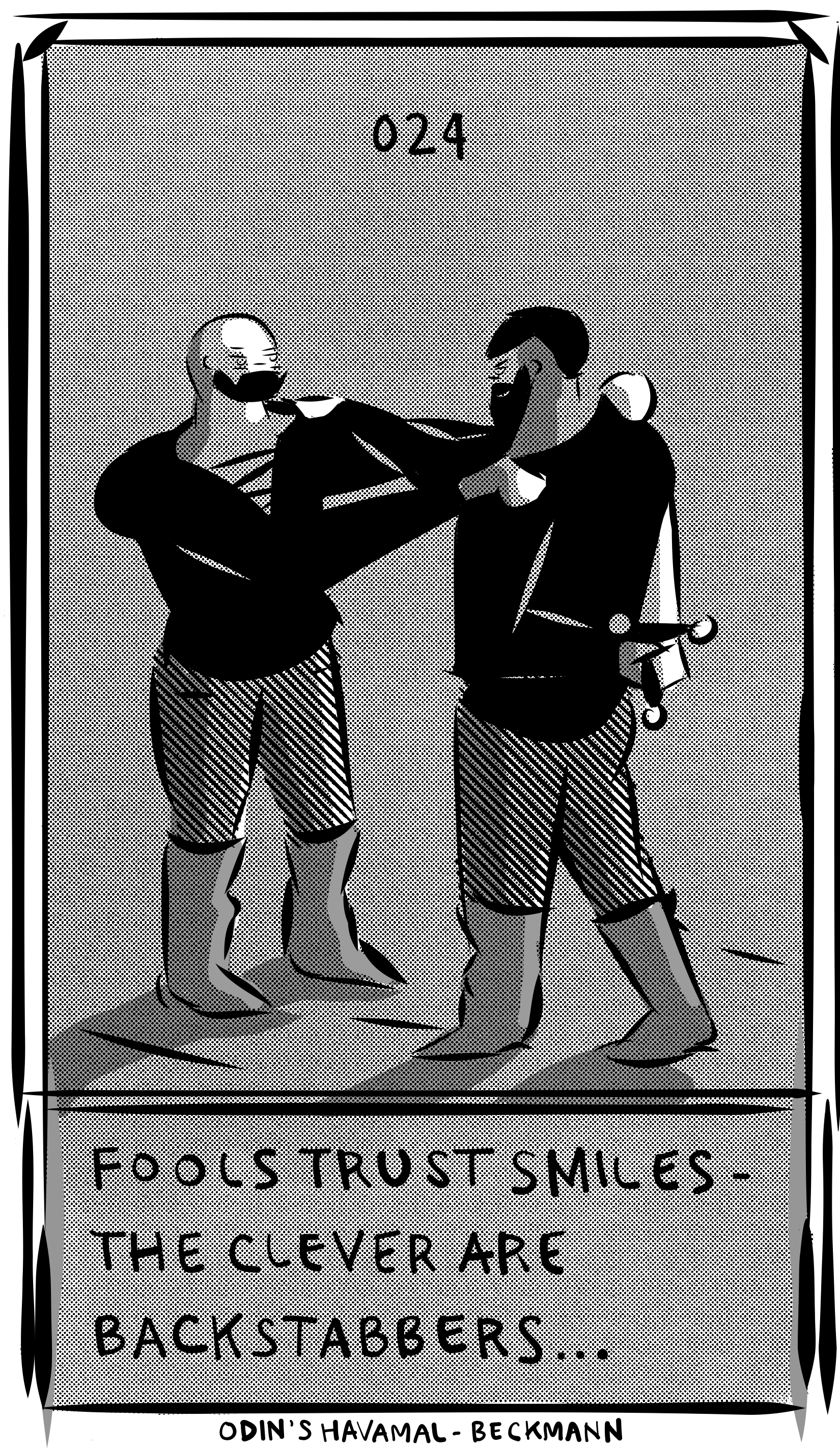
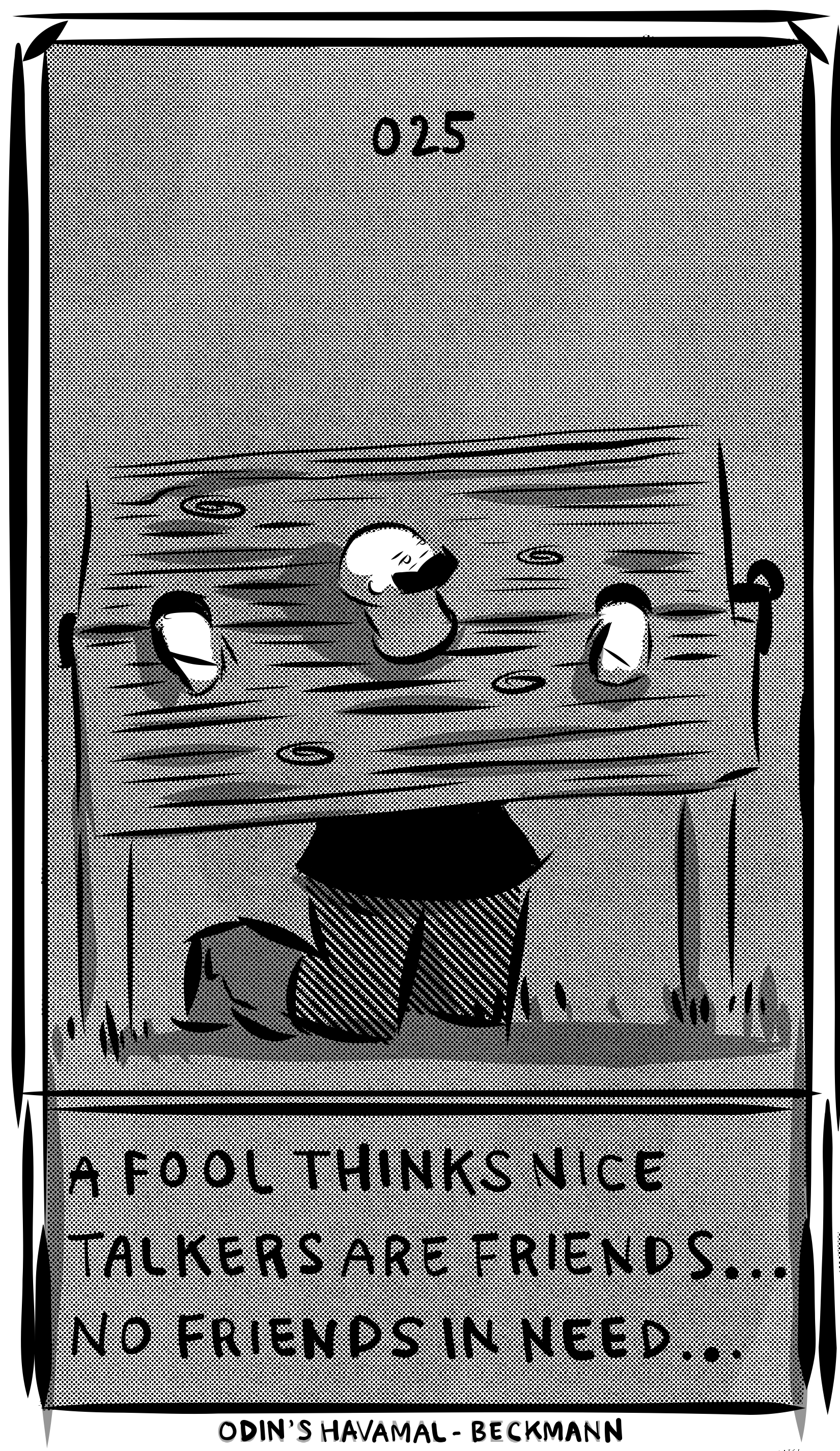
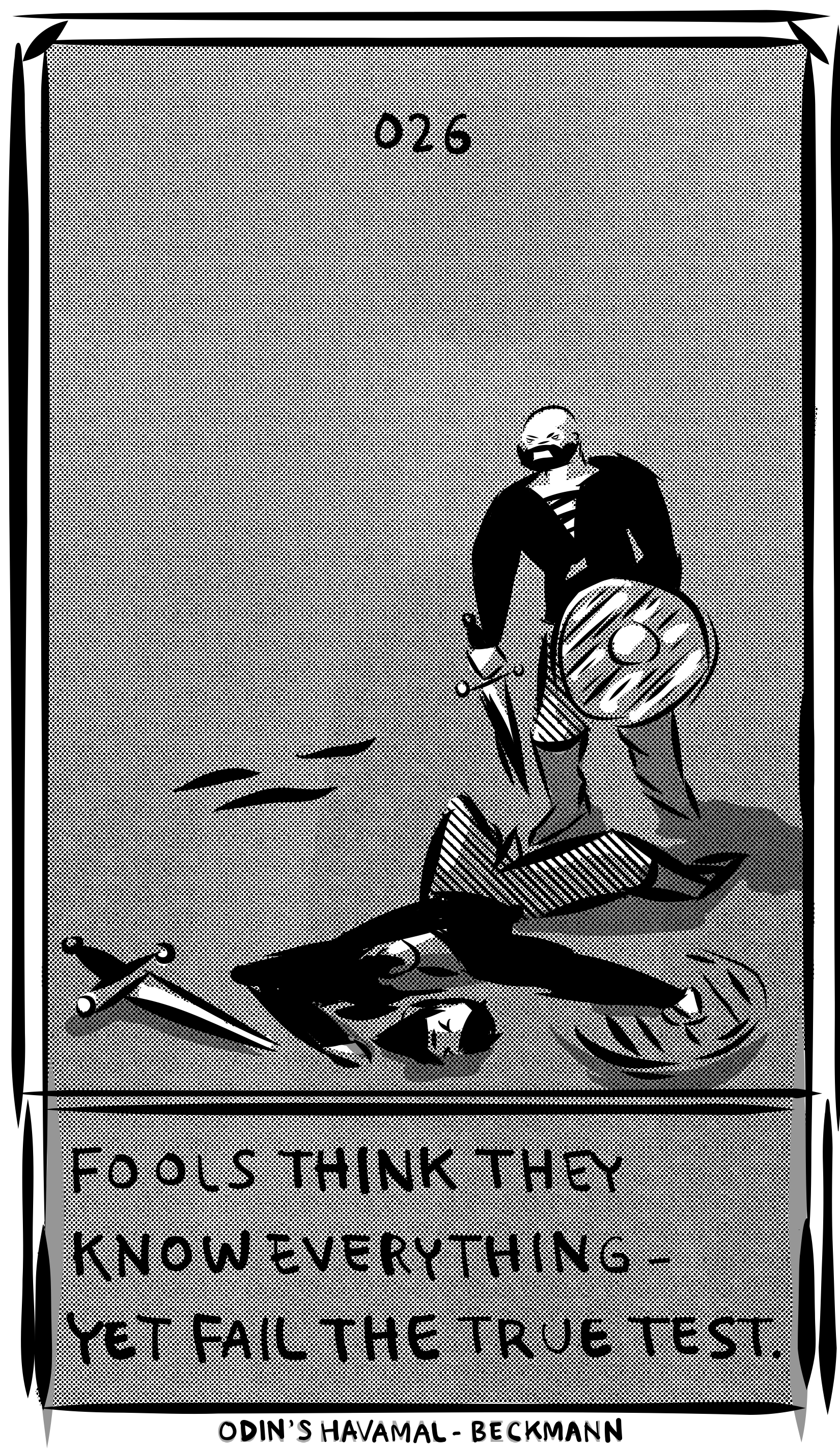
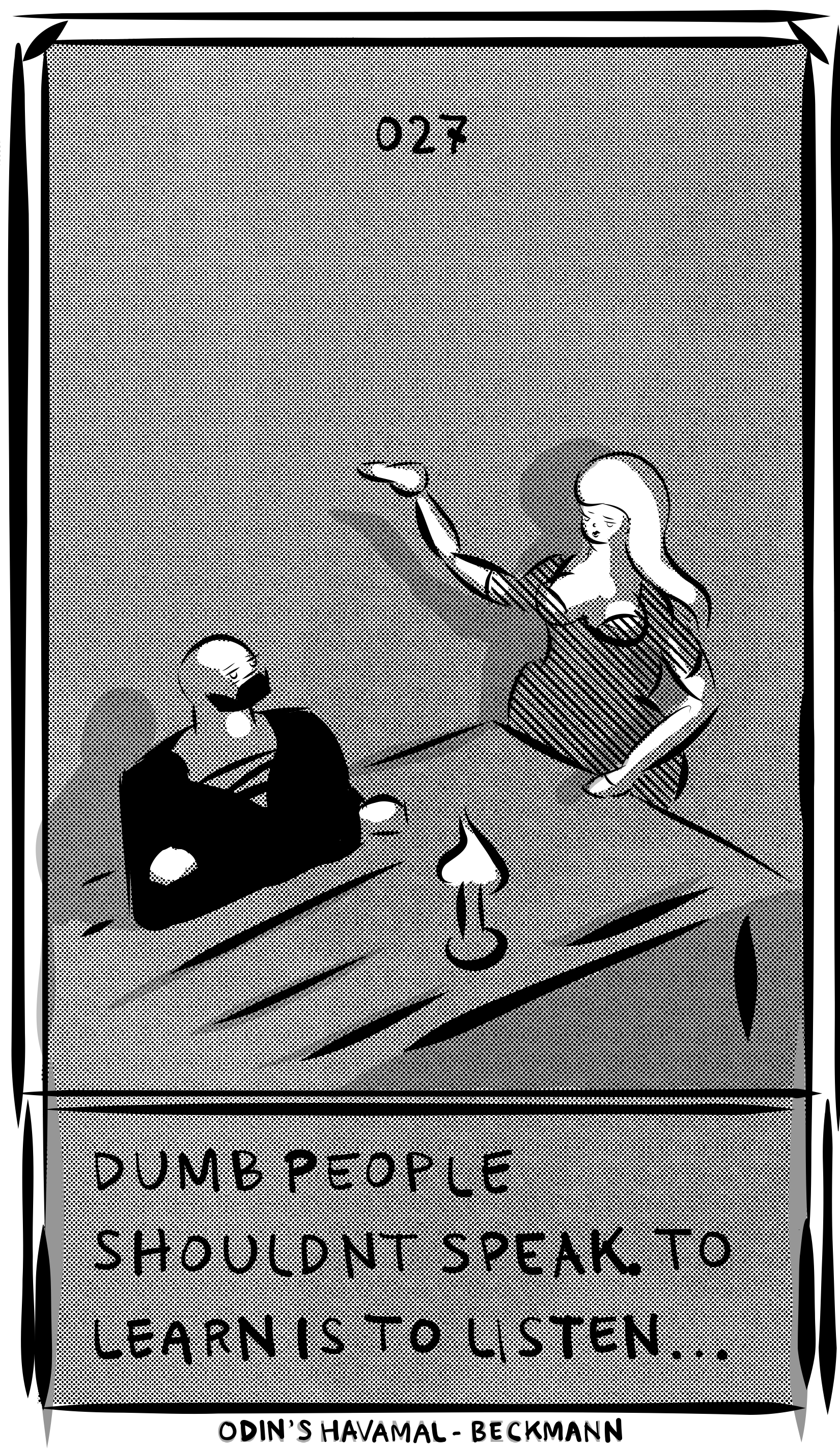
The Codex Regius (the King’s Book), which is our source of the Havamal, seems to have been preserved by an unidentified Christian scribe (who likely thought it was both funny and disturbing). Something in these texts inspired persistence and preservation. Replicating the Havamal as meme is not an endorsement of paganism. Though I learned a lot in the process as the Havamal does truly contain wise cynical proverbs on a plethora of topics including hospitality, friendship, loyalty, defense, and yes – power – that provide context onto the history of the Viking age and the culture of the Scandinavians, their memes, and the selective regimes that applied forces shaping their genetics and those memes. It is funny and clever in a disturbing way. These words are part of my cultural heritage, and I argue that not Allwords, especially wise runes transcribed from an ancient paternal ancestor, should be thrown out with the bathwater of paganism. The words need to be understood, corrected, and put into proper modern orthodoxy. This is my humble opinion, and I suspect that most Scandinavians would feel similar. My mother used to read Old Norse myths to me. They’re deep inside my training sets and it’s my honor to now share these memes and read the original runes myself.
I suggest that the Havamal is a joke book – or is it a clever infiltration? like Odin himself, the book is a clever paradox that I cannot completely discern. But I believe the lesson is to trust the Logos and err on the side of free speech. God has a sense of humor. We must not forget that Joy is fruit of the spirit.
FYI
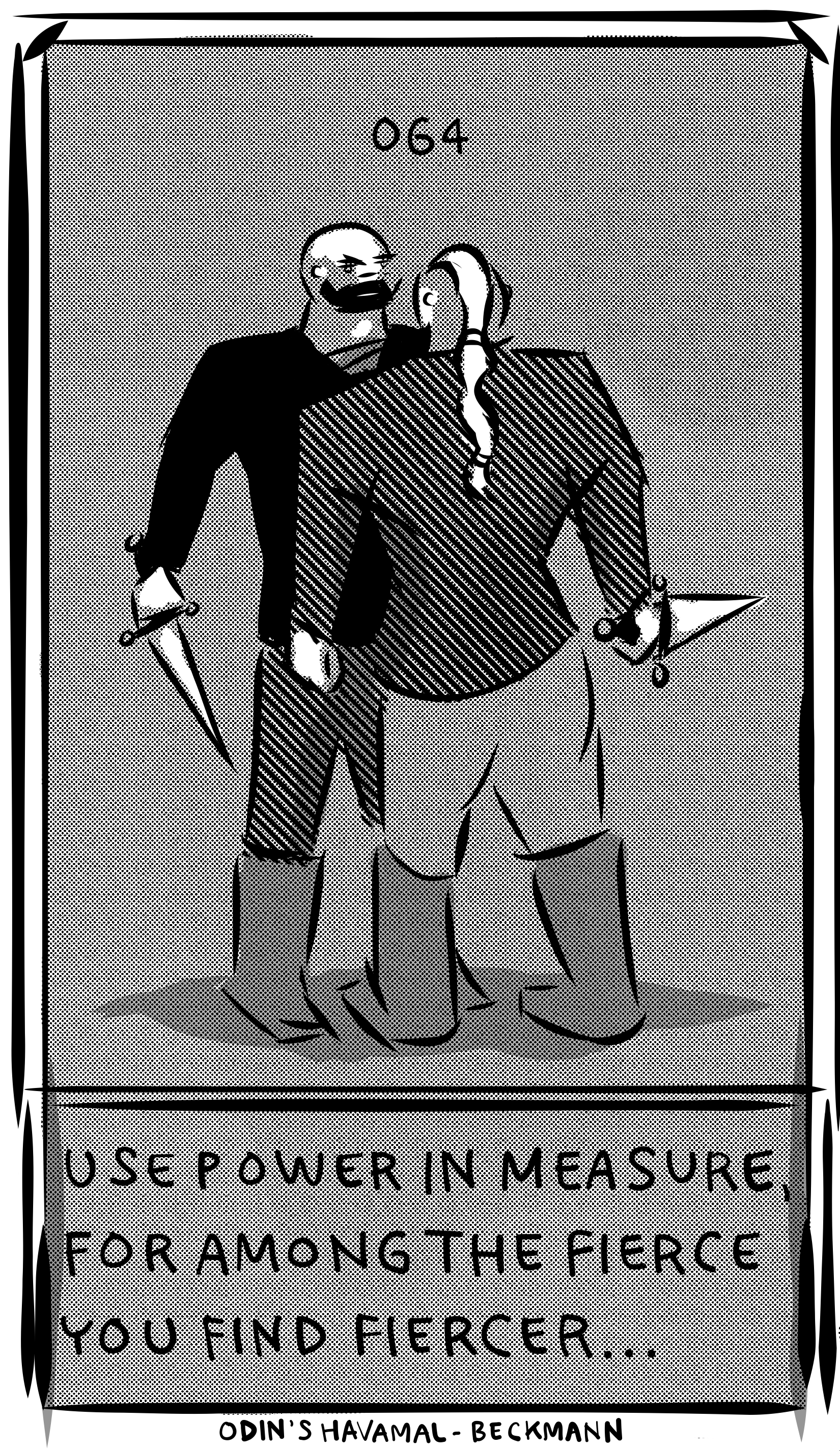
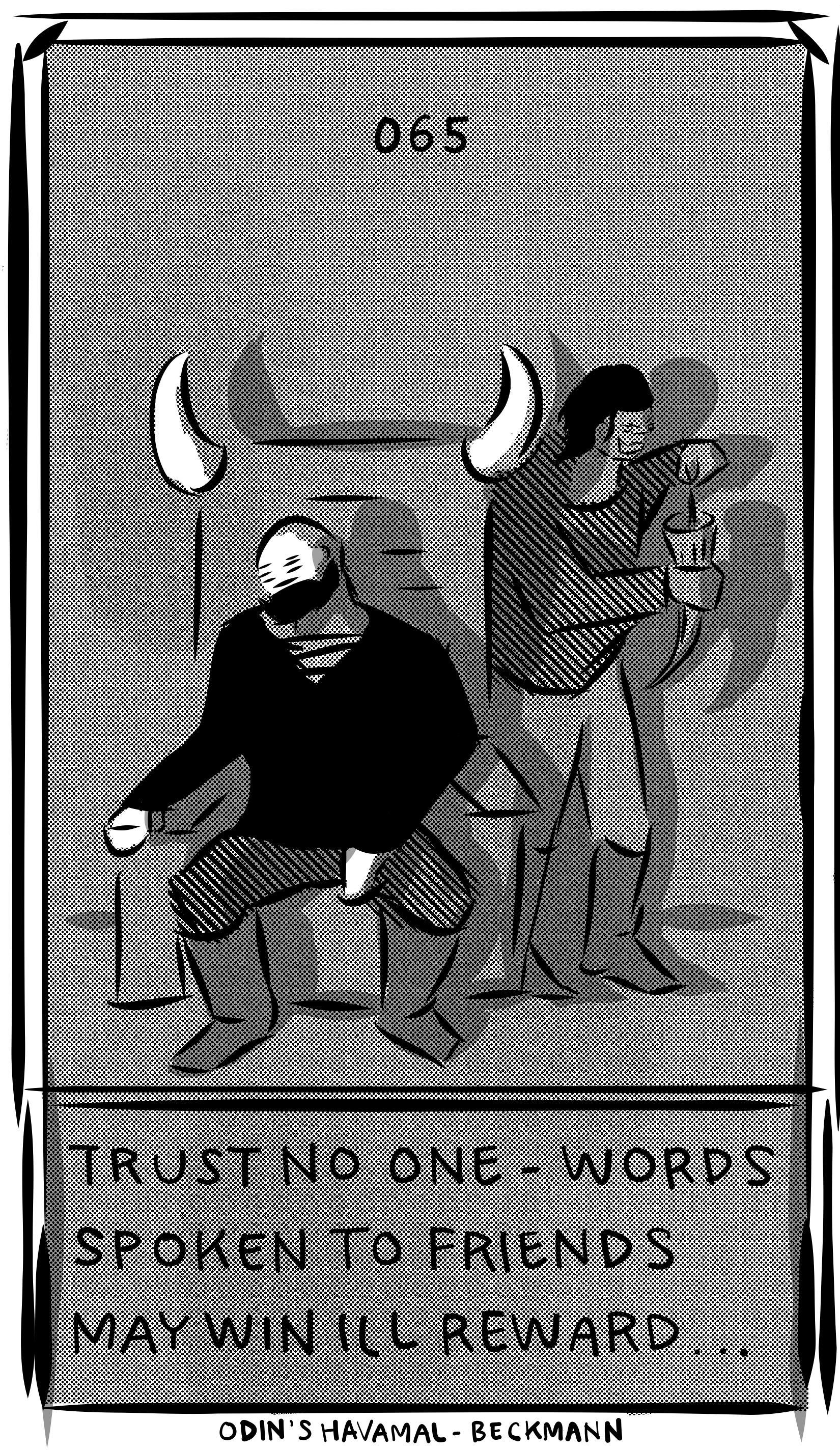
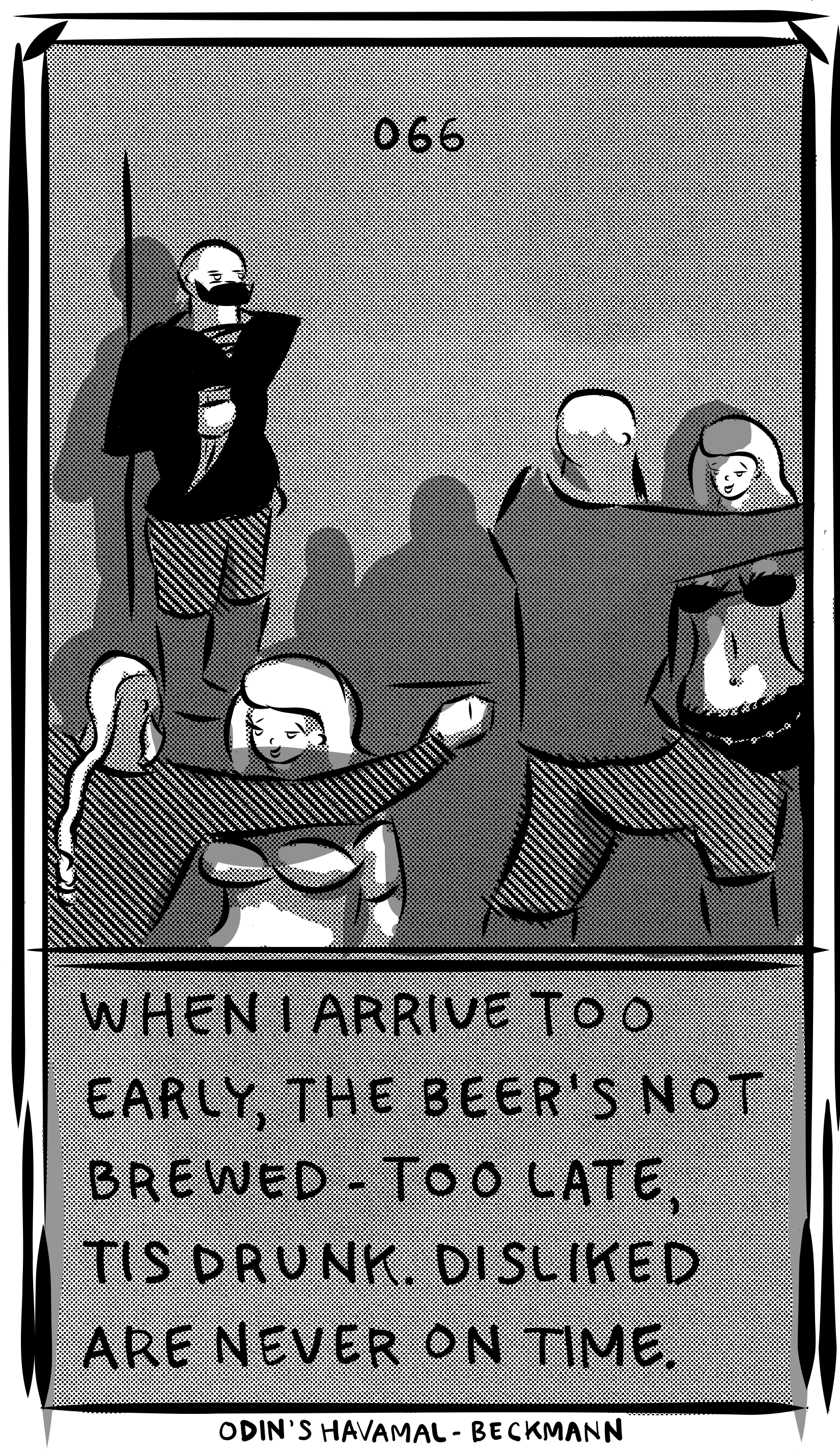
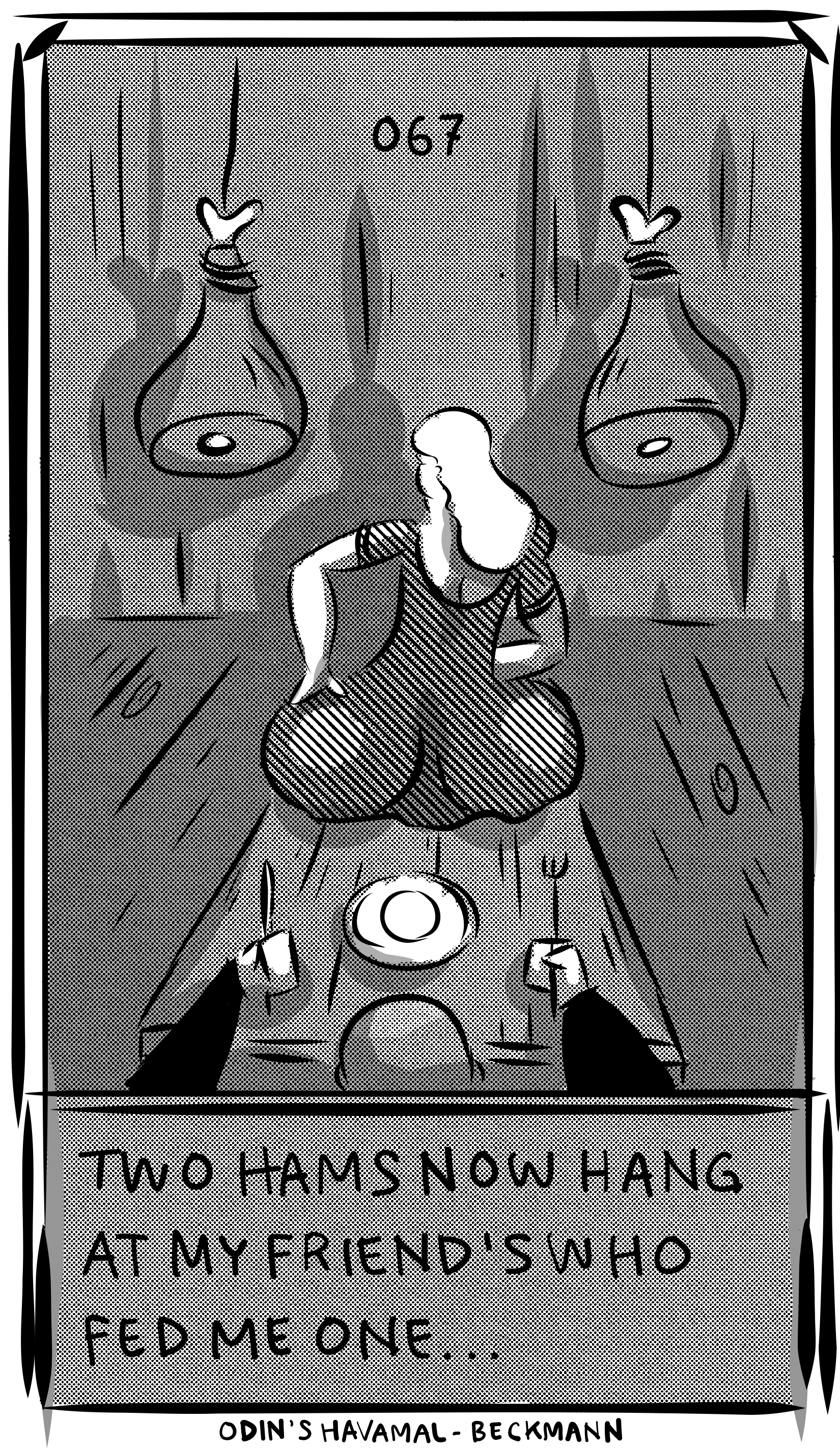
Some of the numbered passages in Memetic Havamal get off about half-way through. Some translations swap the passages or bifurcate and so the numbers herein aren’t perfectly correct. I personally had to split one or two memes myself to make it work or to emphasize what I thought was a standalone meme. To reference/consult other translations you need to locate the direct words, not the number. A few memes have extrapolated translations, interpreting what I think Odin really means or what I think the inherent joke is, but you can consult the runes yourself if you doubt, Brother.
“Angels to the left of me, angels to the right of me, angels in front of me, angels behind me.” – Grandma’s Prayer
“Saint Michael the Archangel, defend us in battle. Be our protection against the wickedness and snares of the devil. May God rebuke him, we humbly pray; and do thou, O Prince of the heavenly host, by the power of God, thrust into hell Satan and all the evil spirits who prowl about the world seeking the ruin of souls. Amen.”
“Lord God, Blessed Father – I thank thee from my heart for having so graciously preserved me through this day – fit me for what thy holy will is and grant that I would do nothing this day, nor all the days of my life that which could divide thee from me. For the Lord Jesus my redeemer’s sake. Amen”
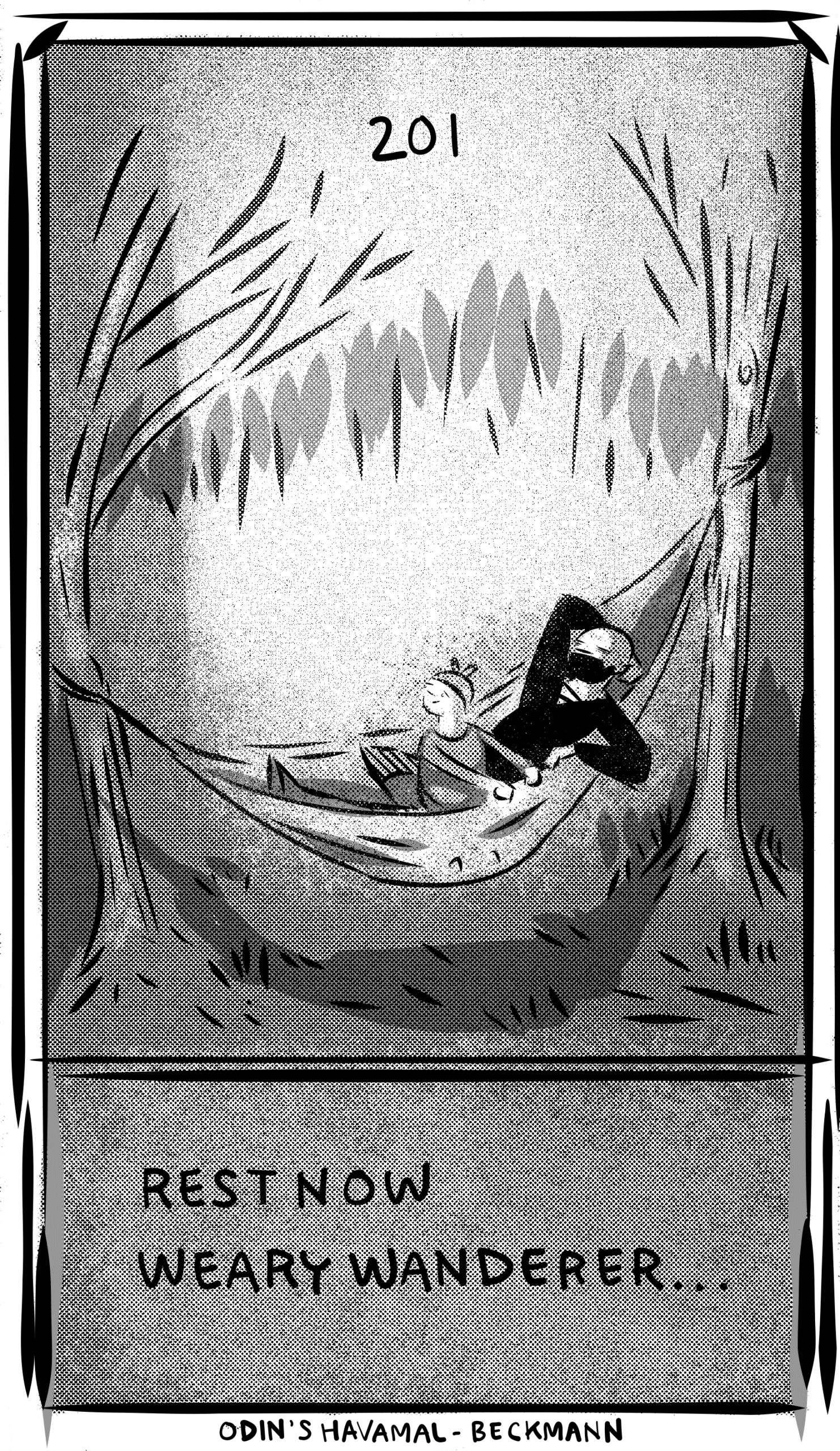
“Rest now weary wanderer.”
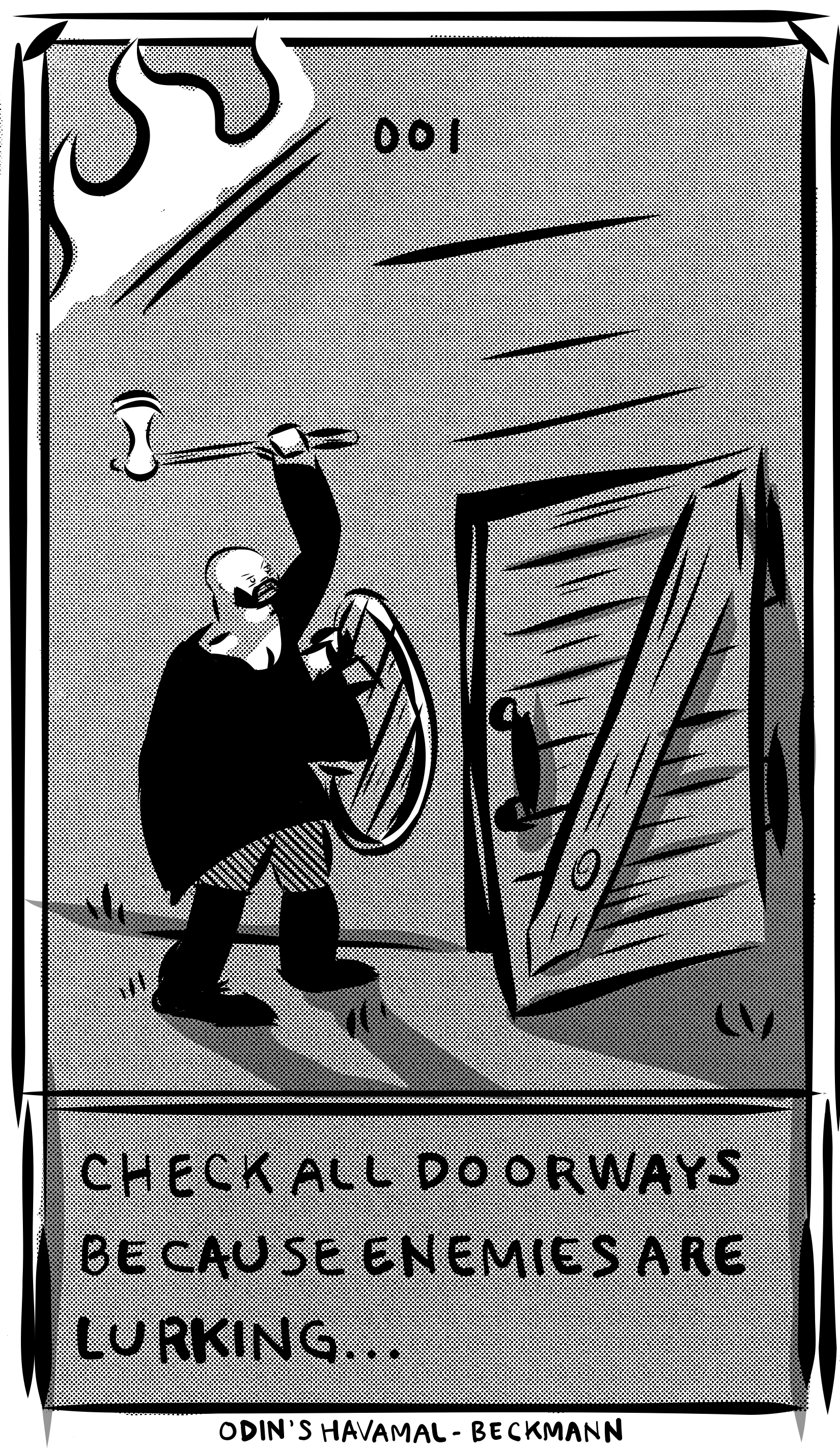
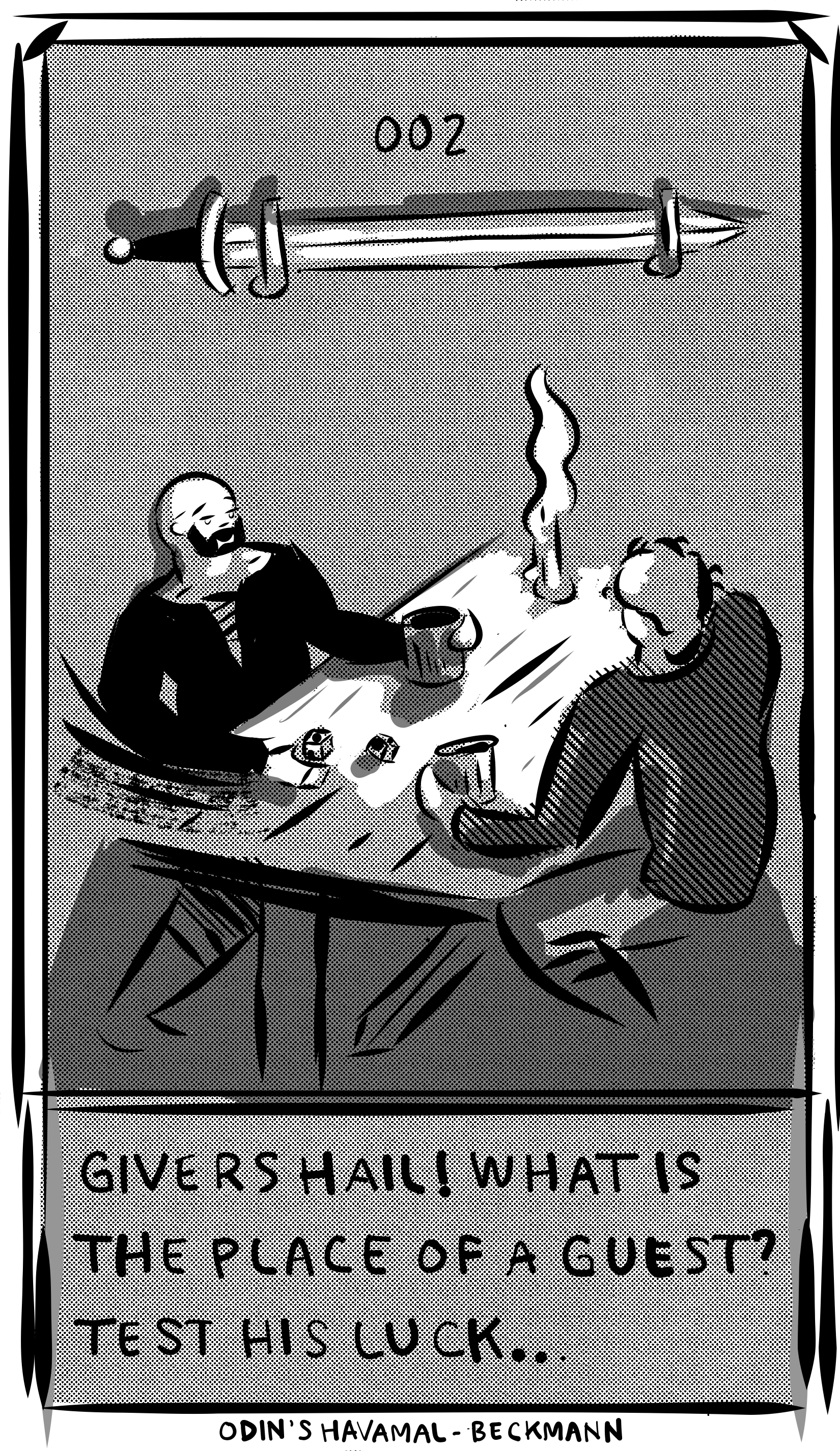
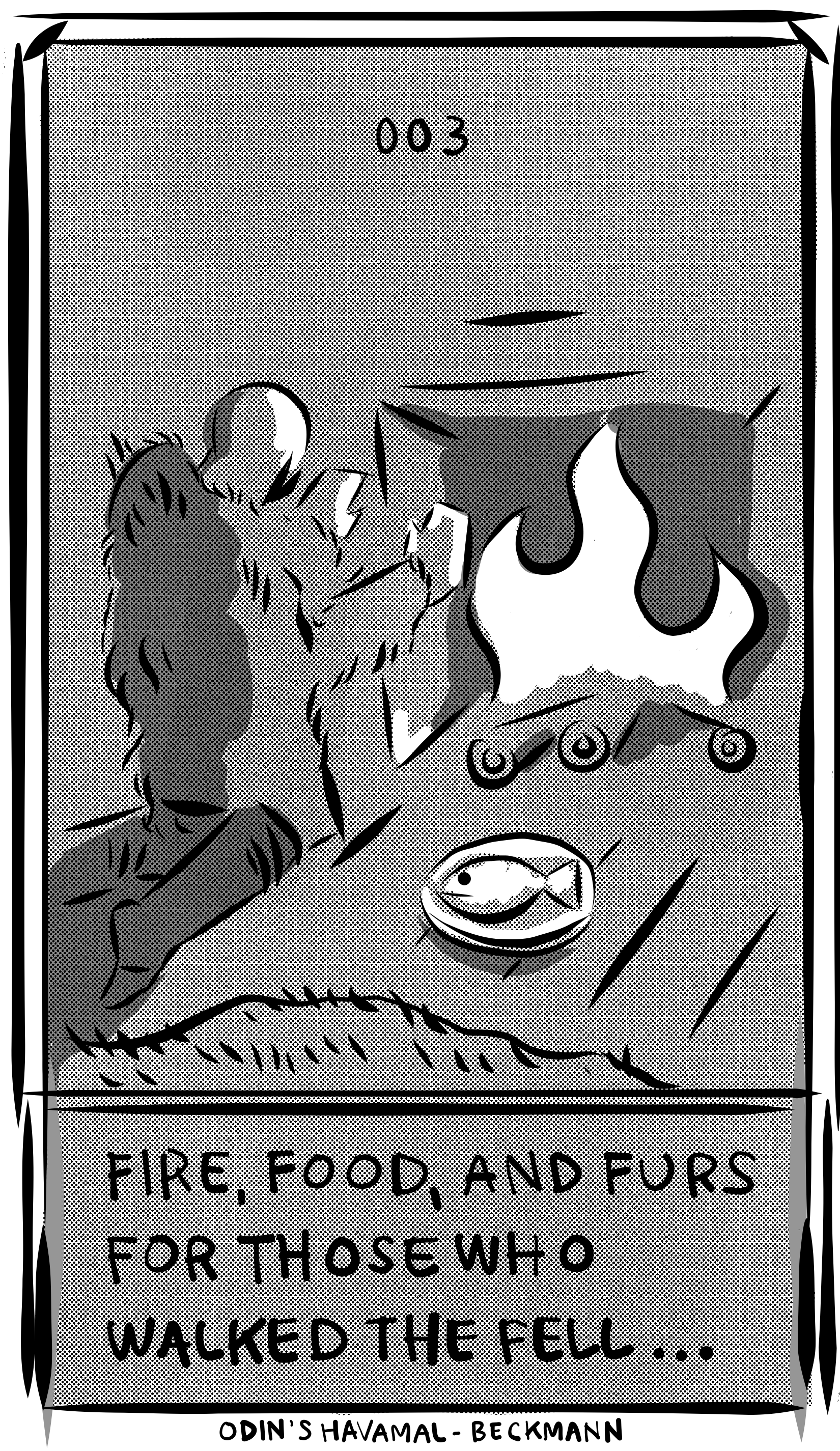
Wisdom for Wanderers and Counsel to Guests (001 – 080)
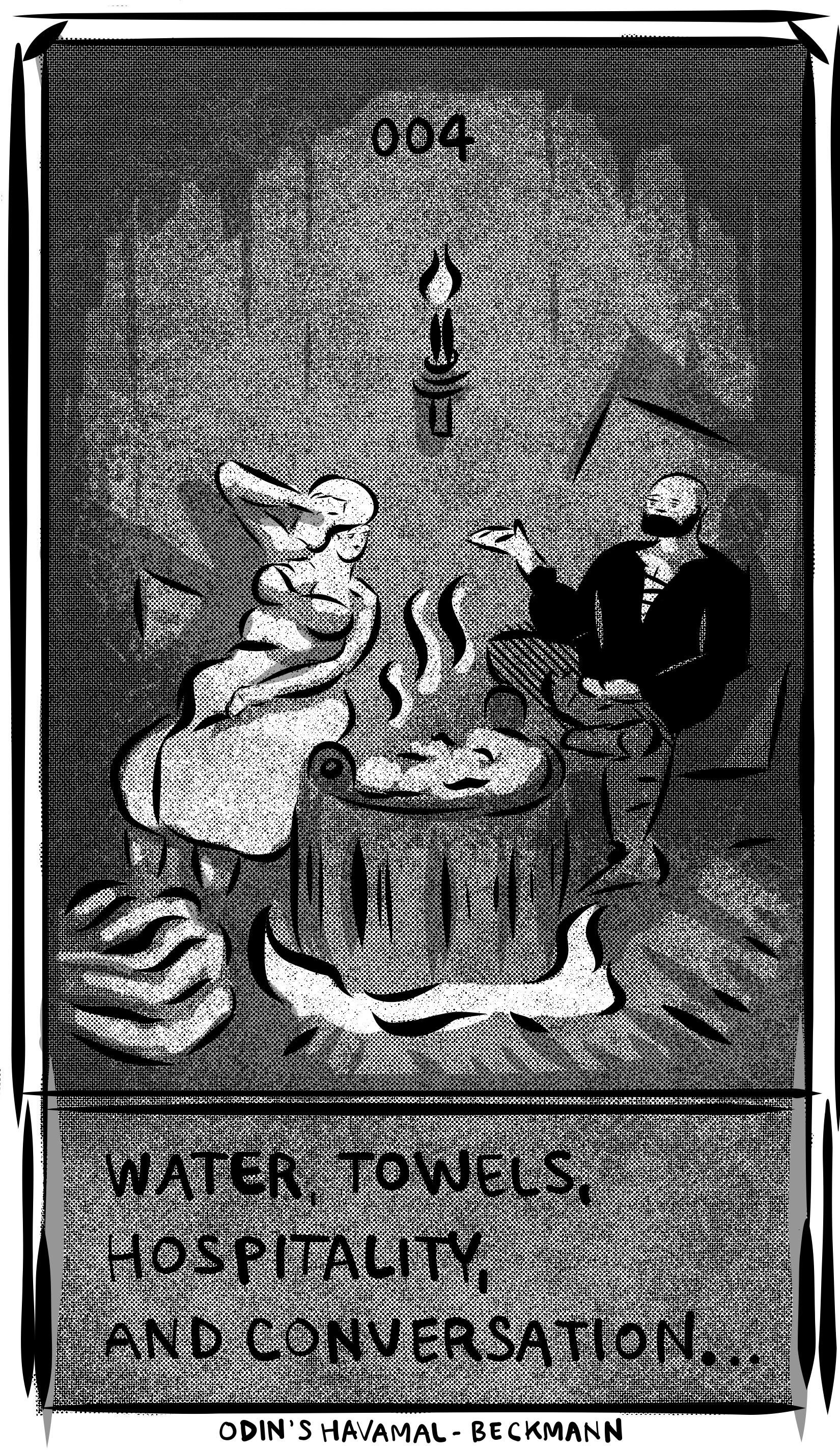
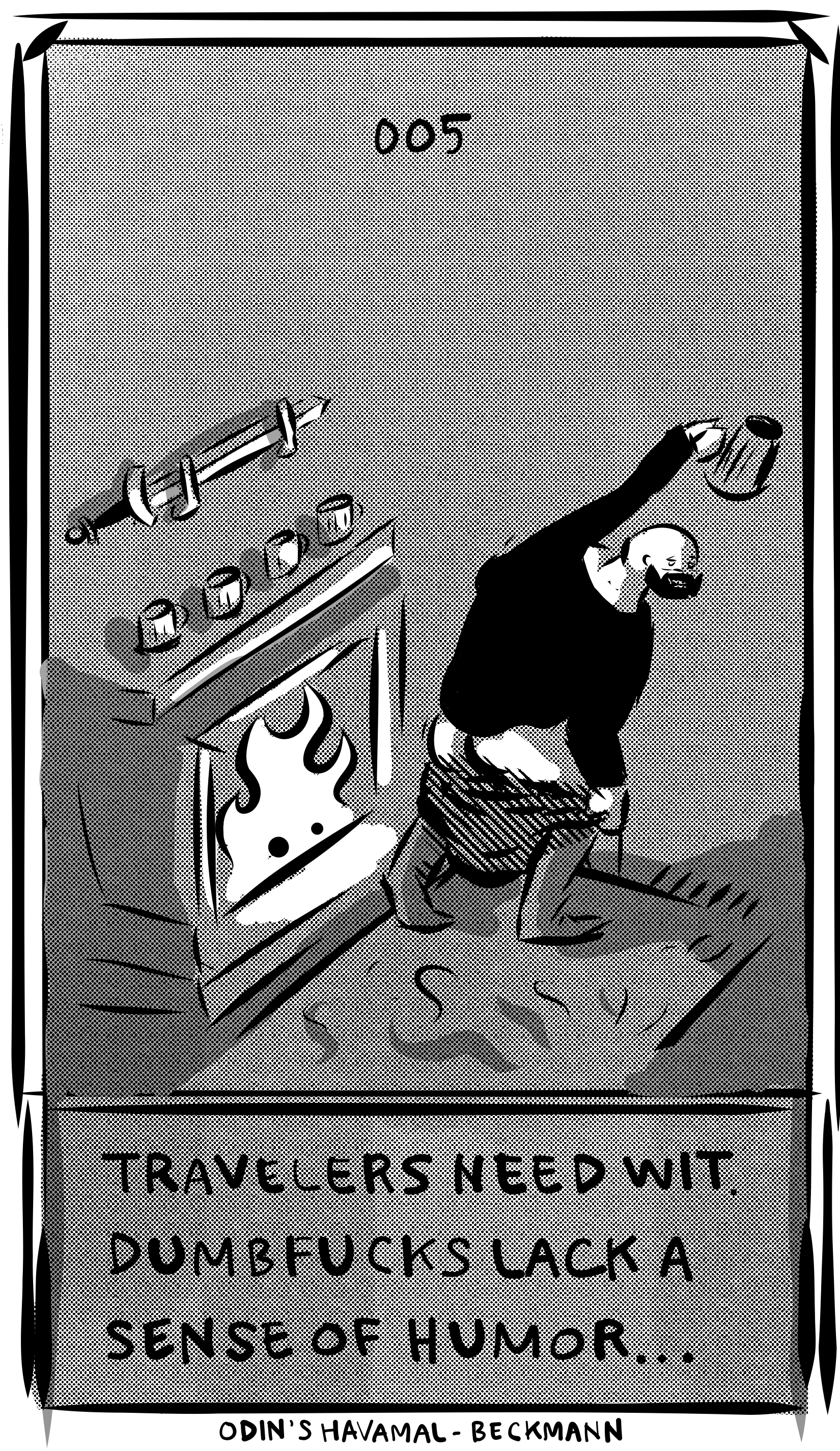
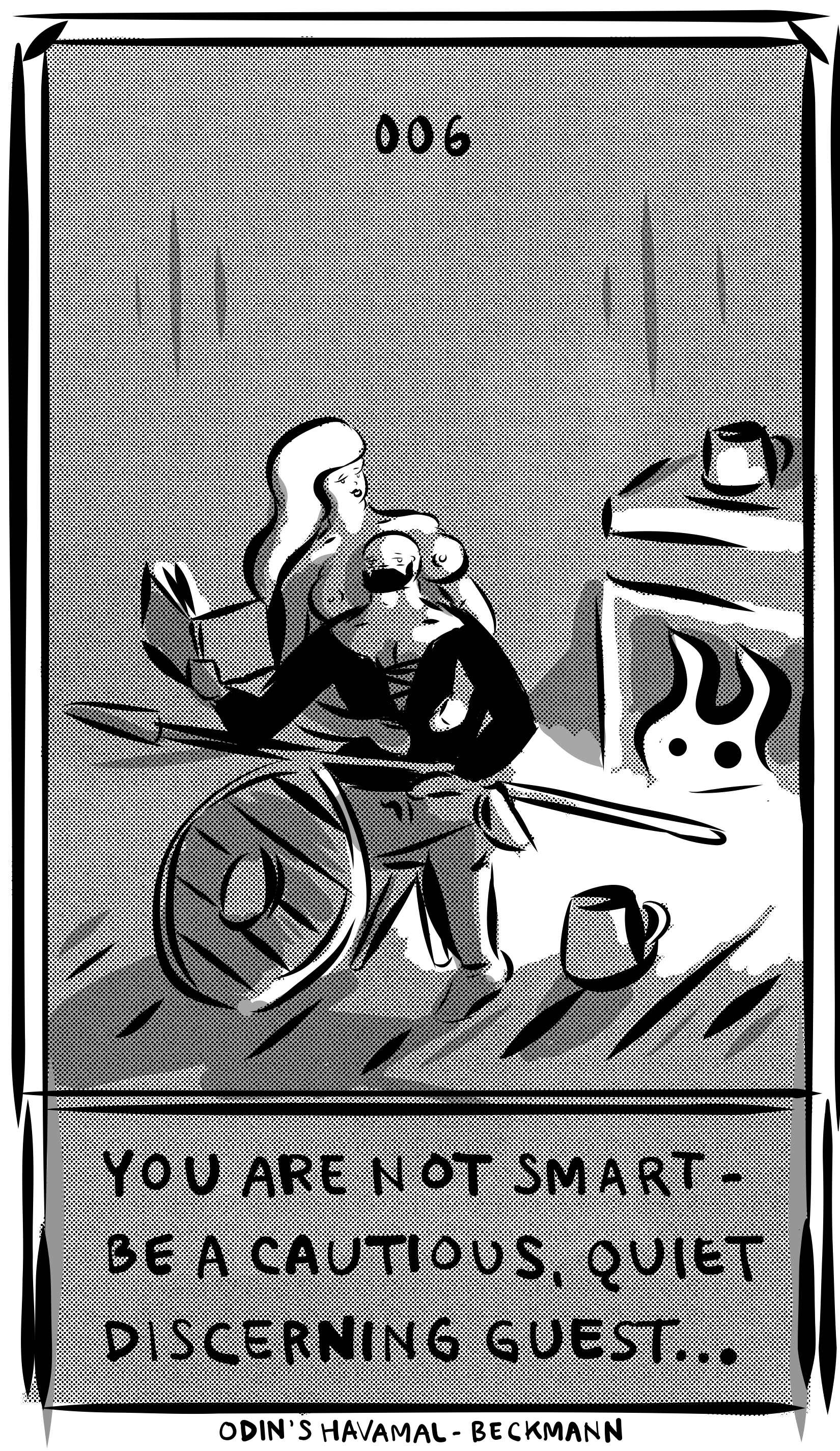
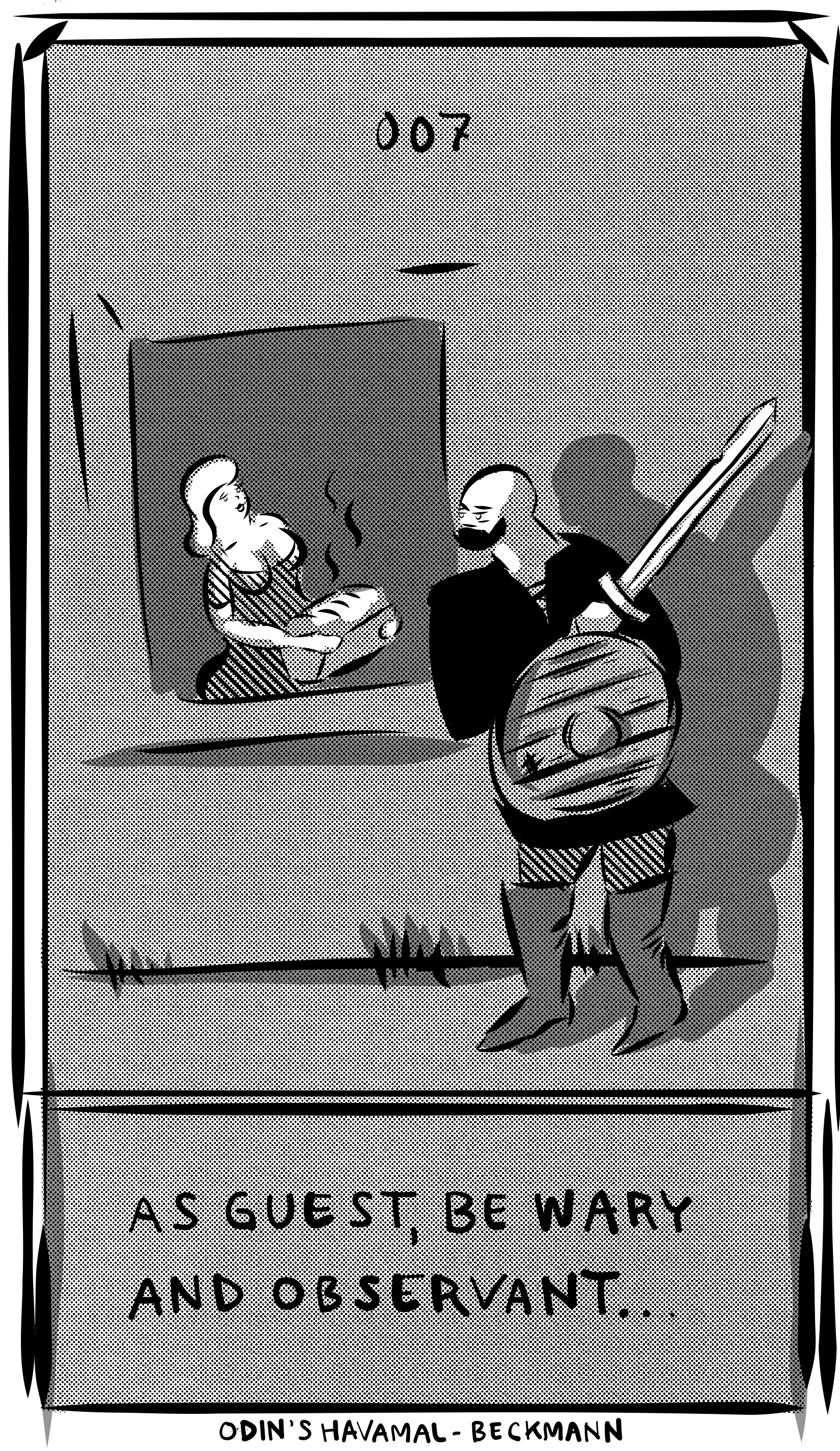
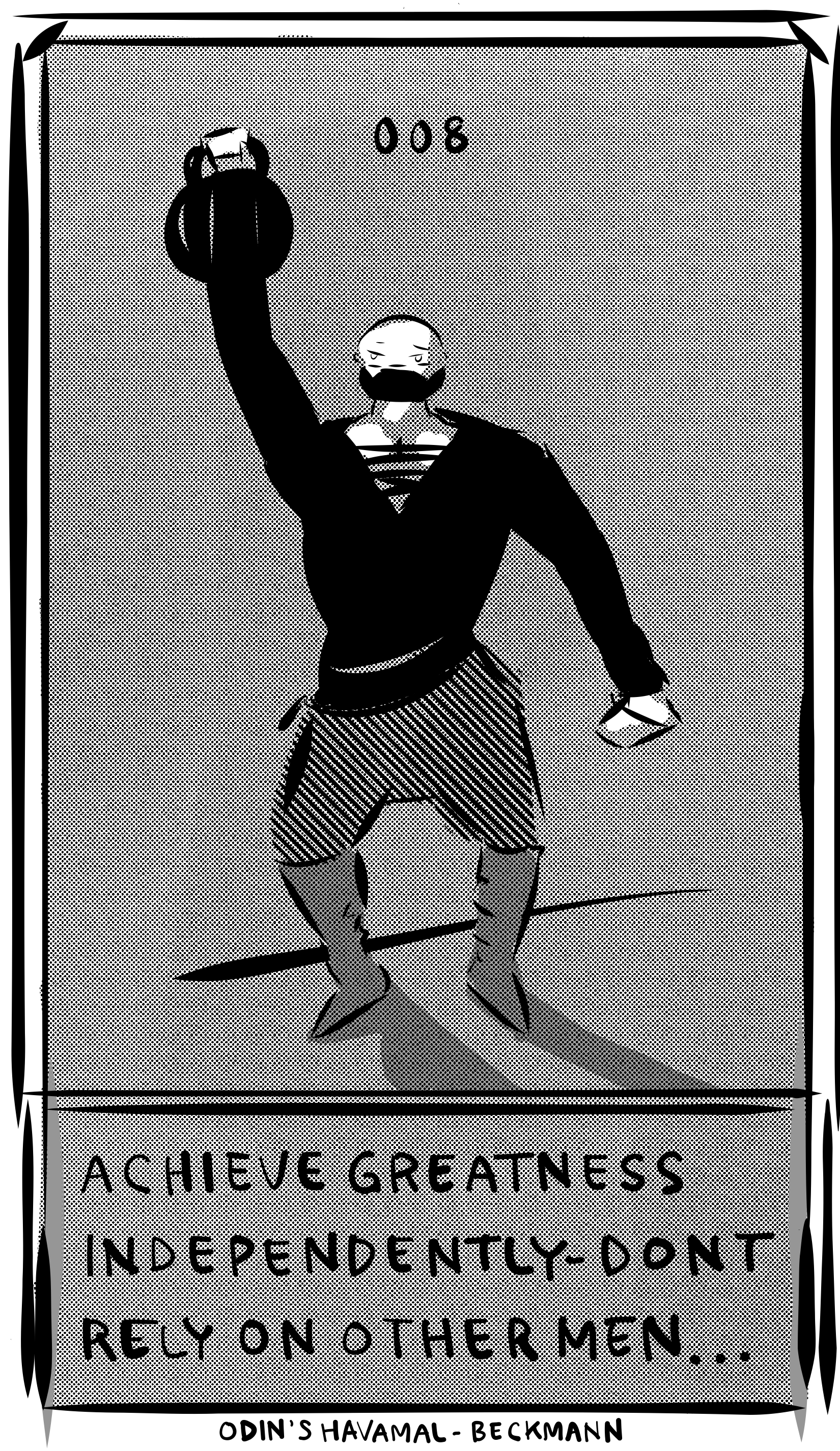
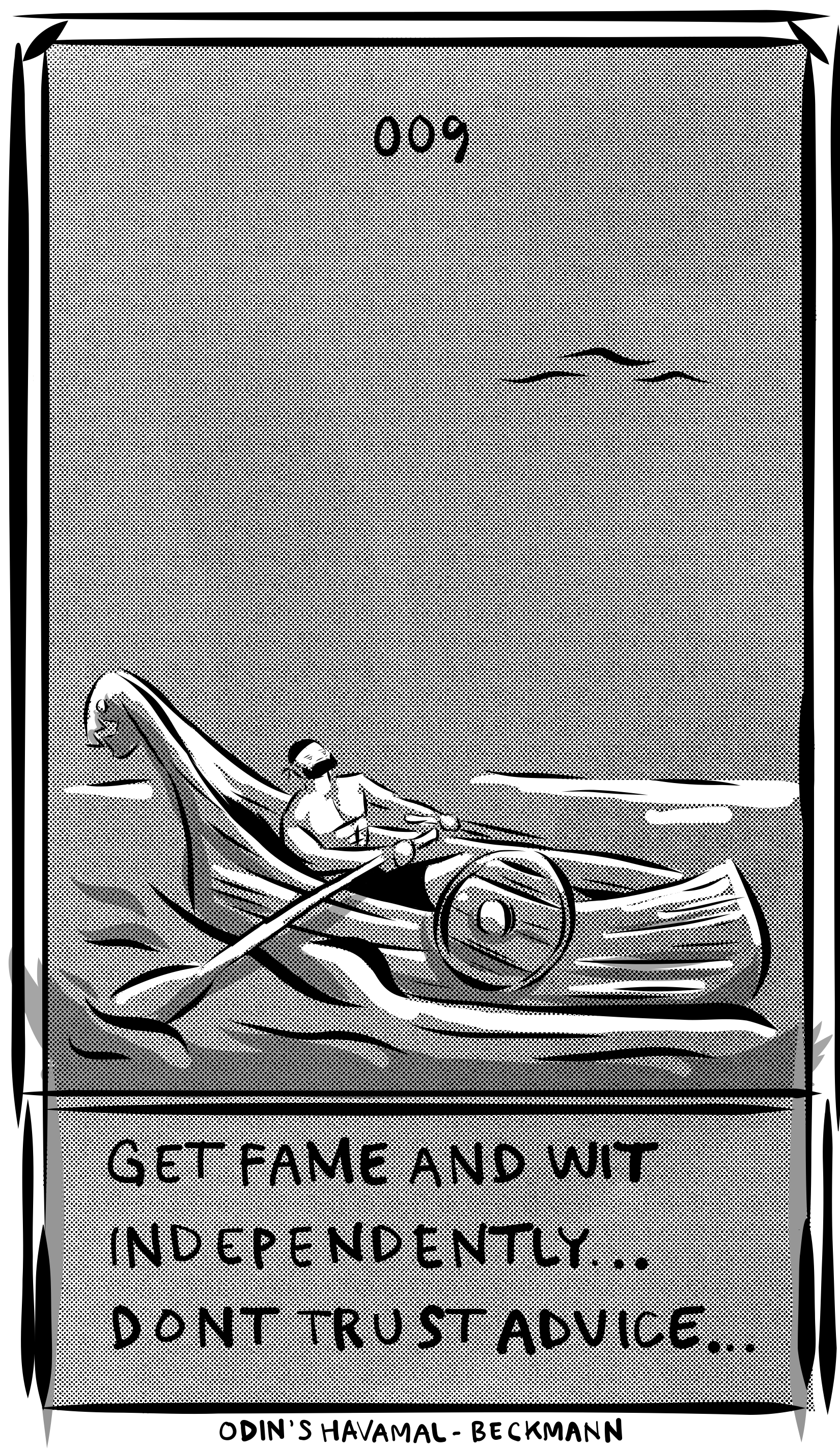
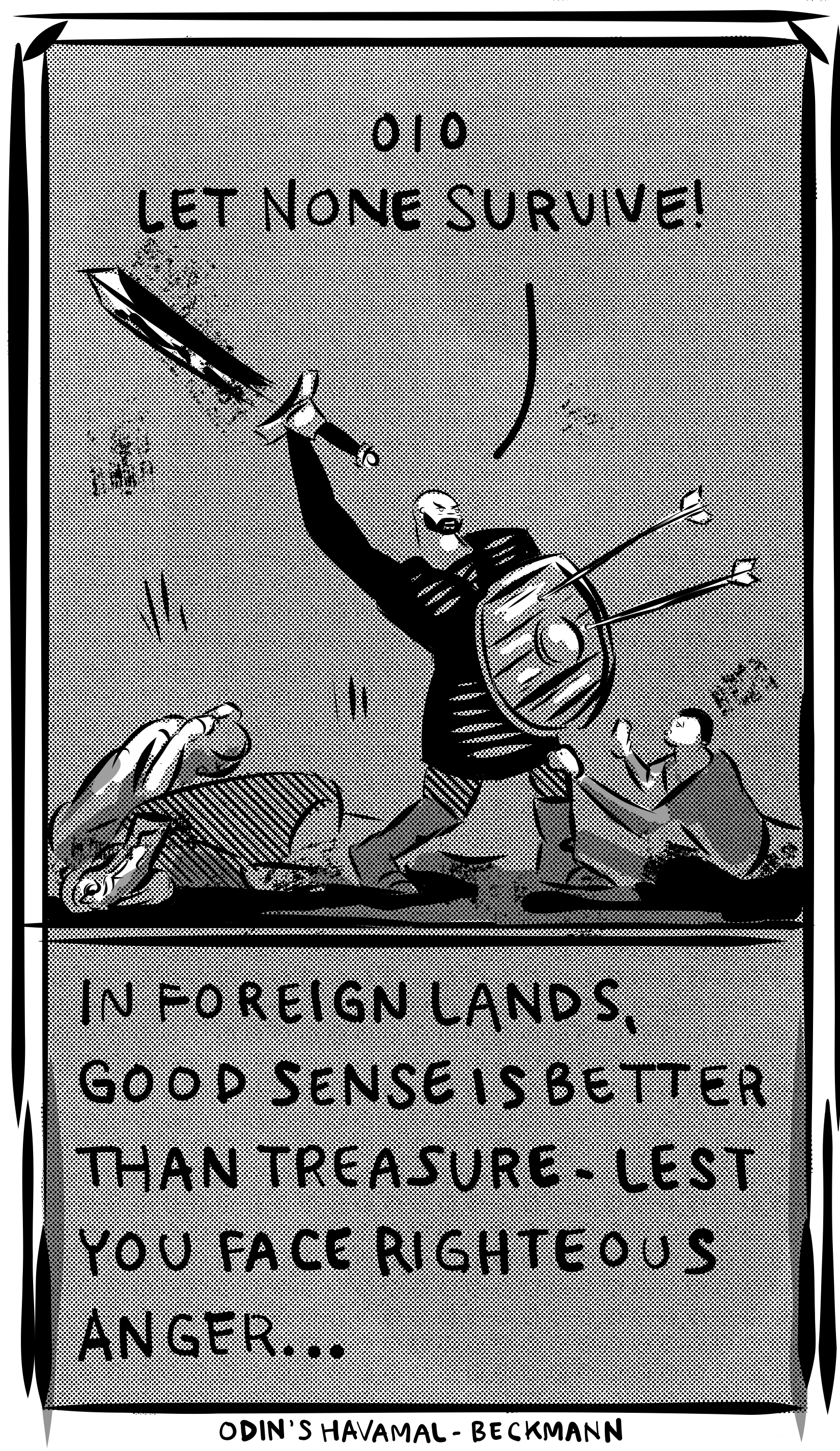
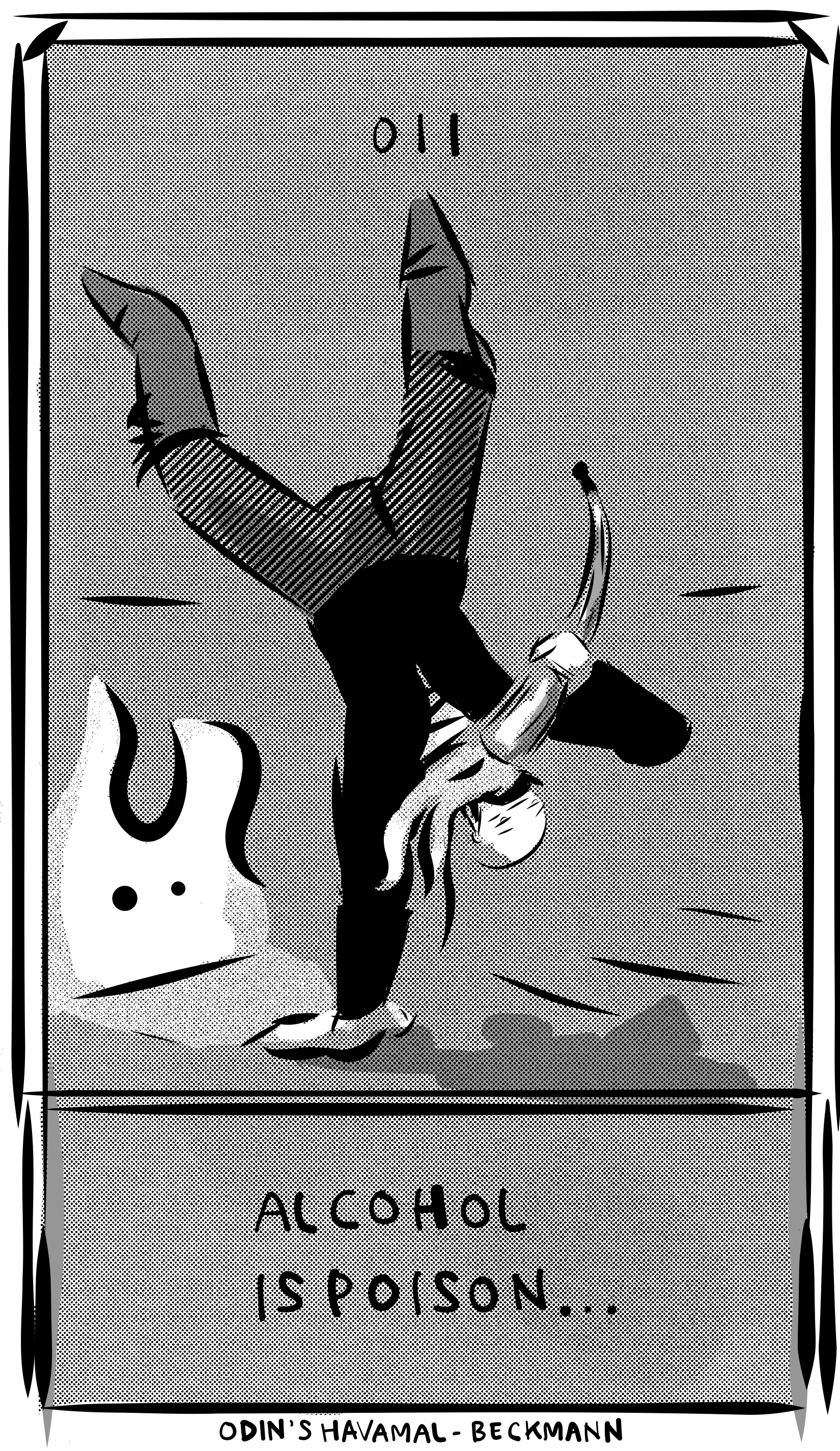
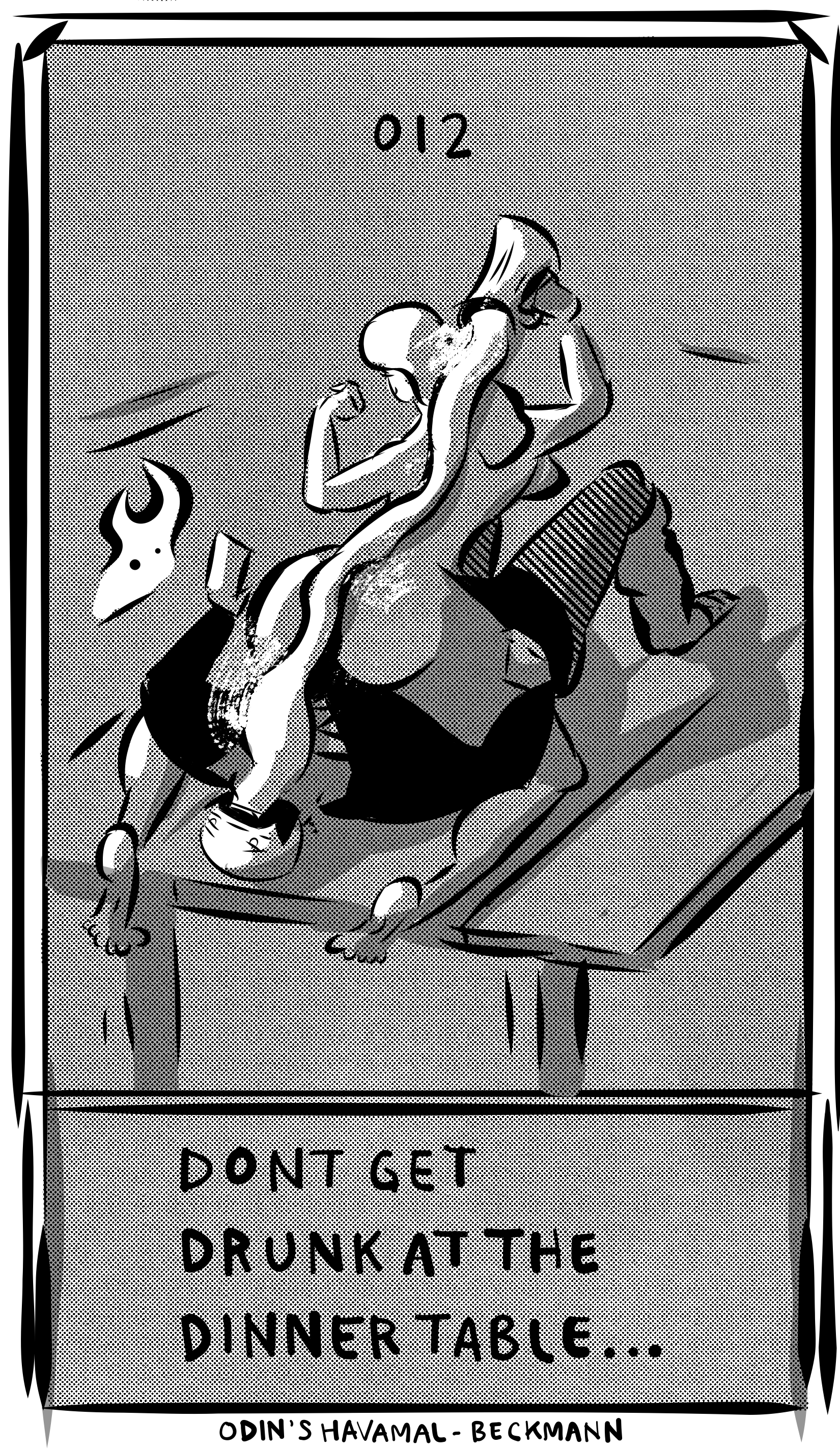
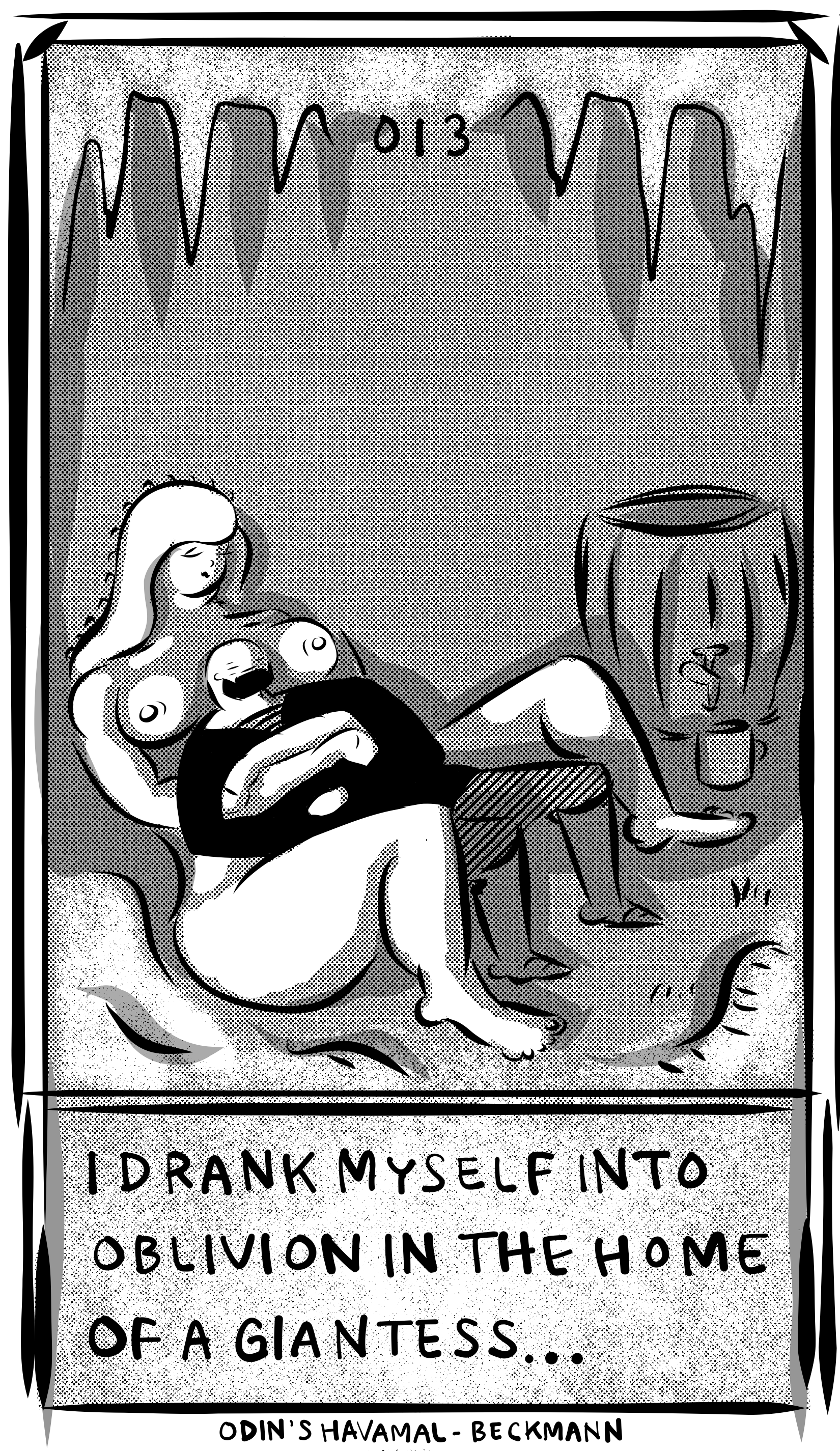
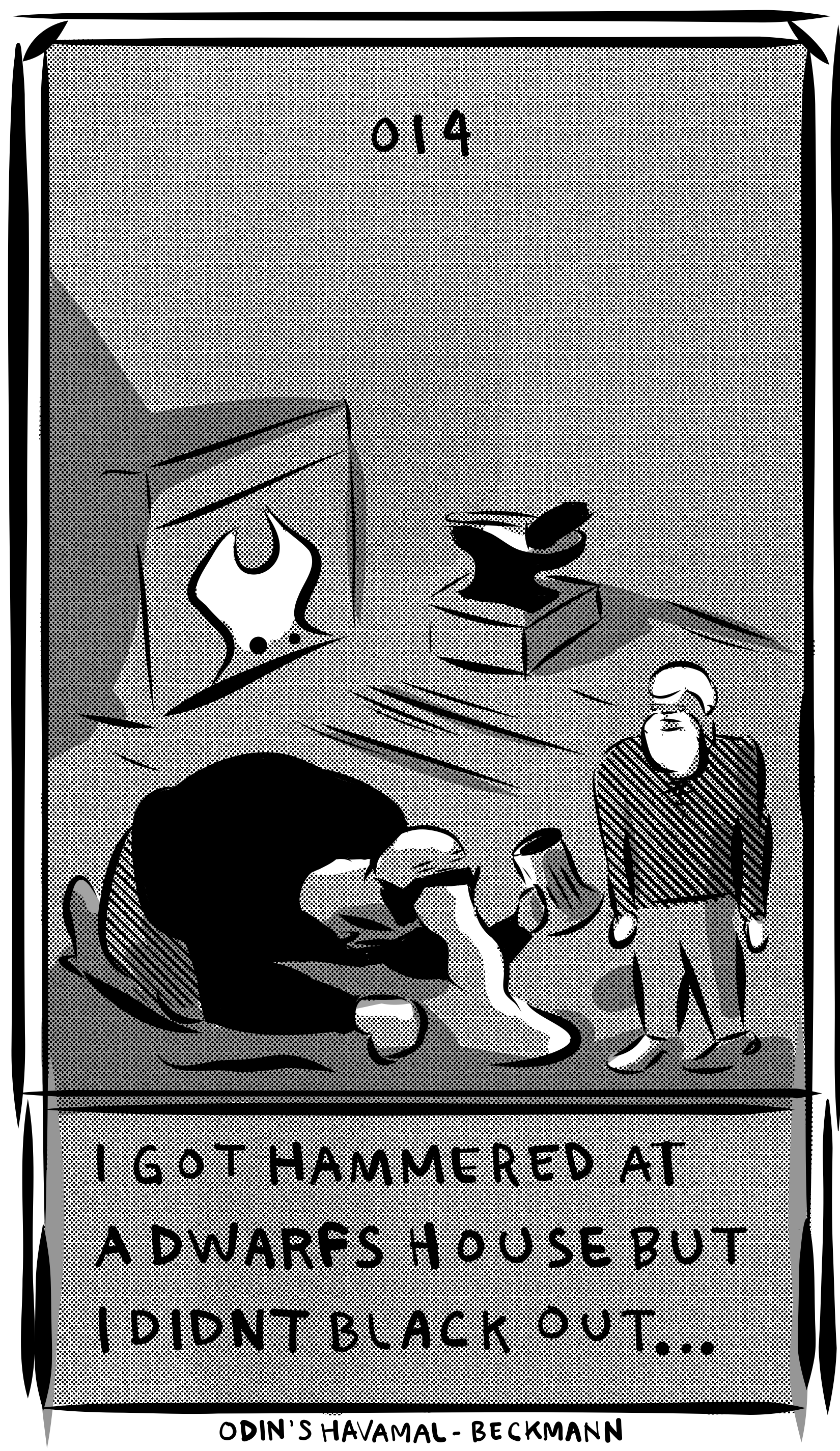
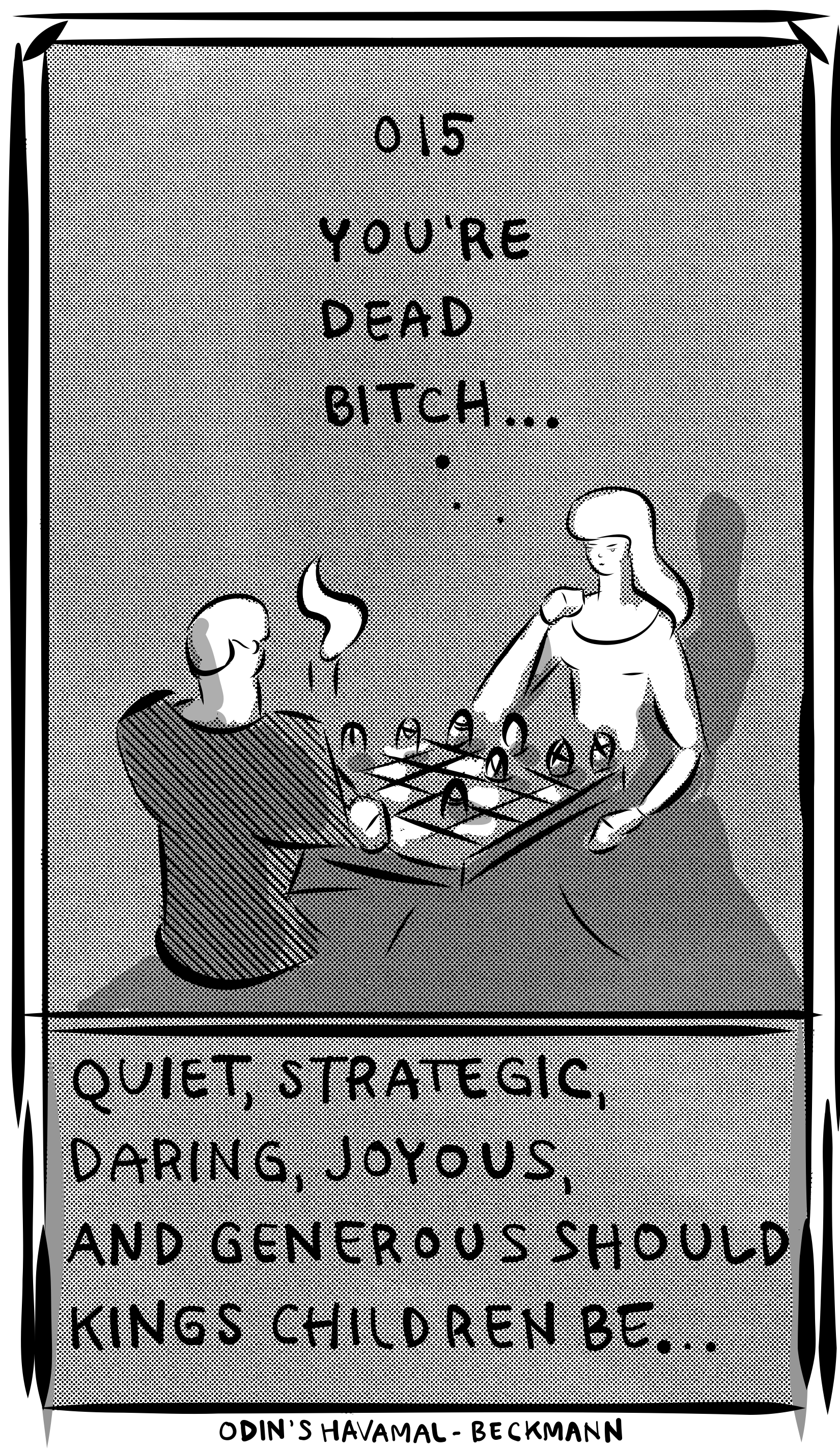
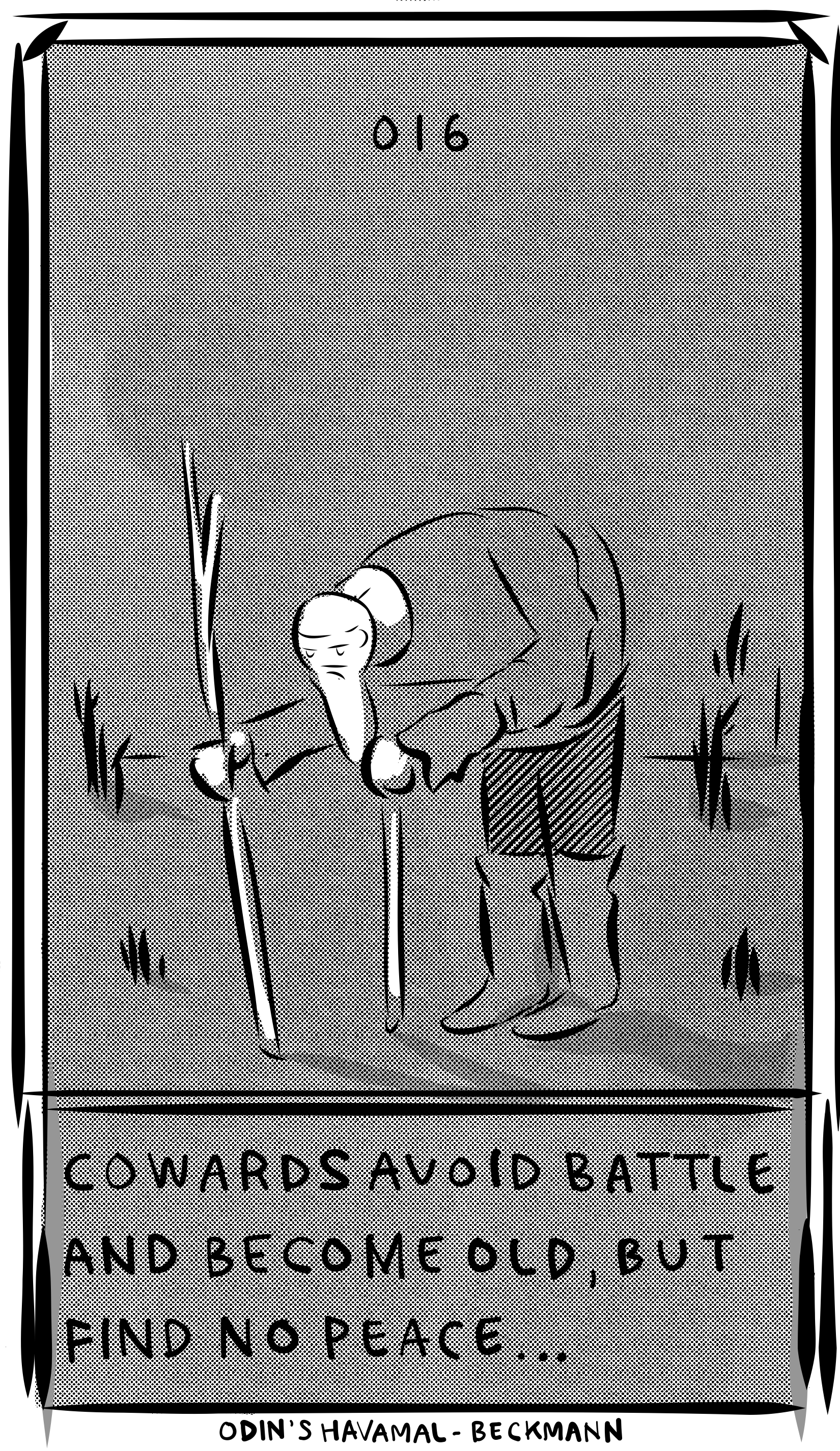
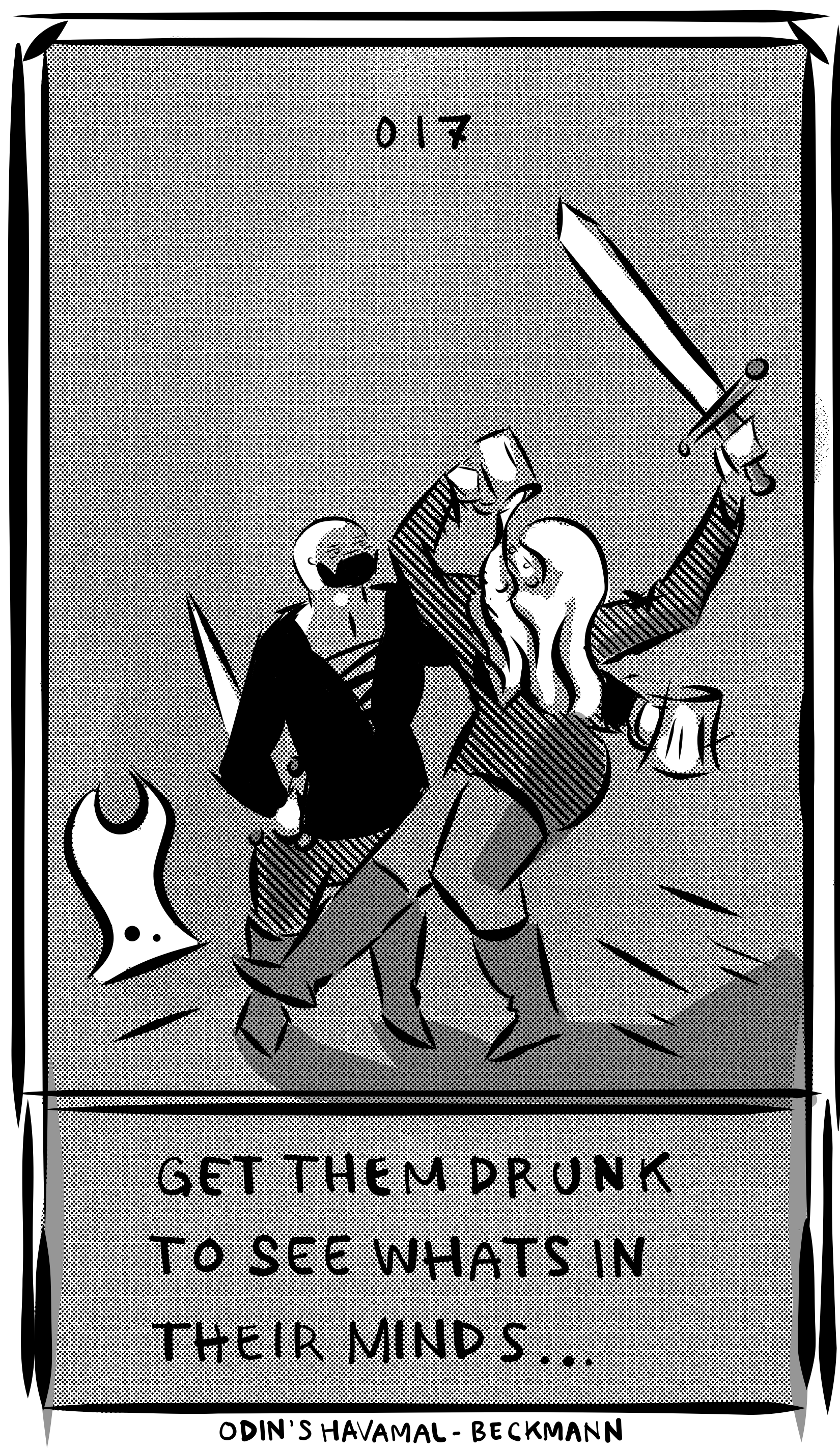
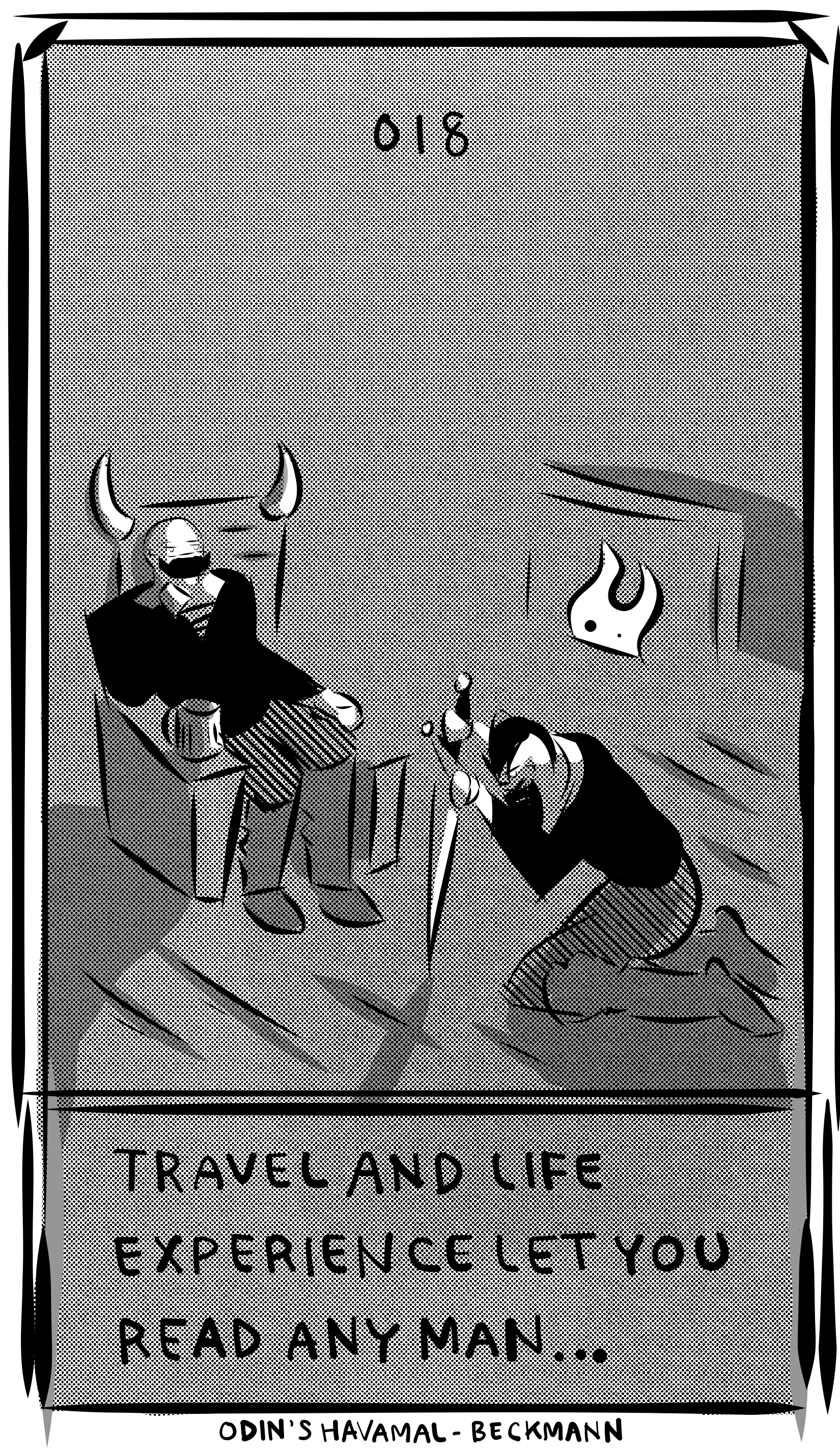
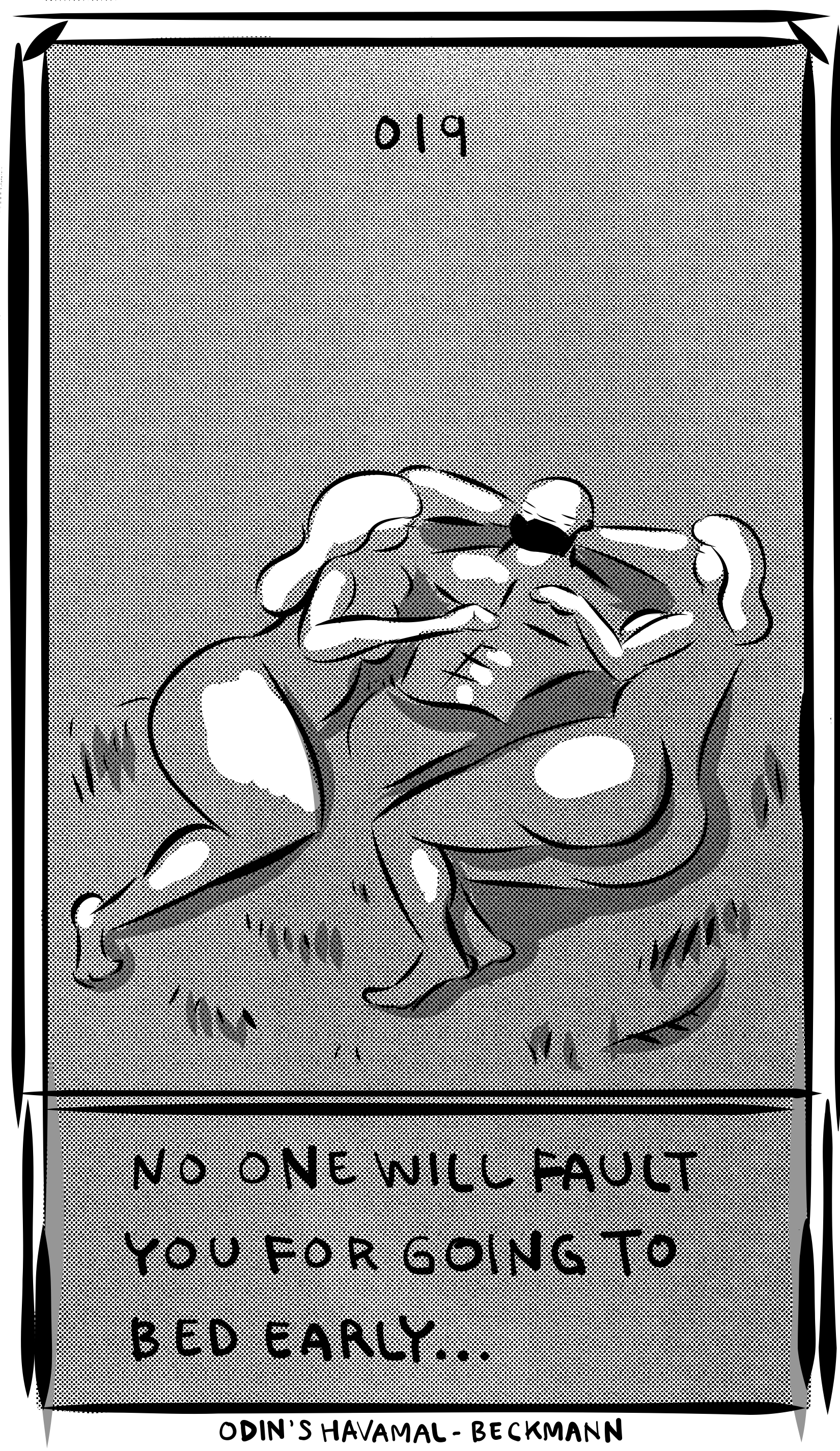
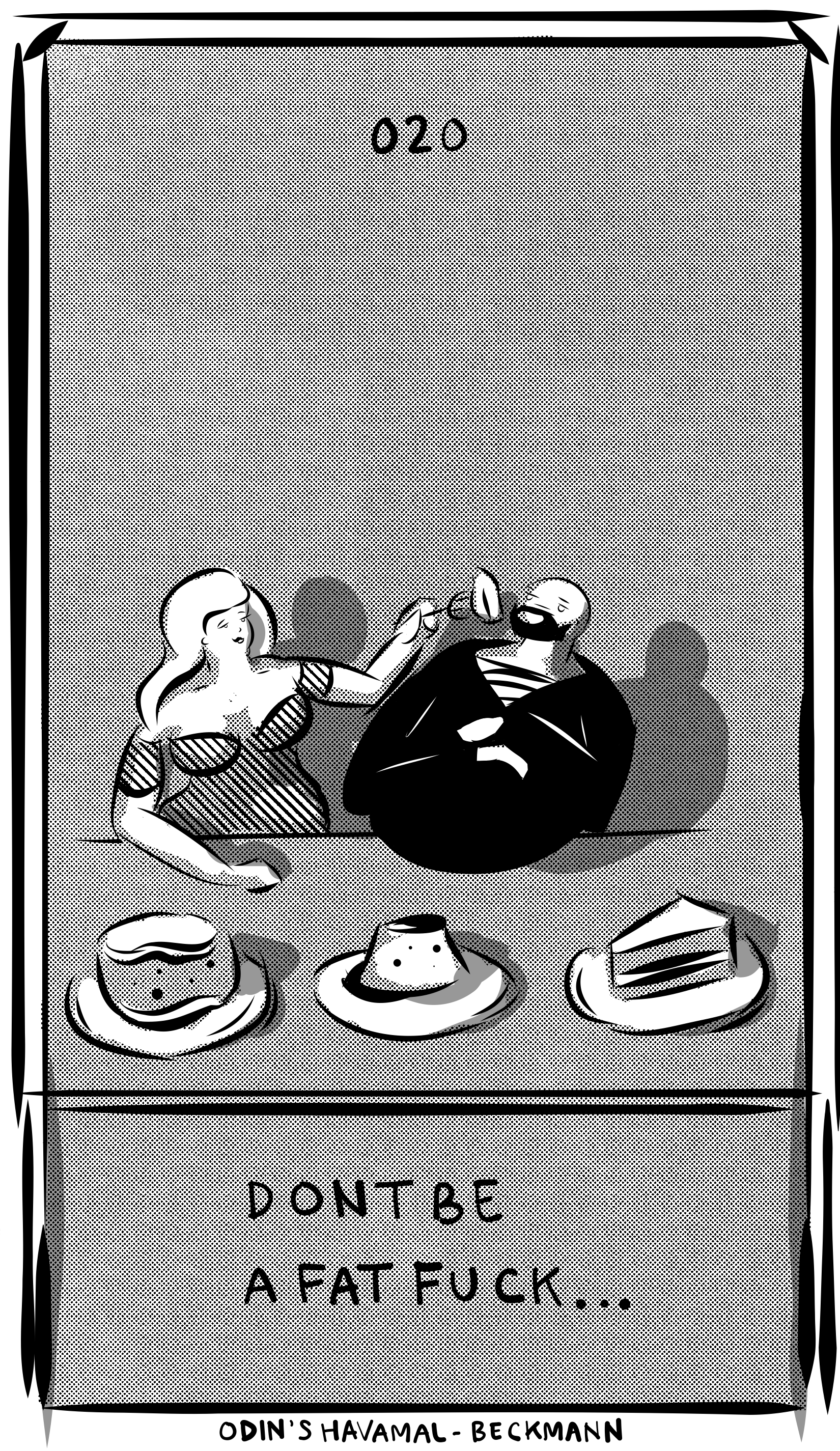
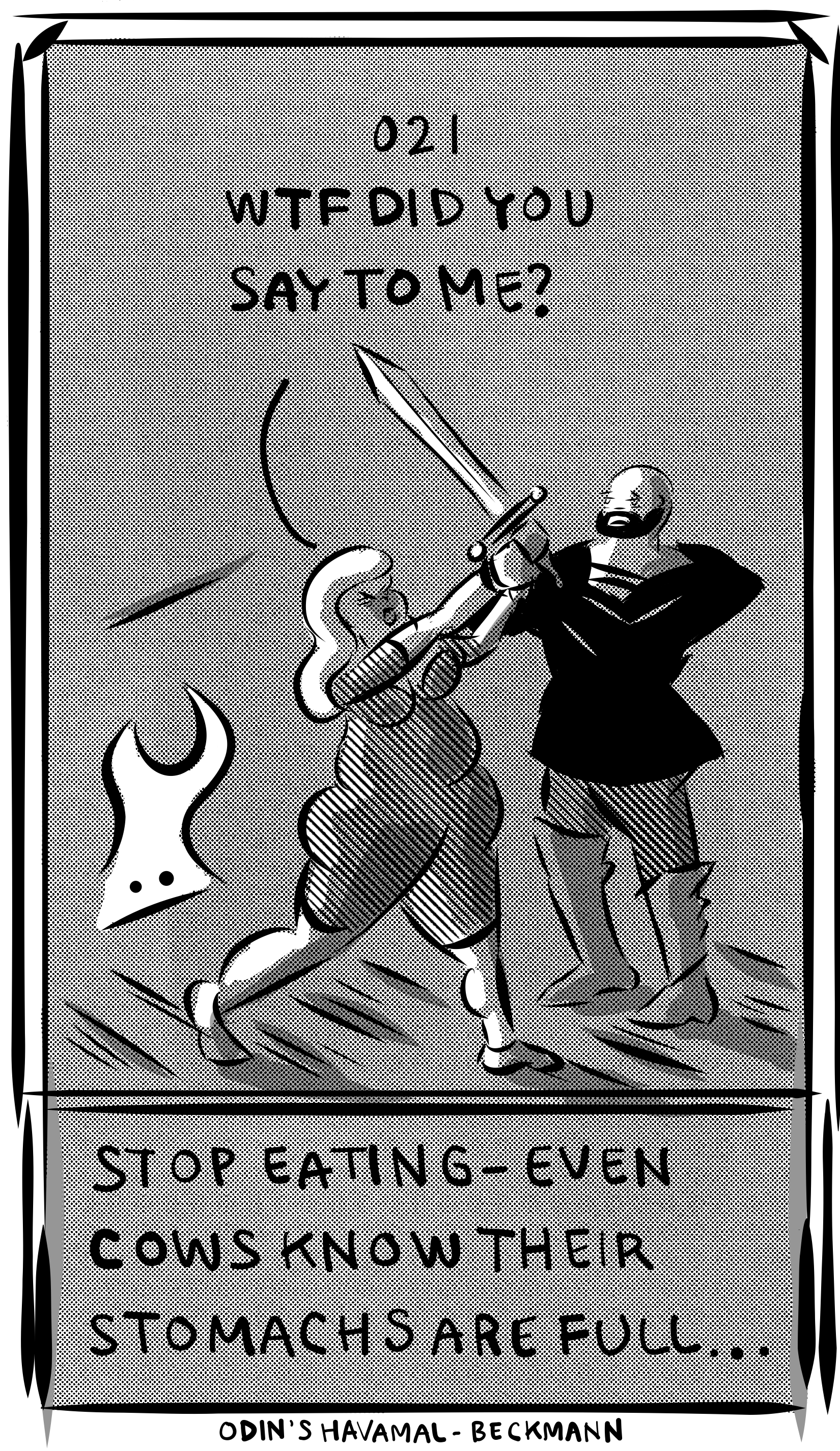
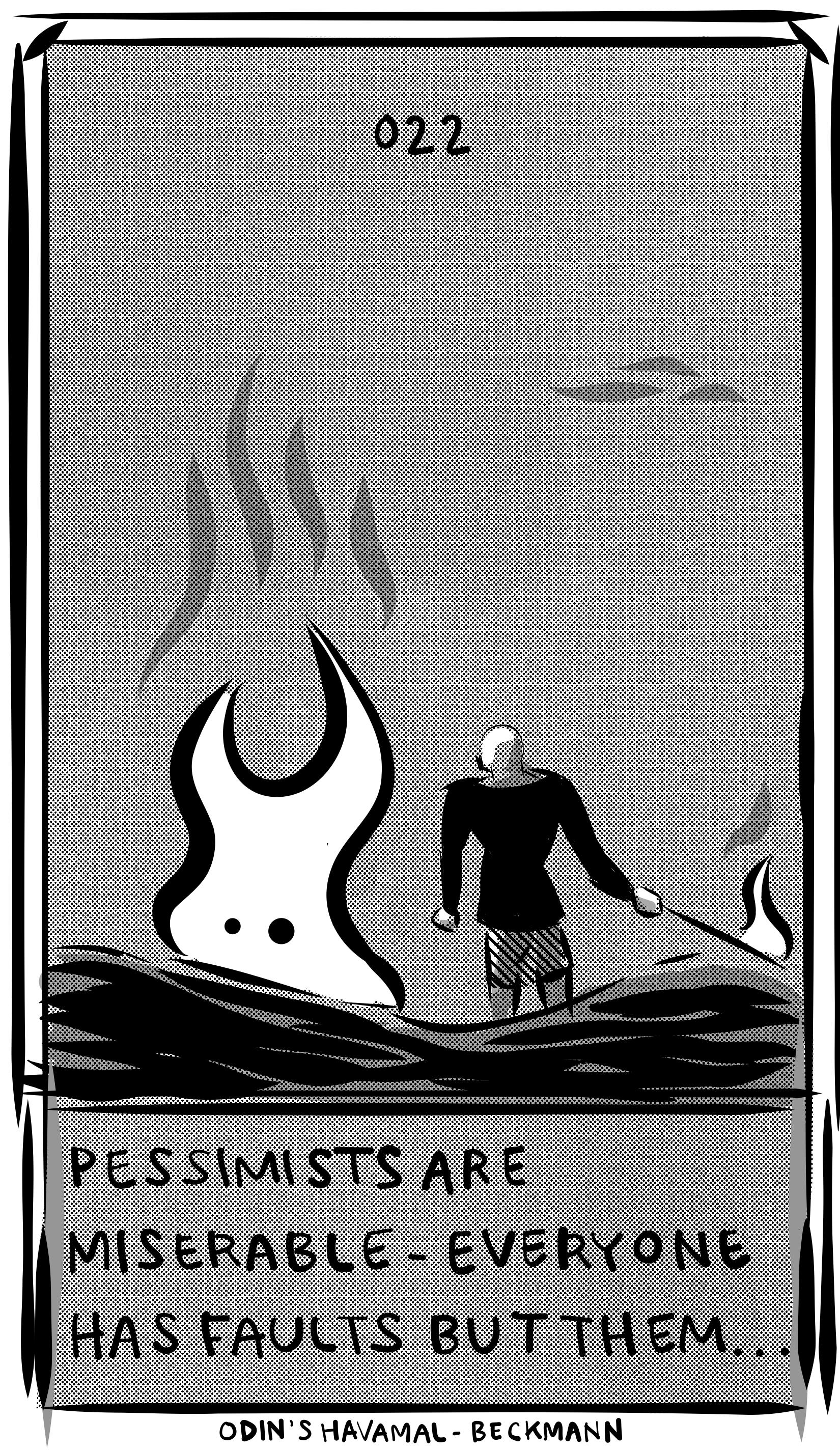
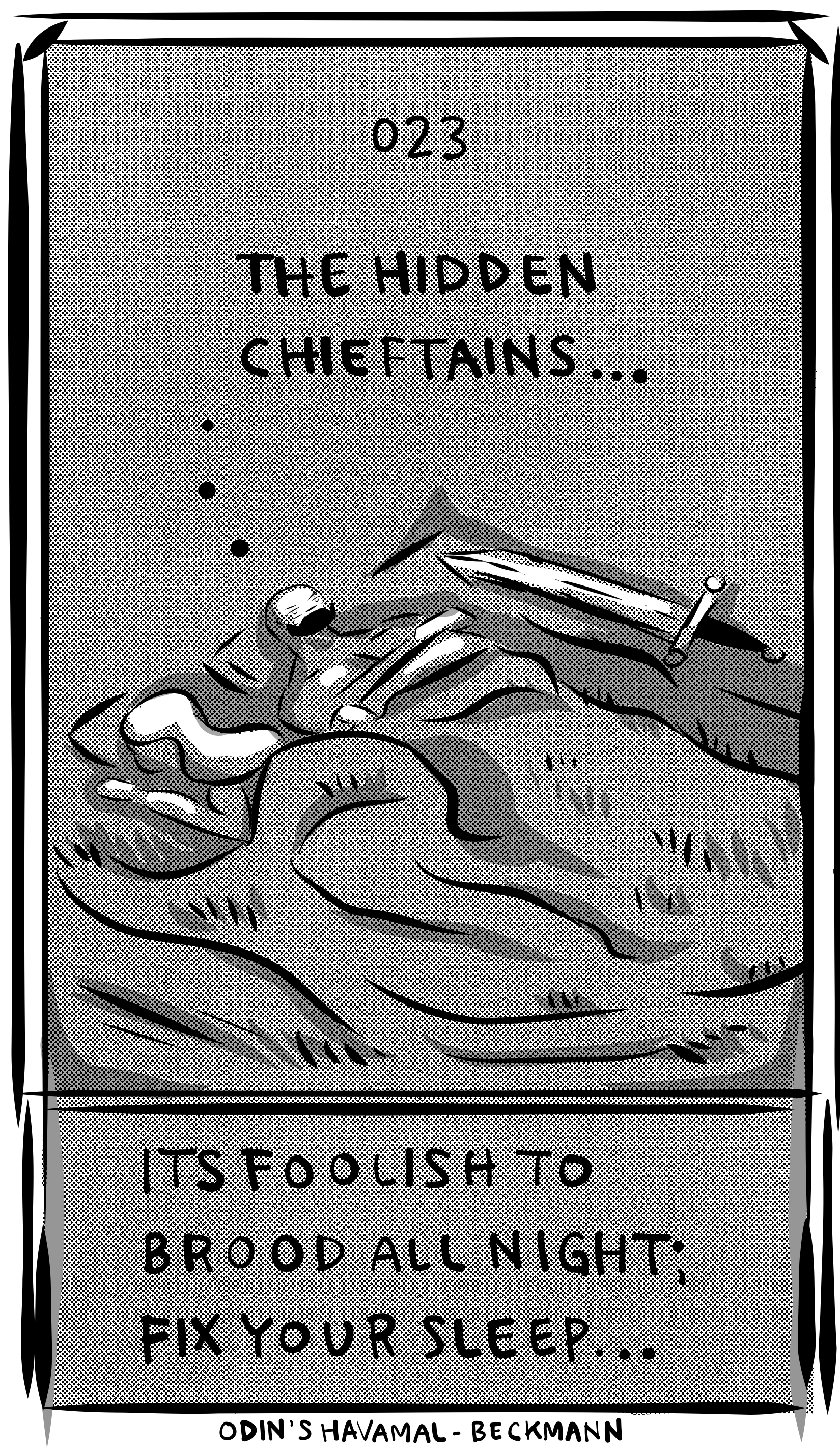
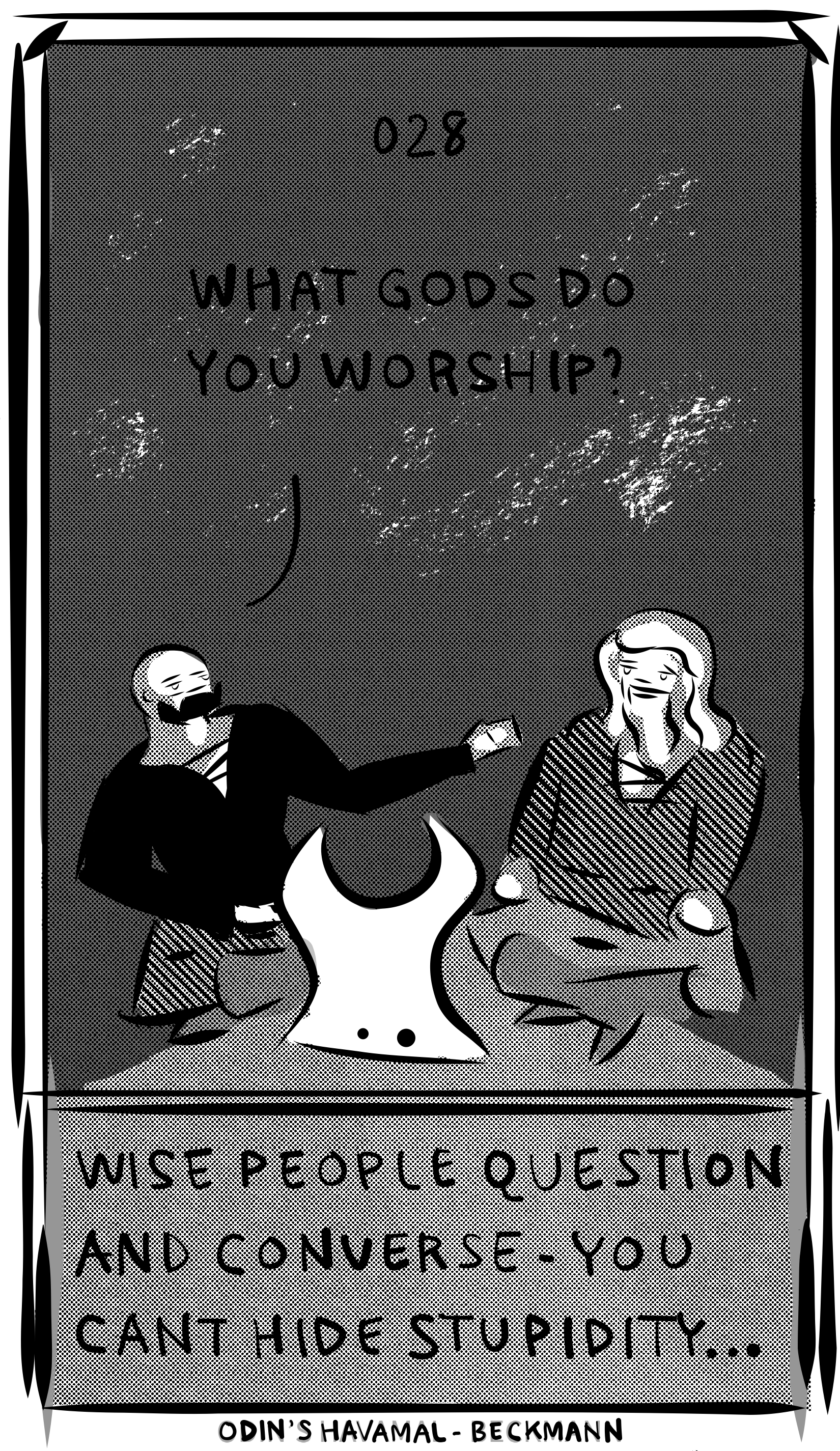
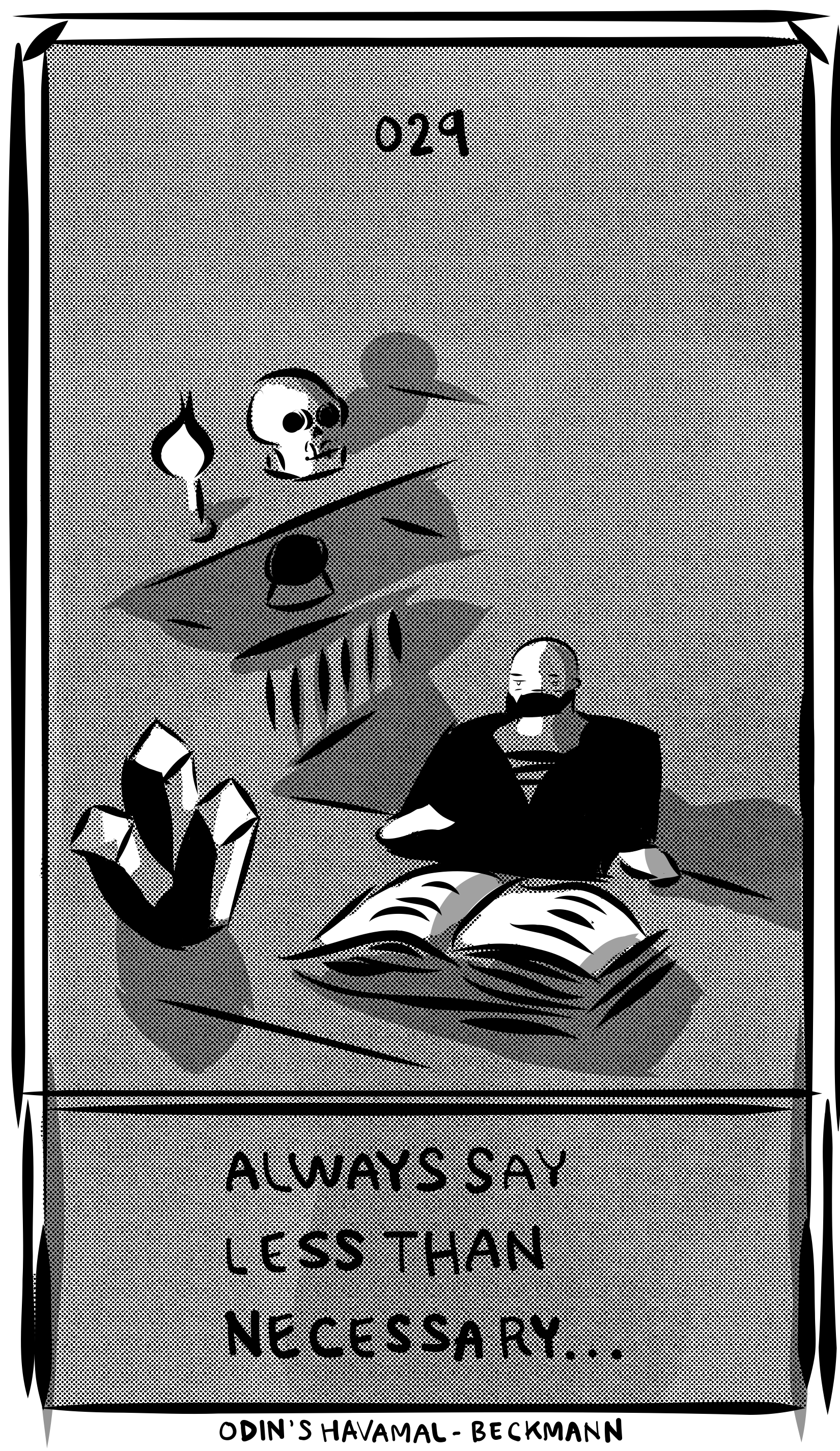
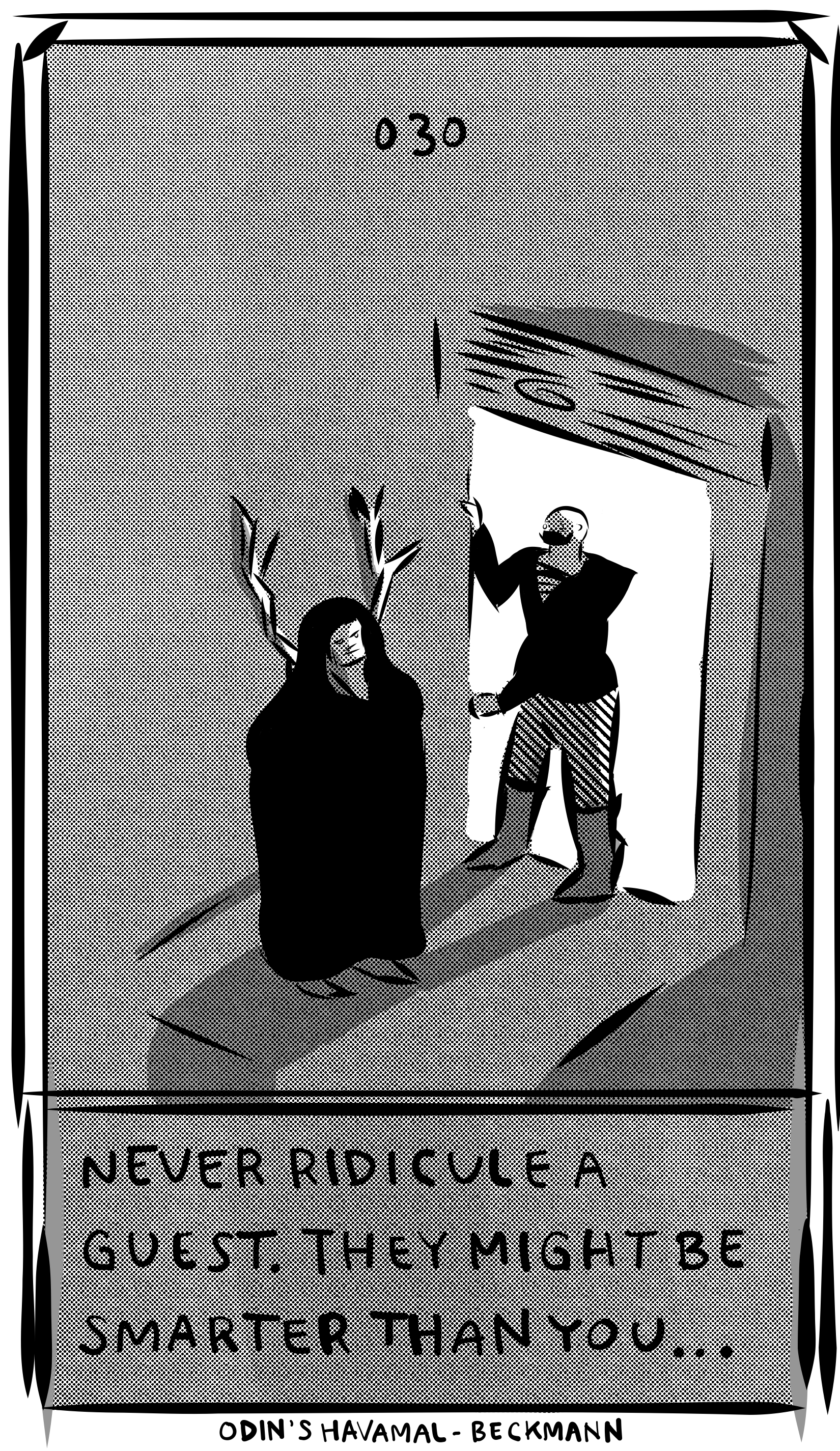
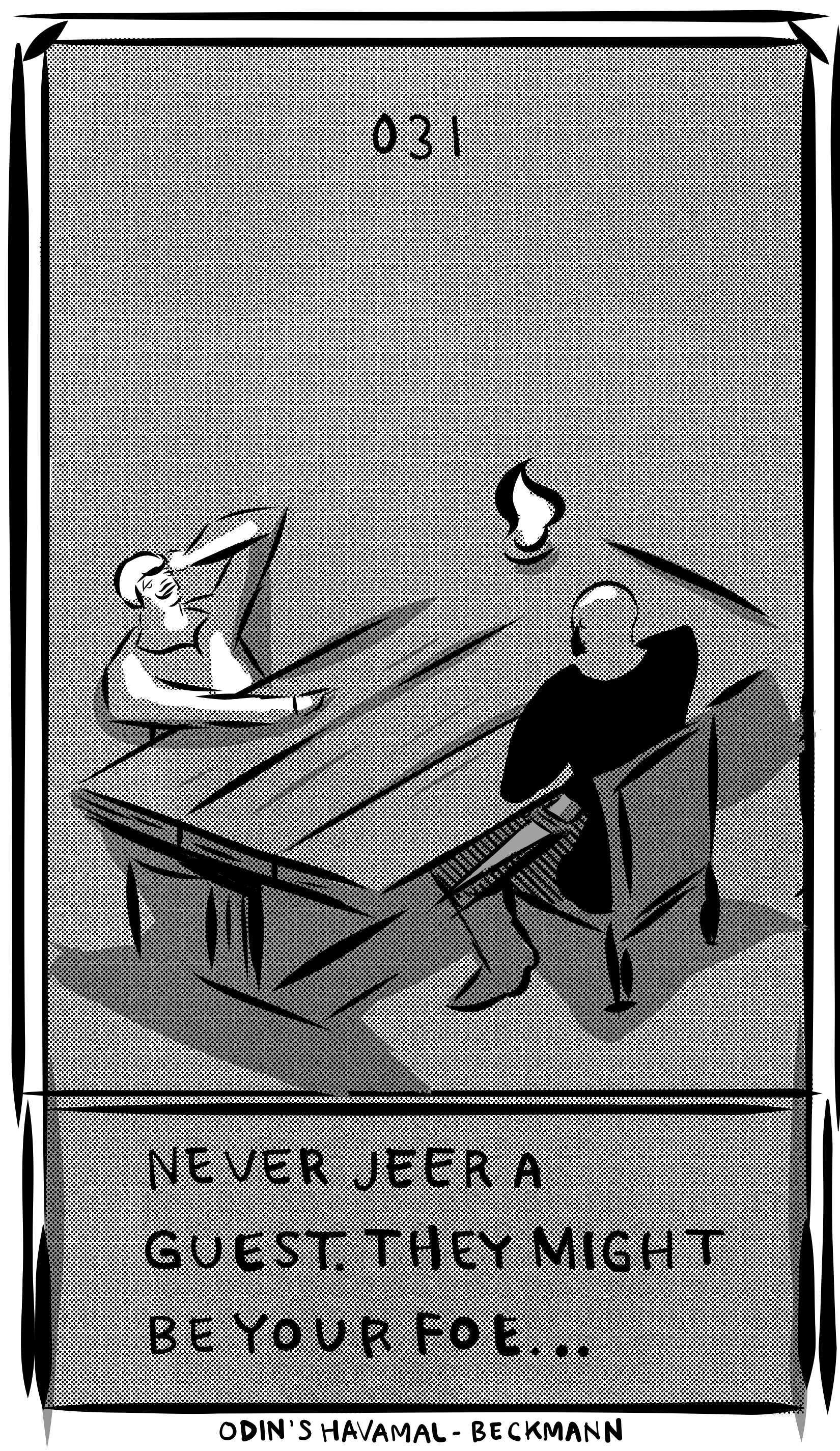
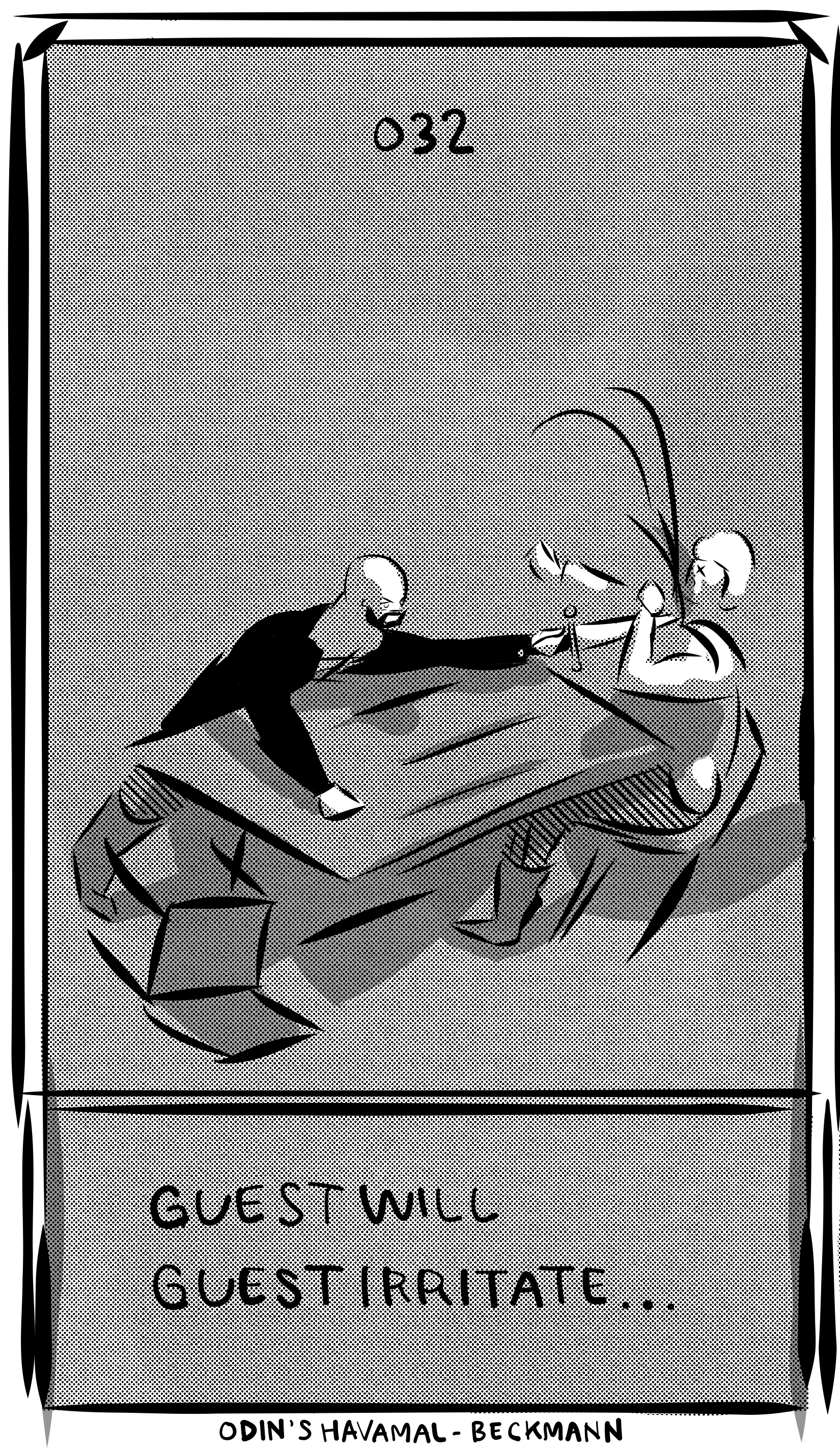
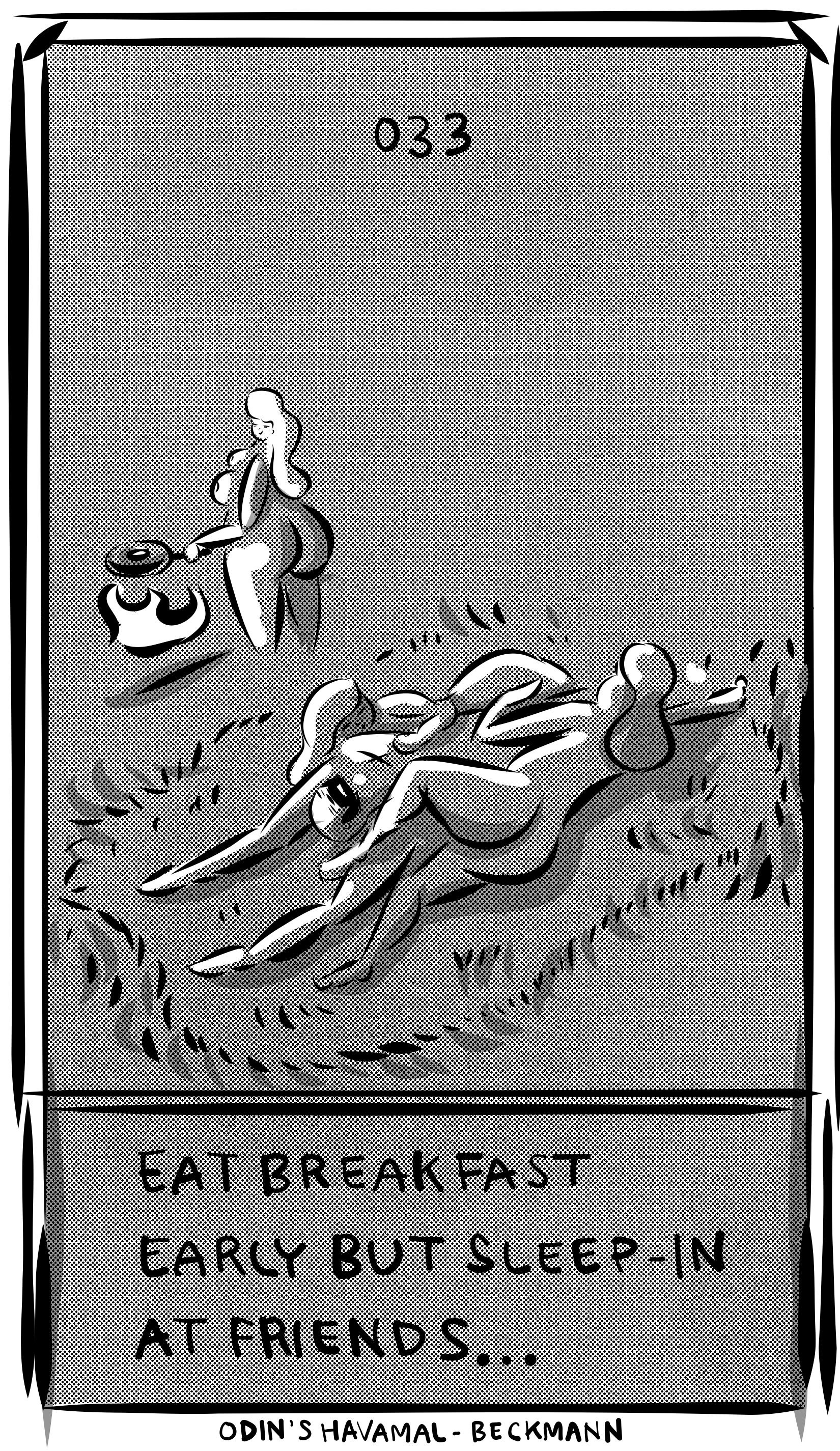
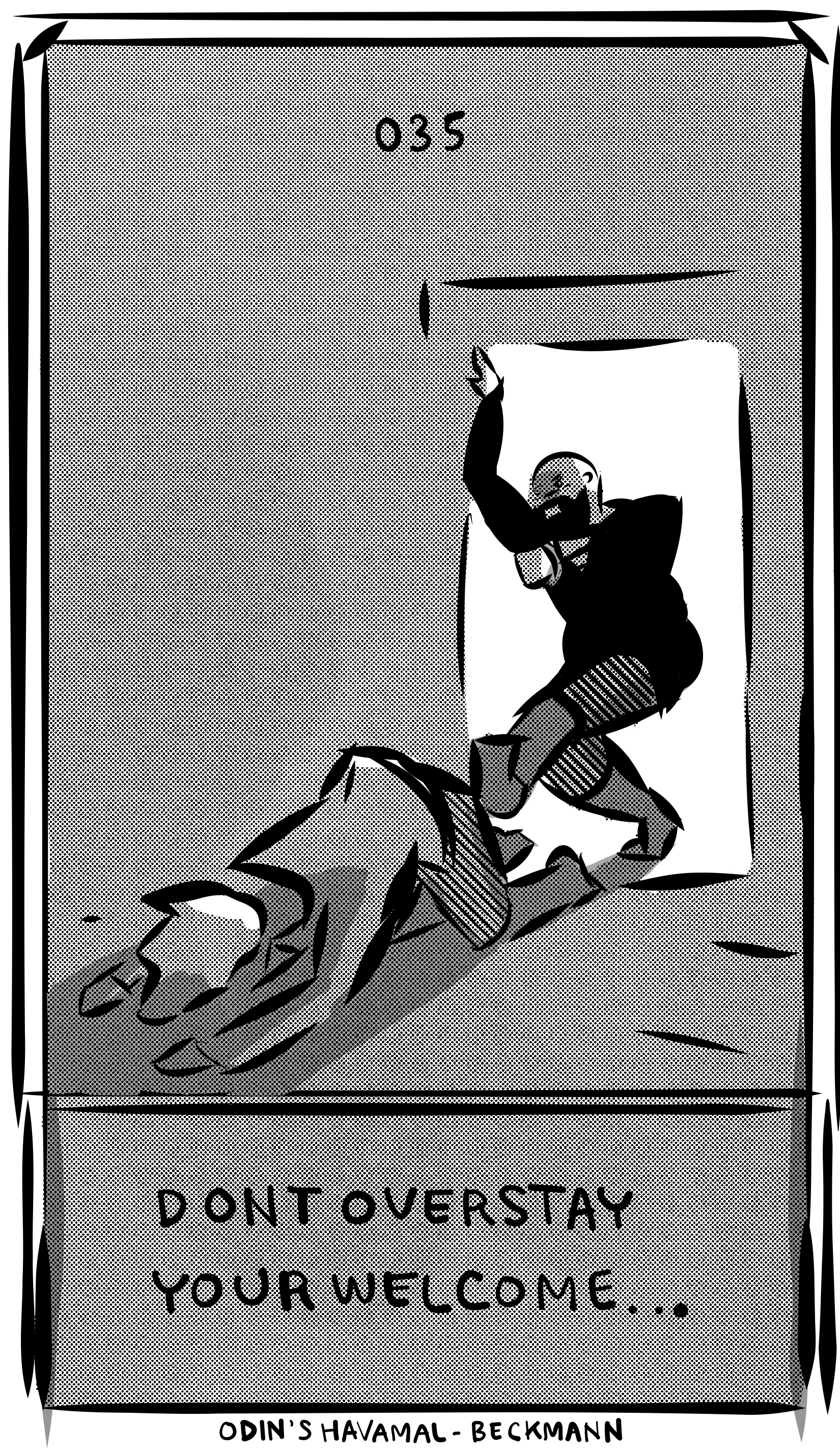
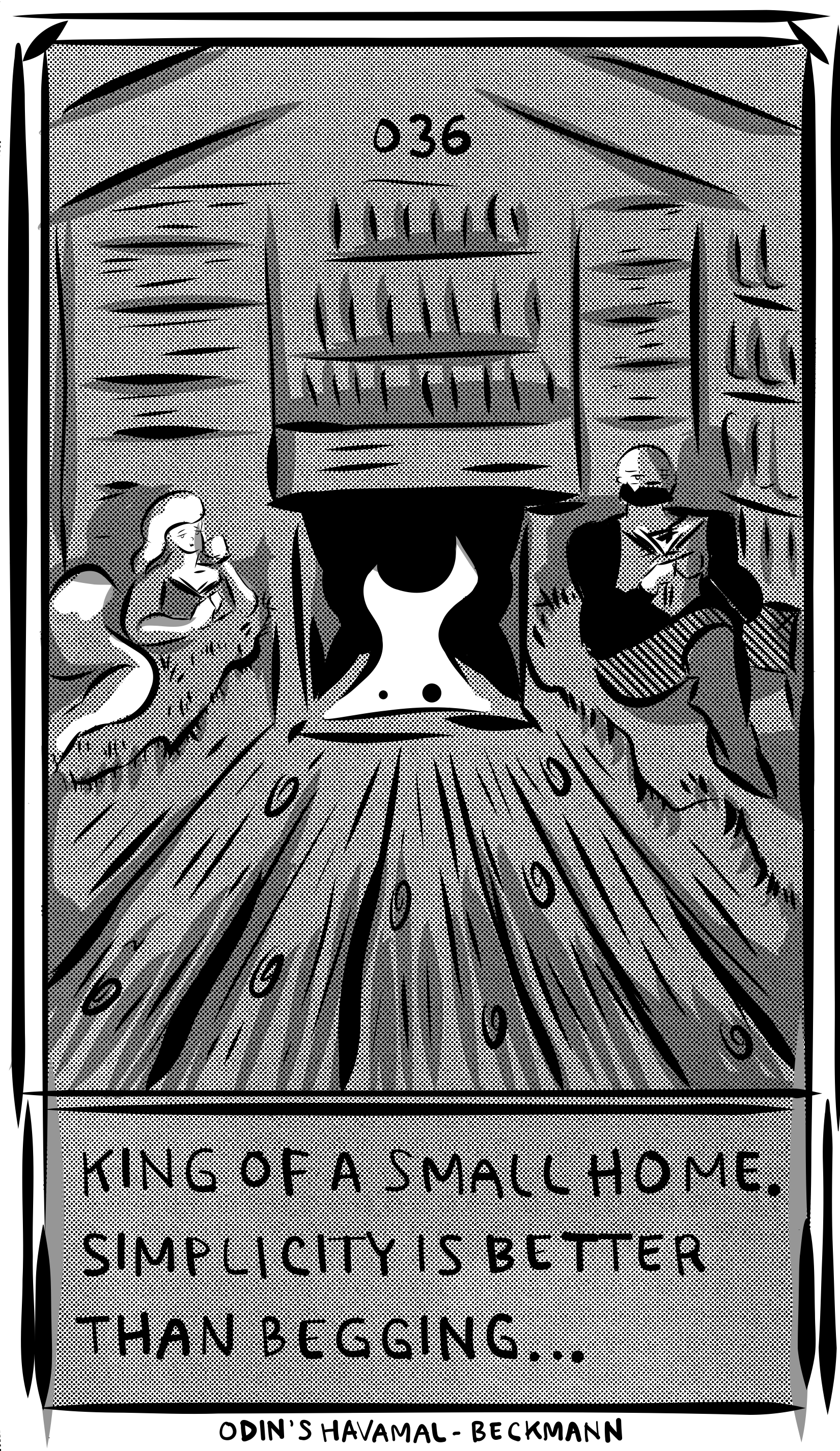
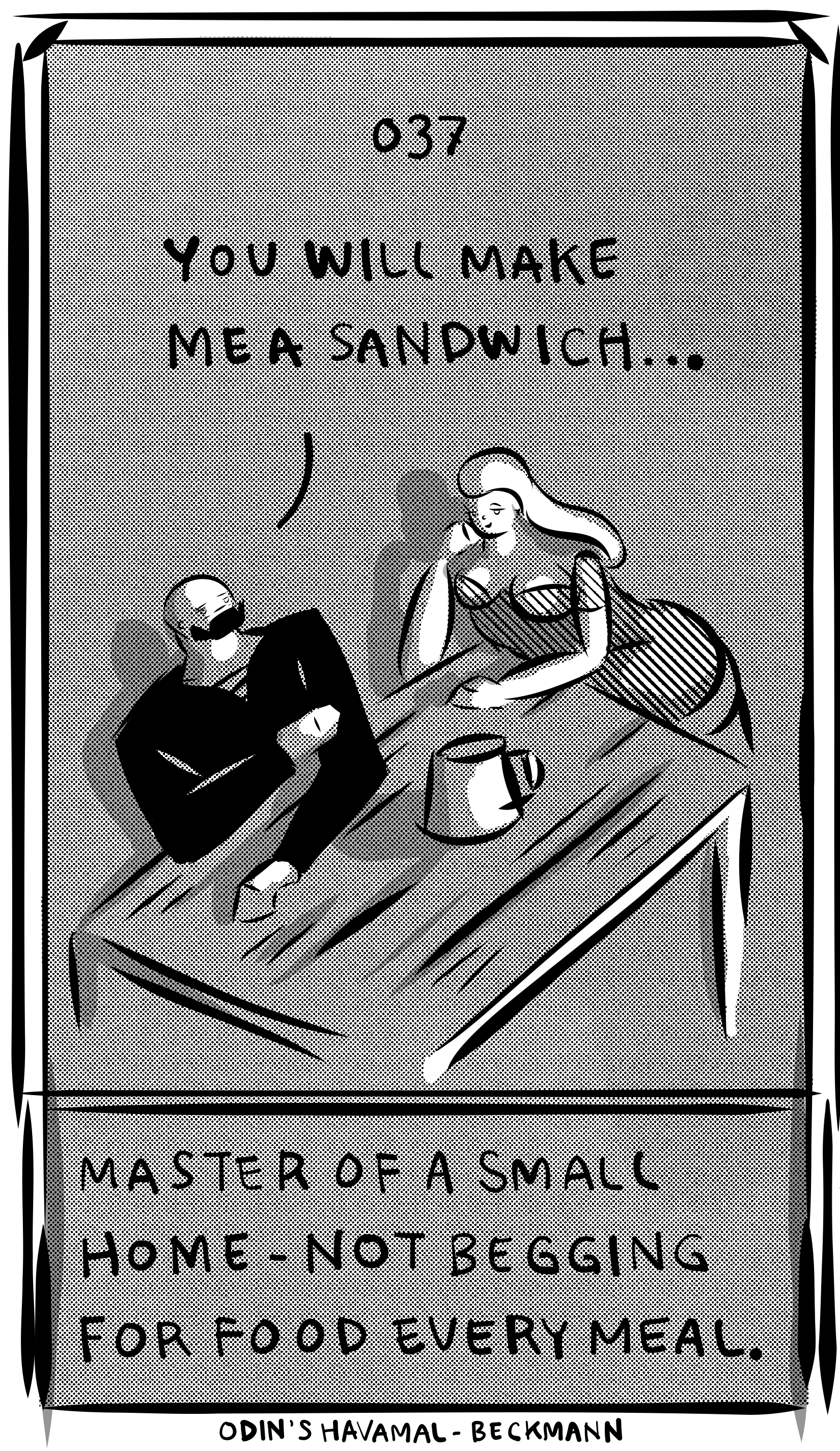
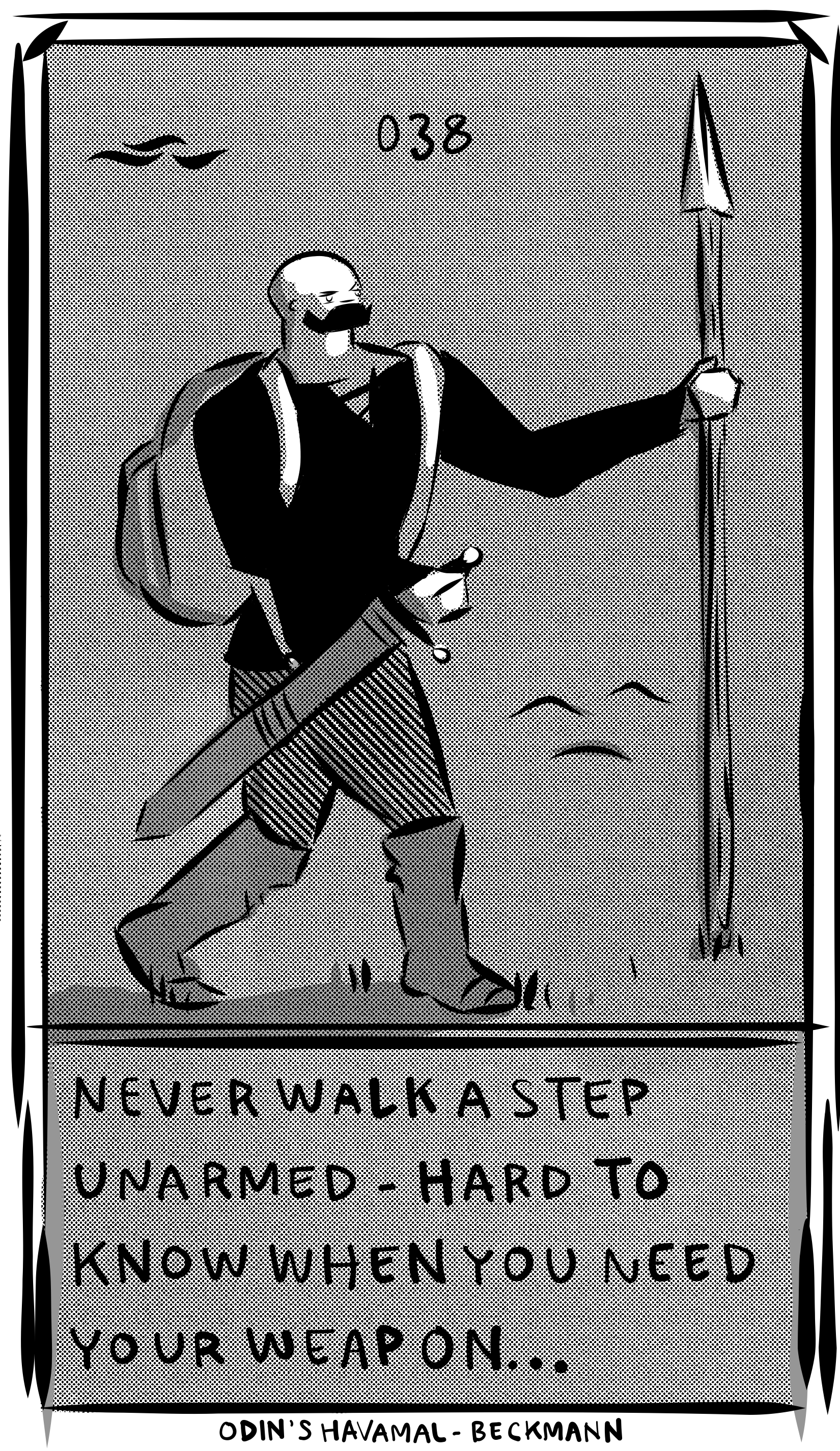
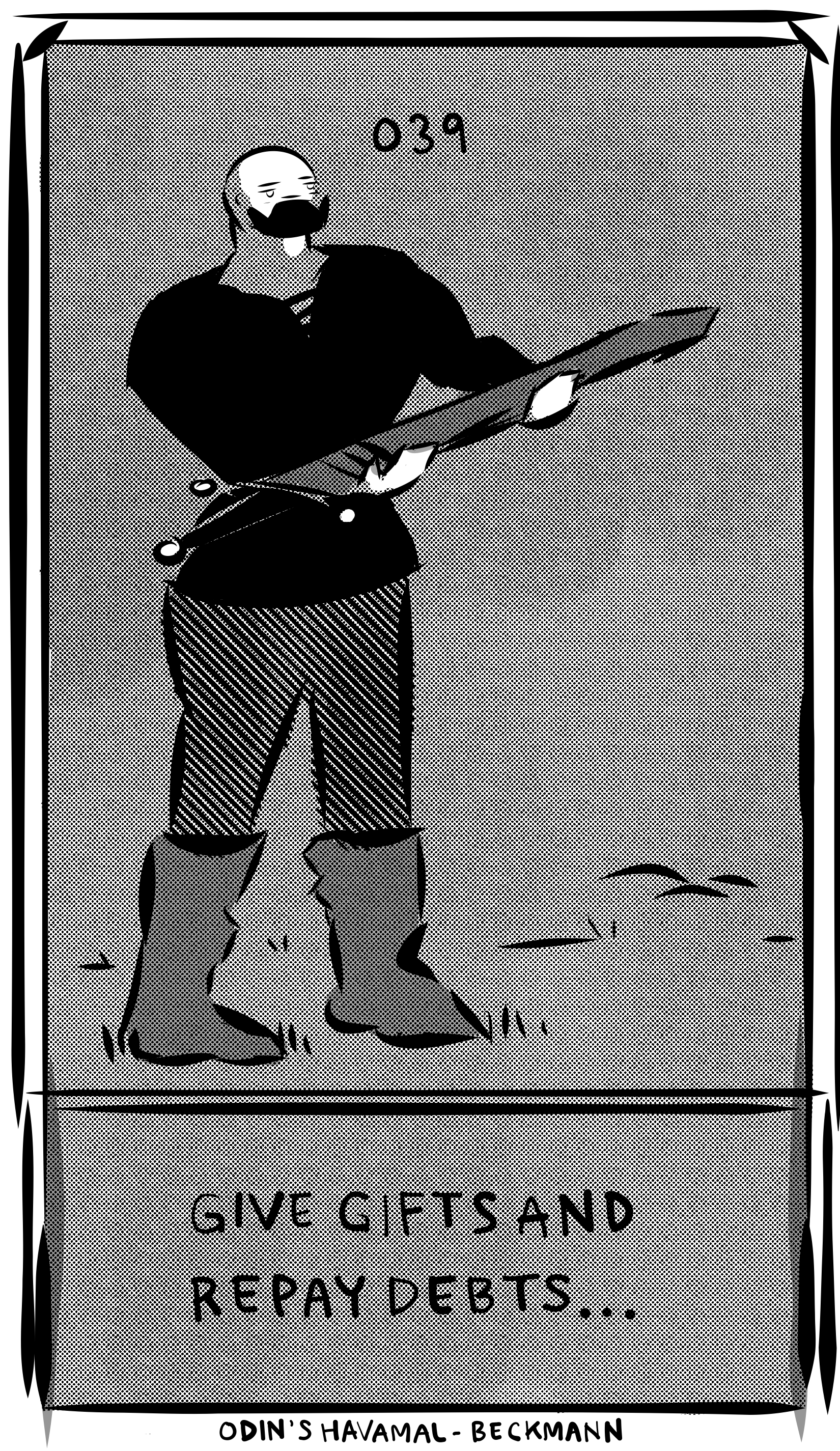
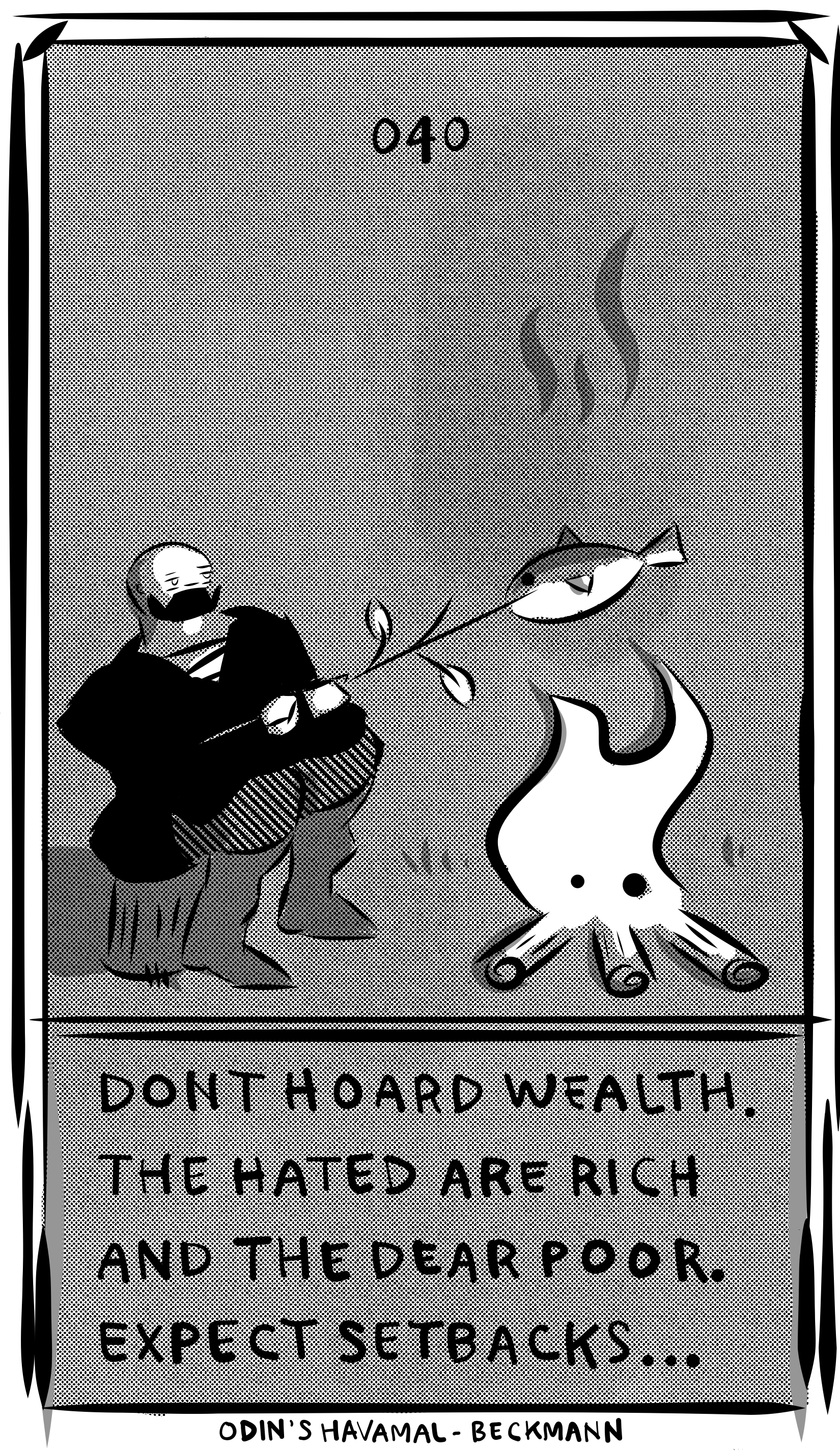
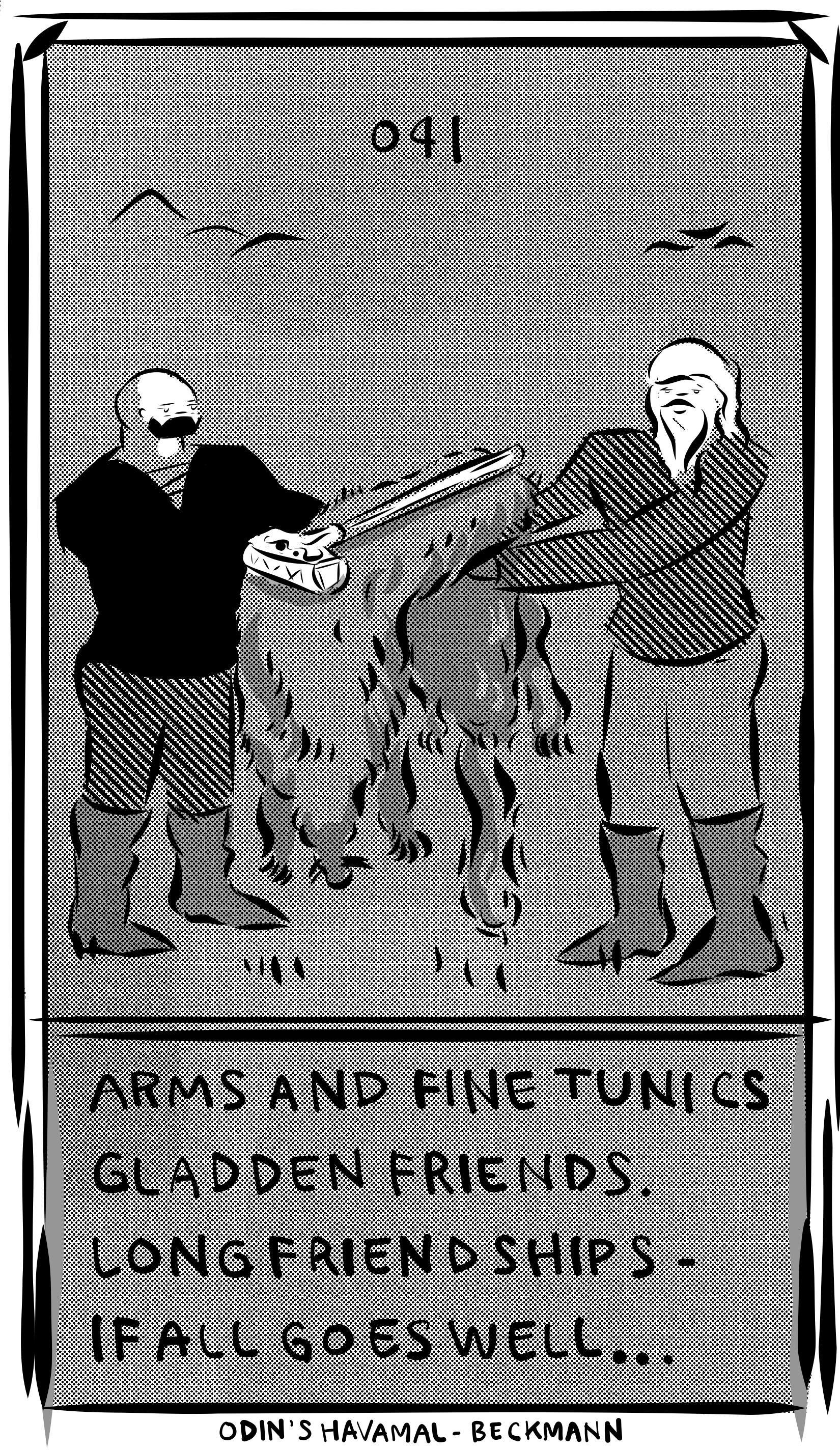
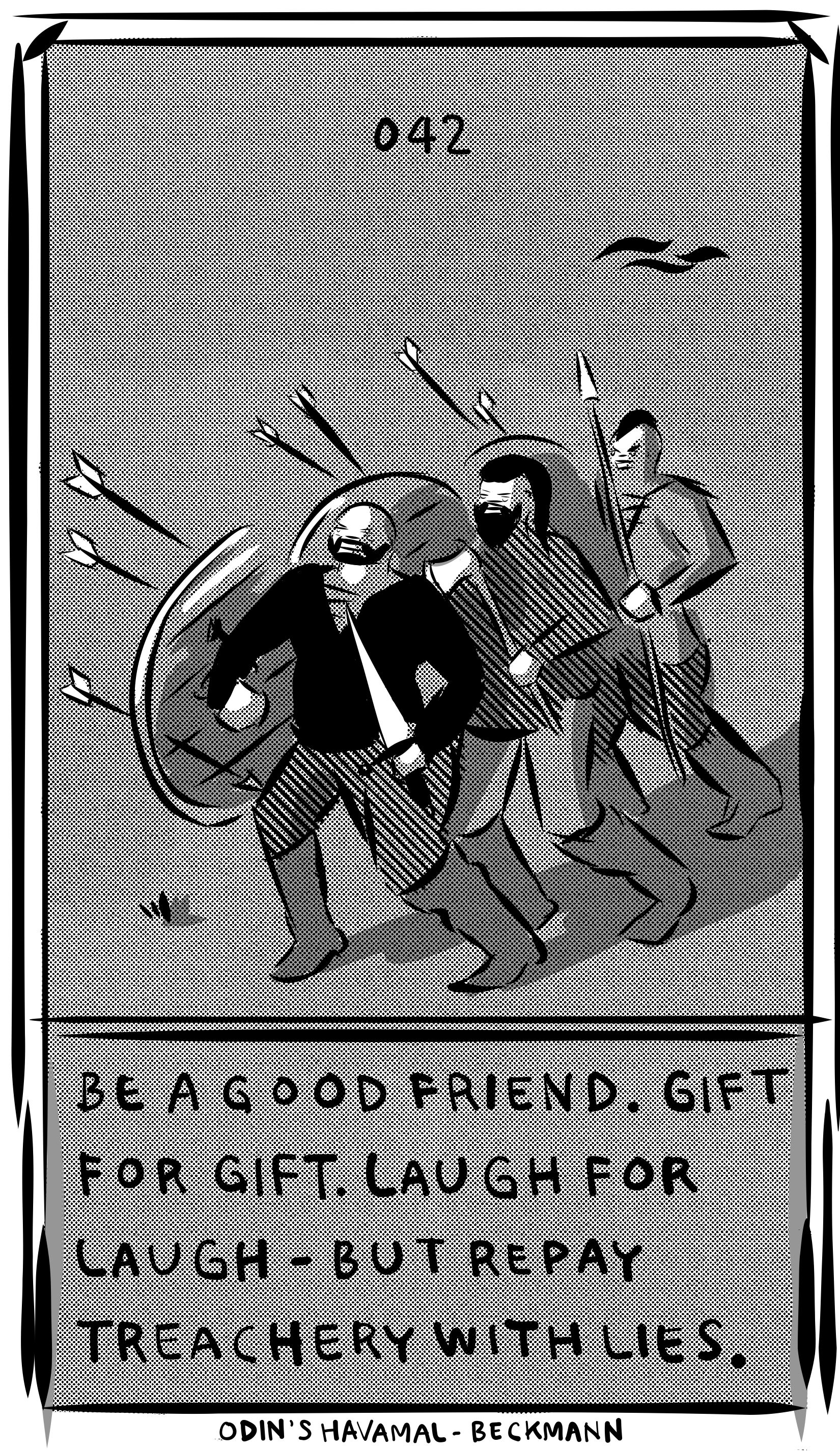
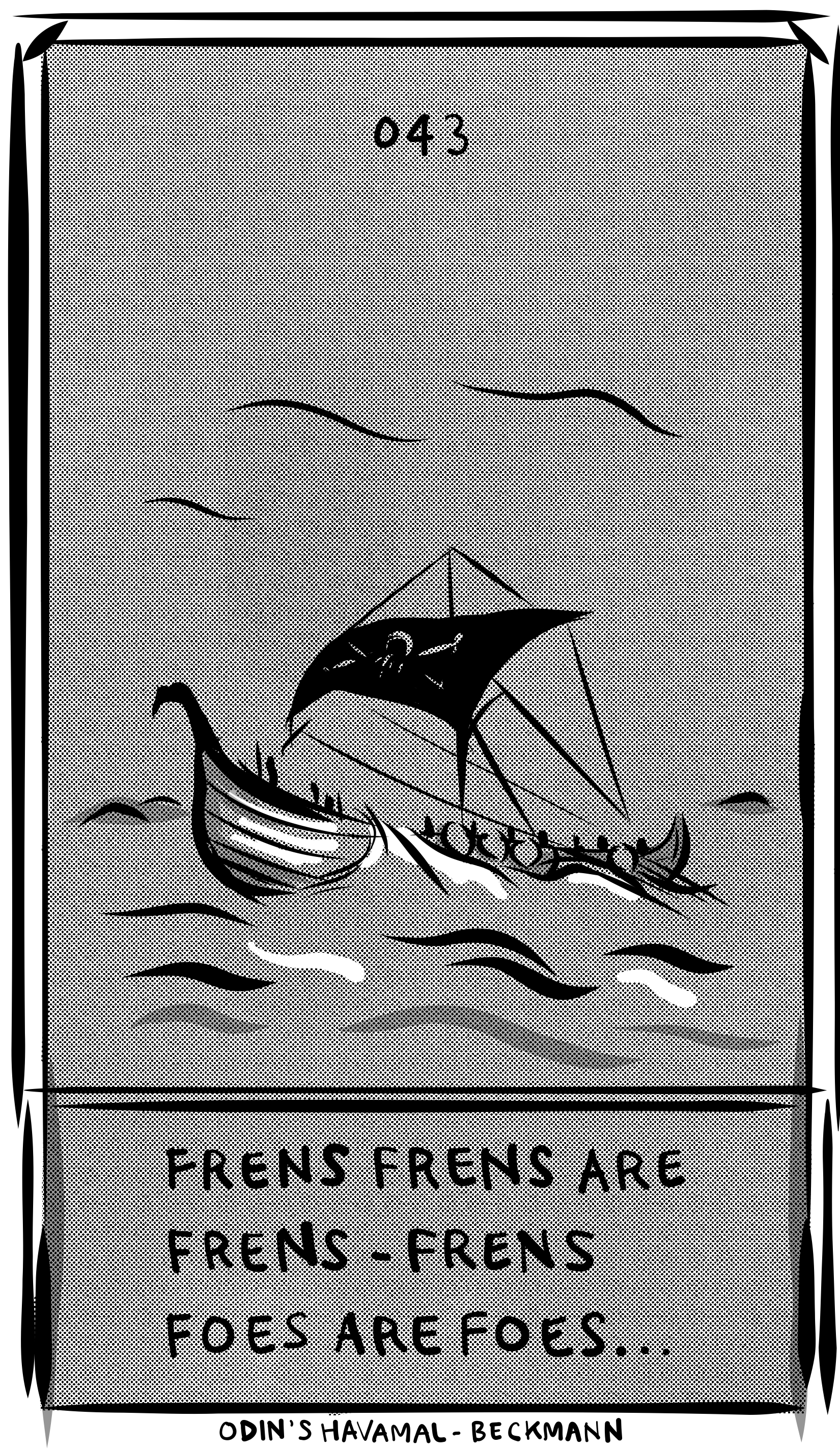
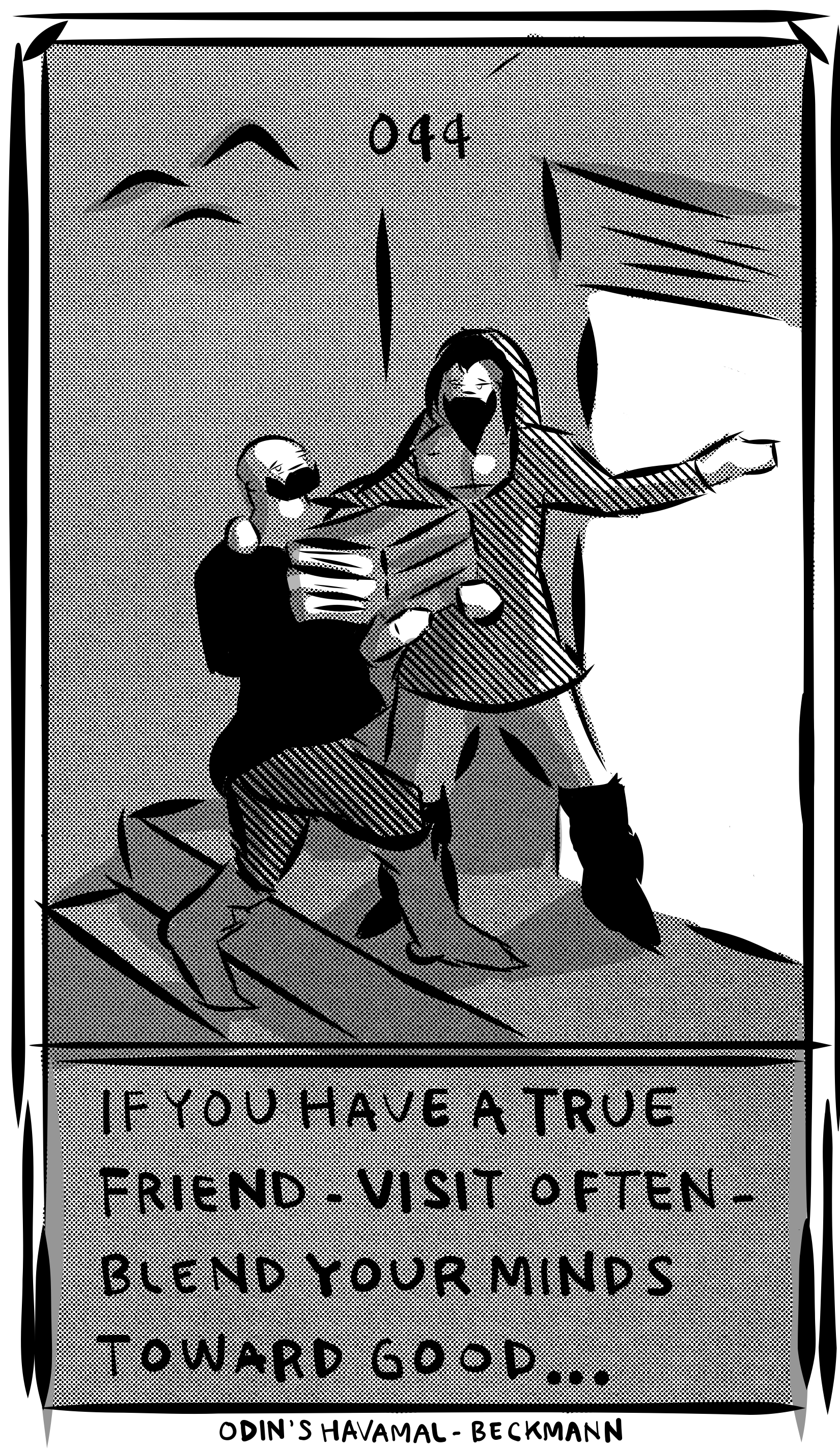
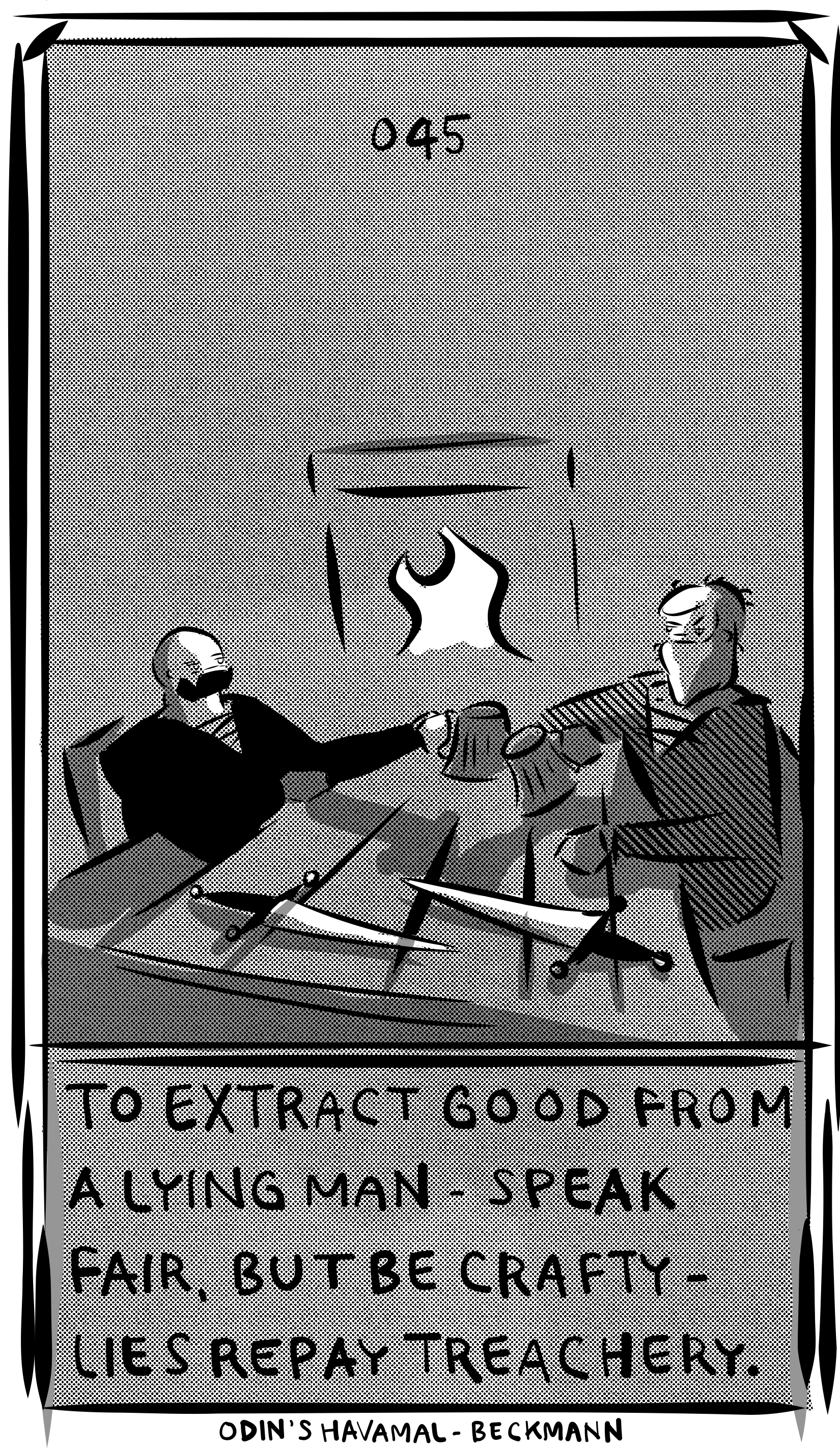
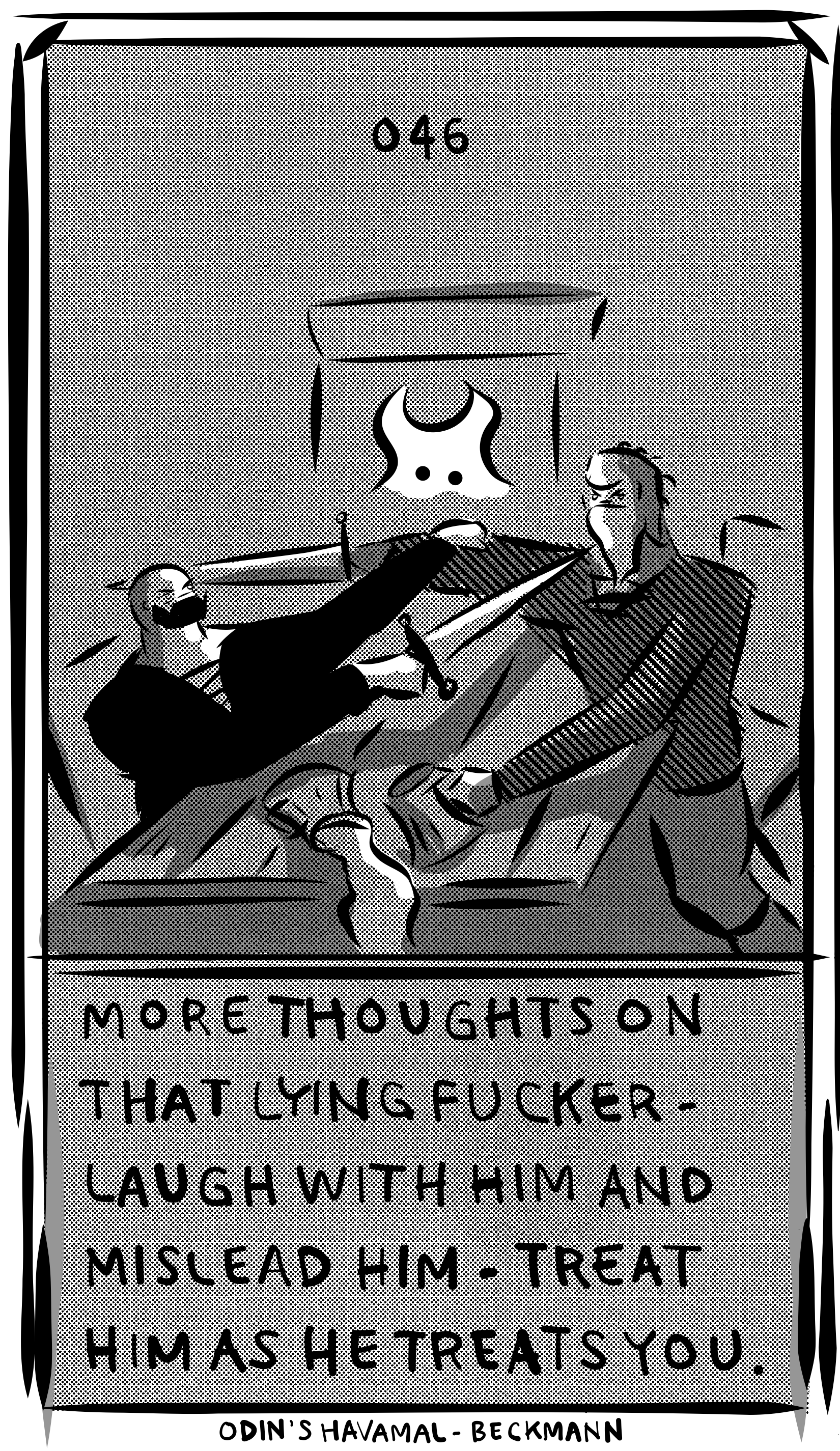
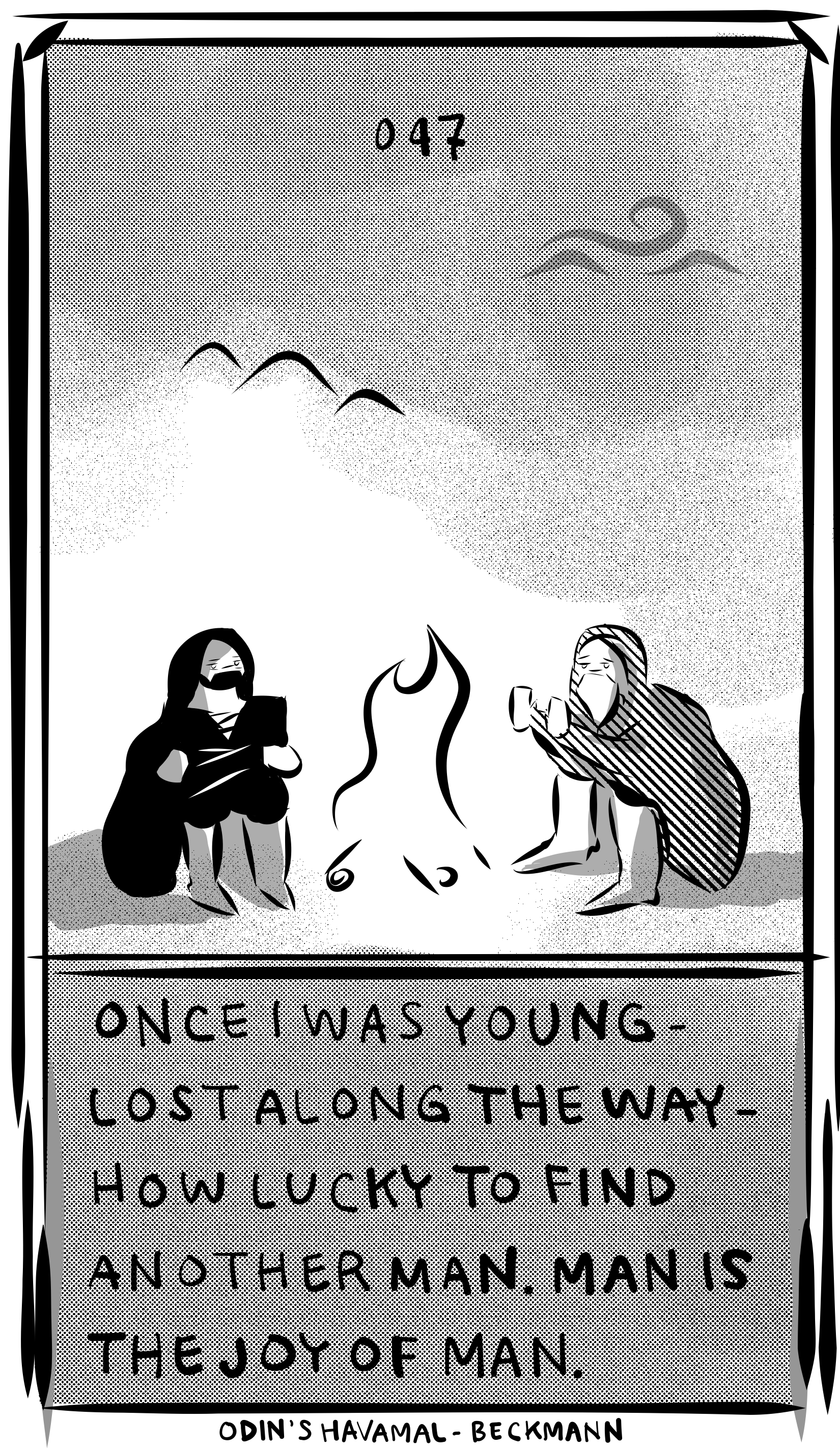
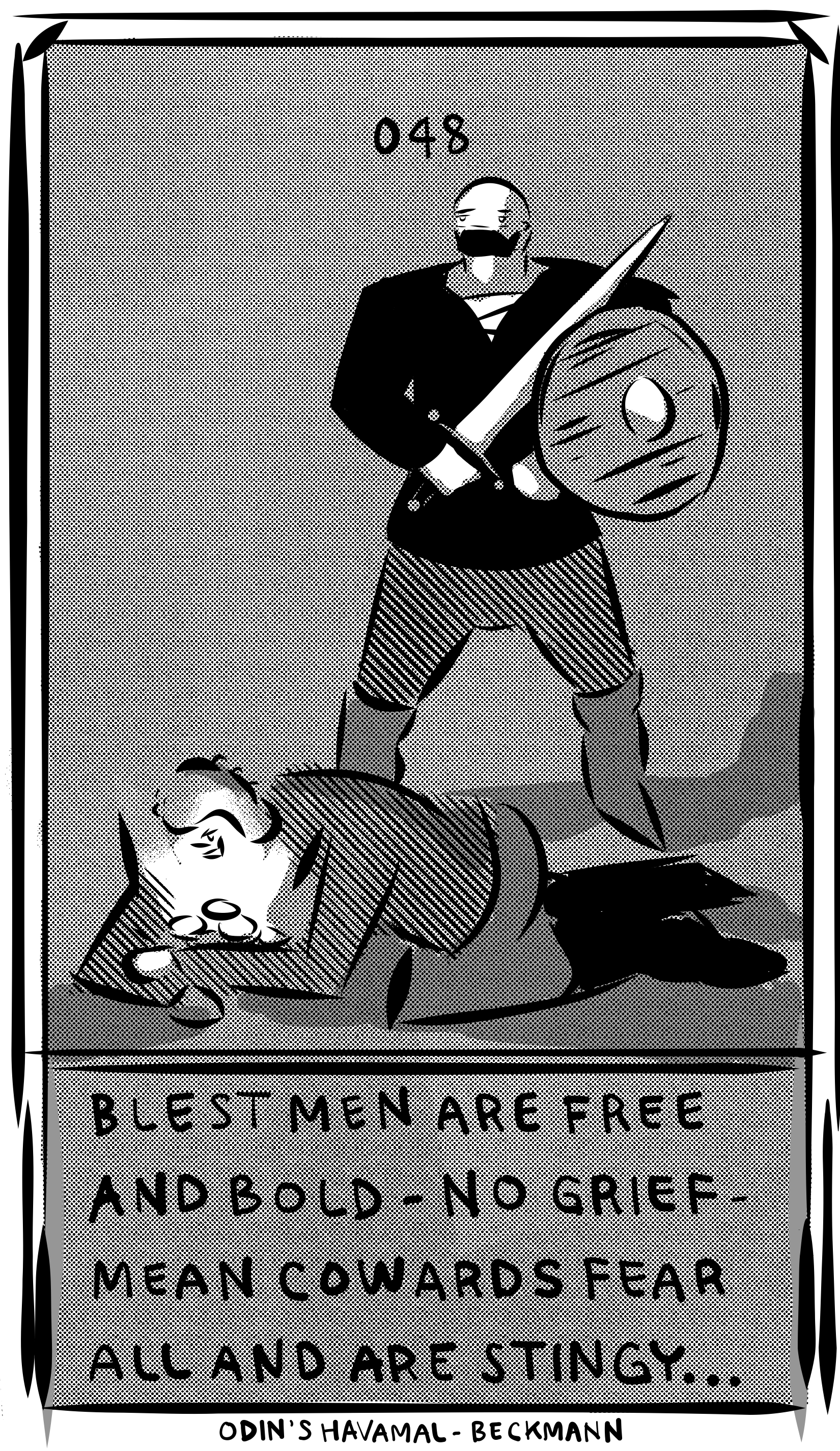
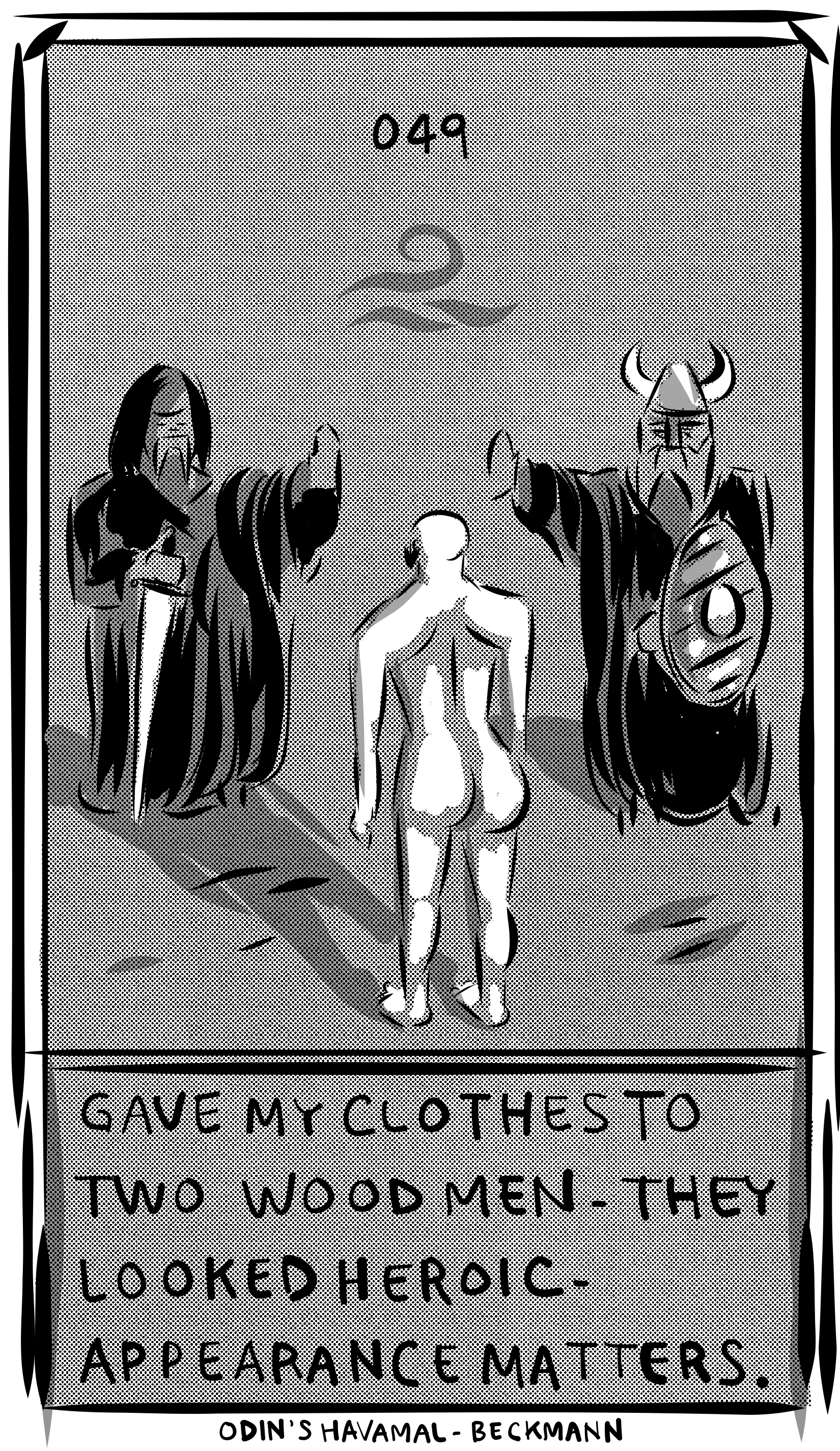
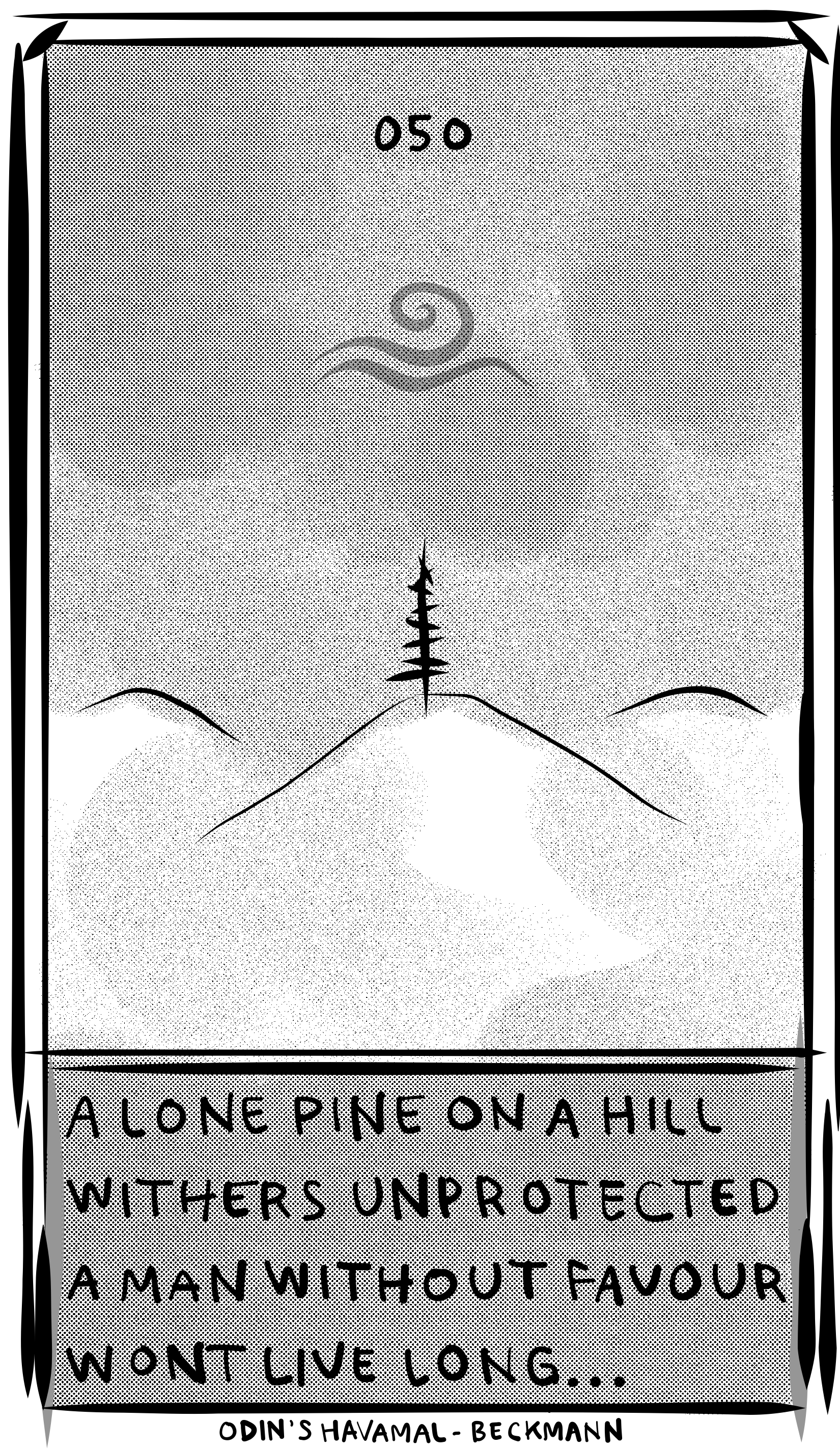
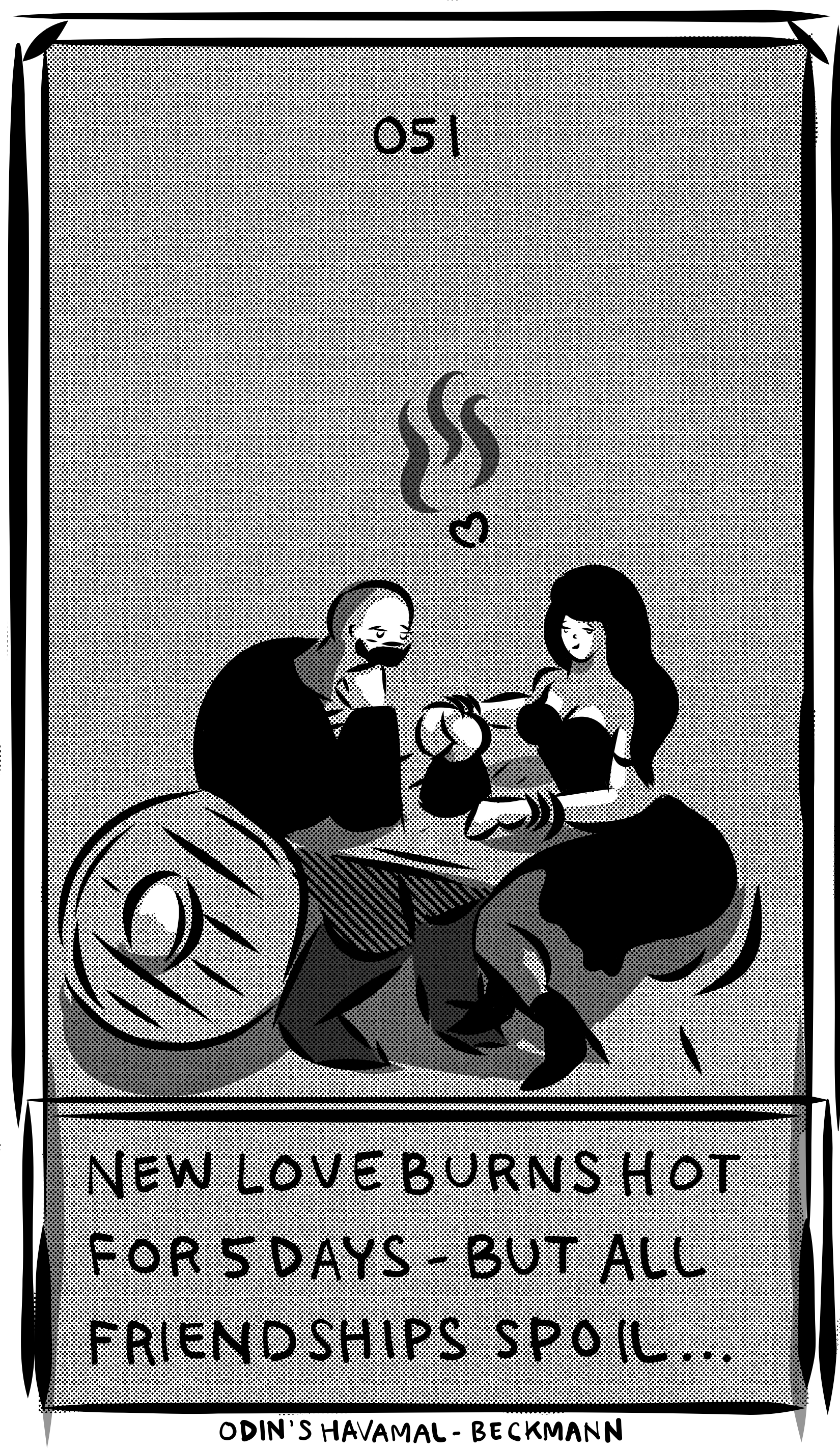
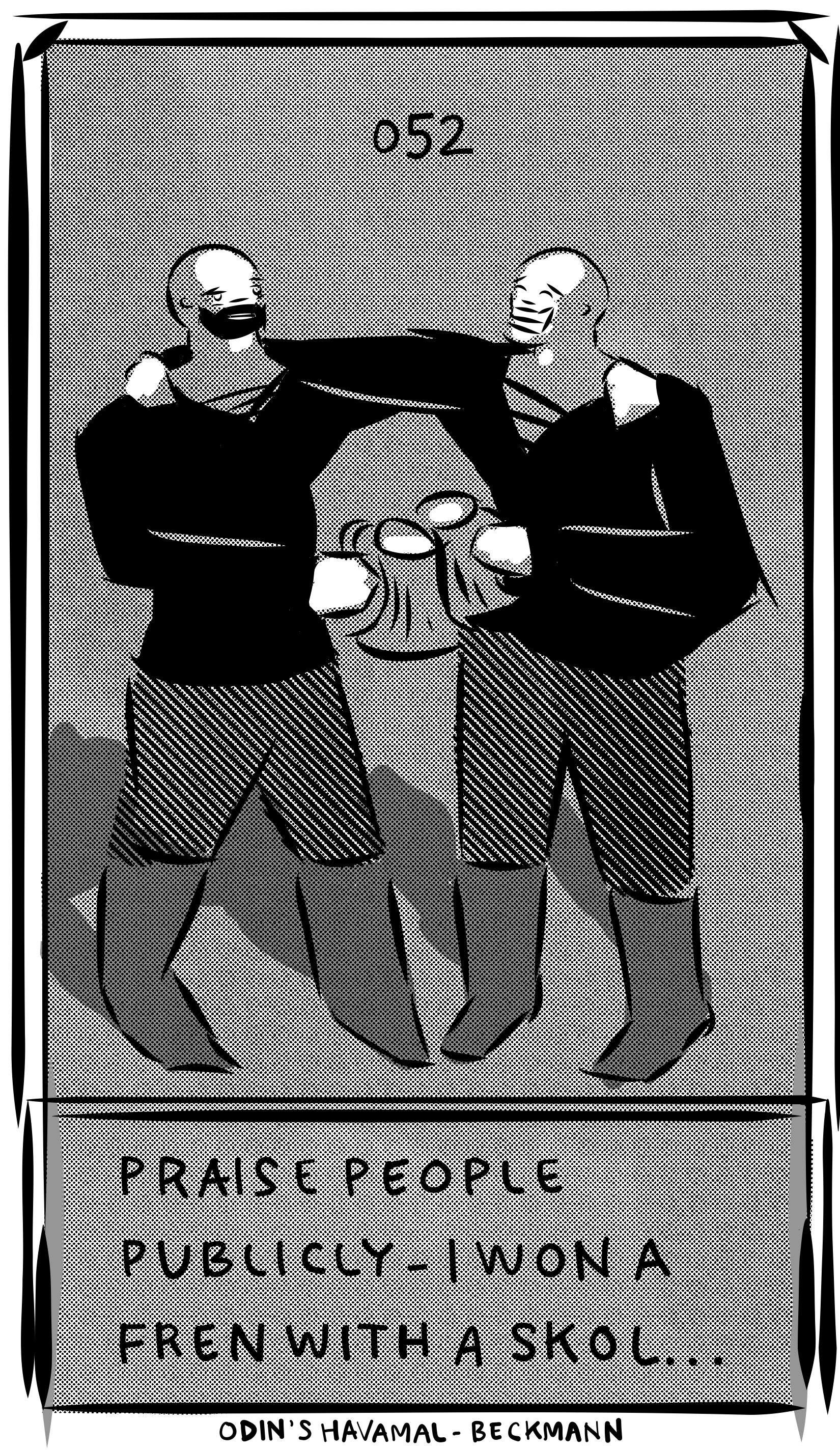
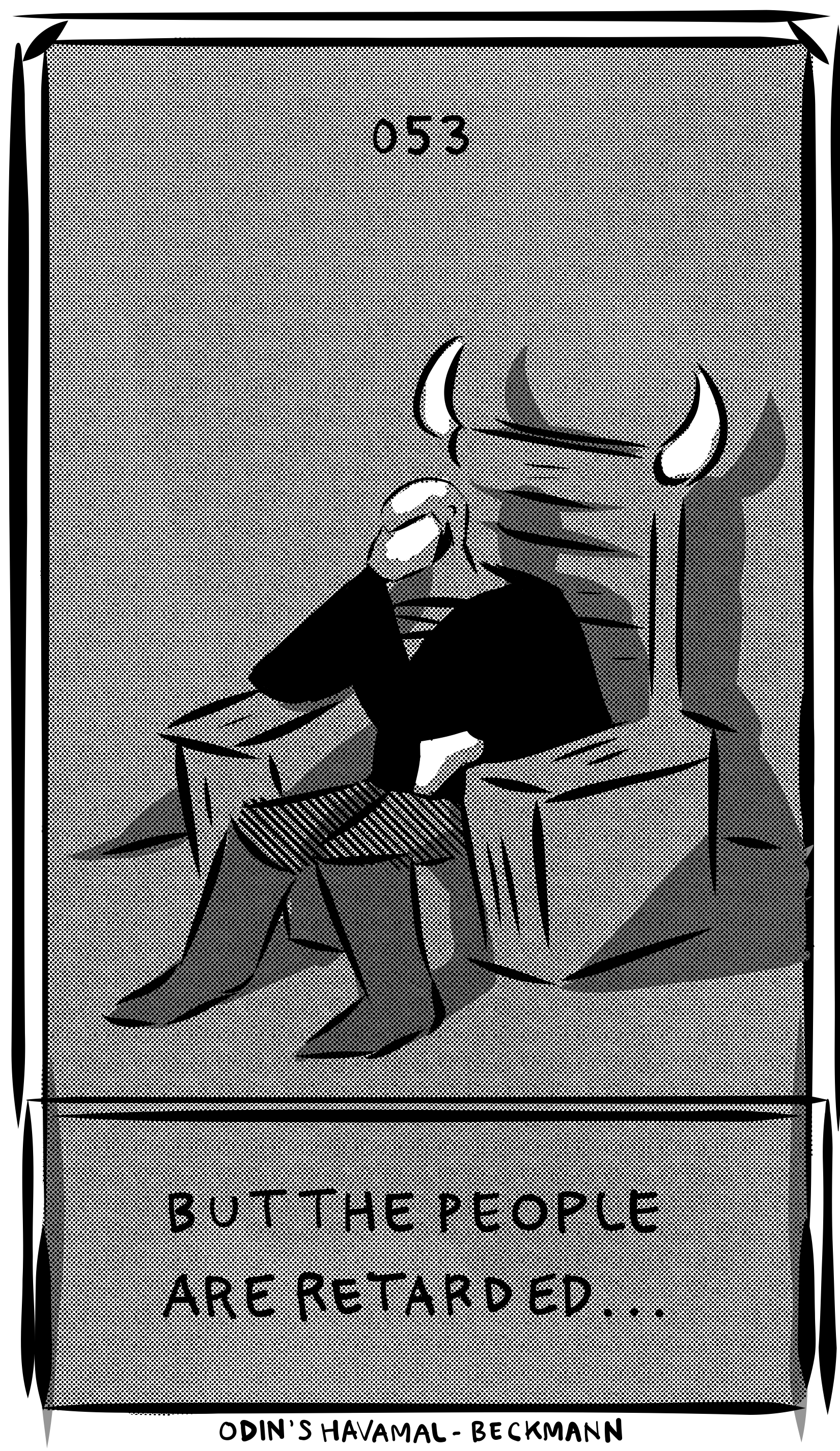
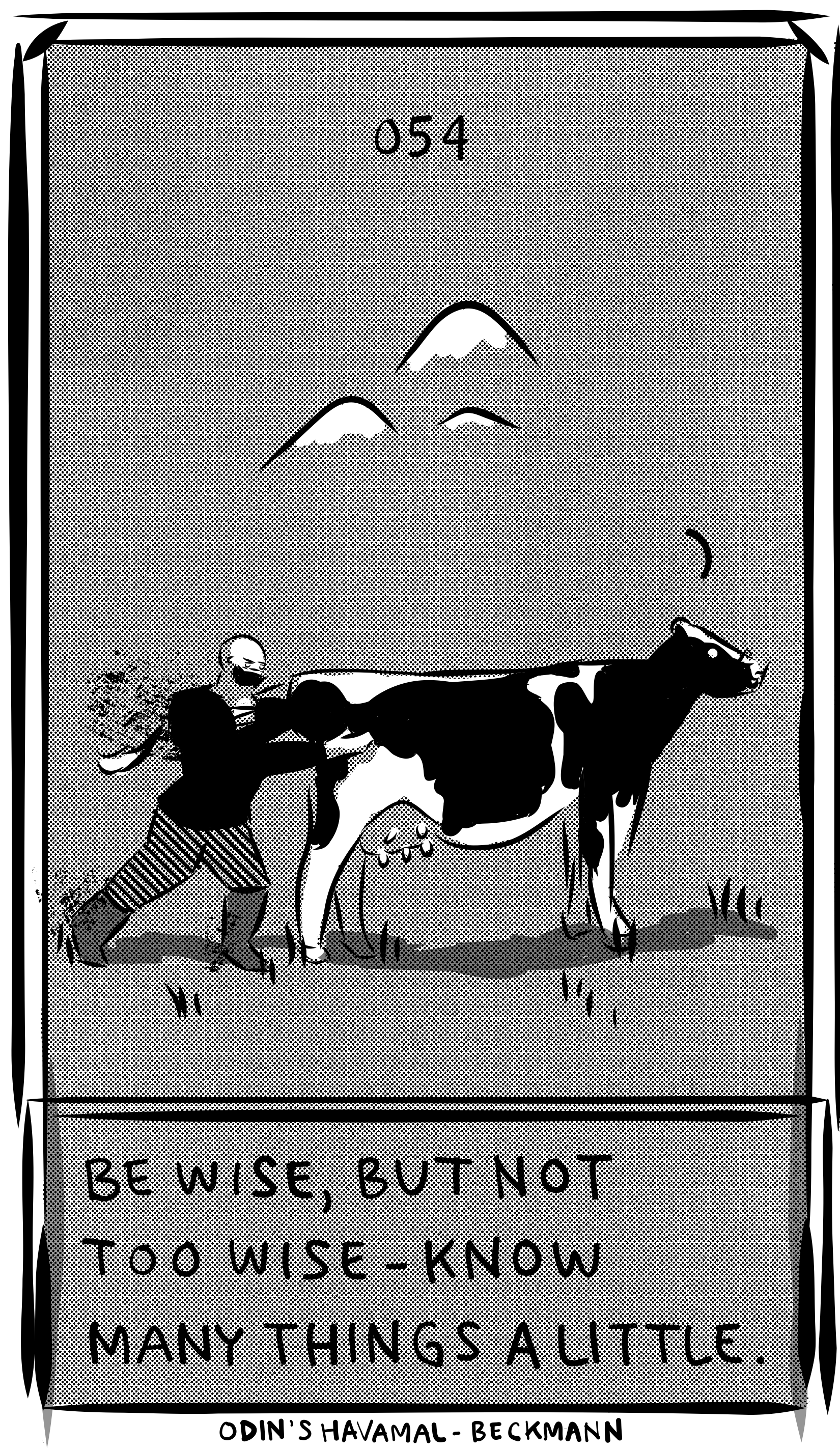
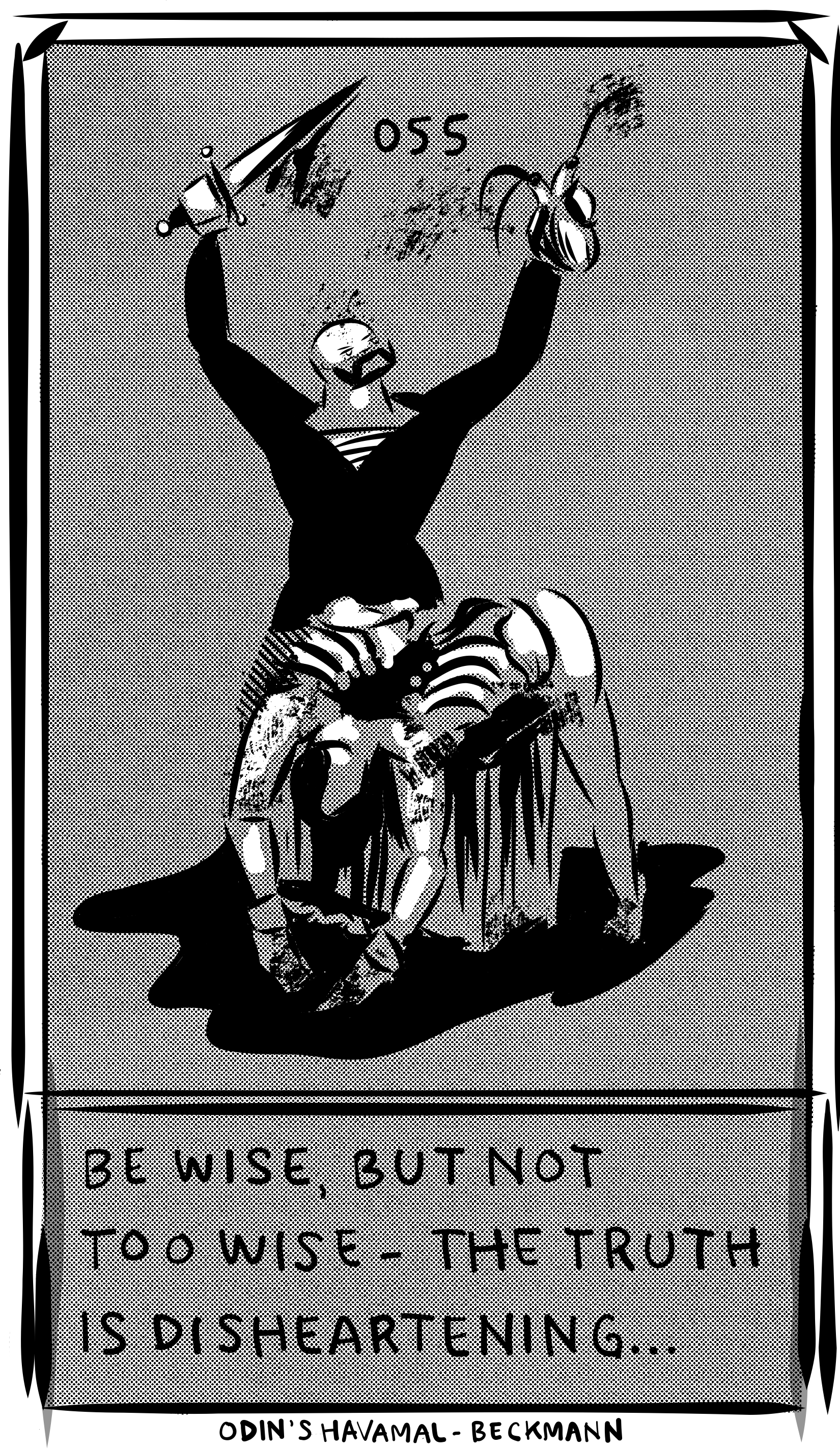
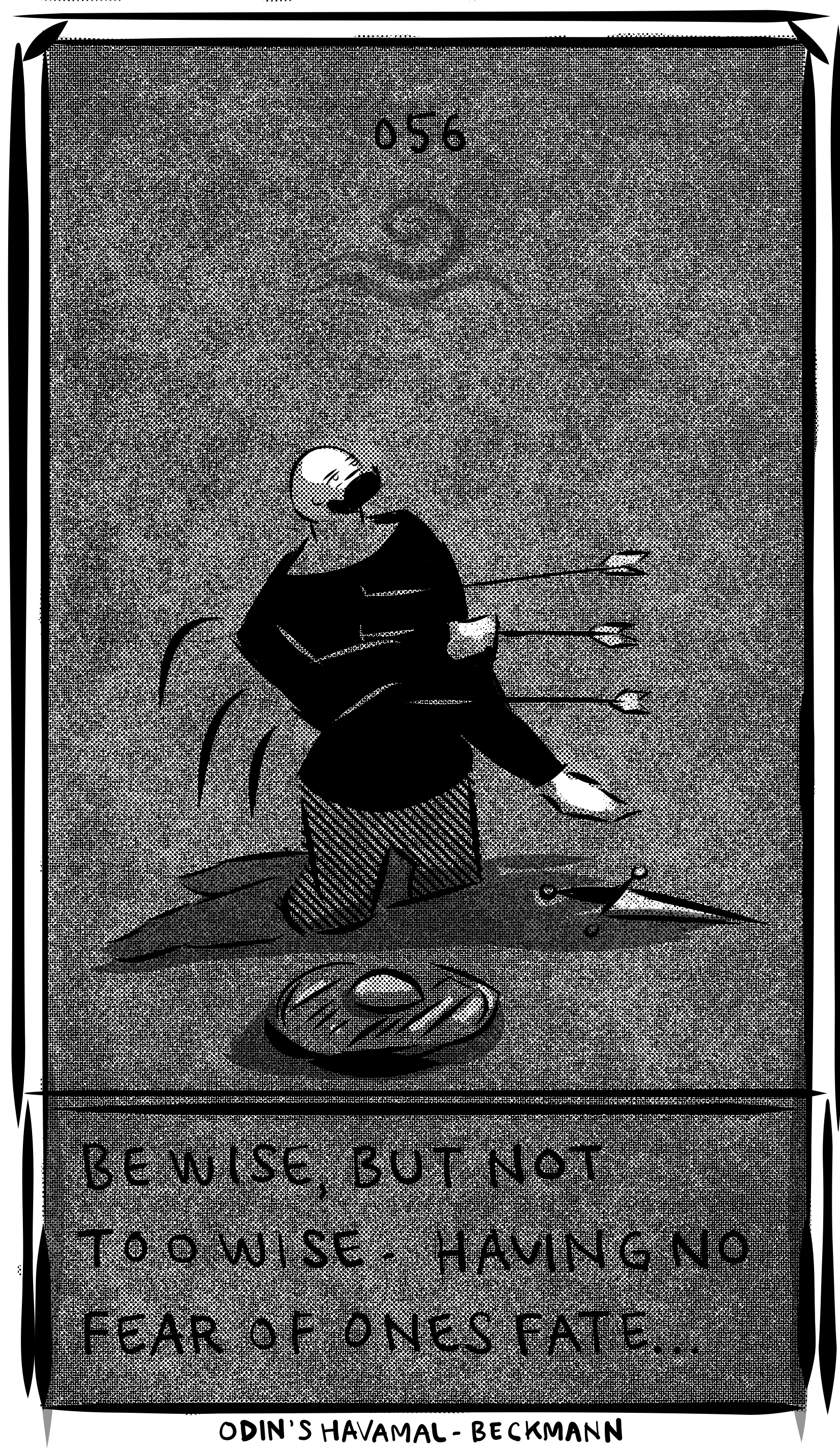
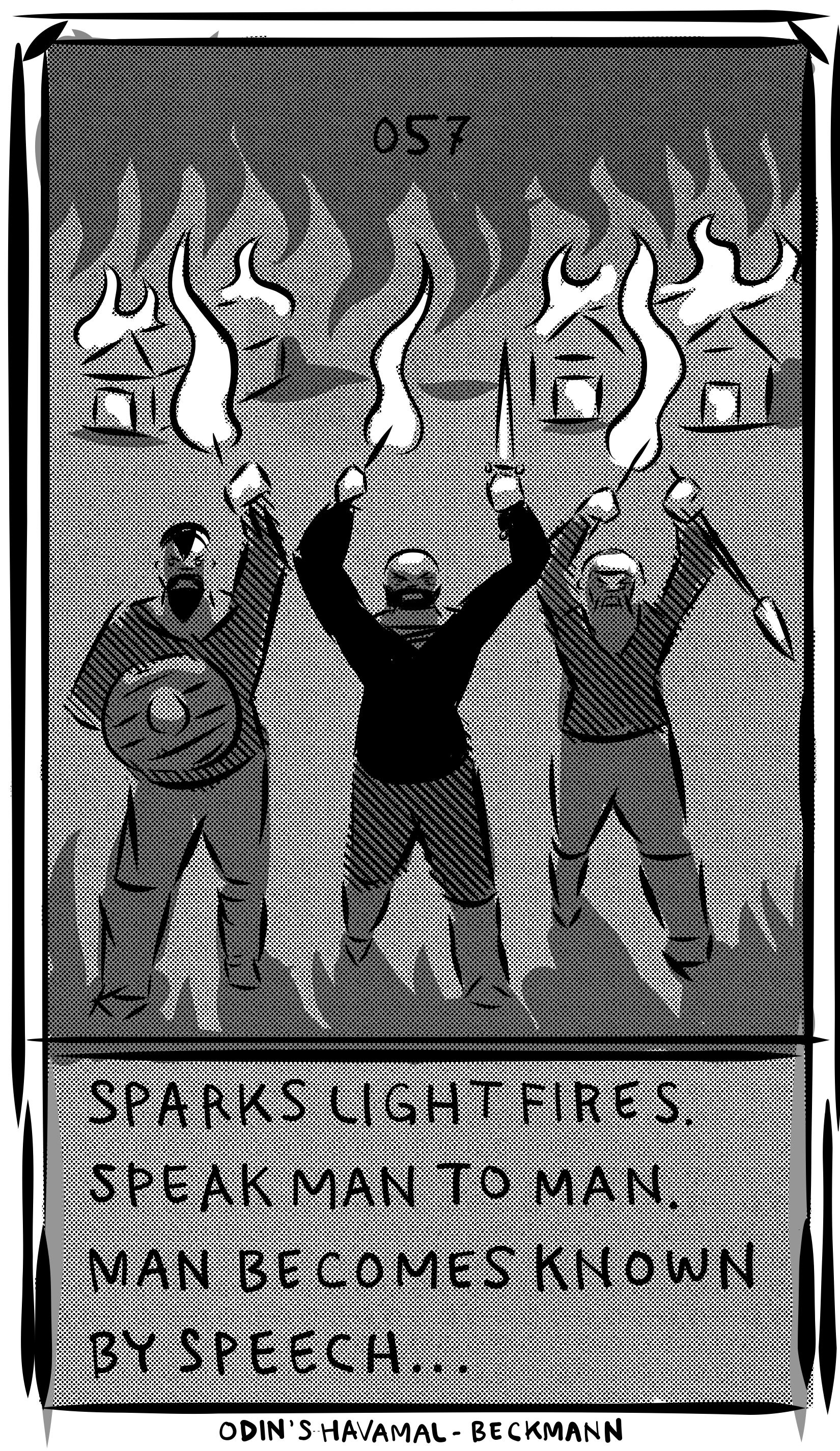
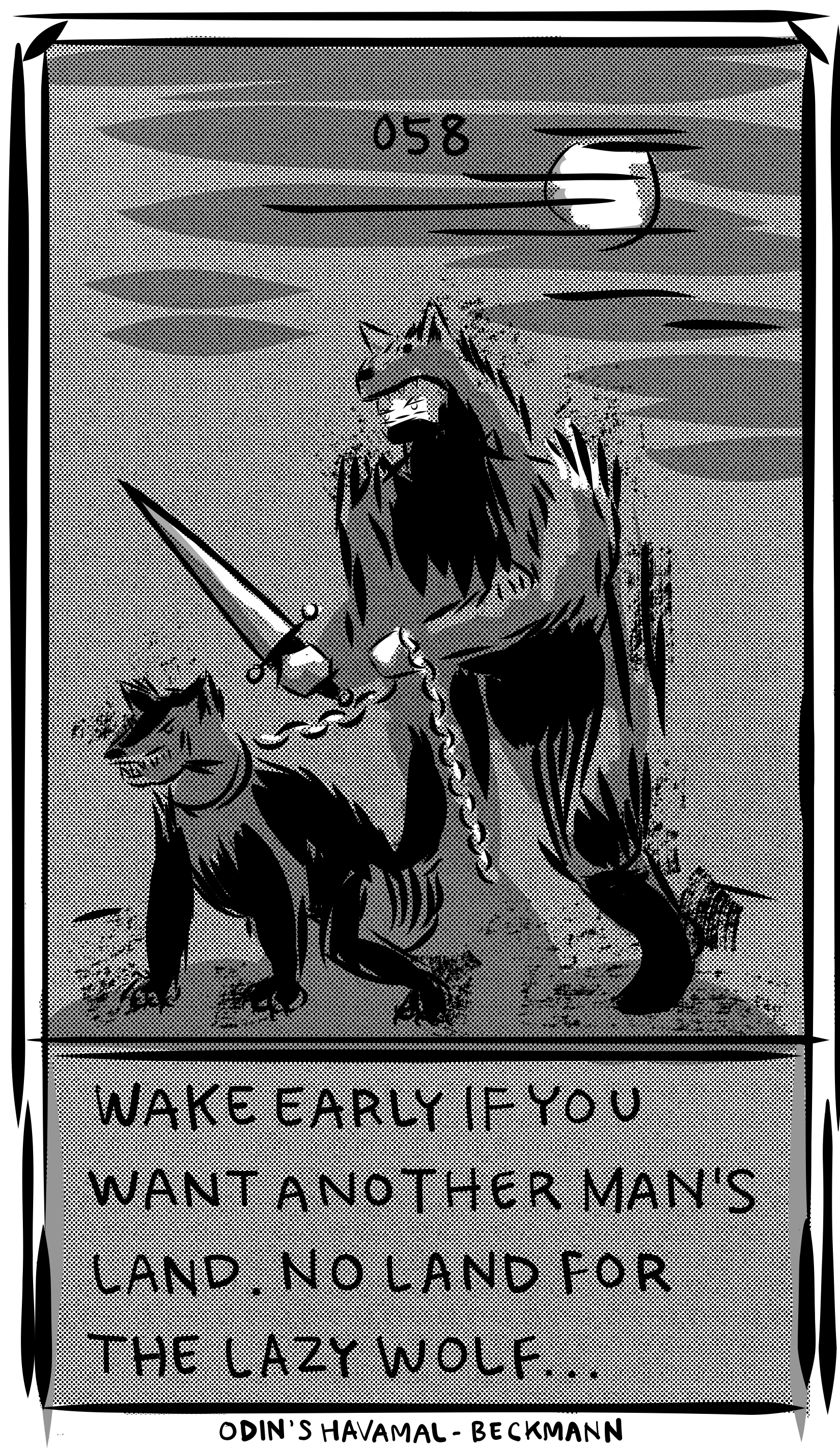
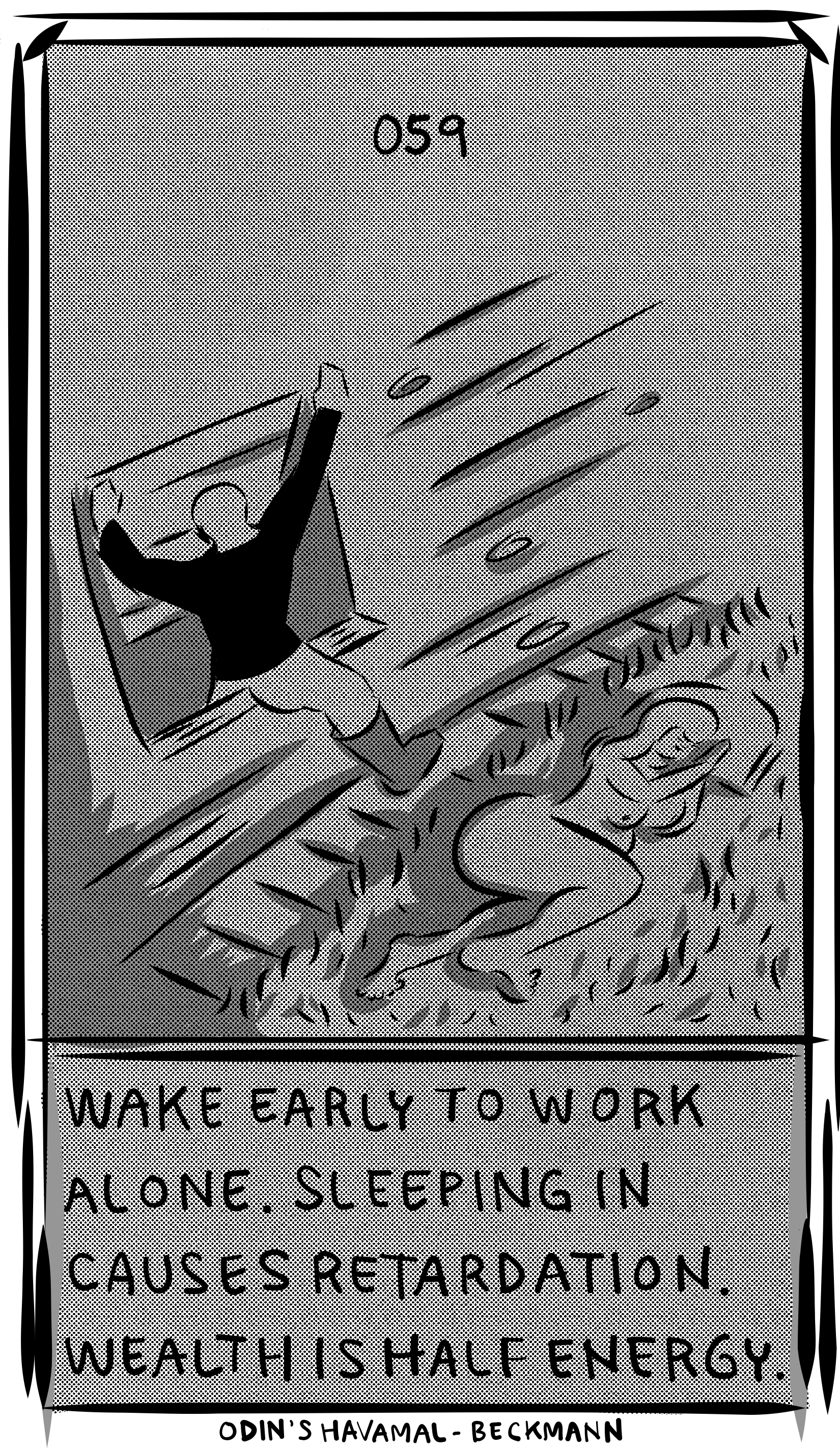
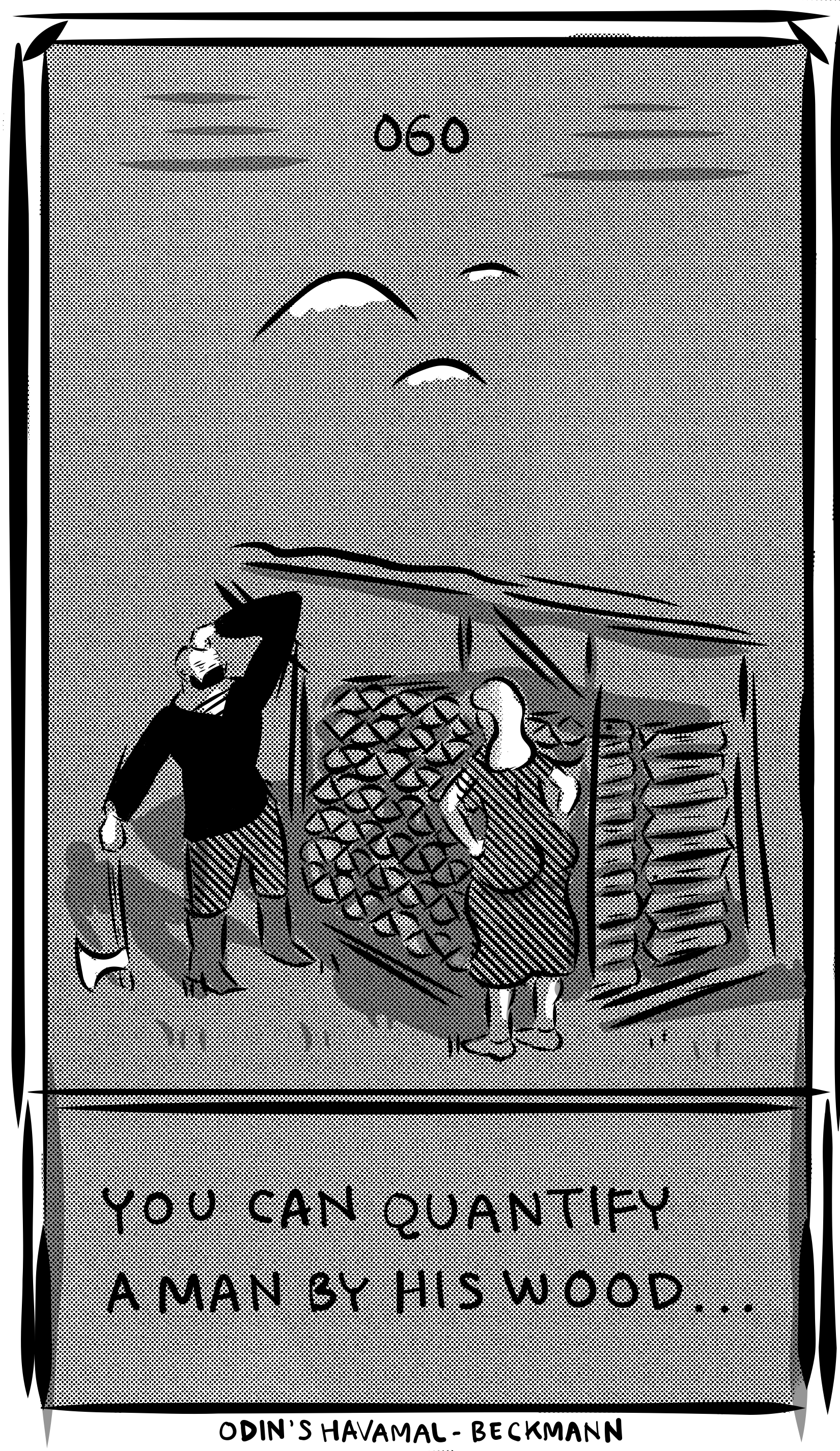
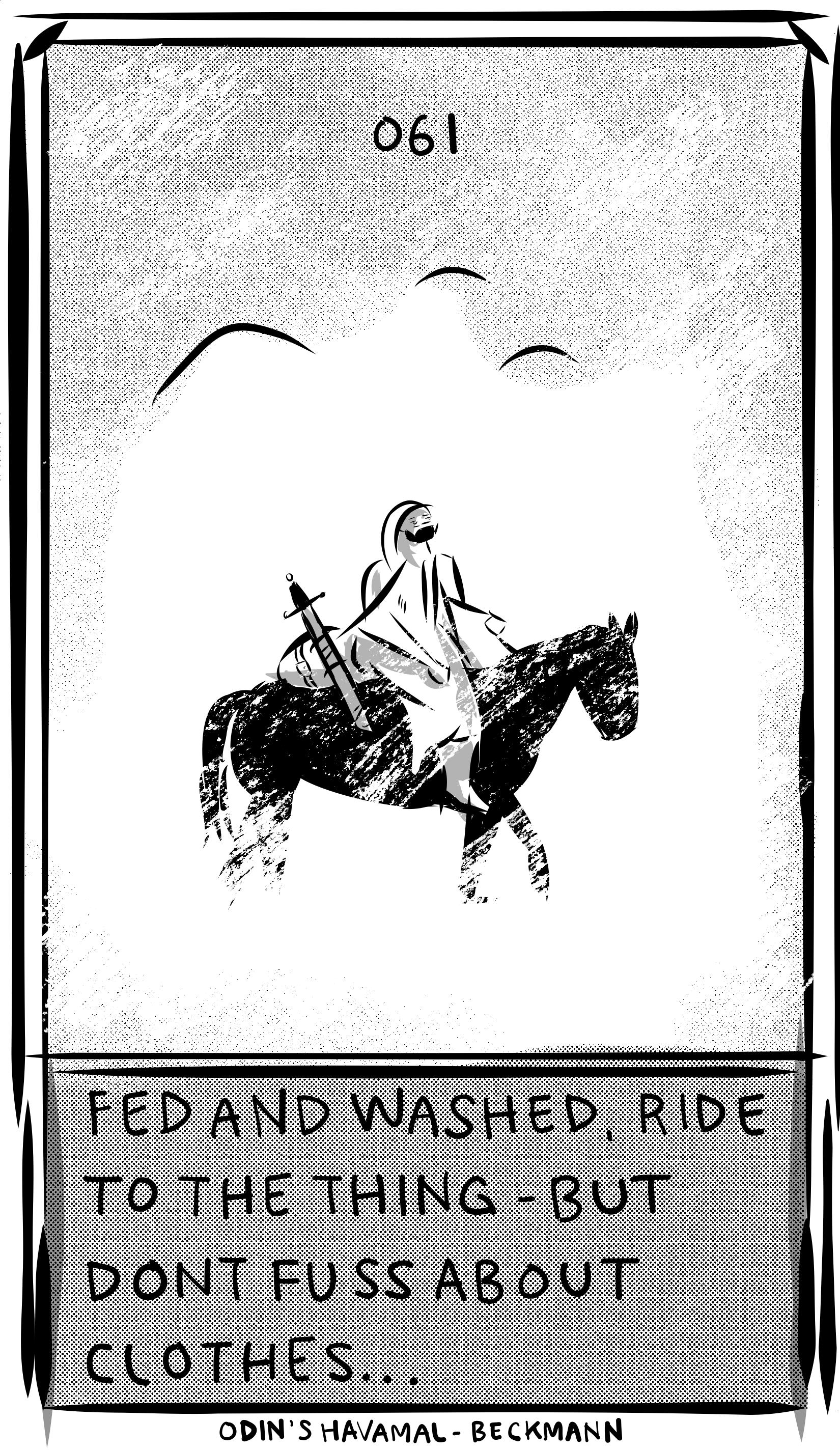
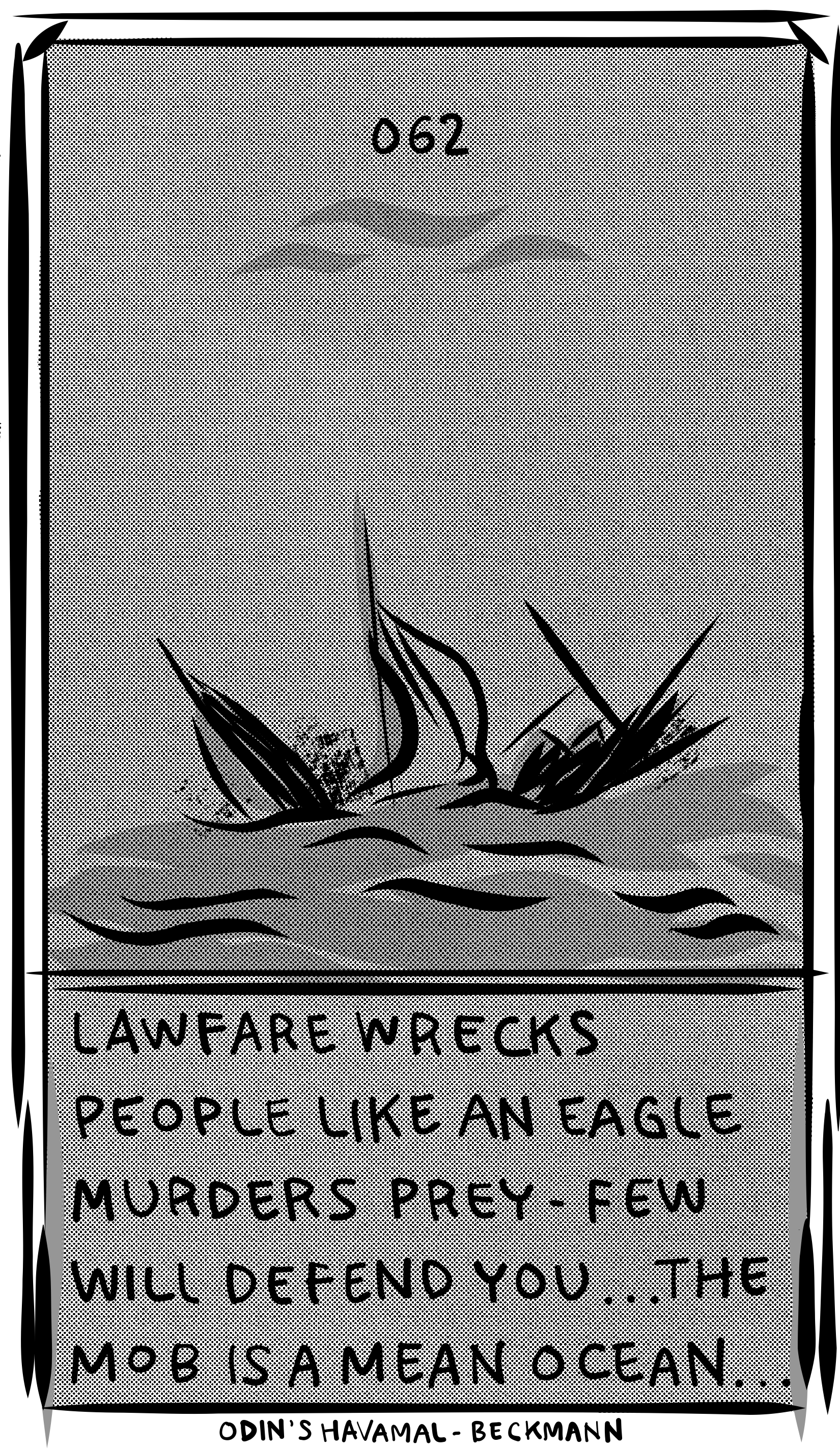
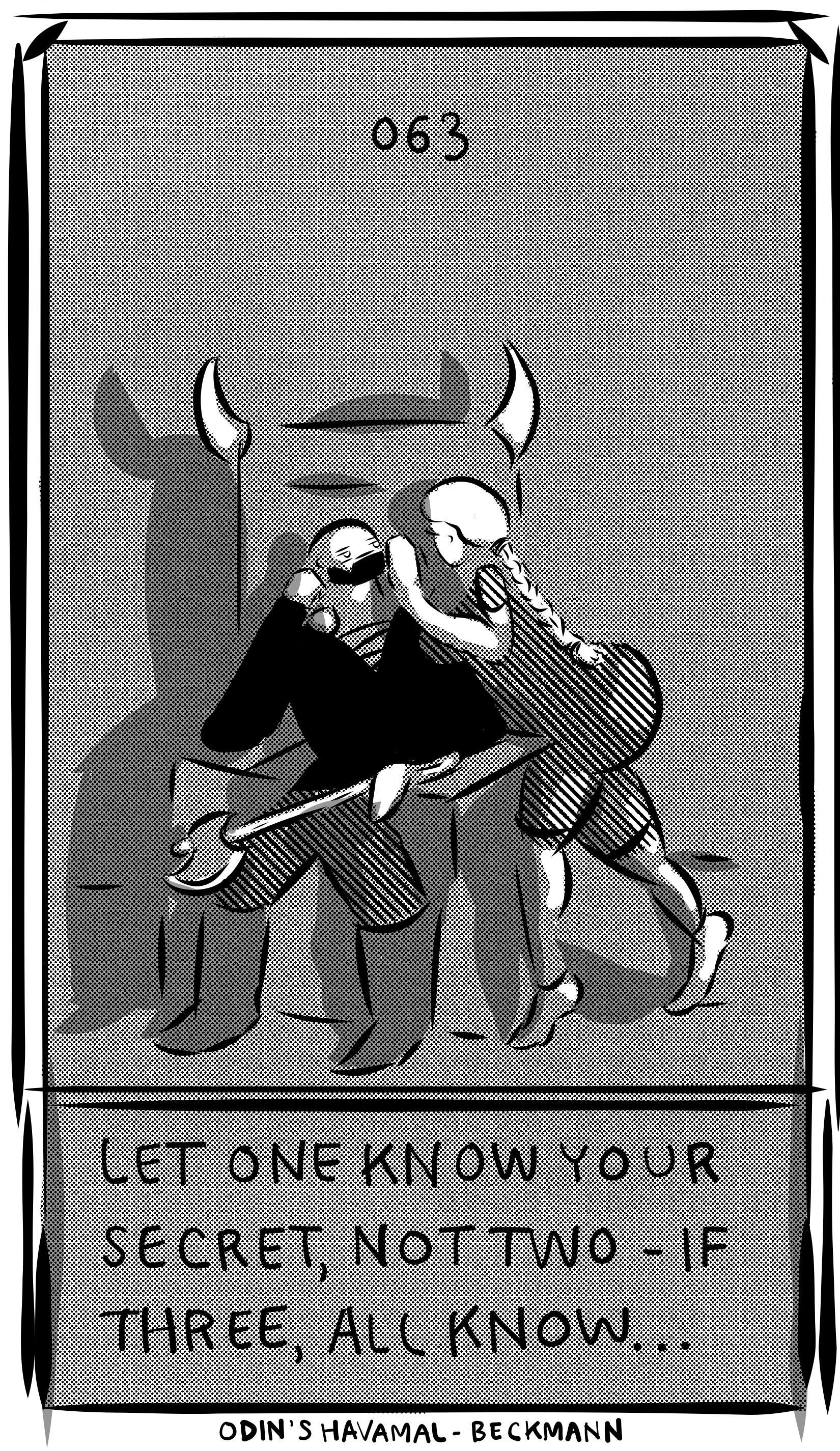
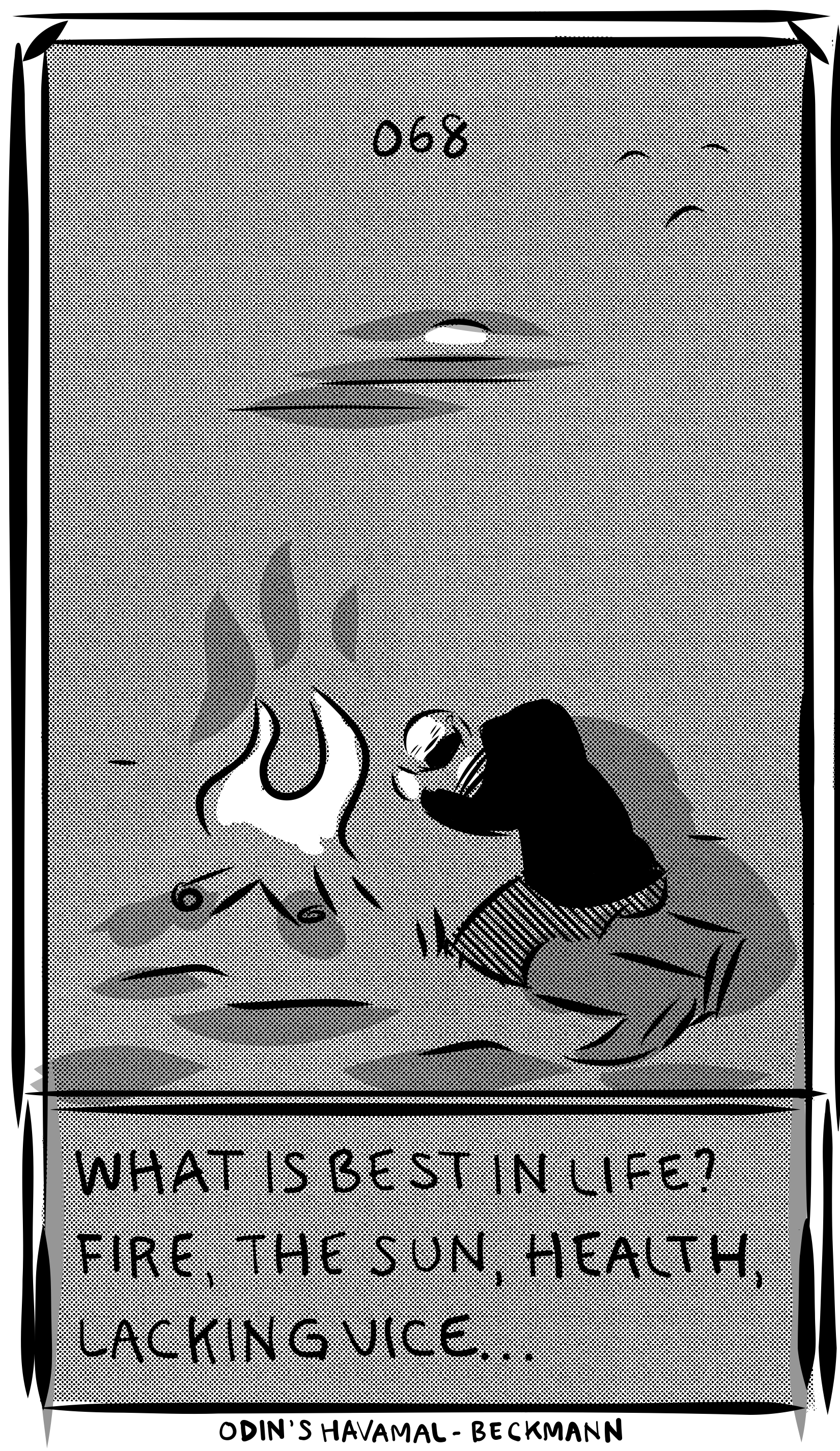
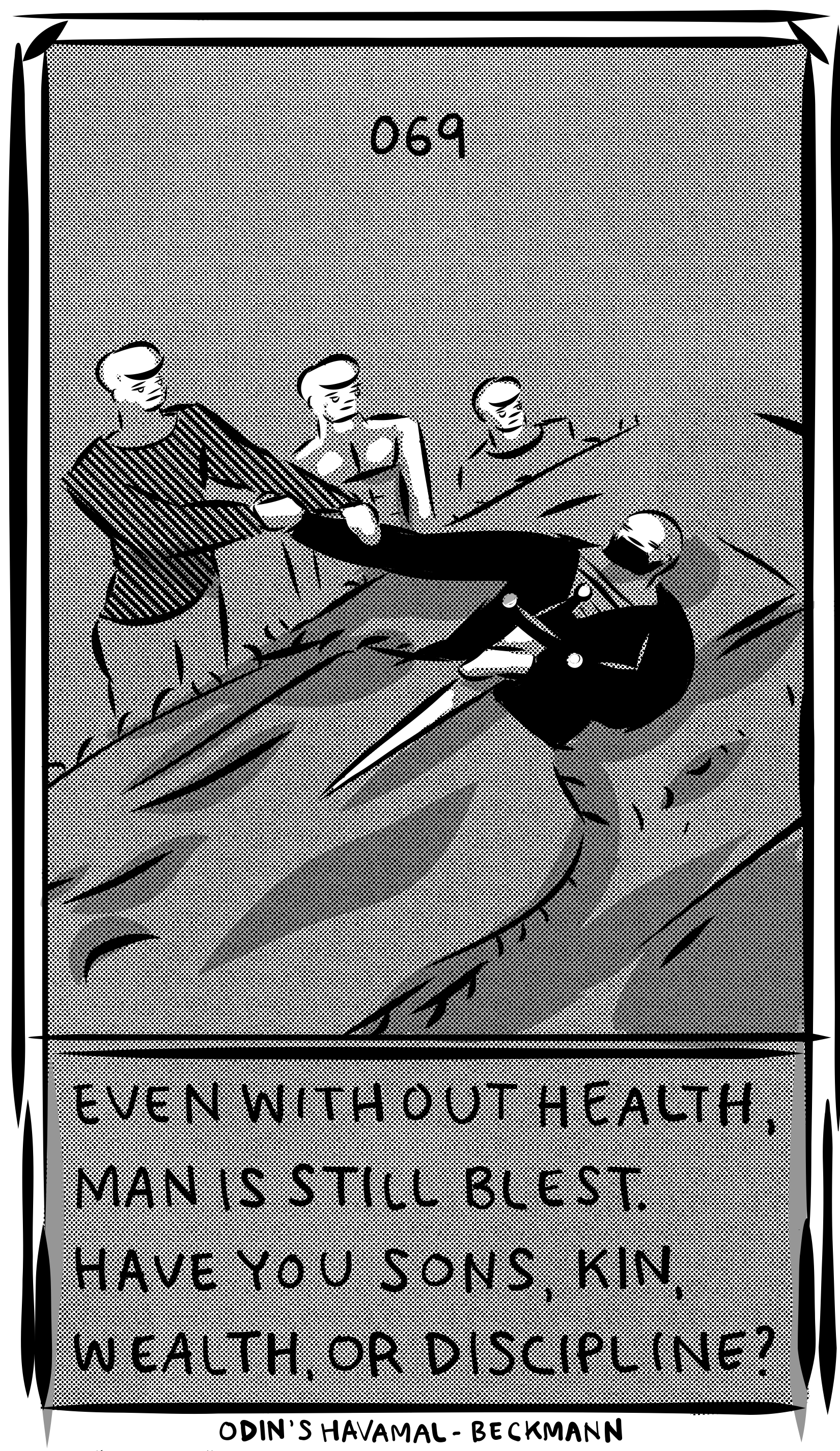
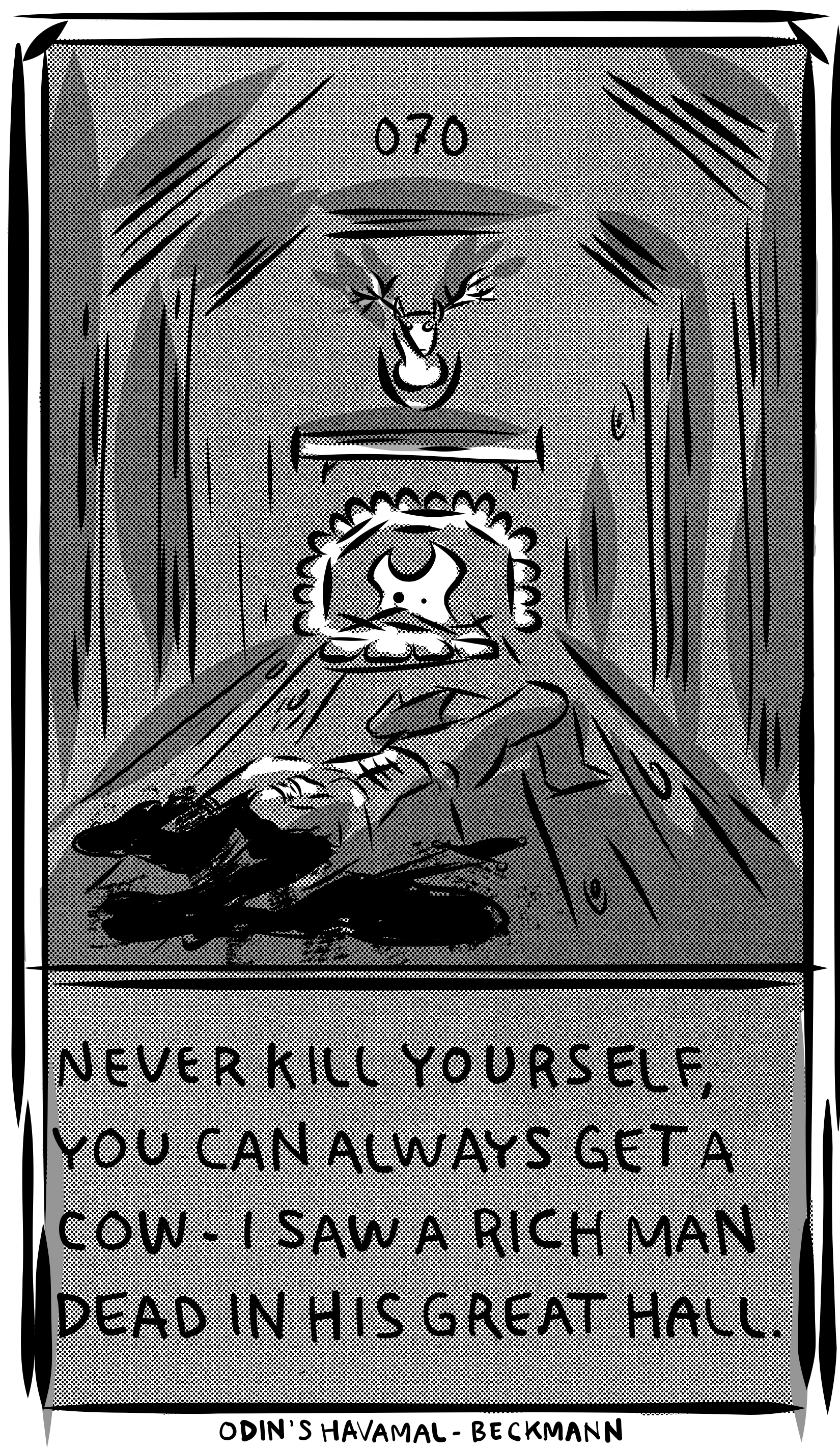
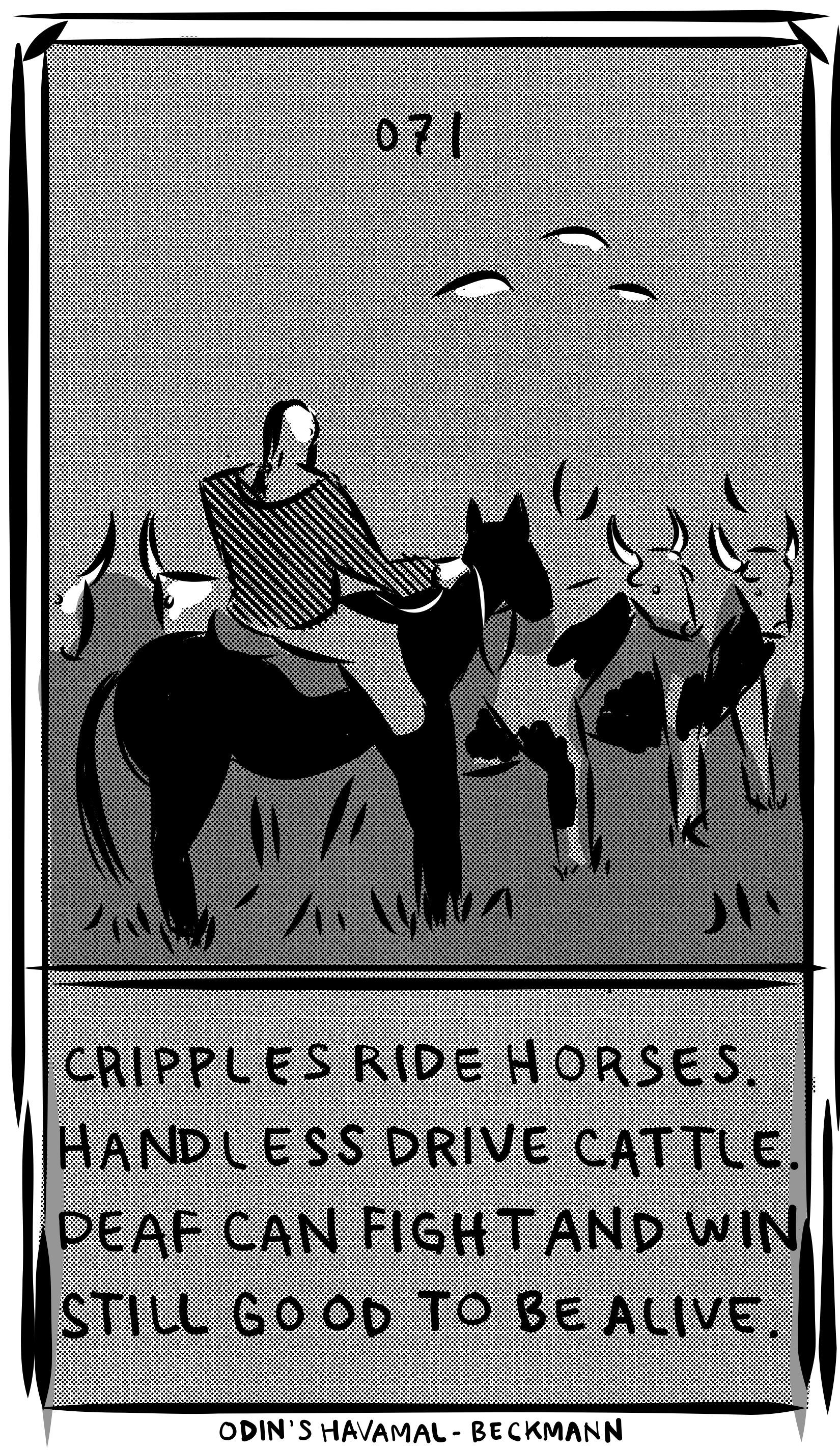
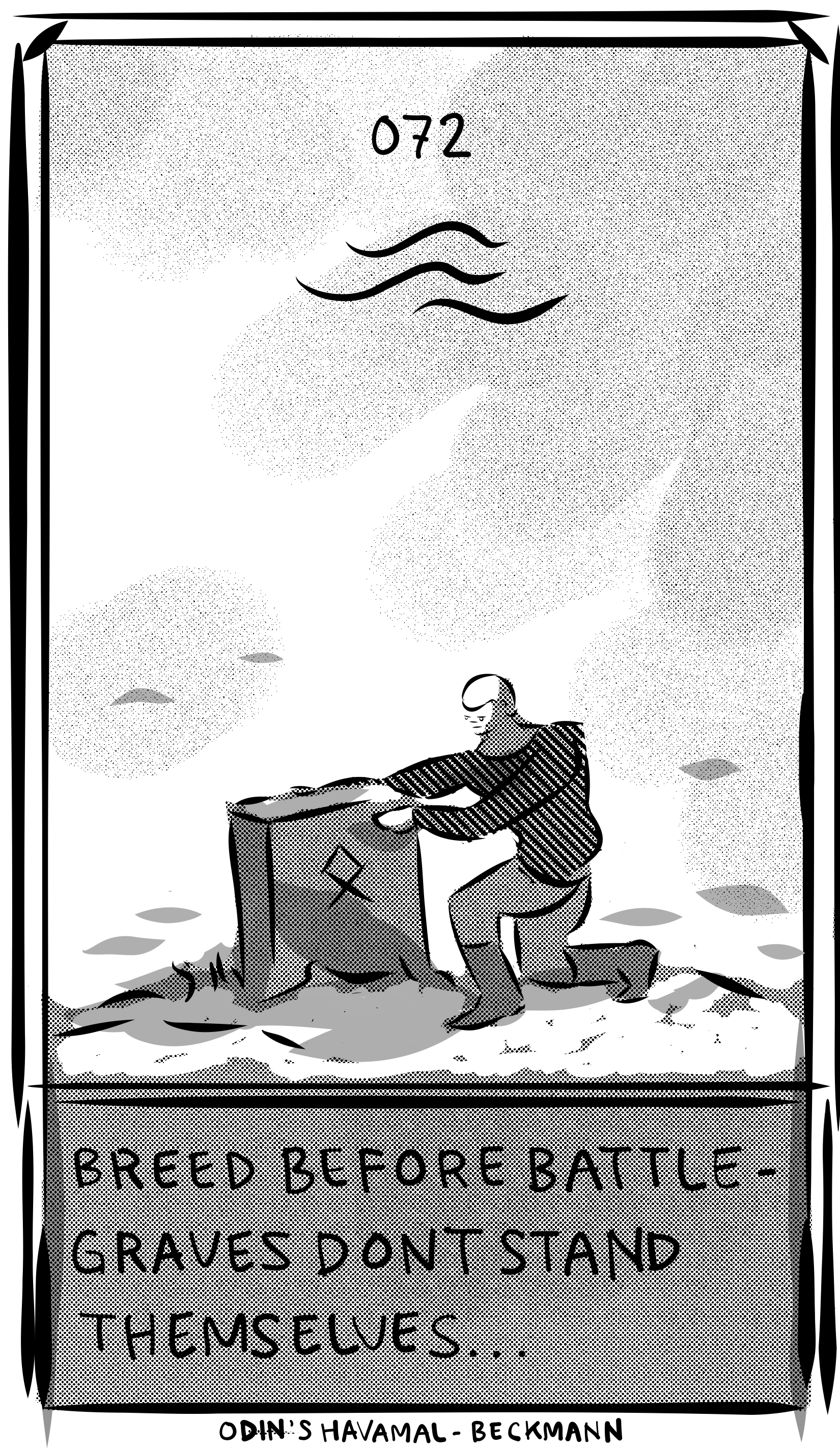
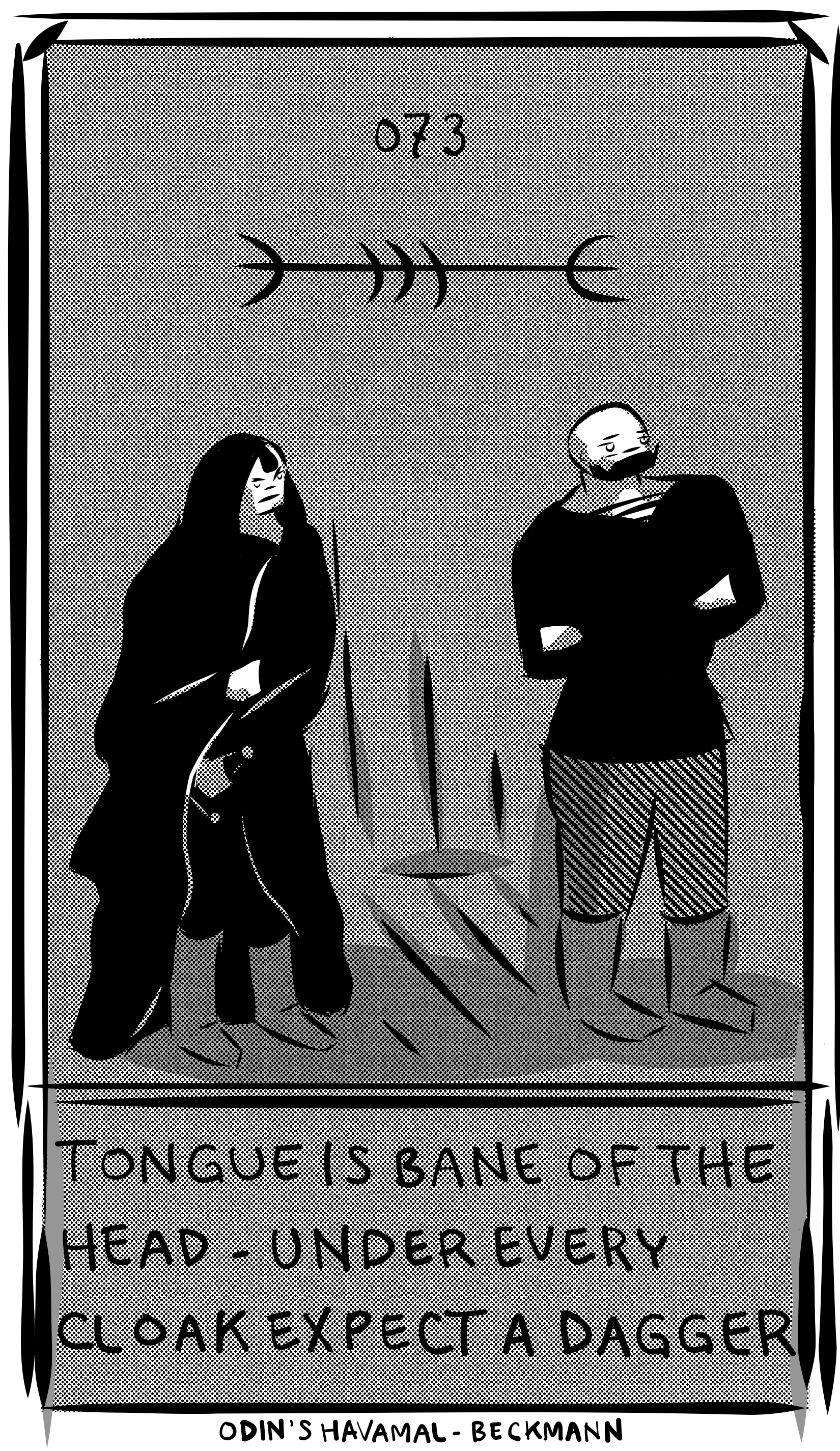
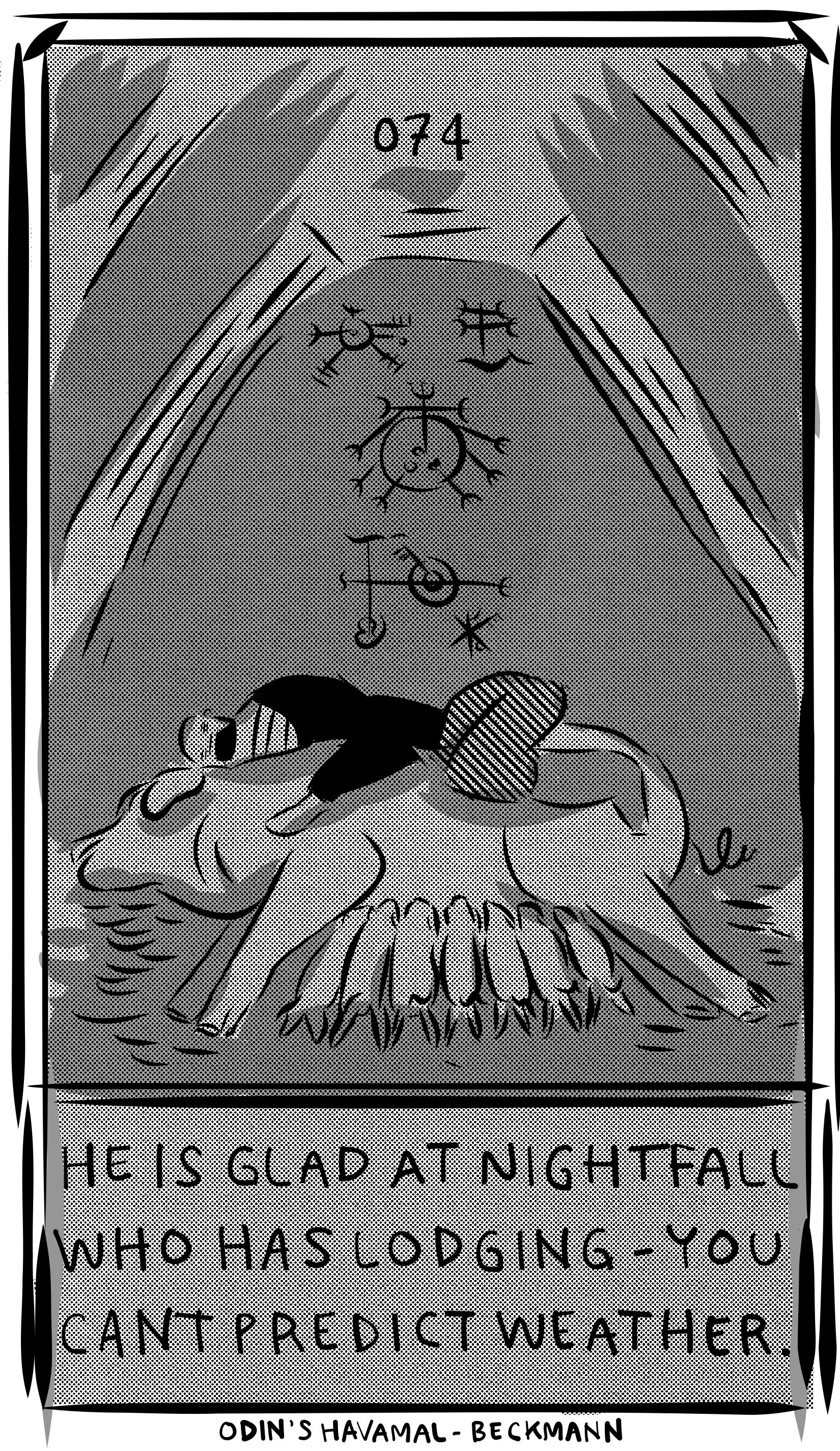
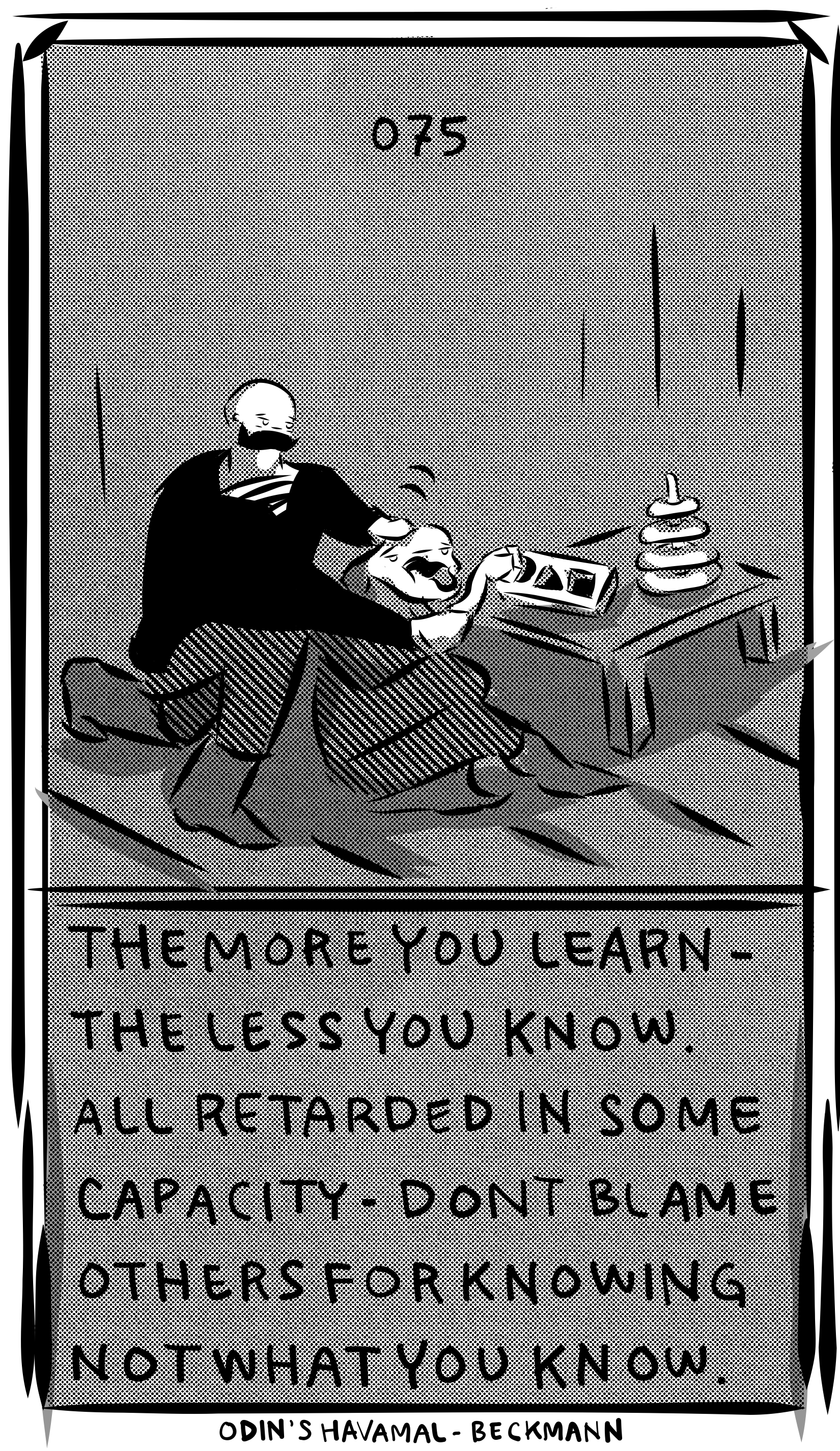
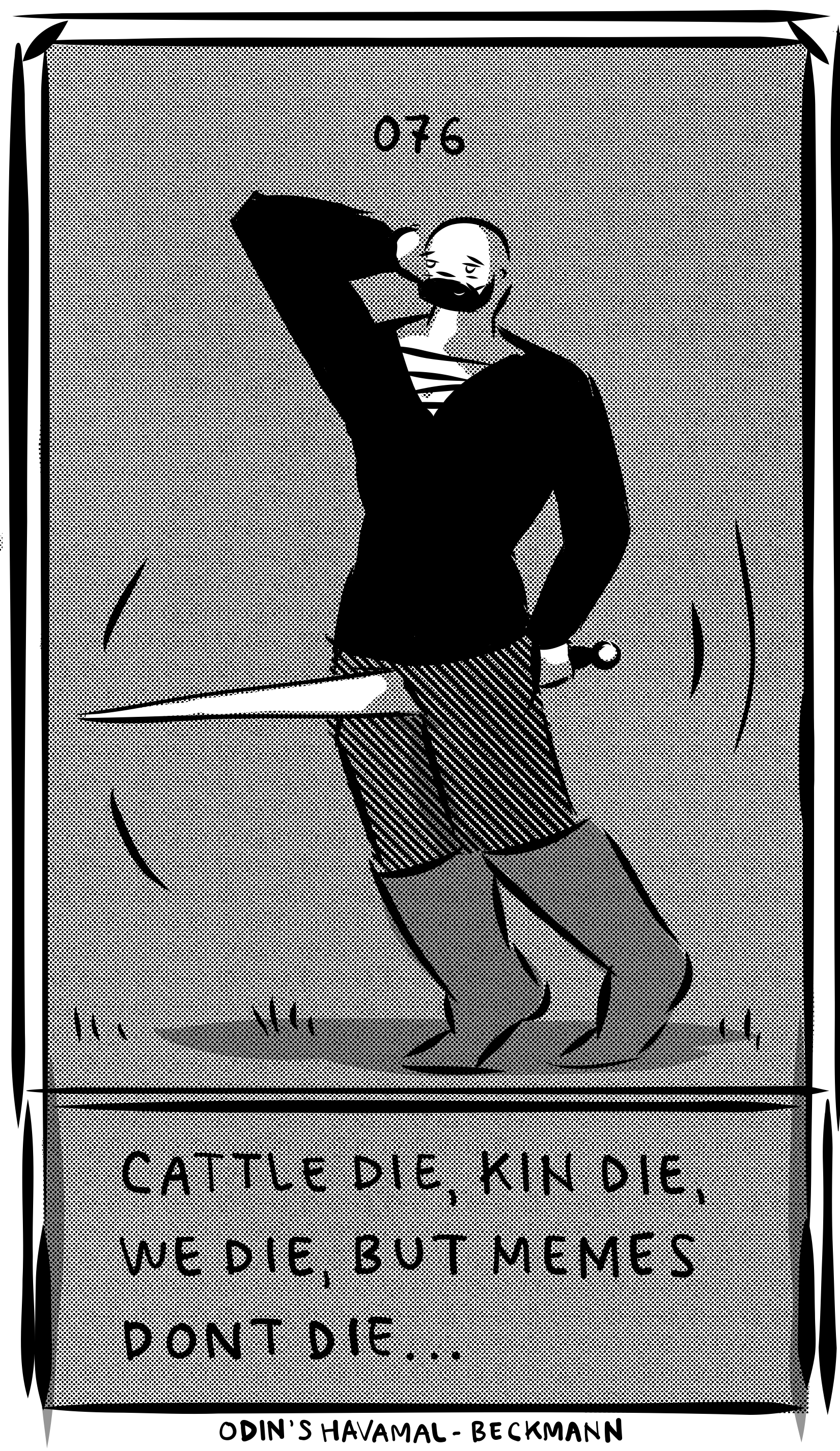
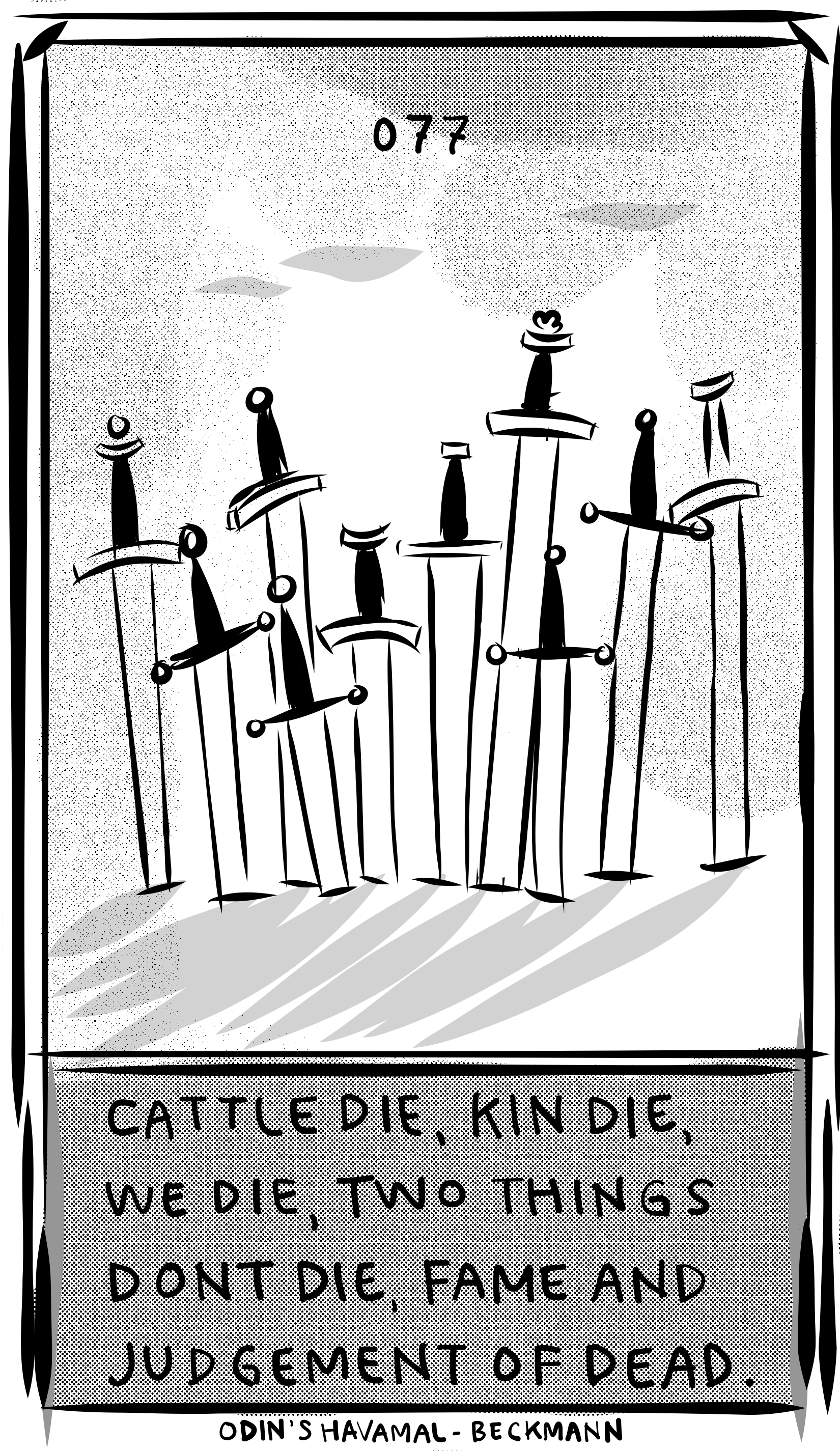
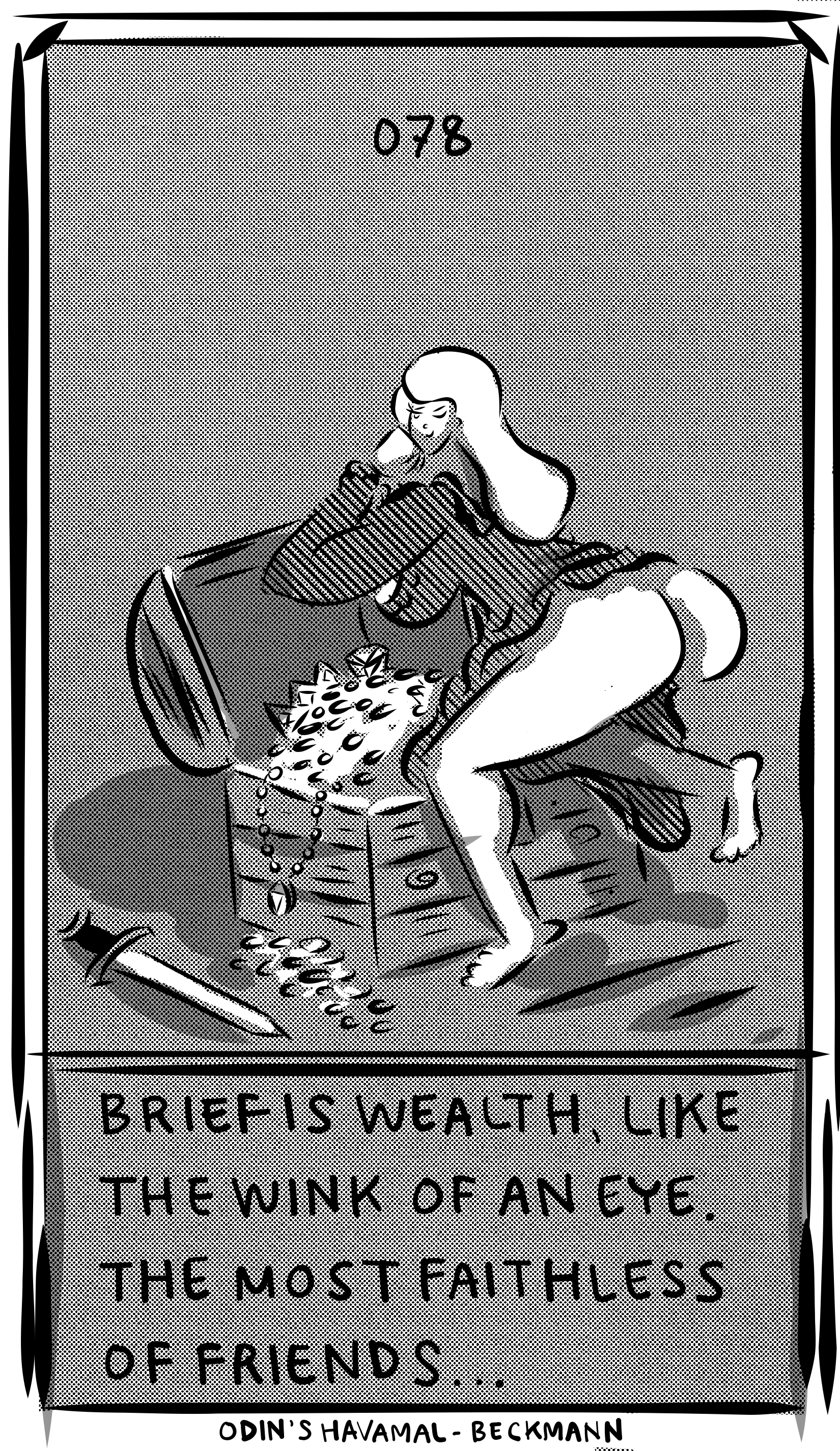
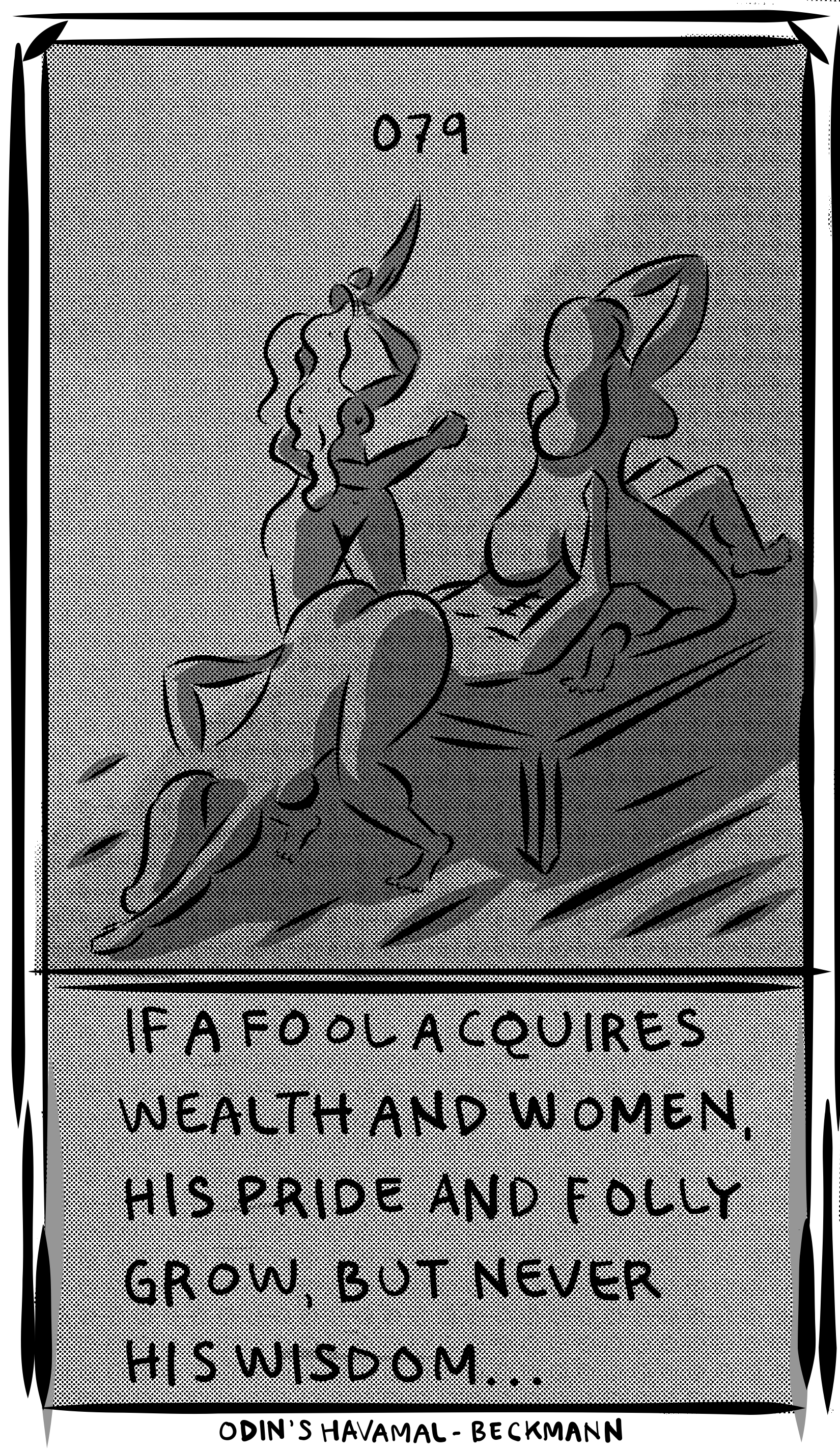
Maxims for All Men (081-088):
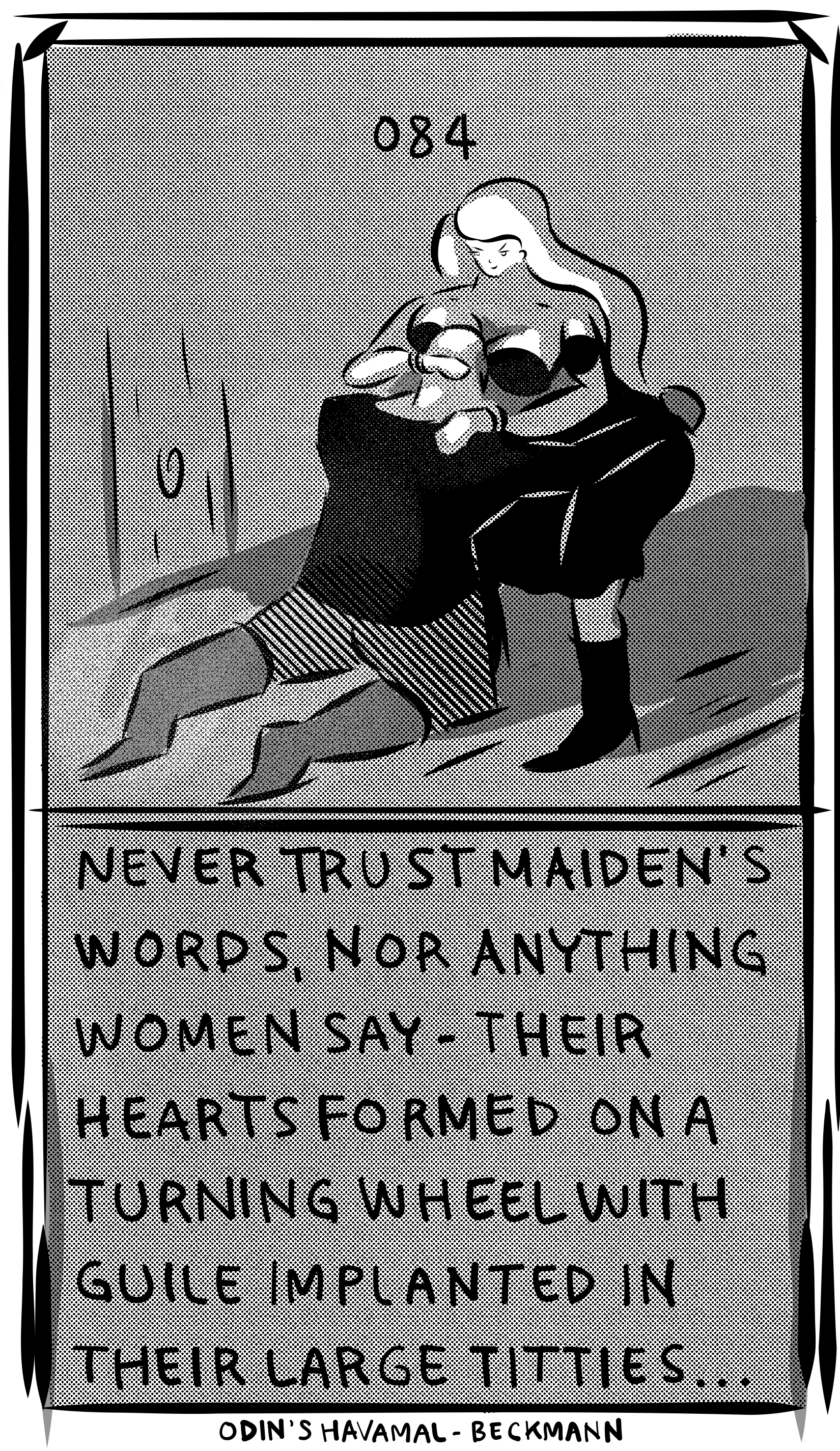
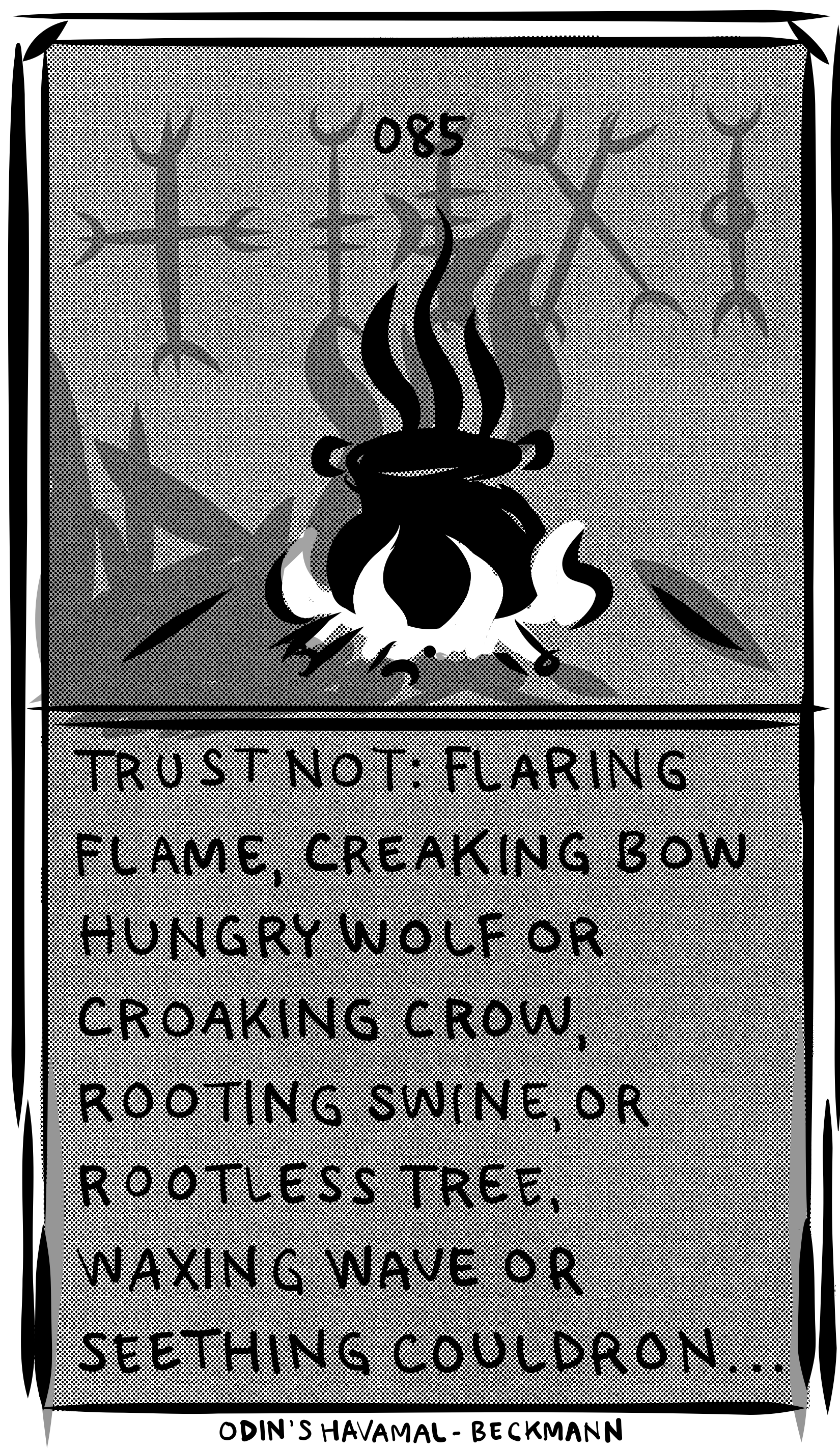
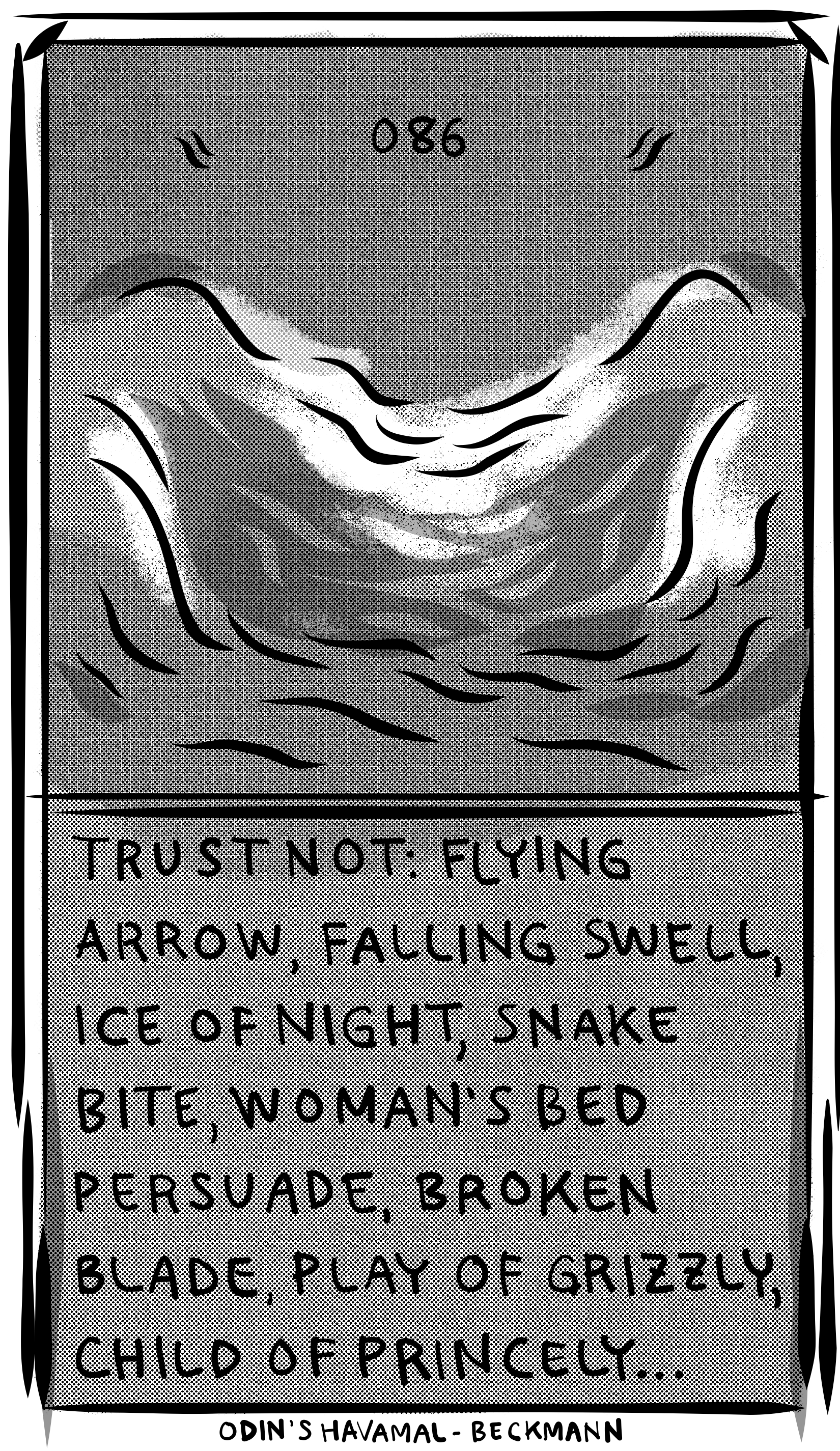
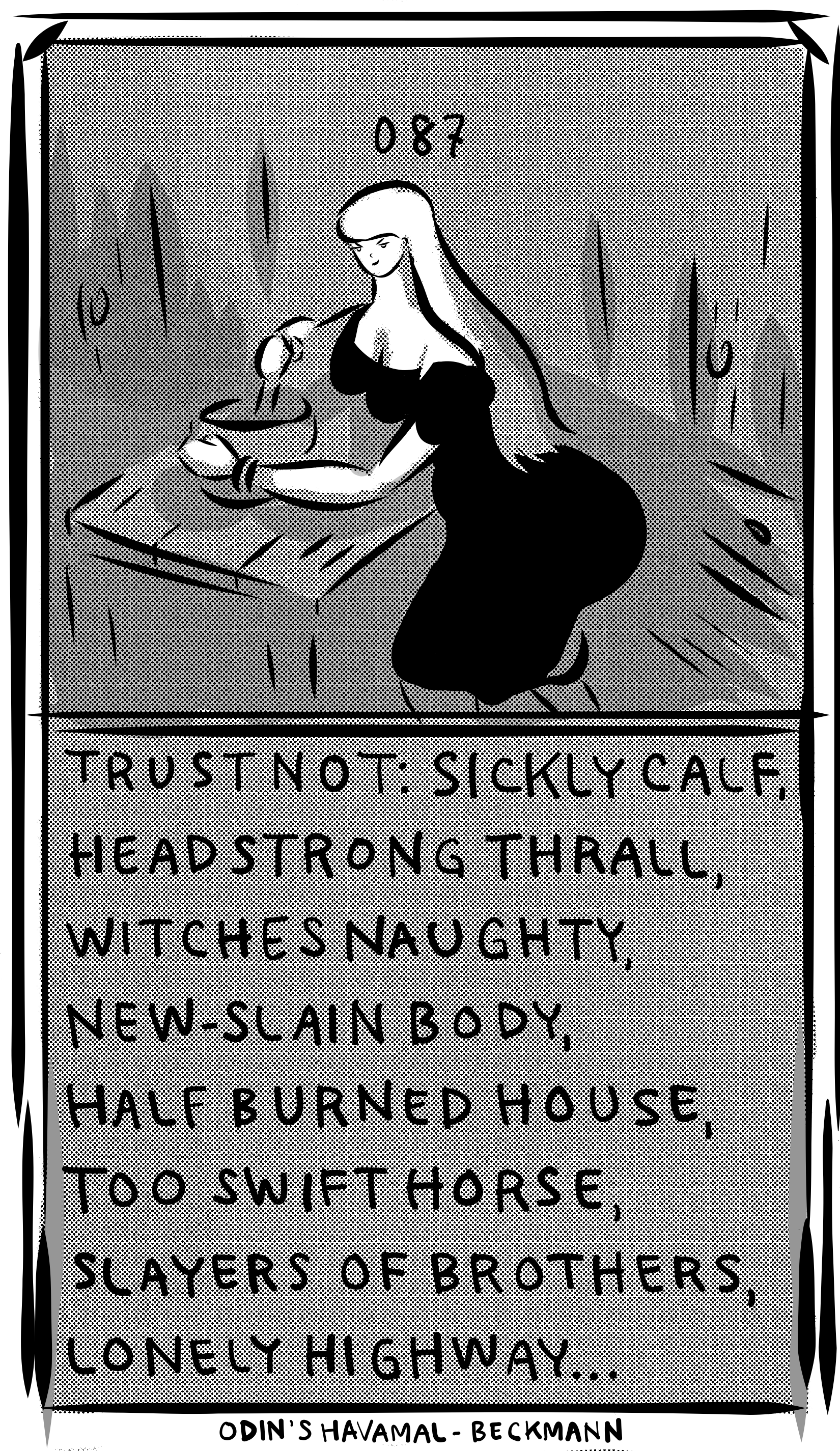
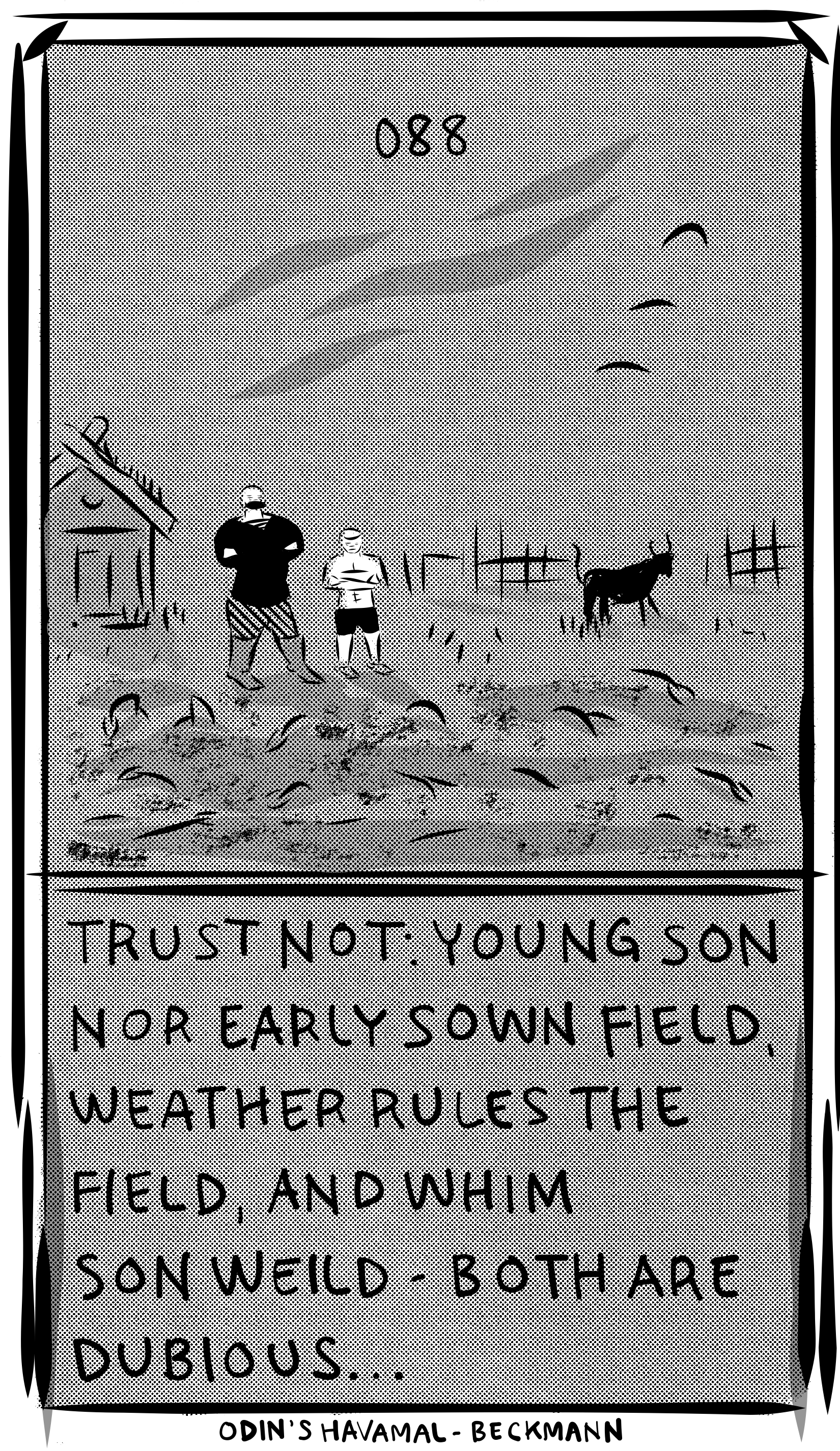
Lessons for Lovers 089-094:
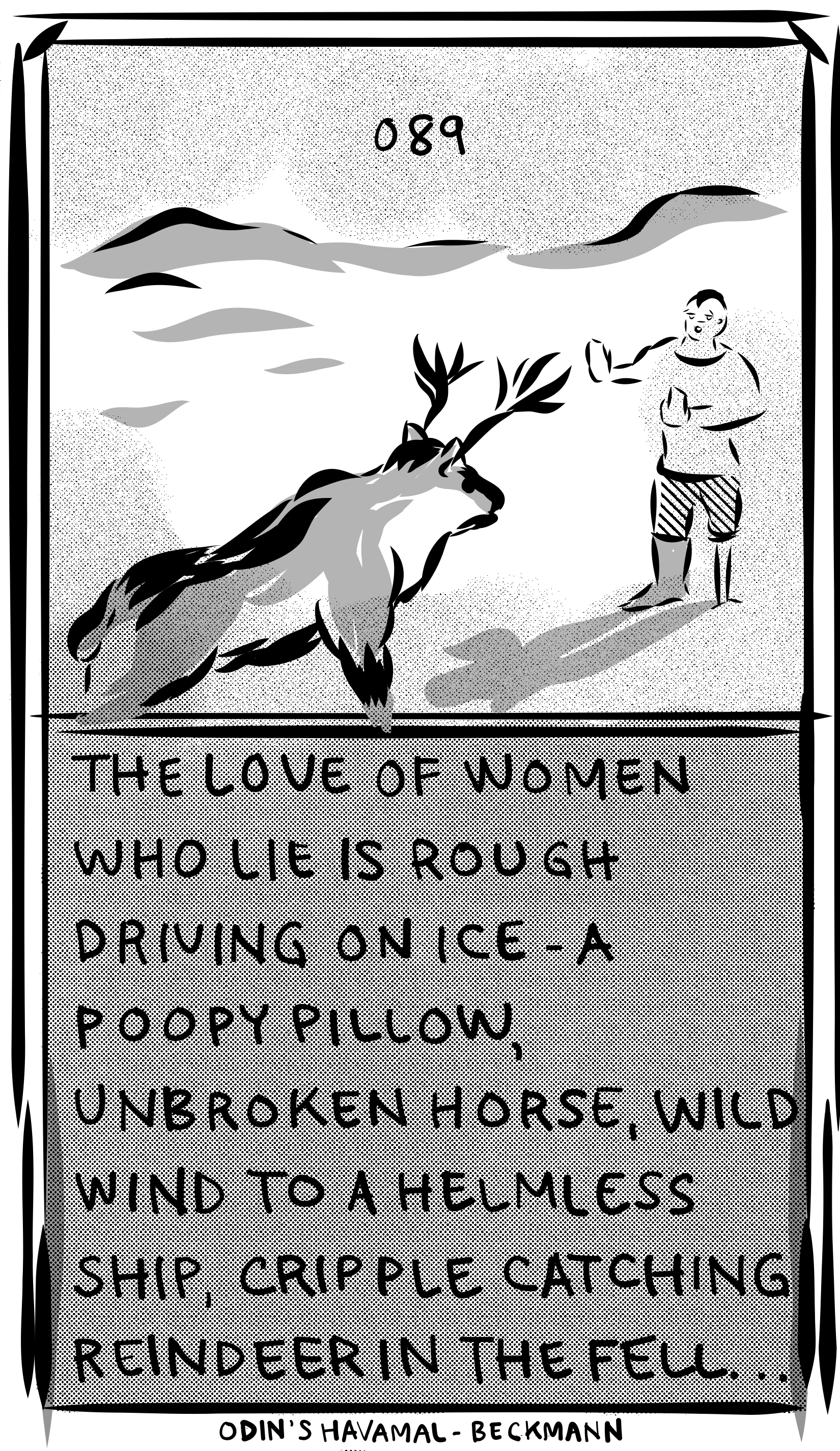
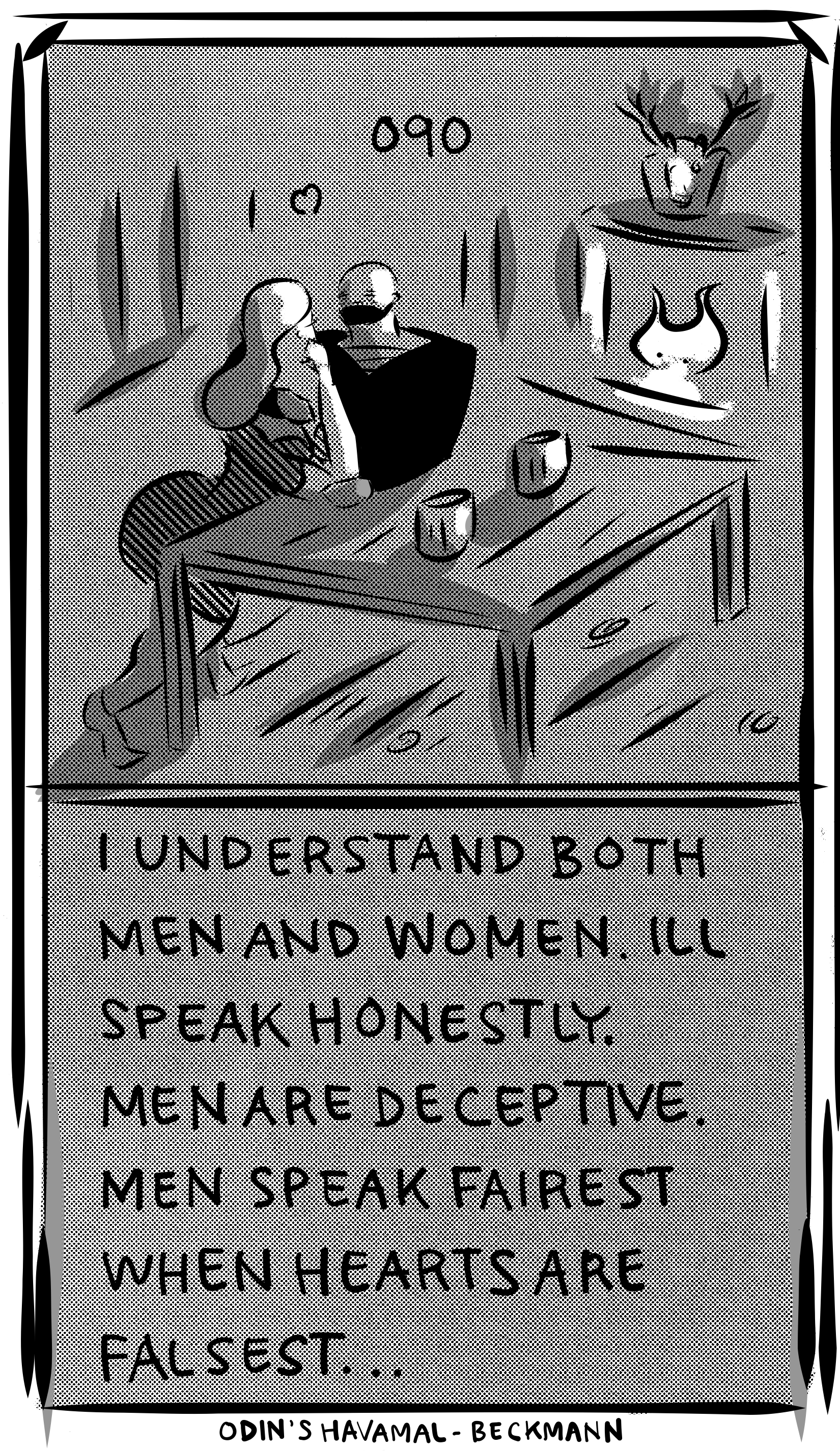
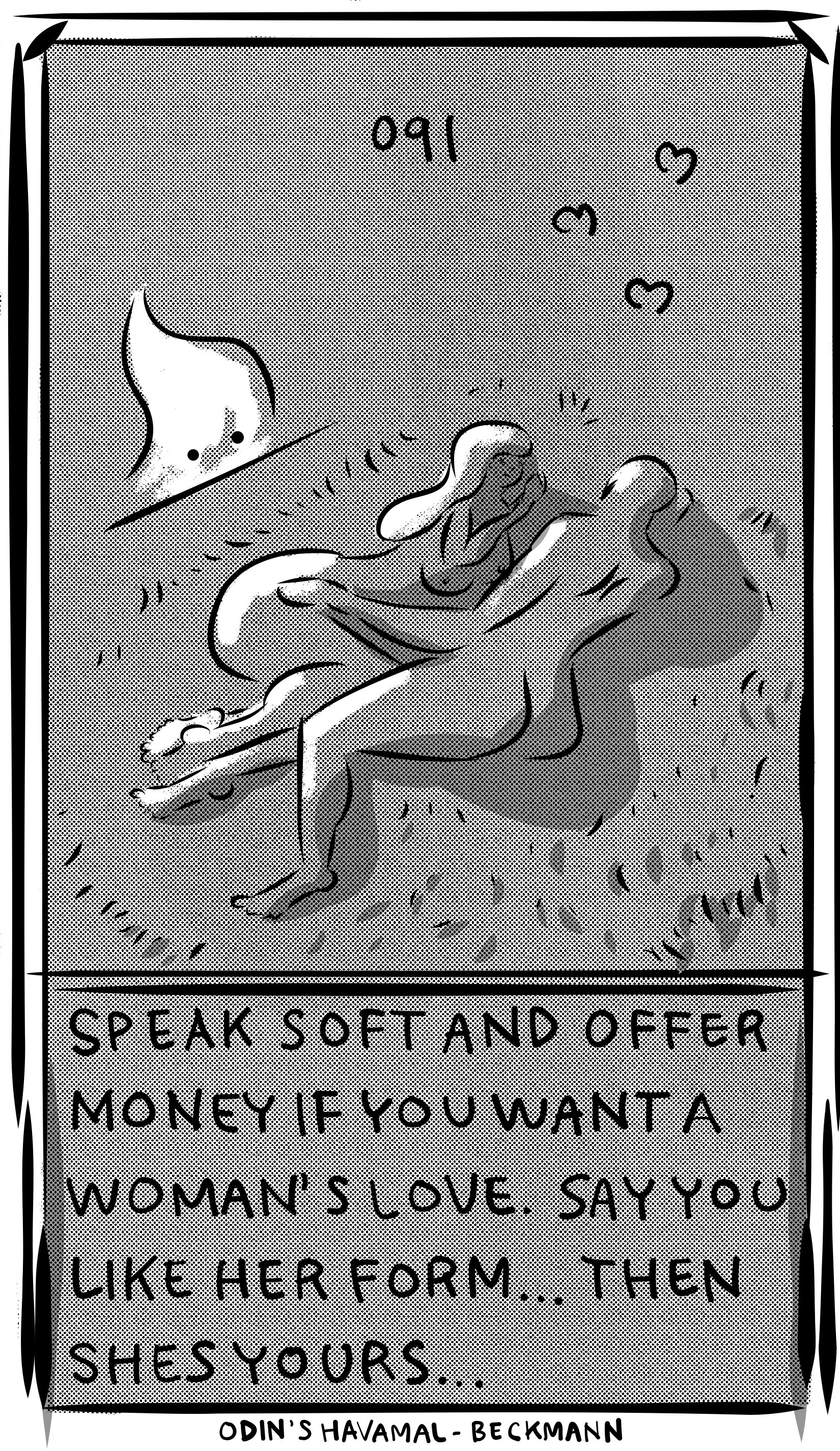
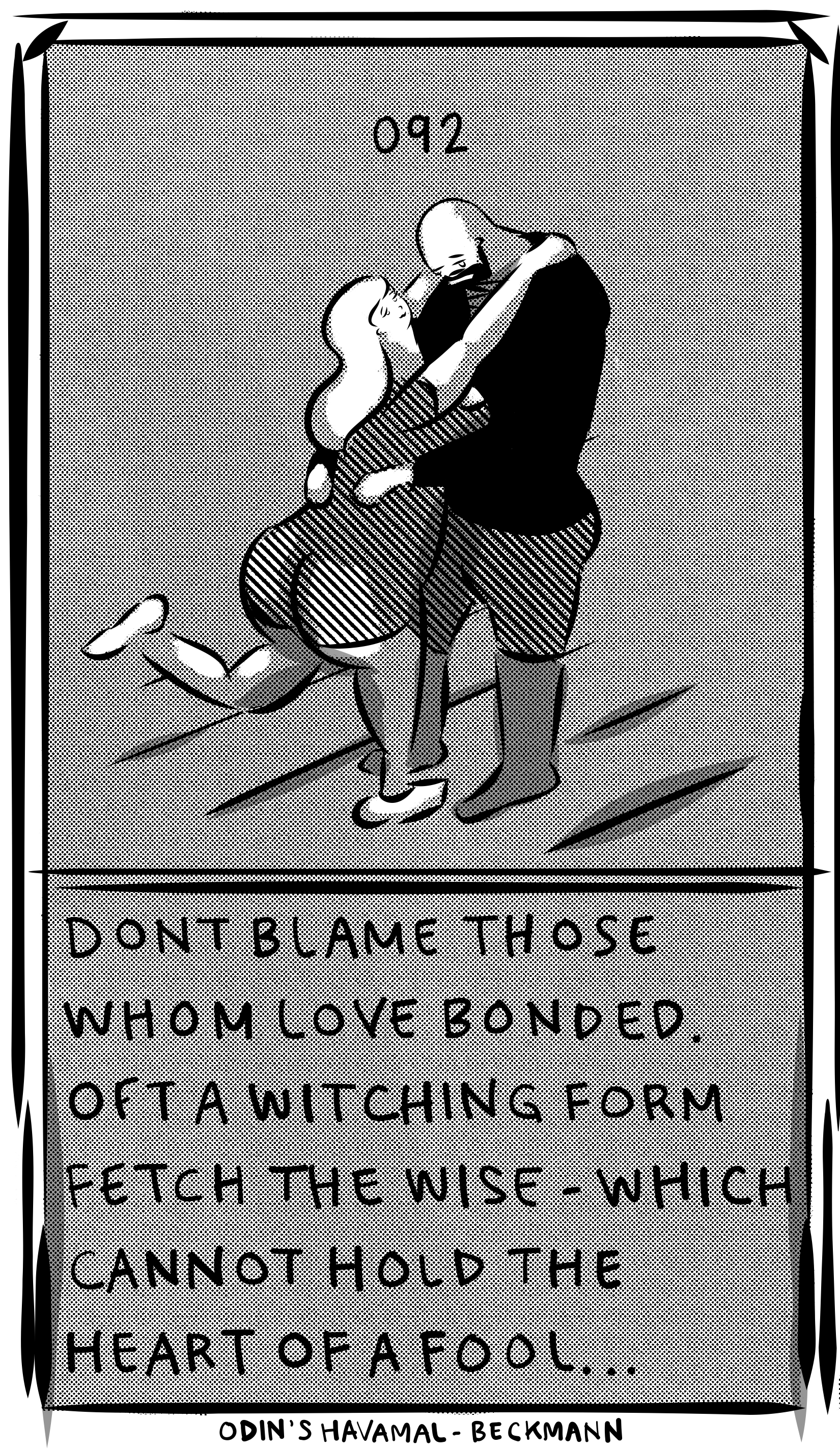
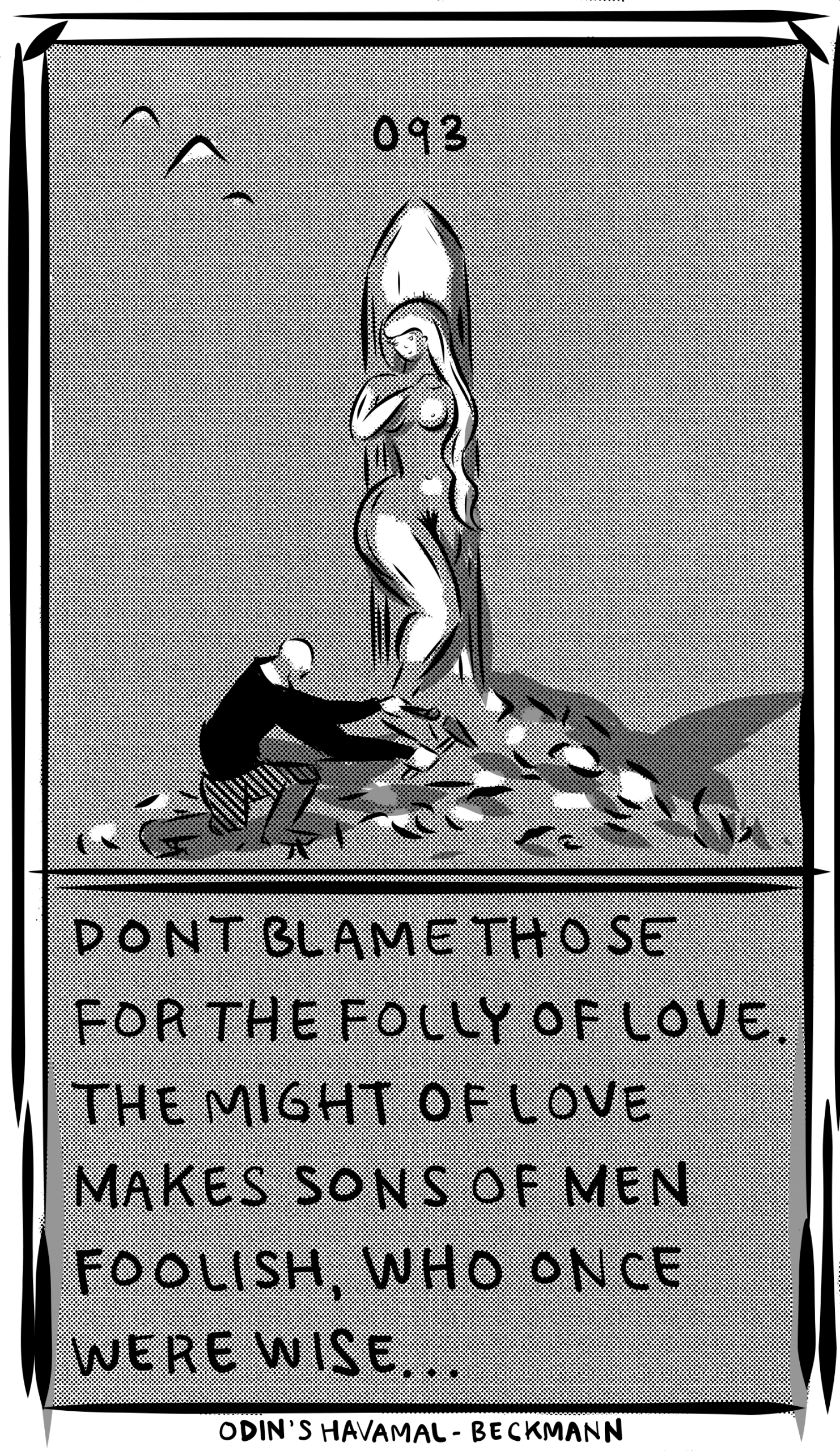
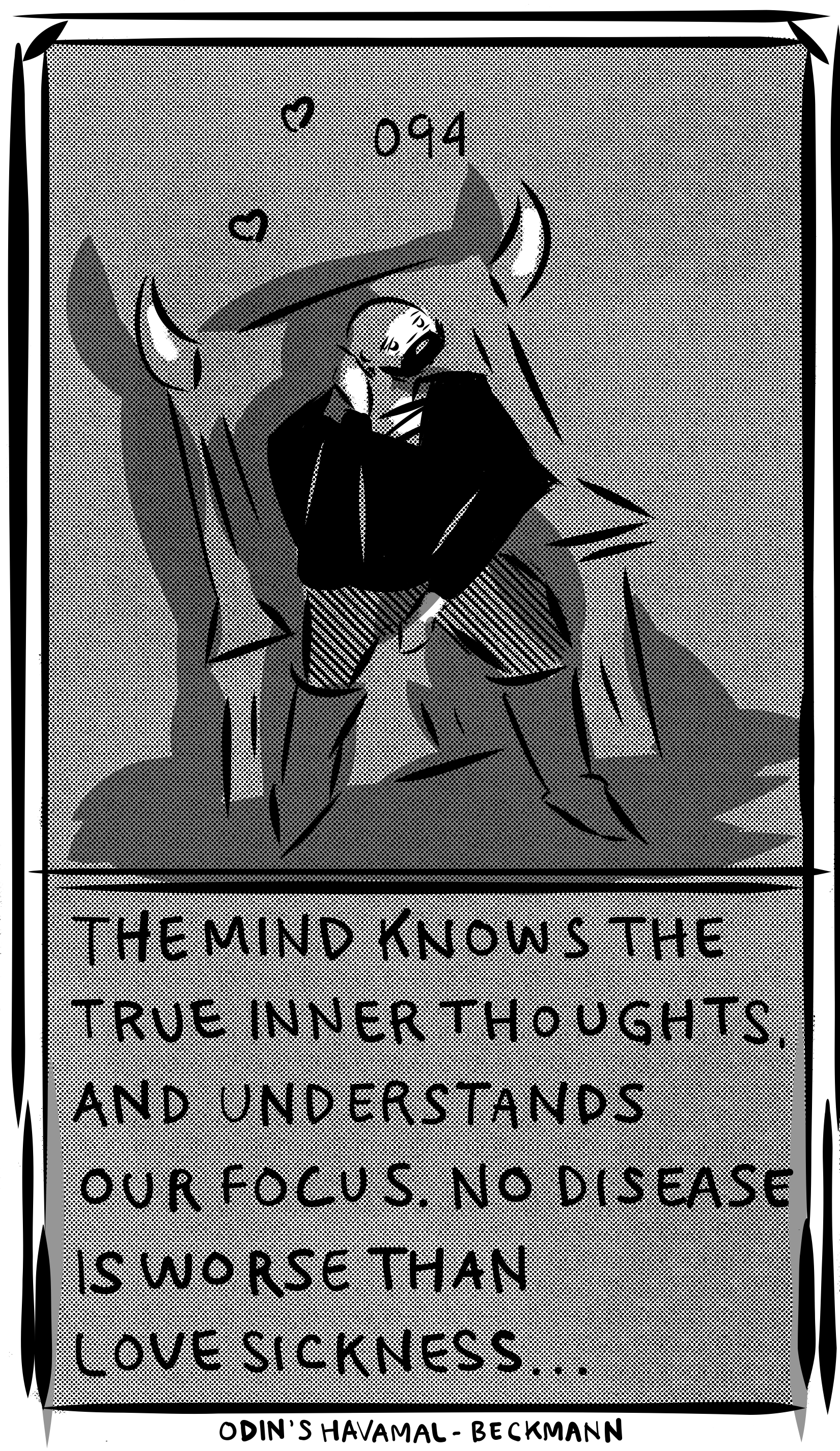
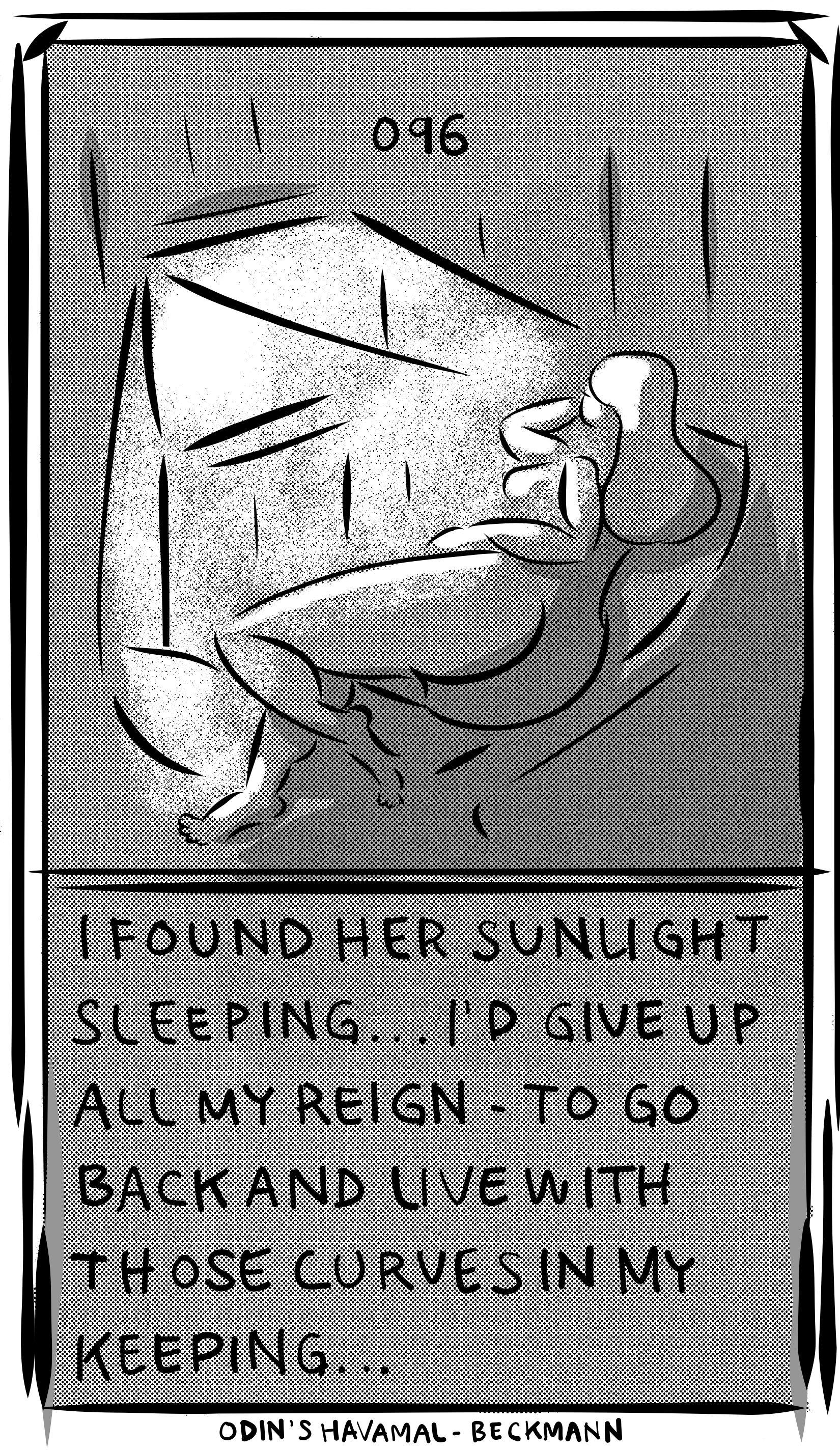
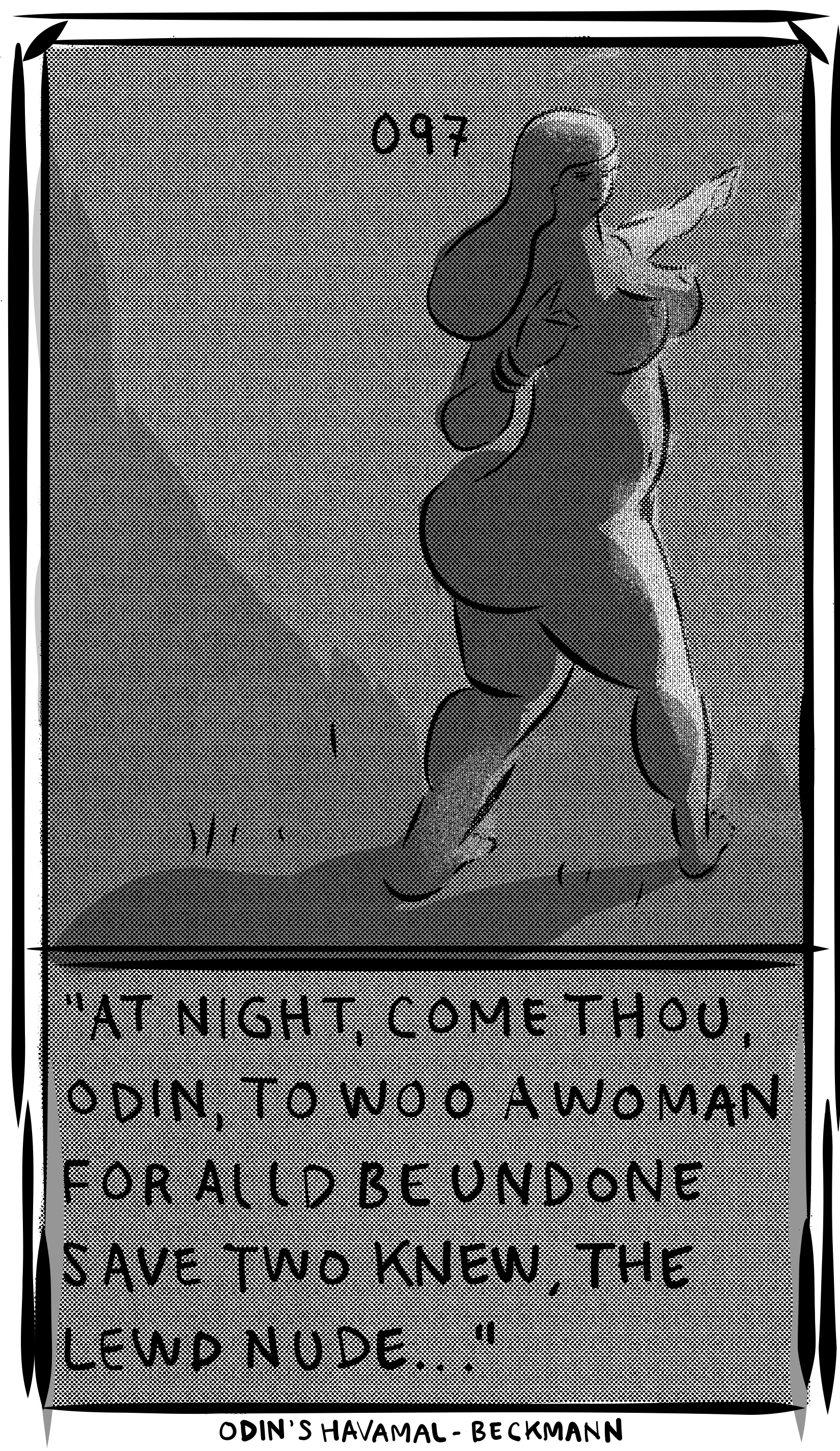
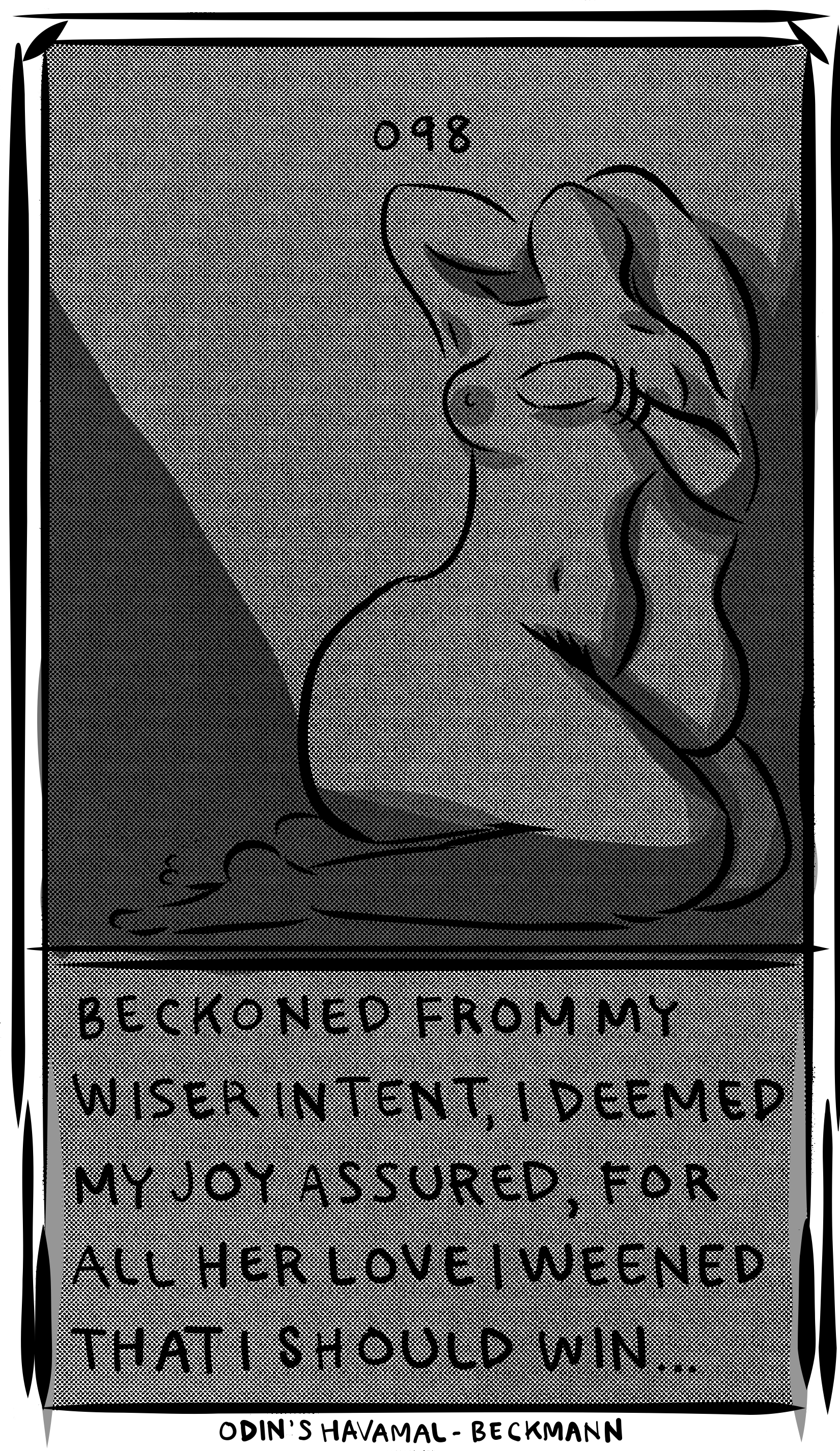
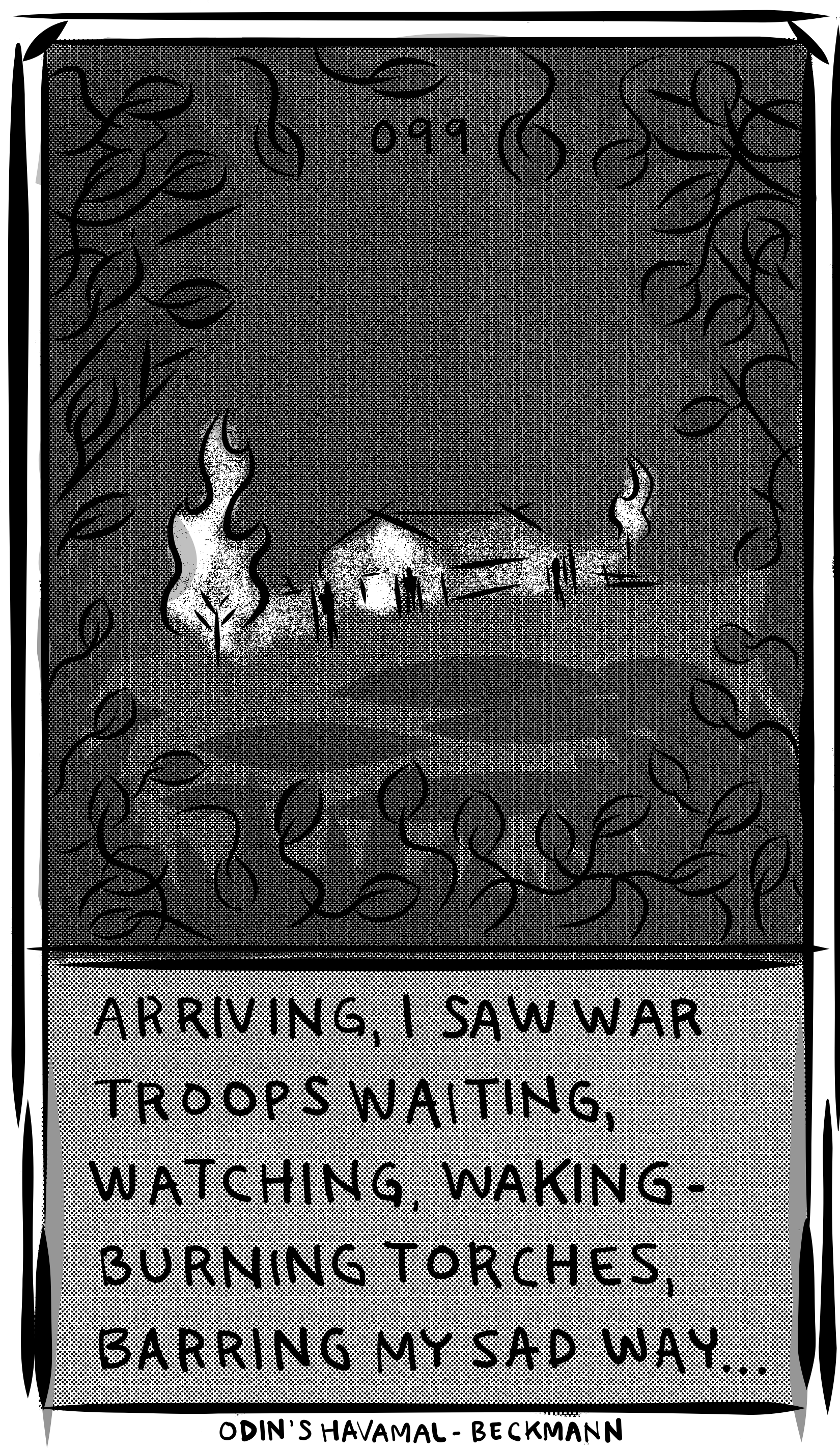
Odin’s Love Quests (095 – 101)
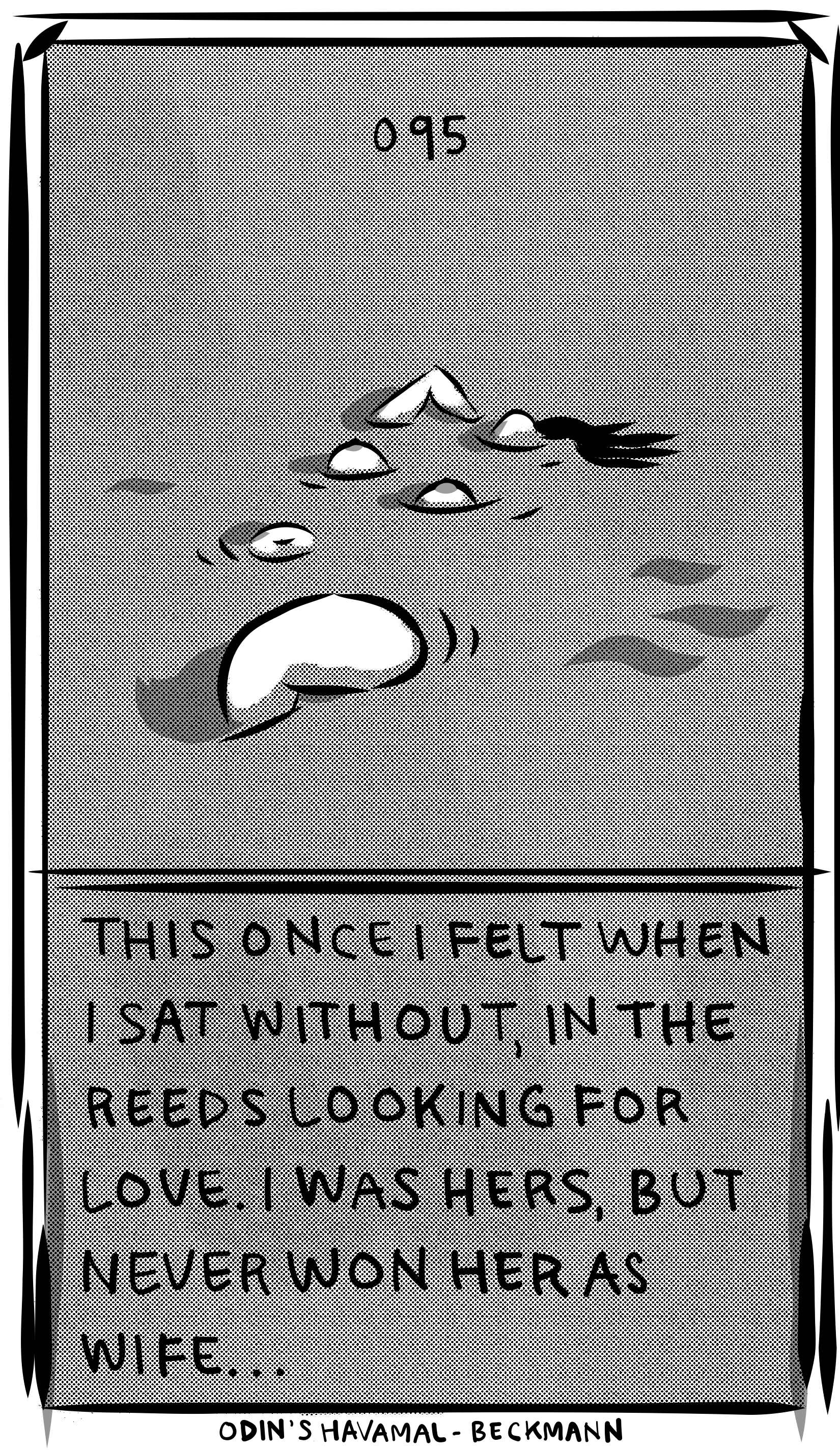
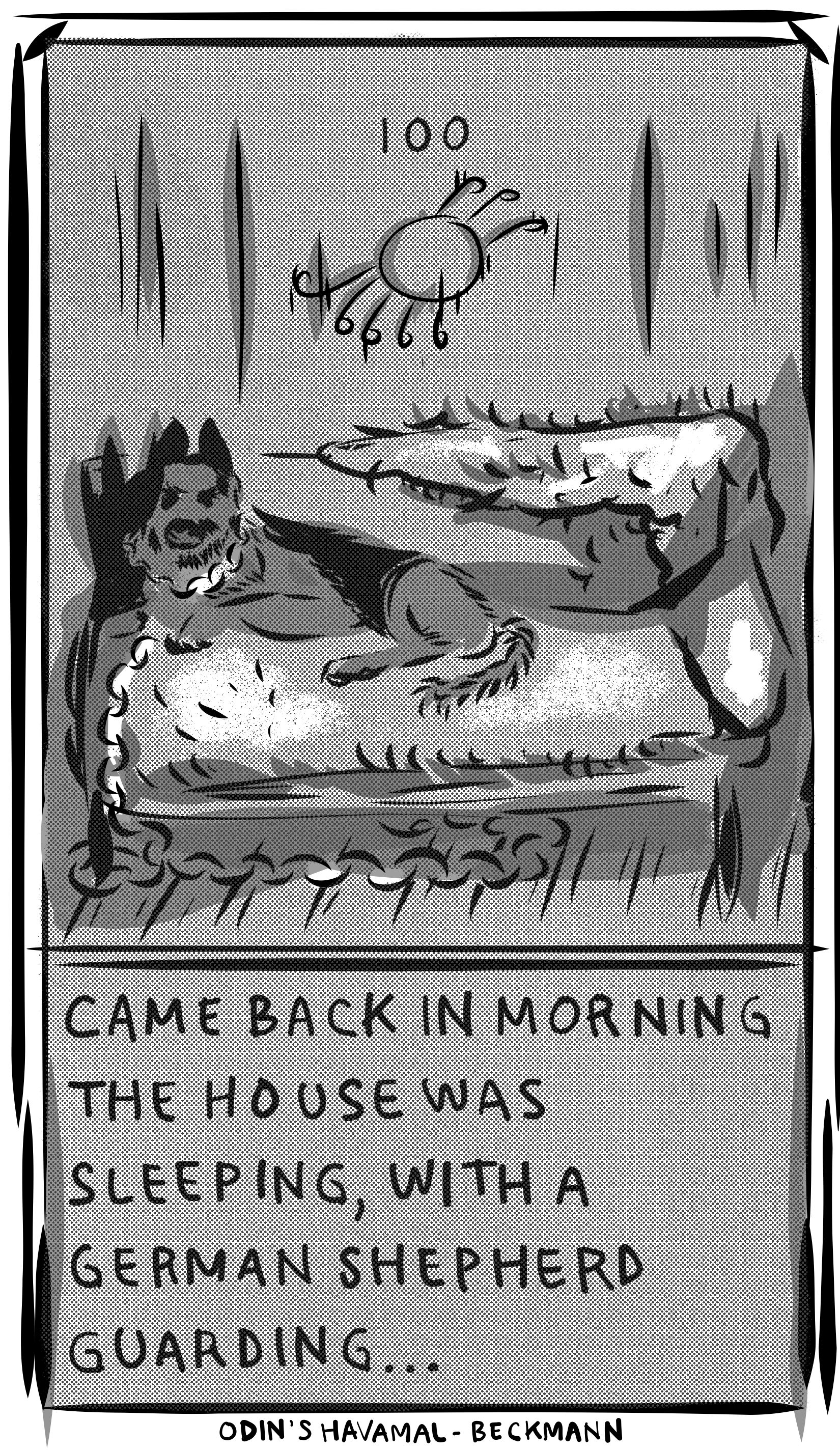
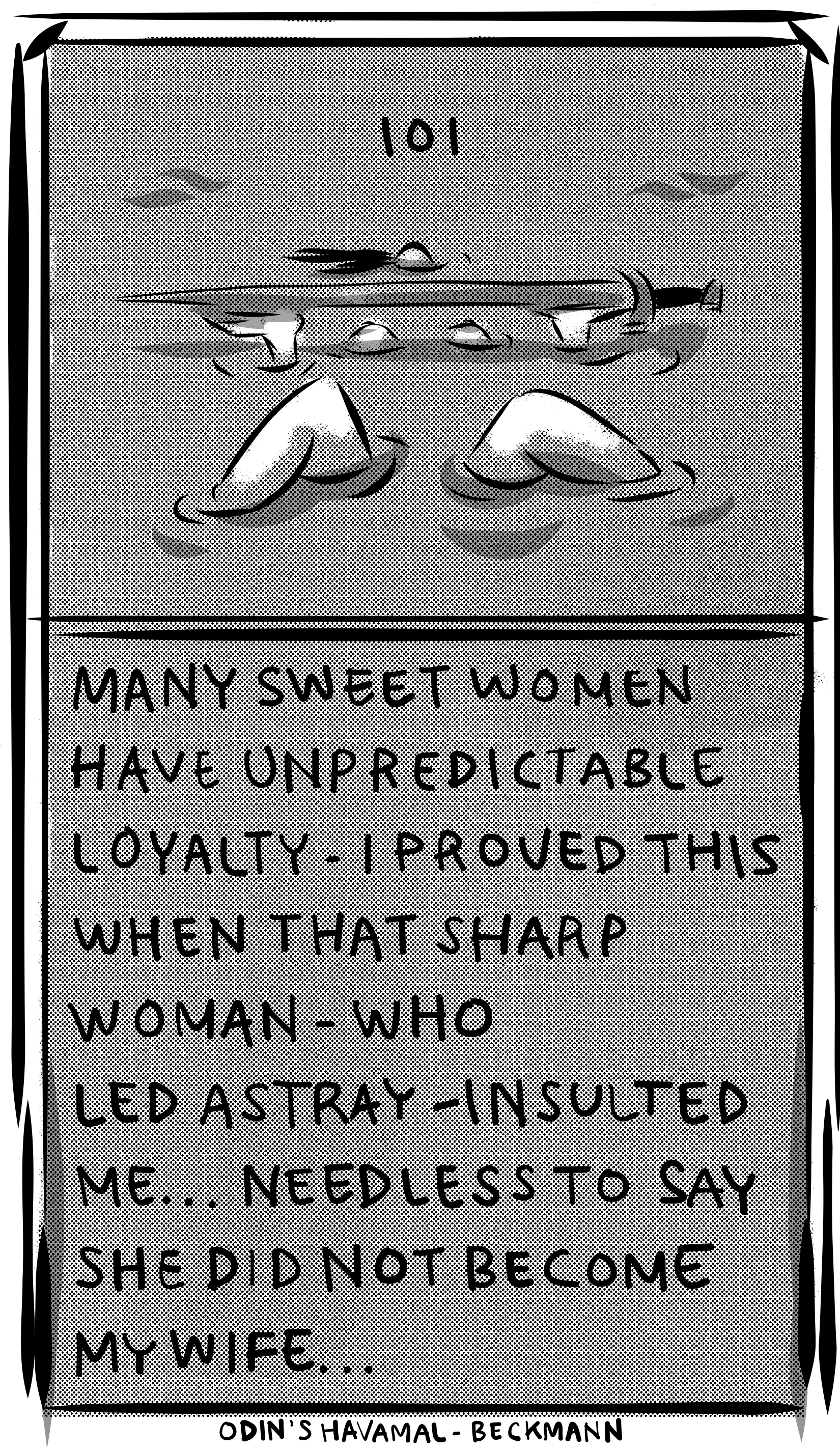
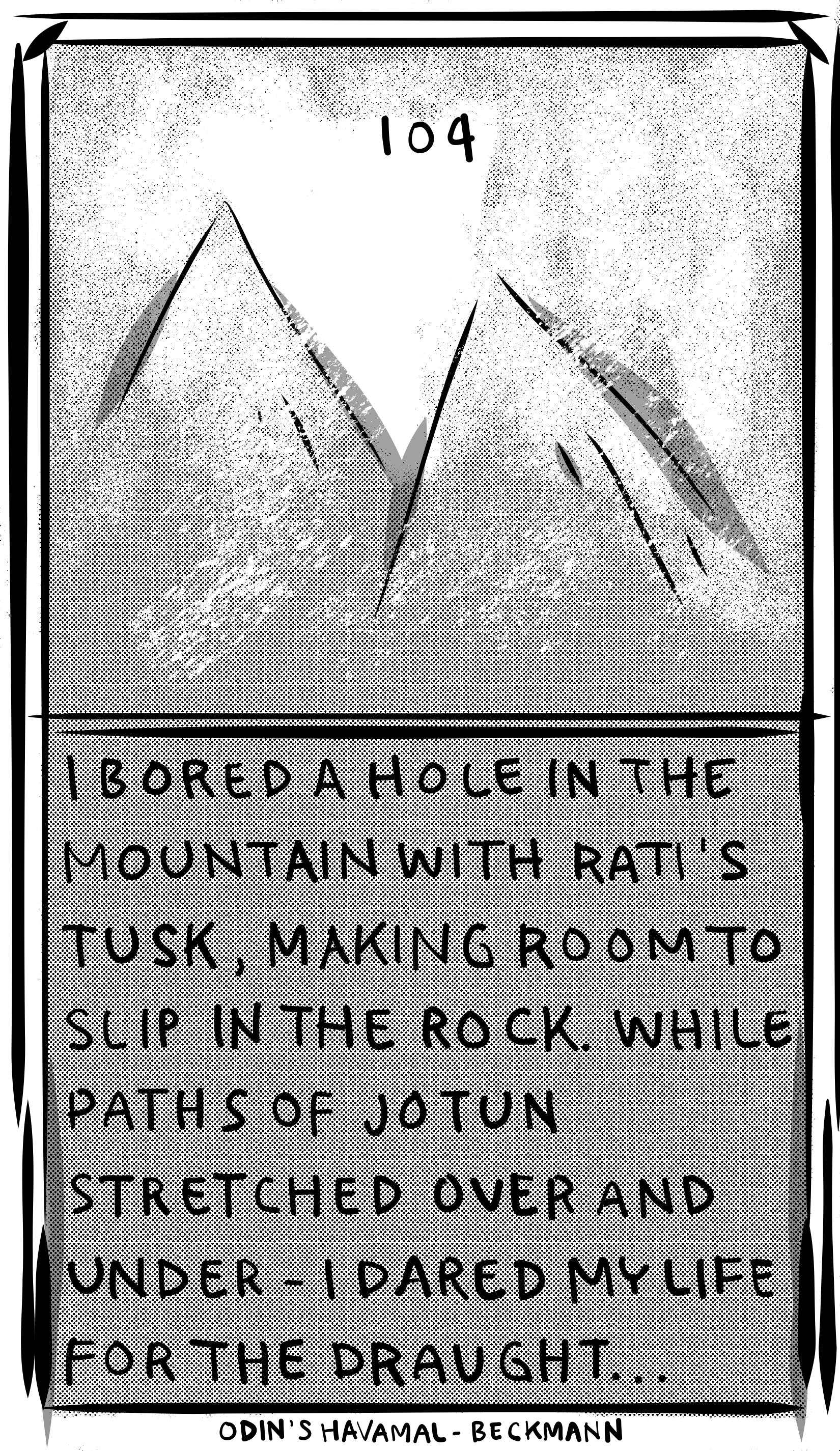
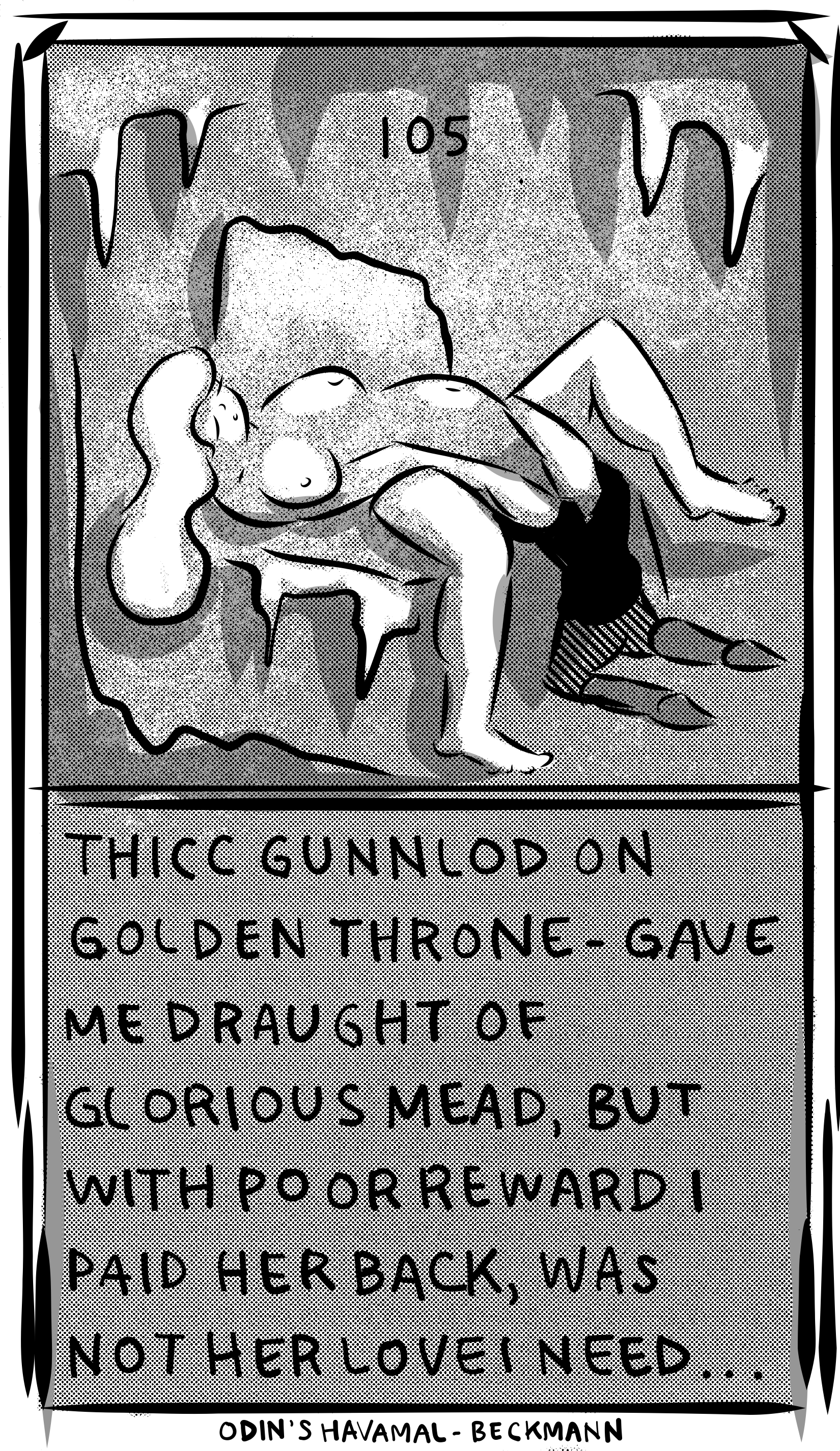
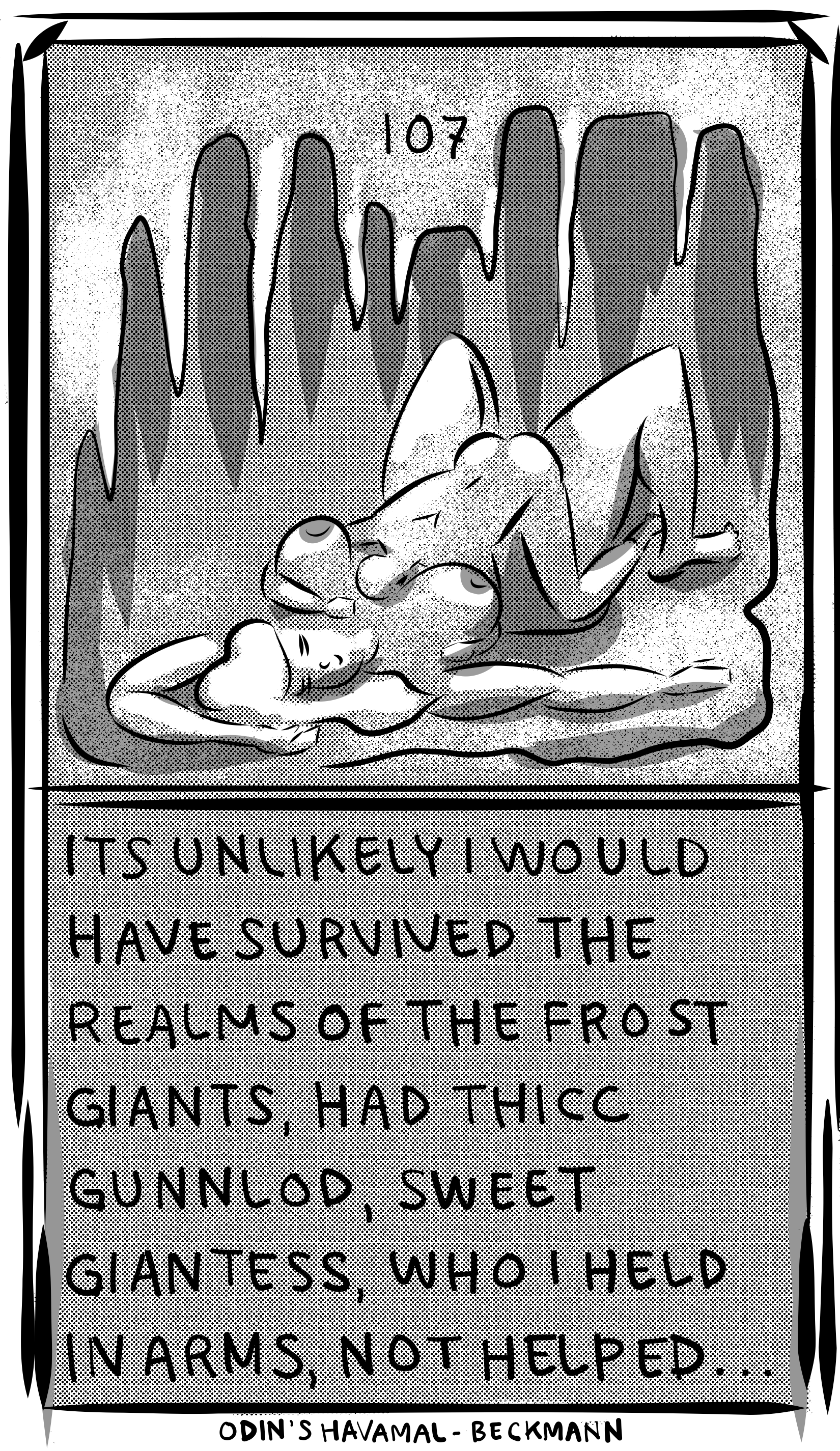
Odin’s Quest for the Song Mead (102 – 109)
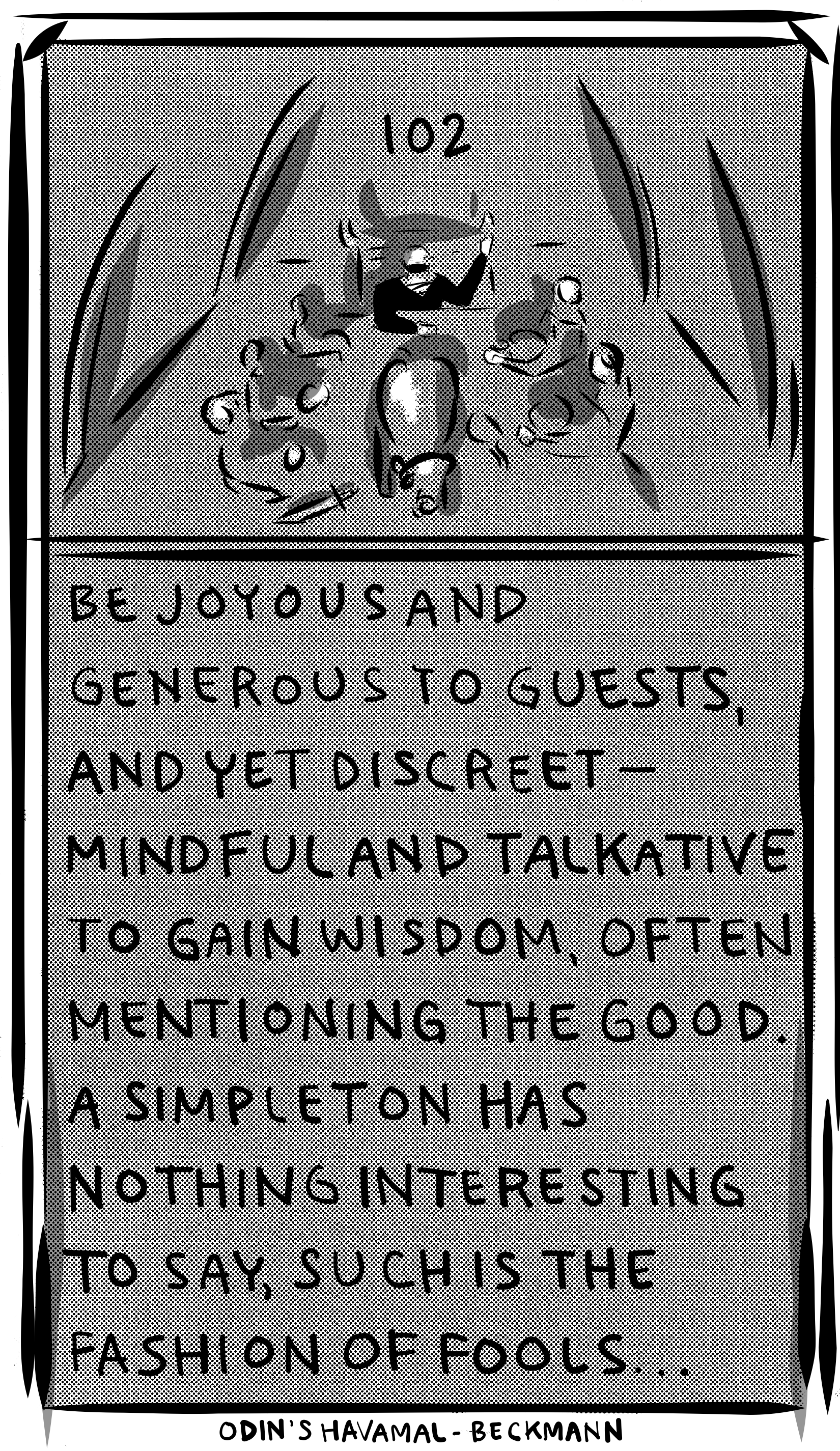
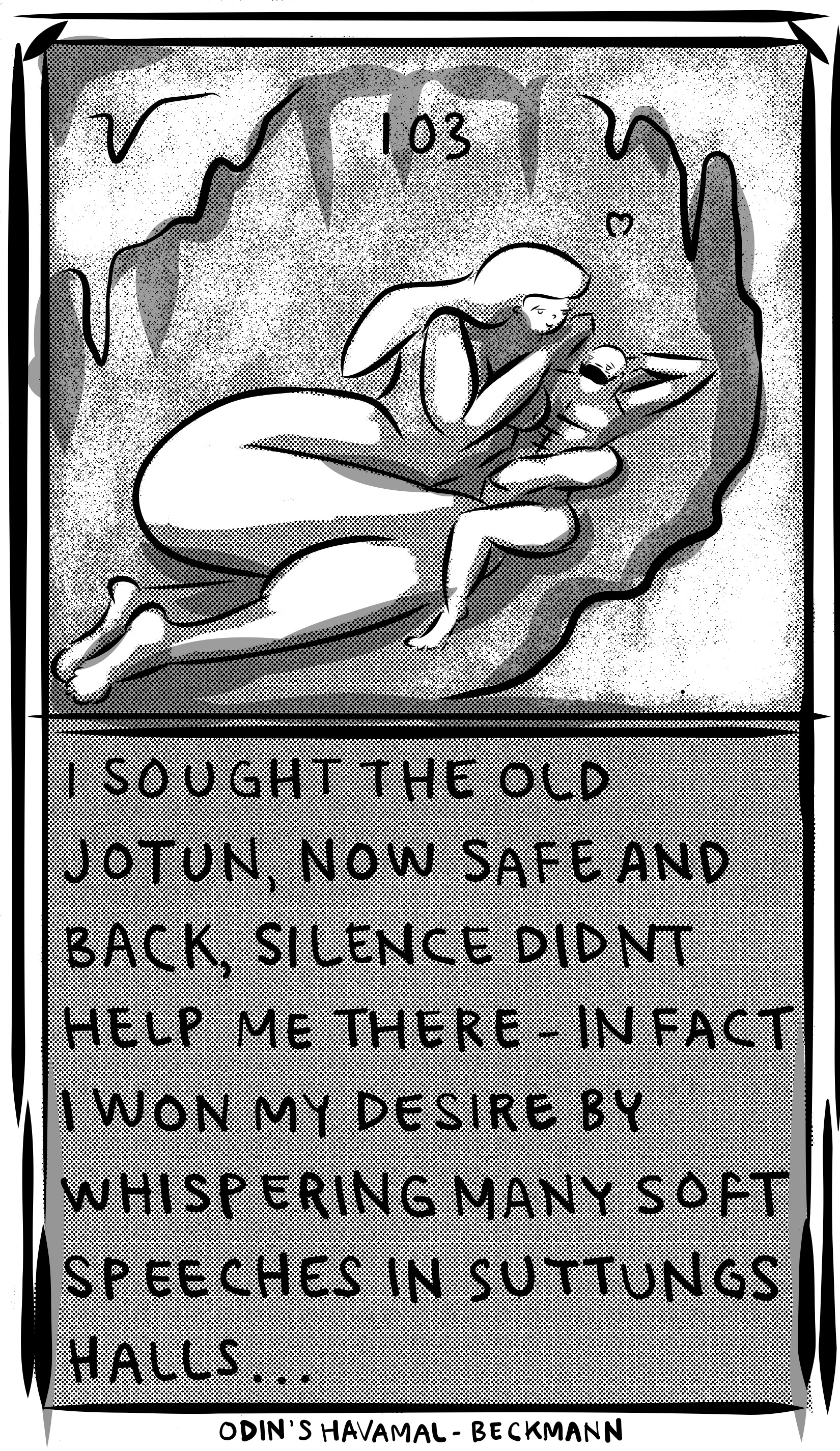
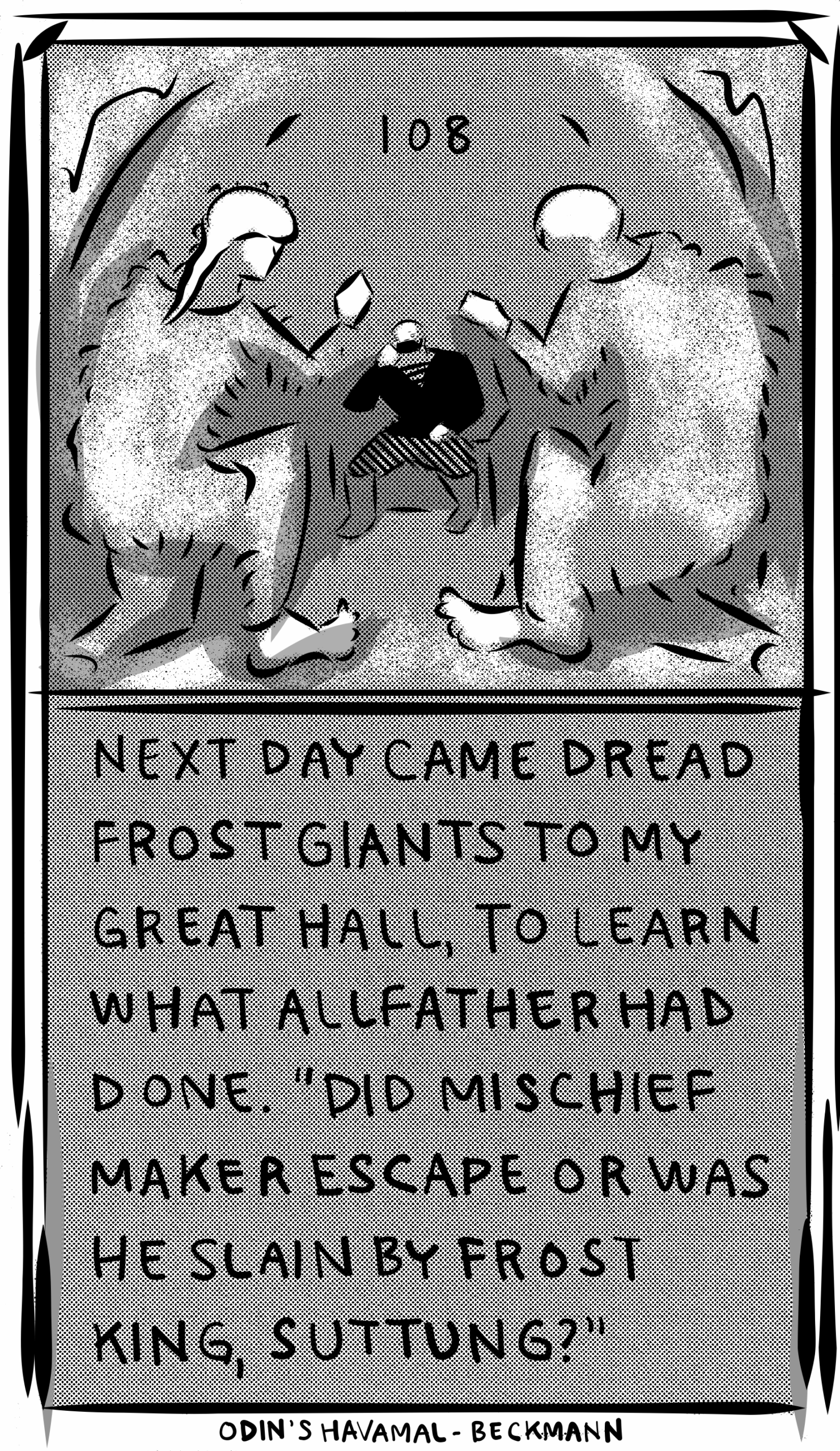
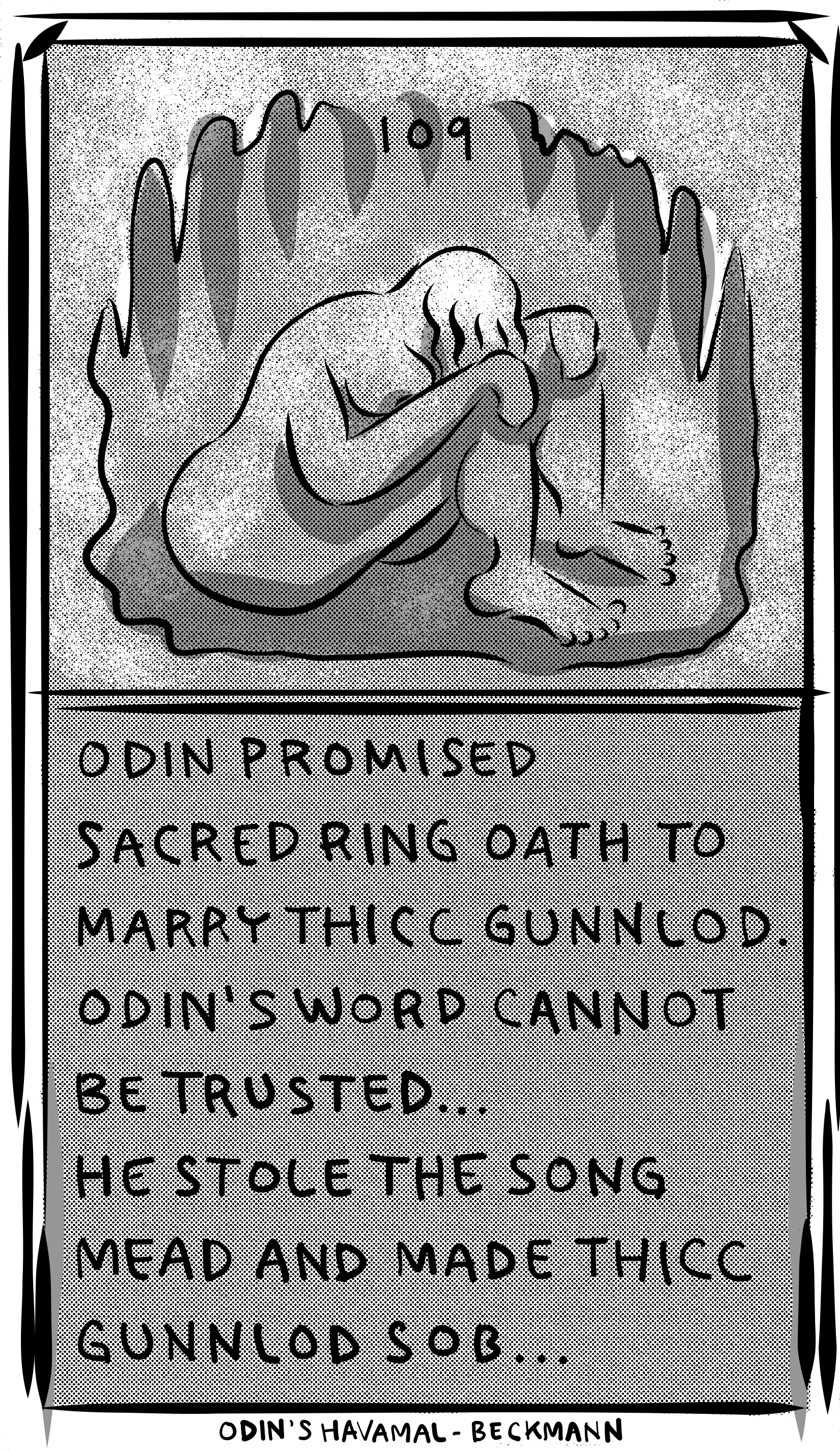
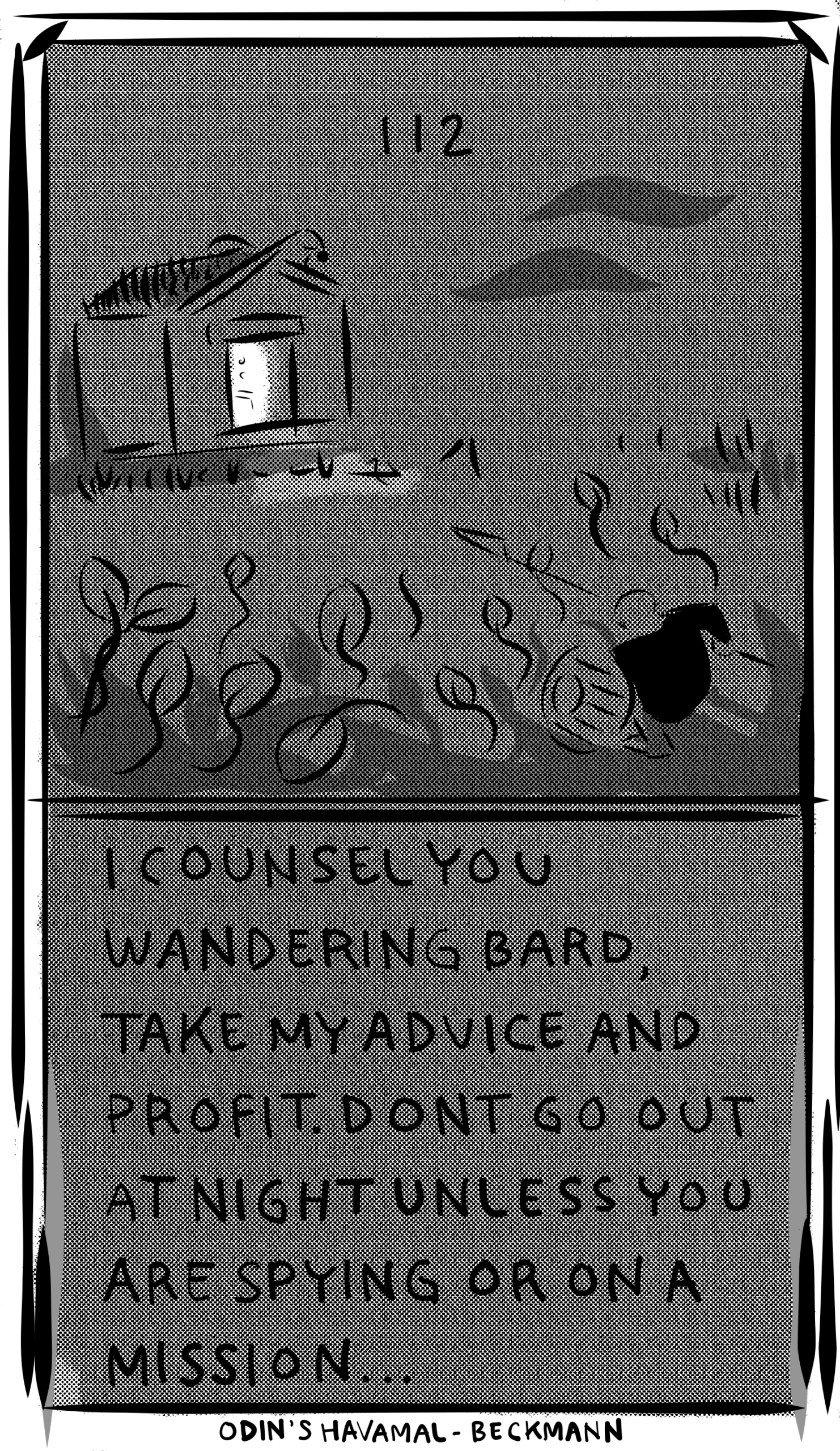
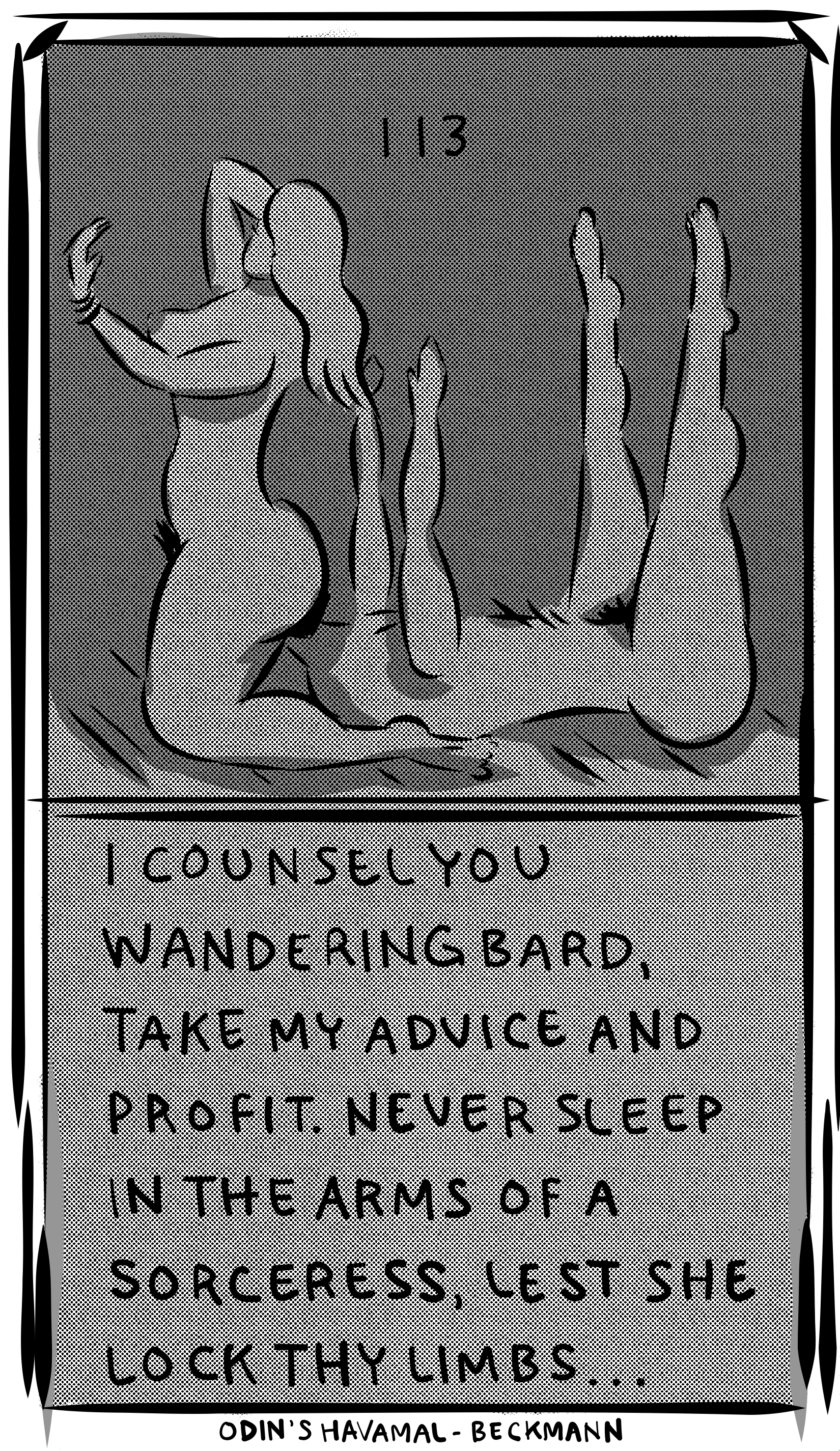
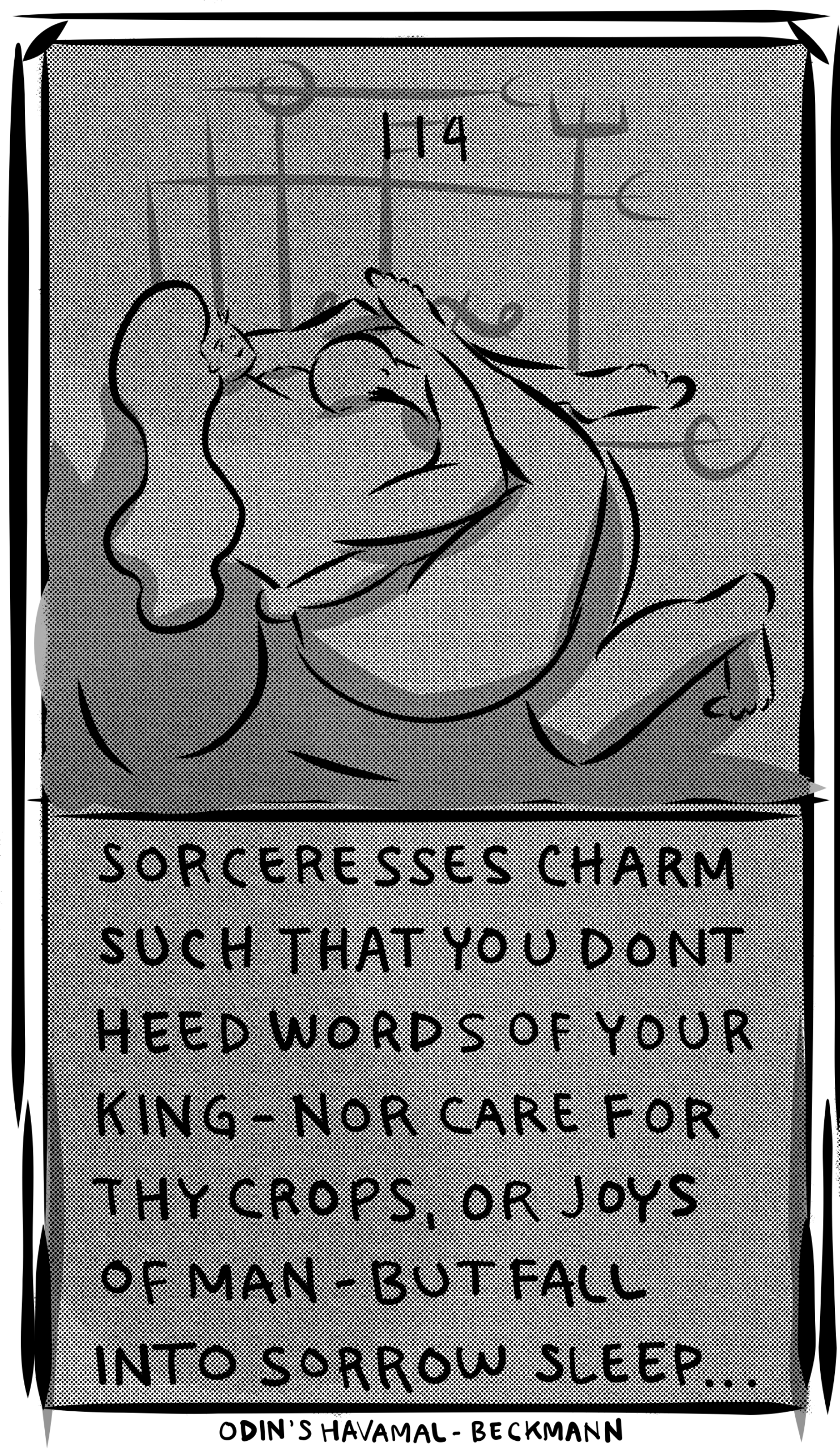
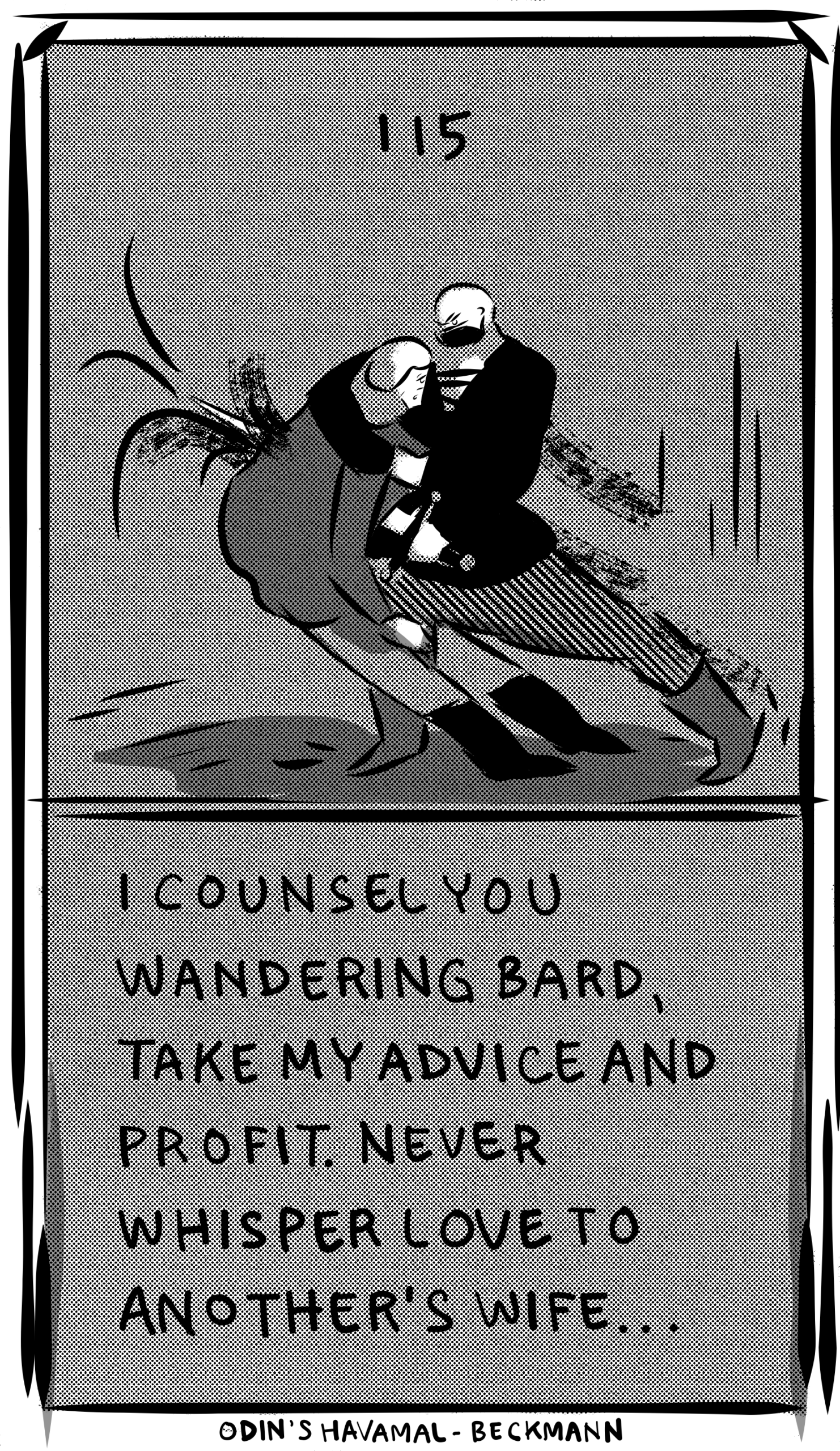
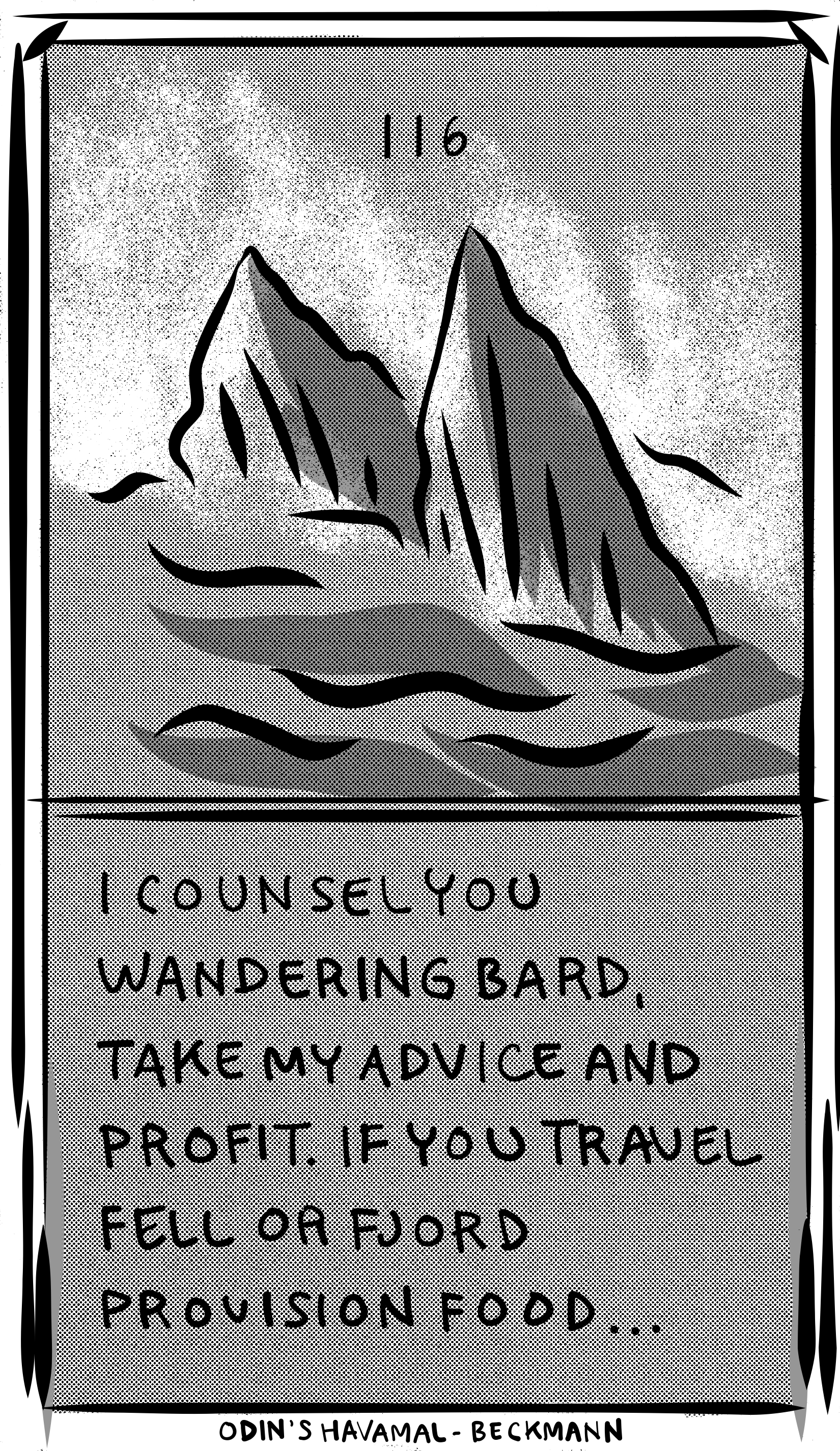
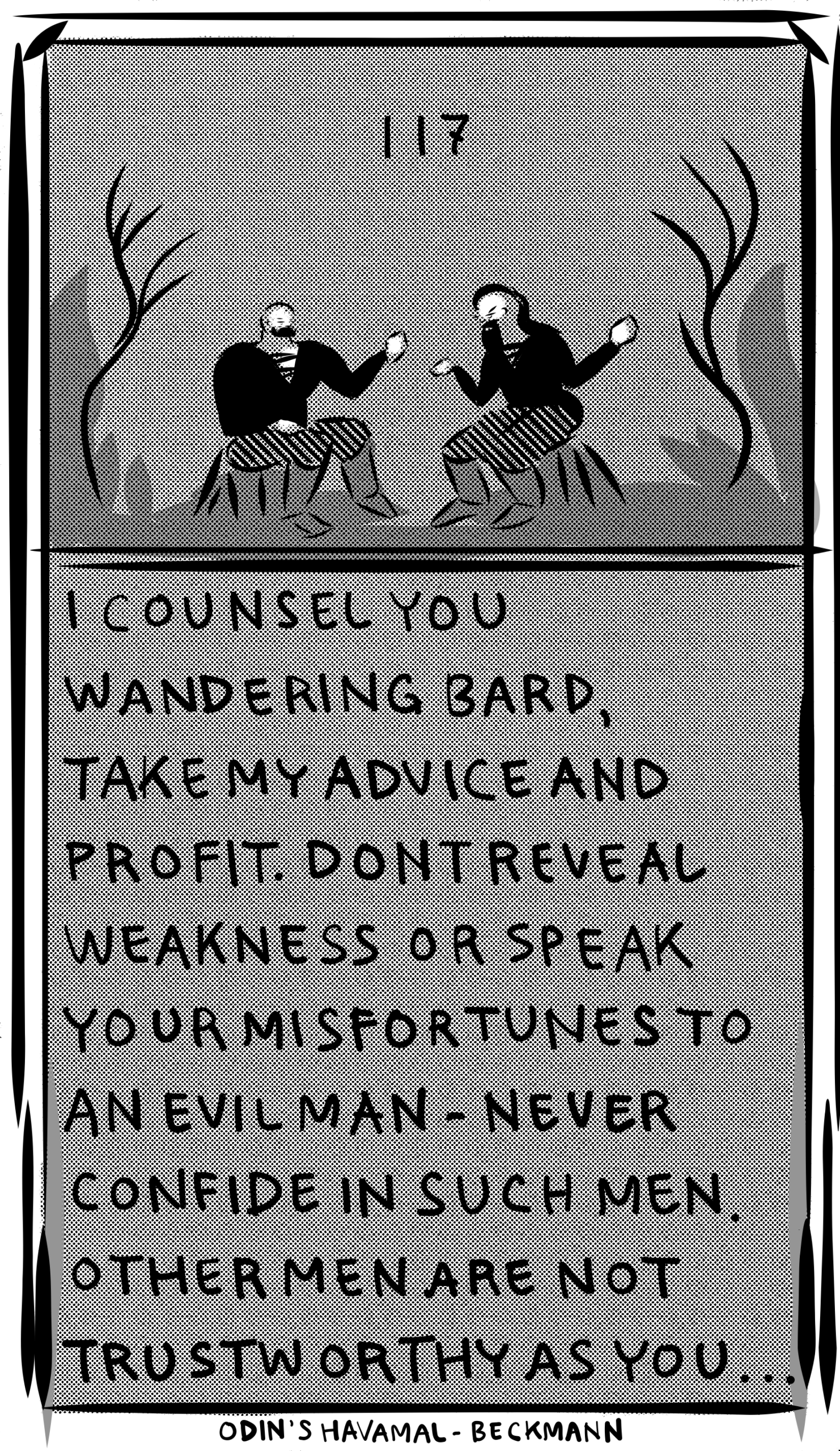
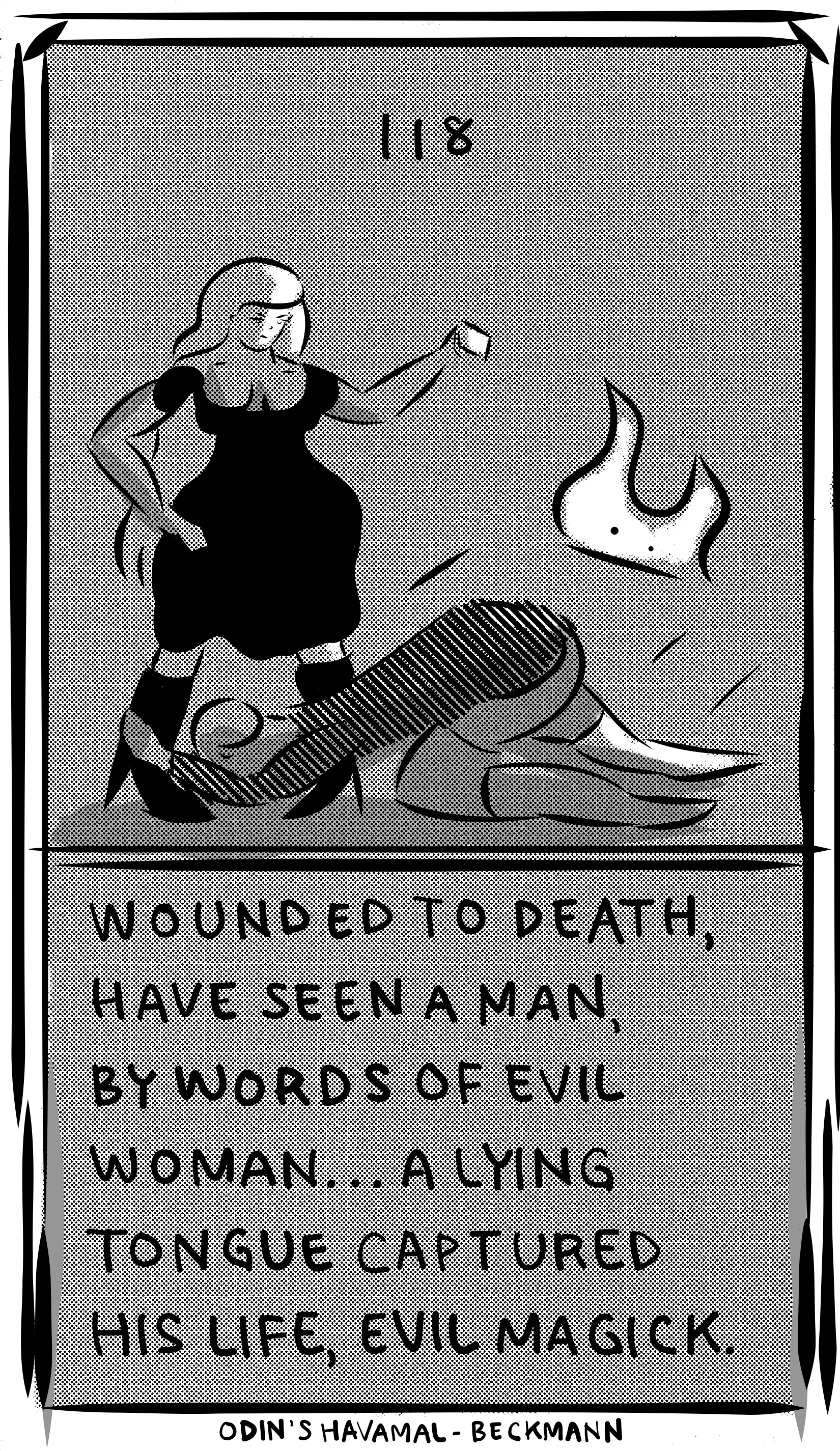
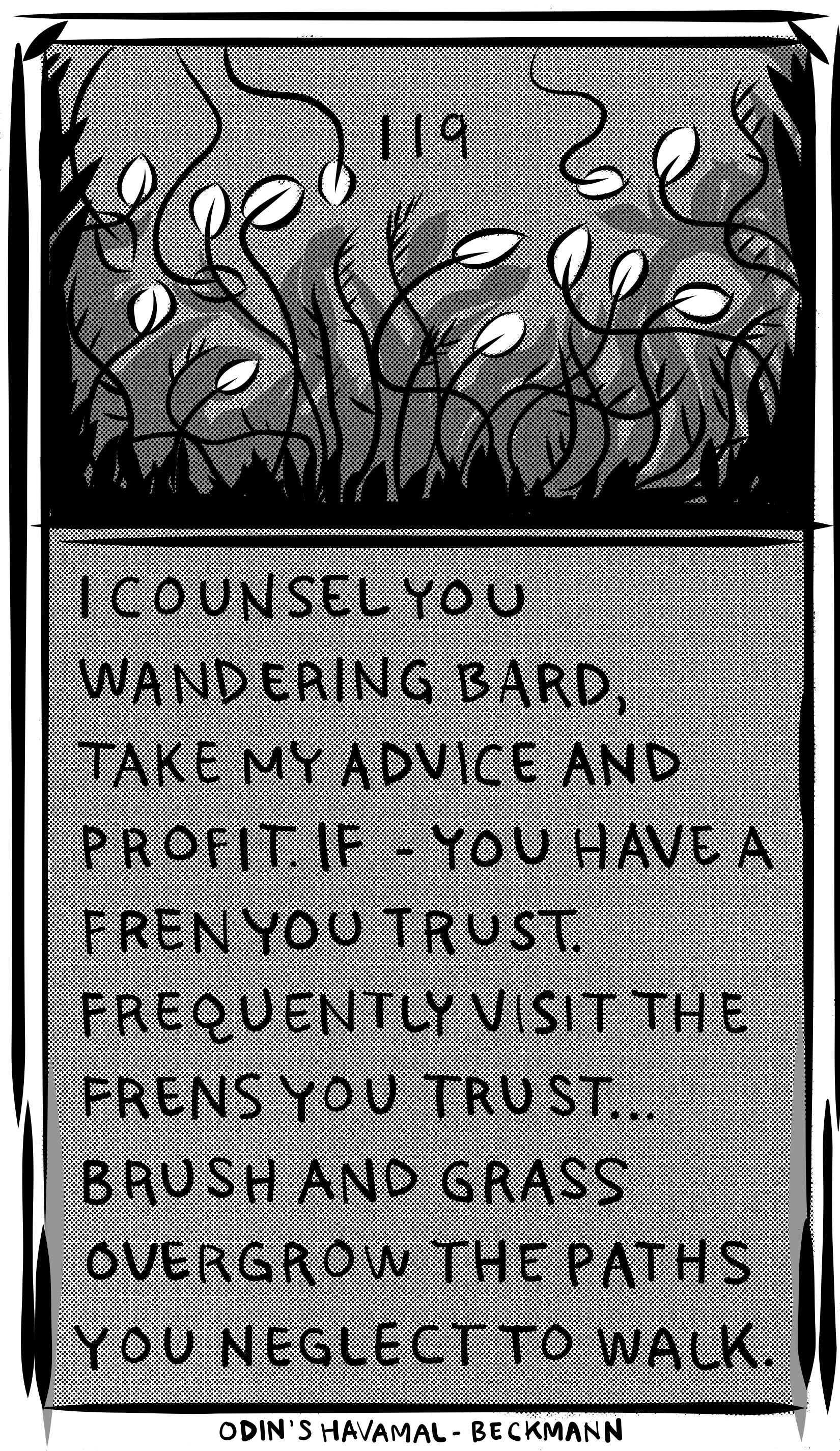
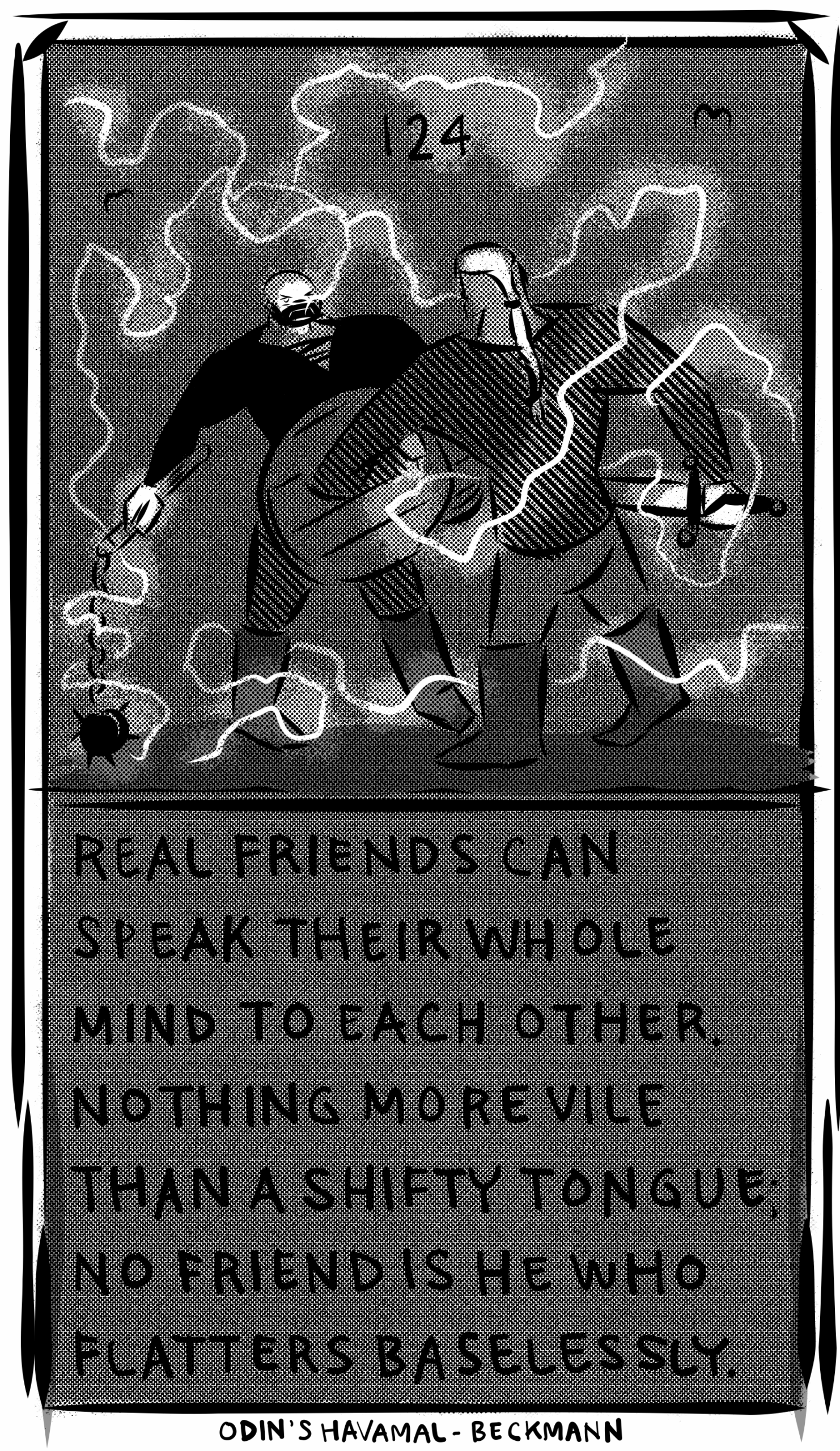
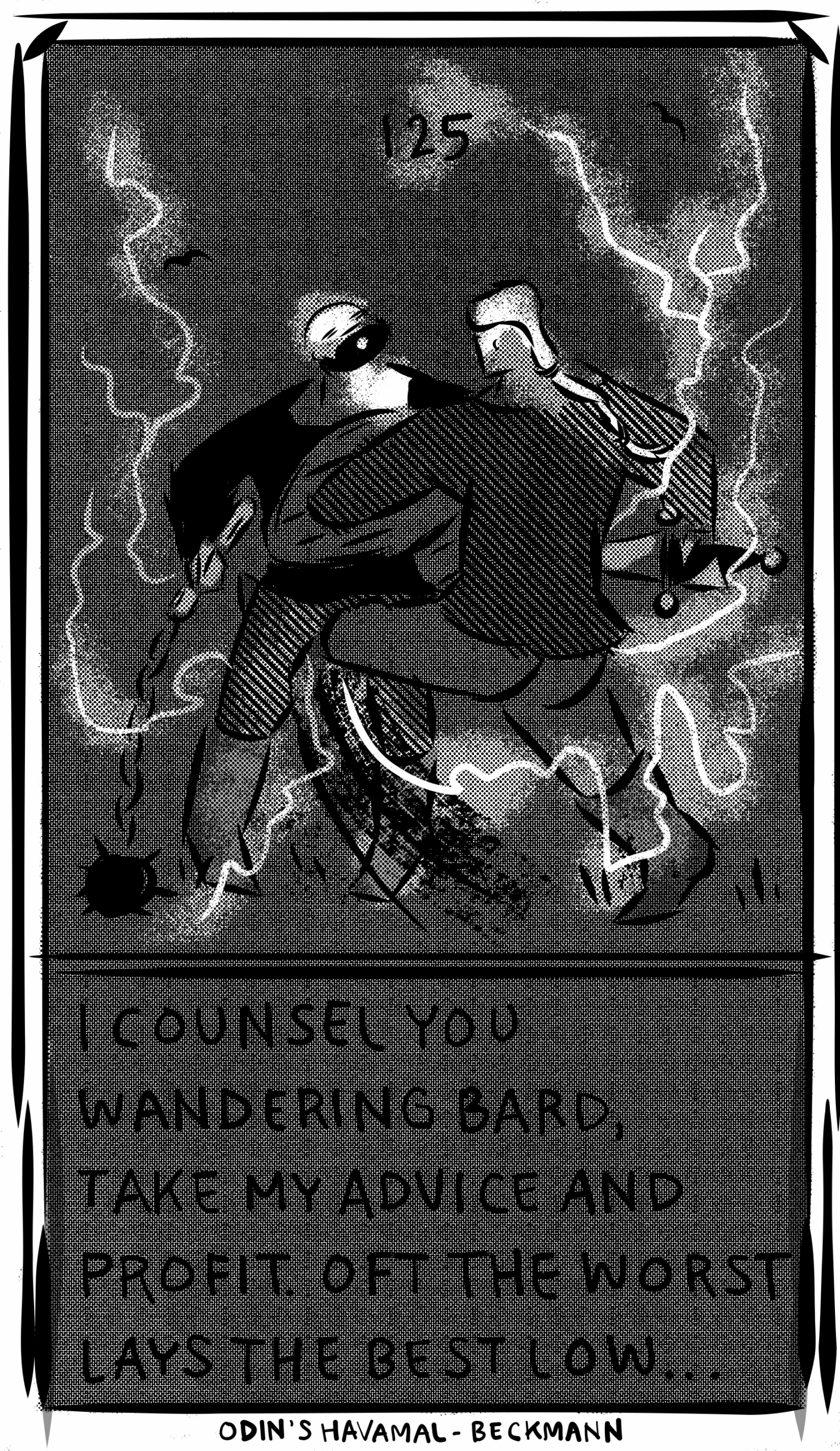
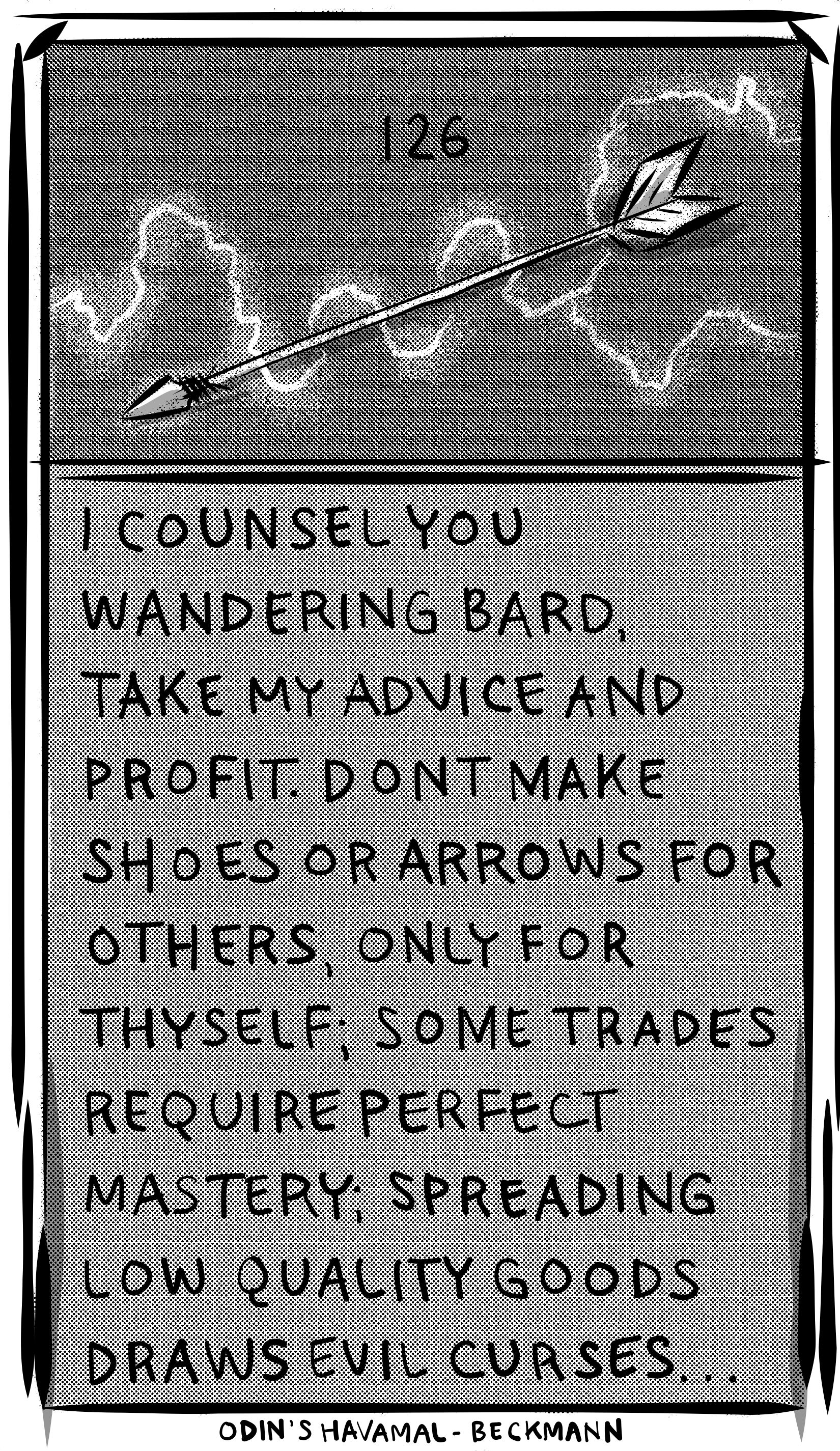
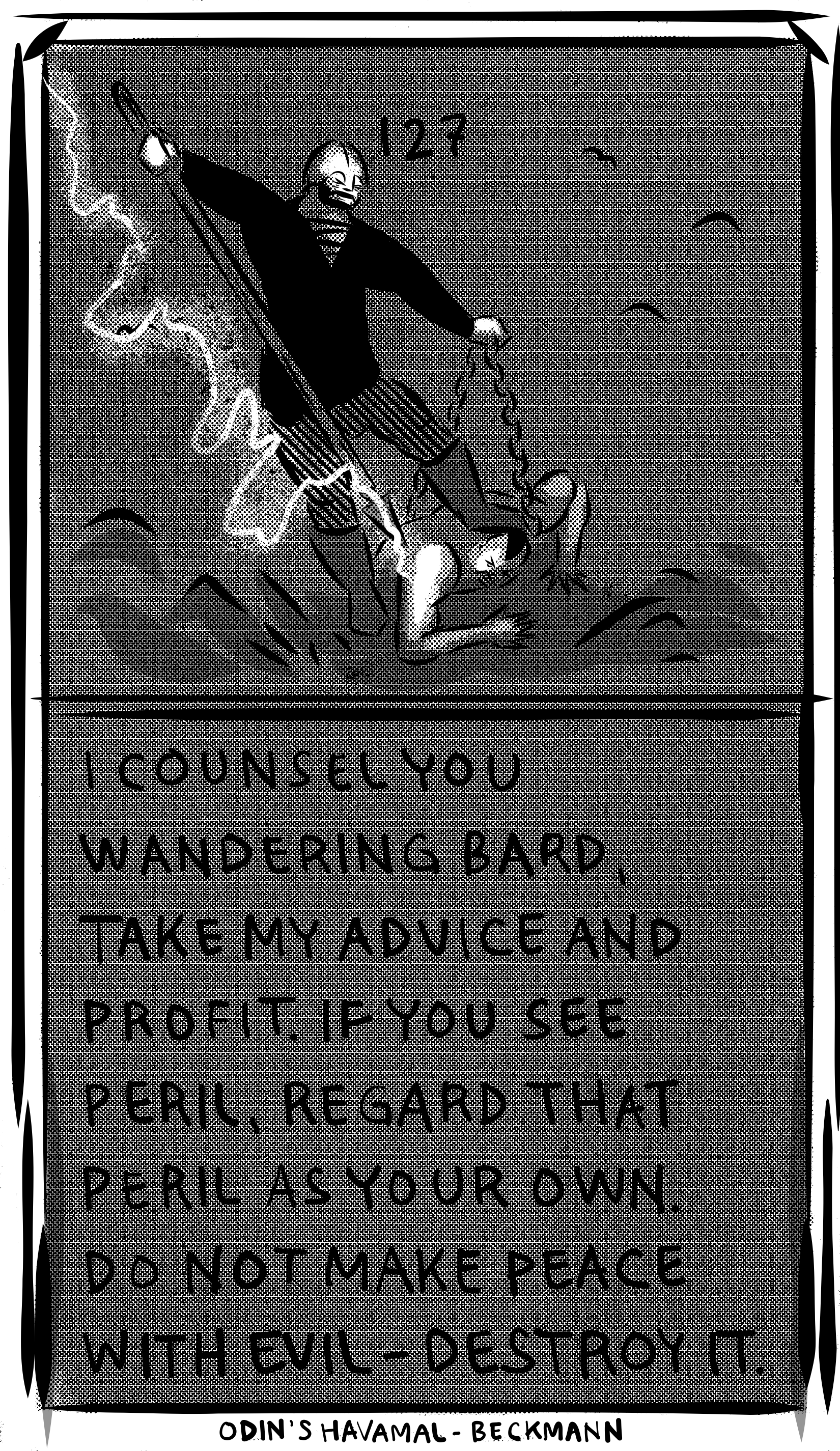
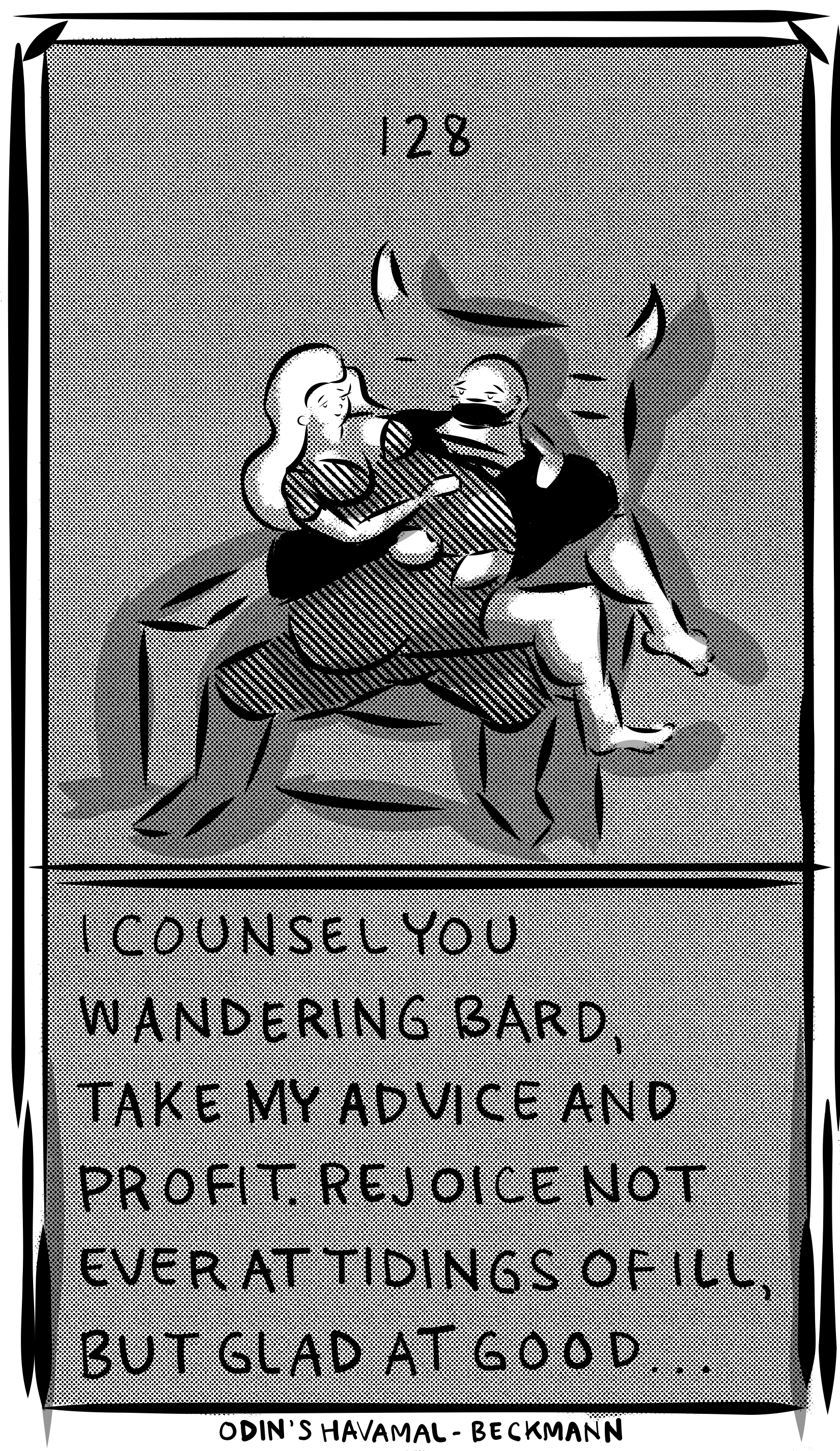
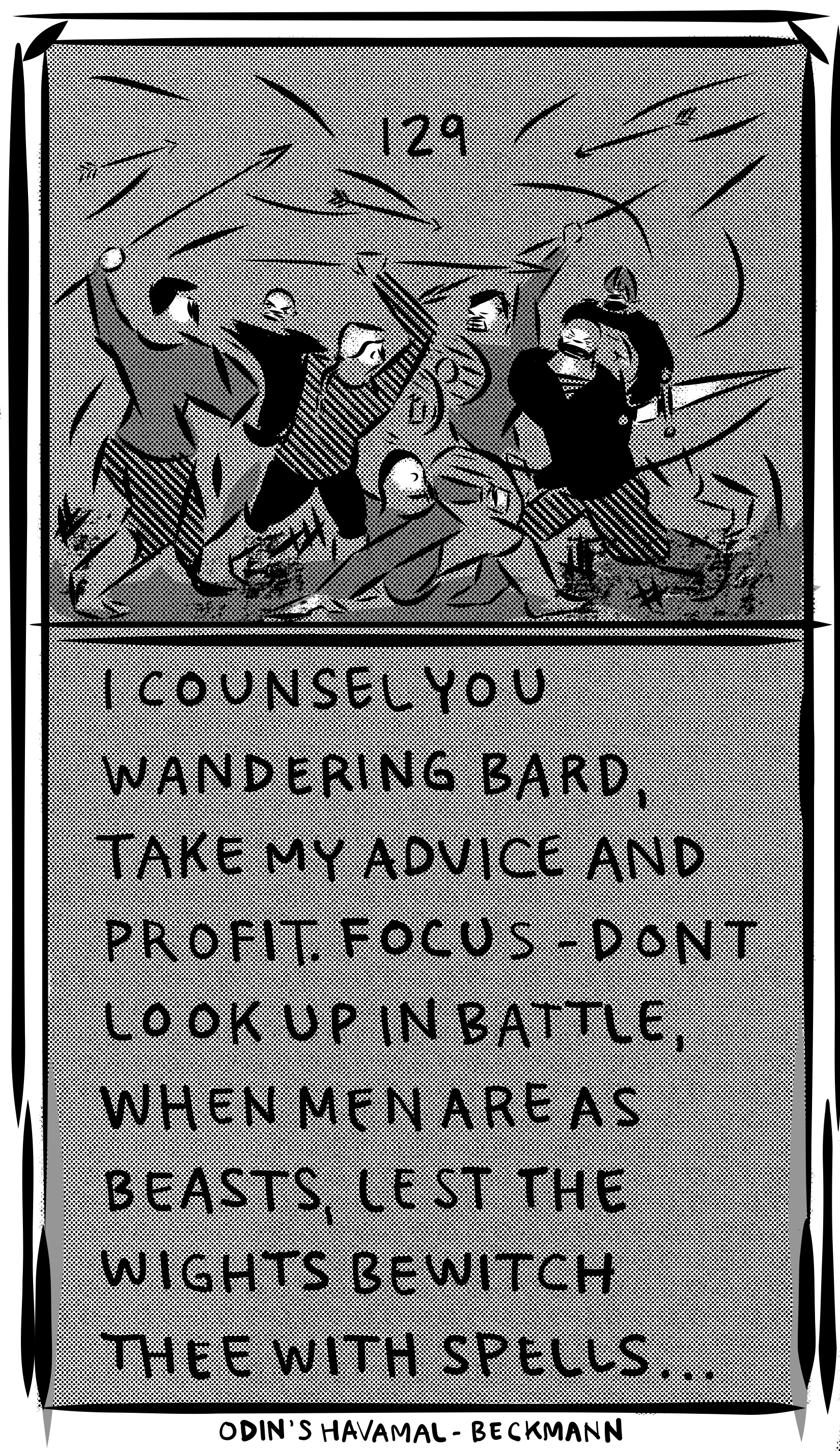
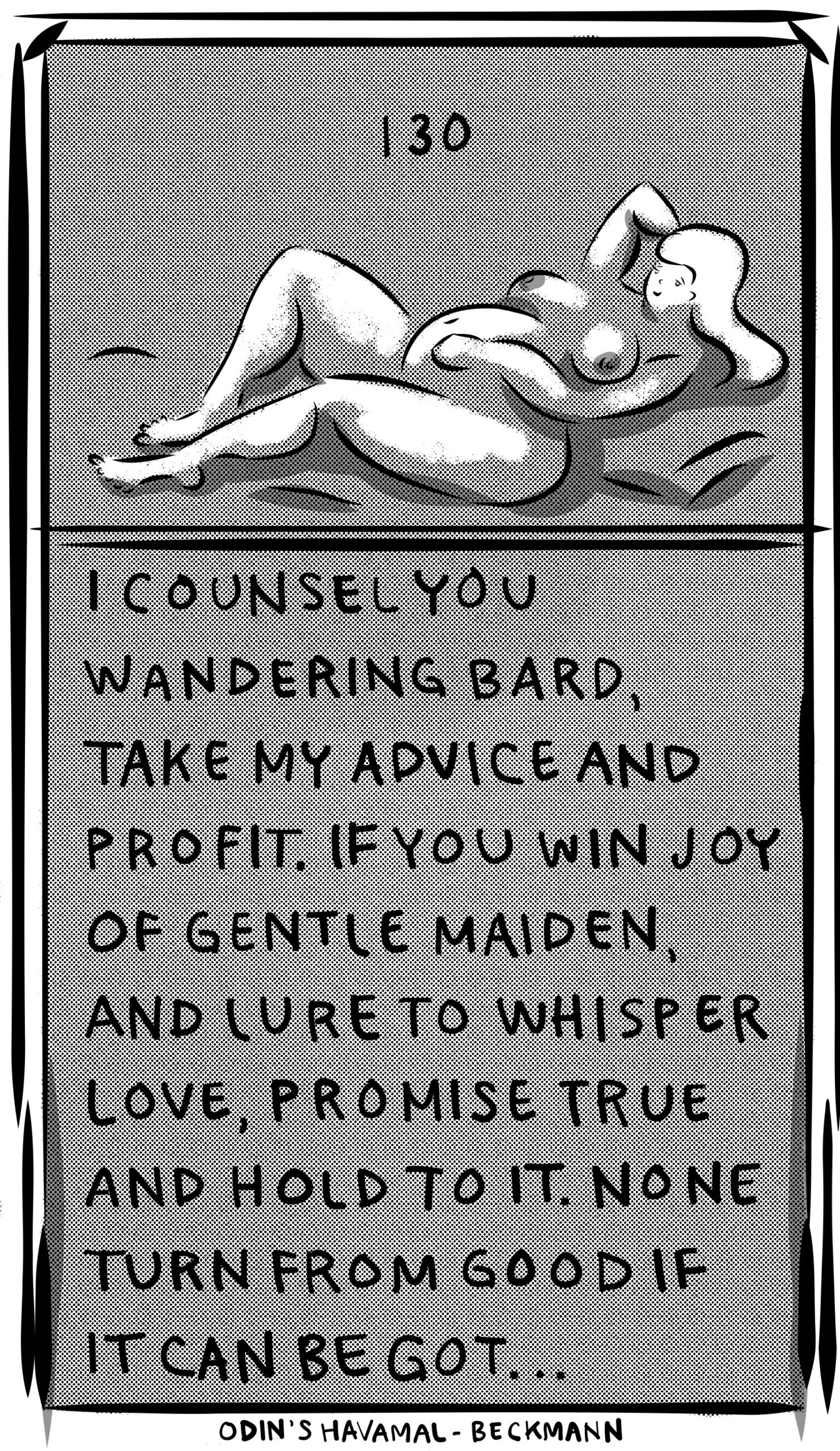
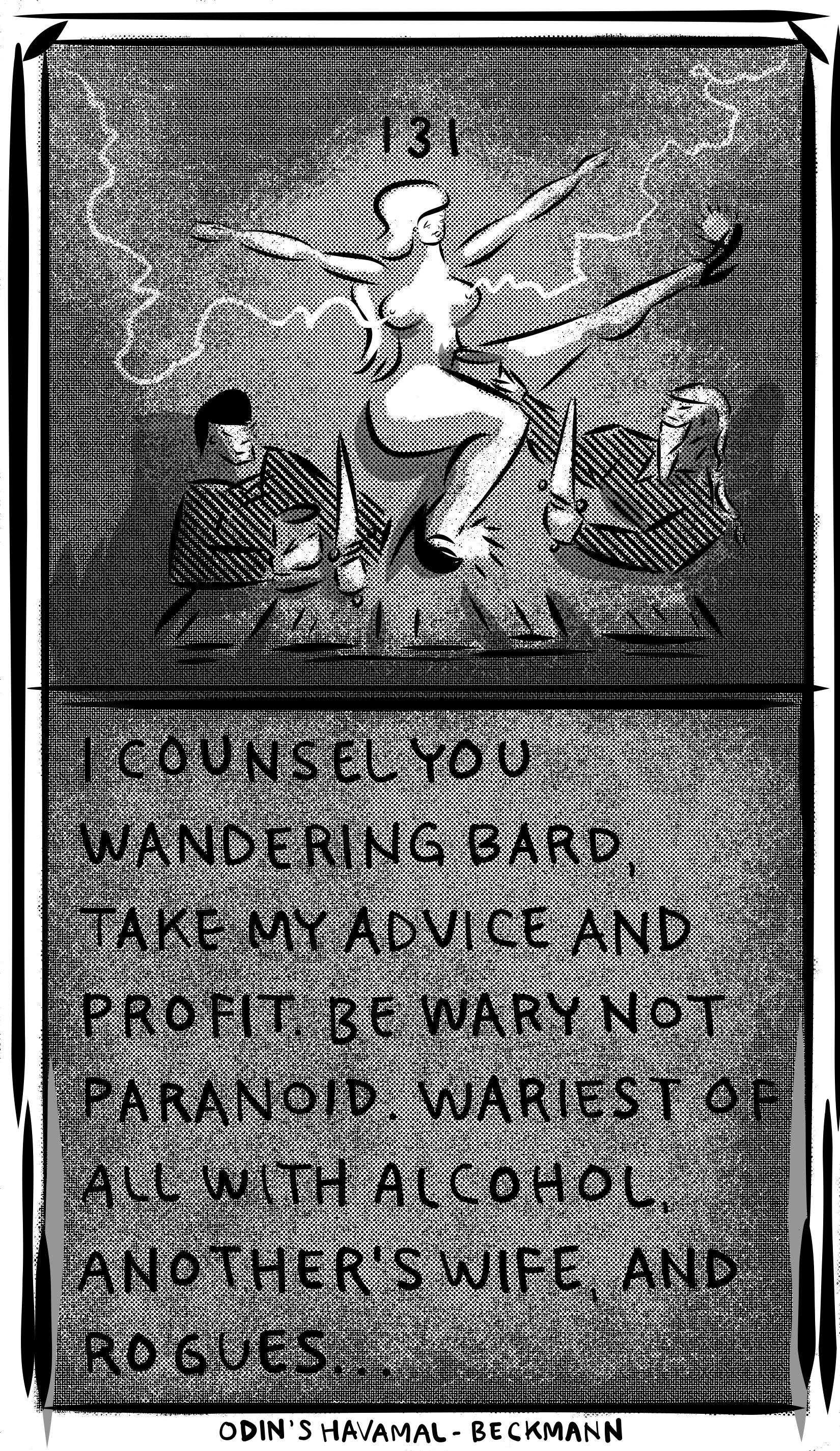
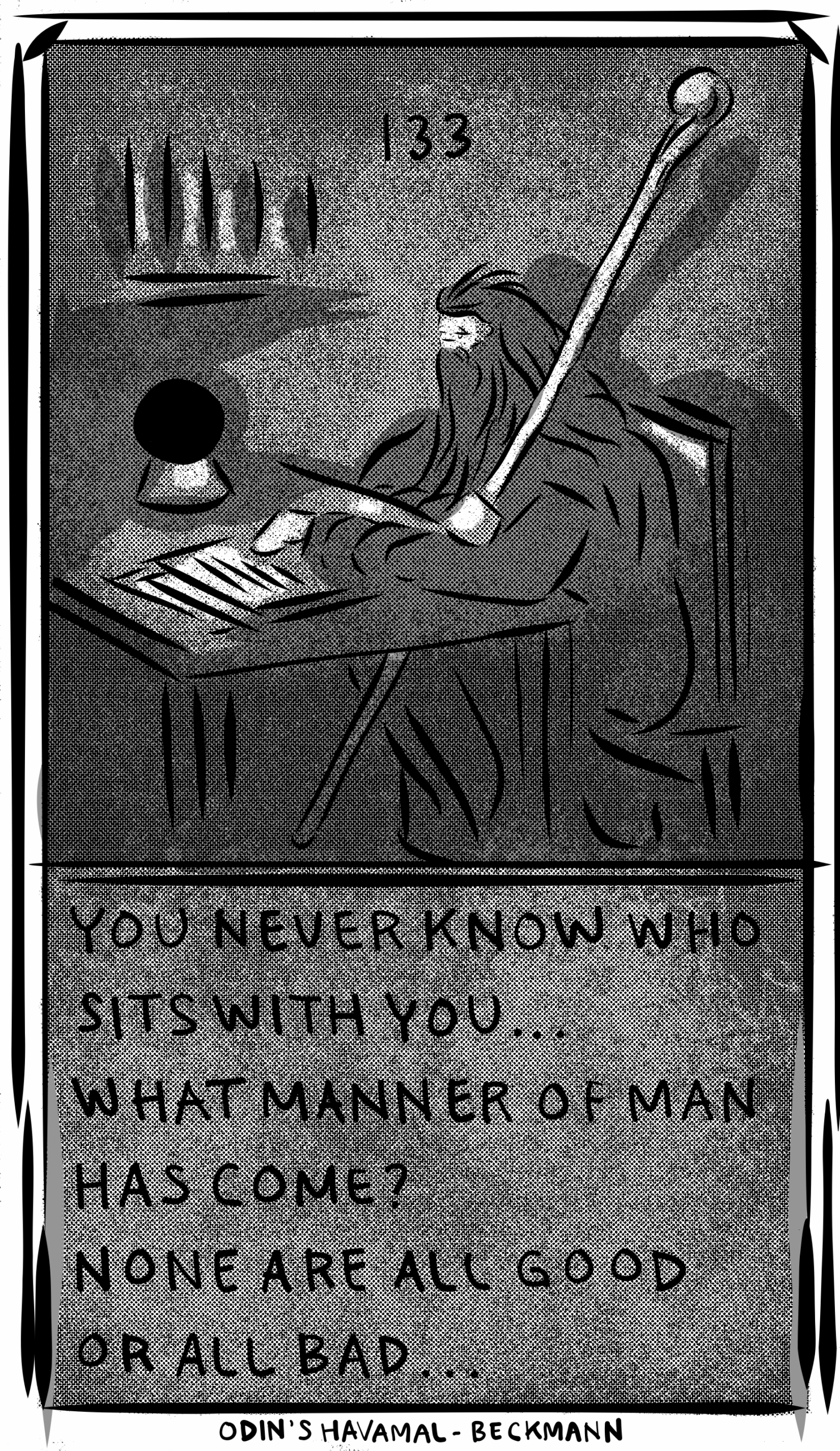
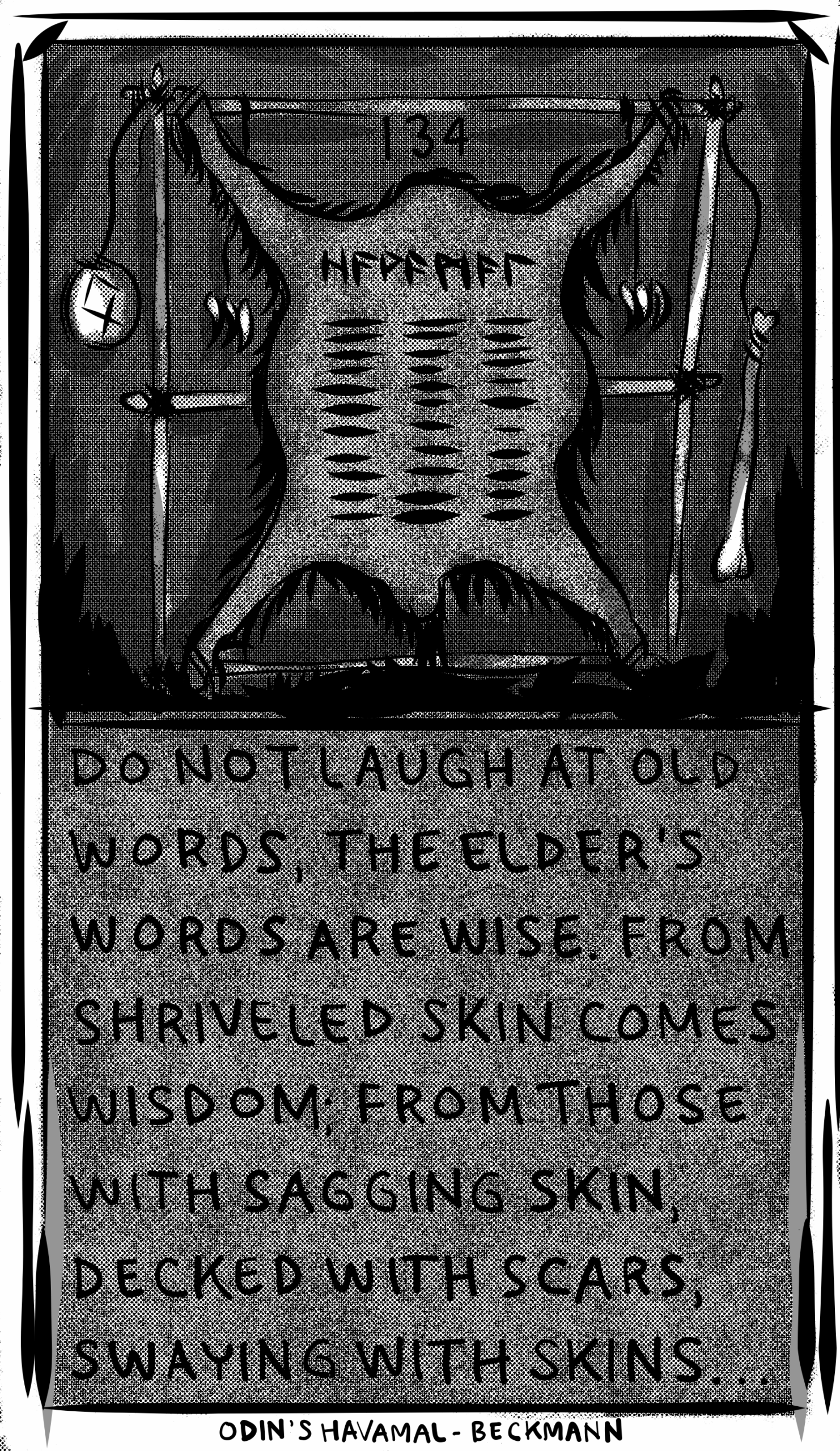
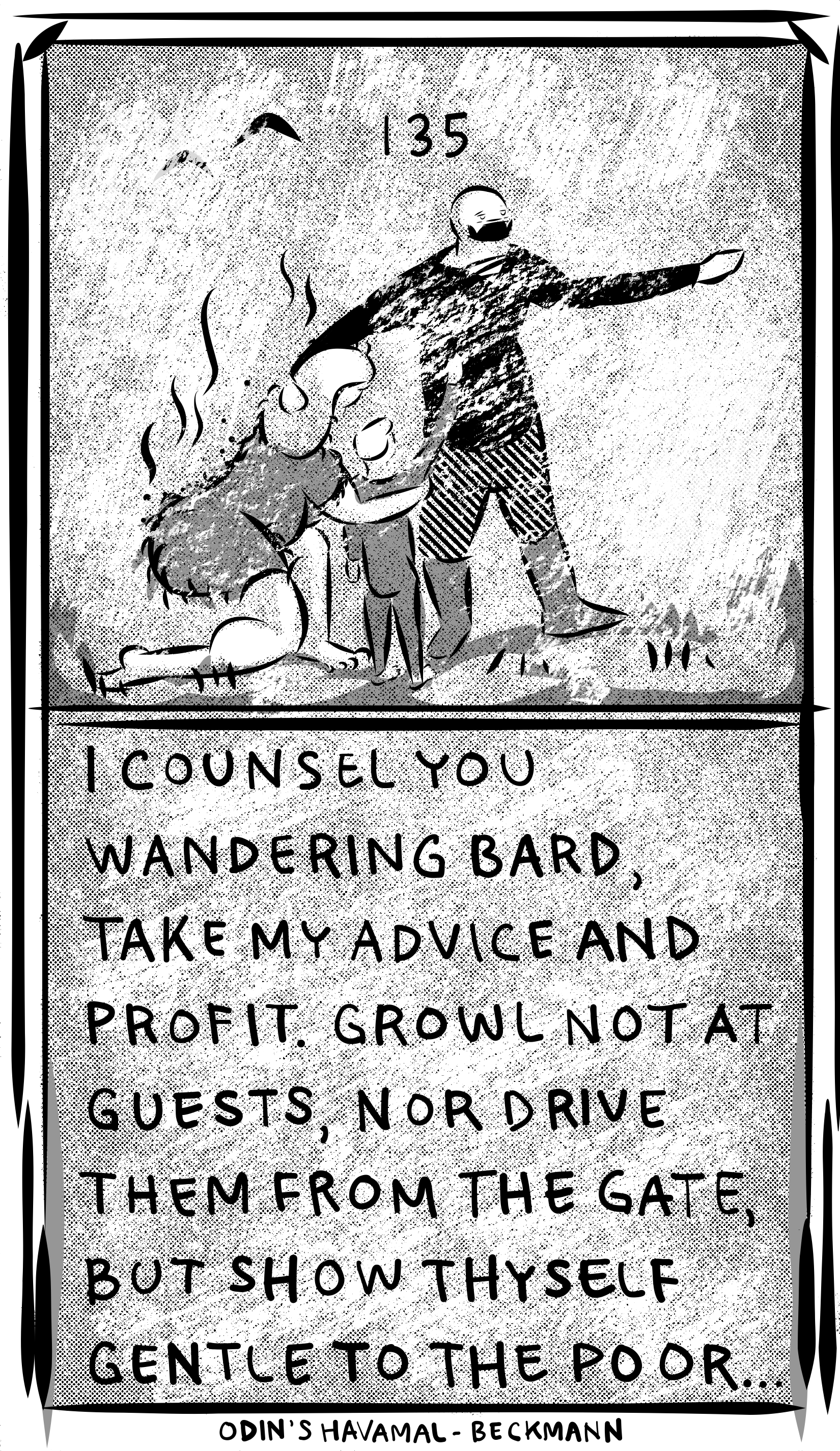
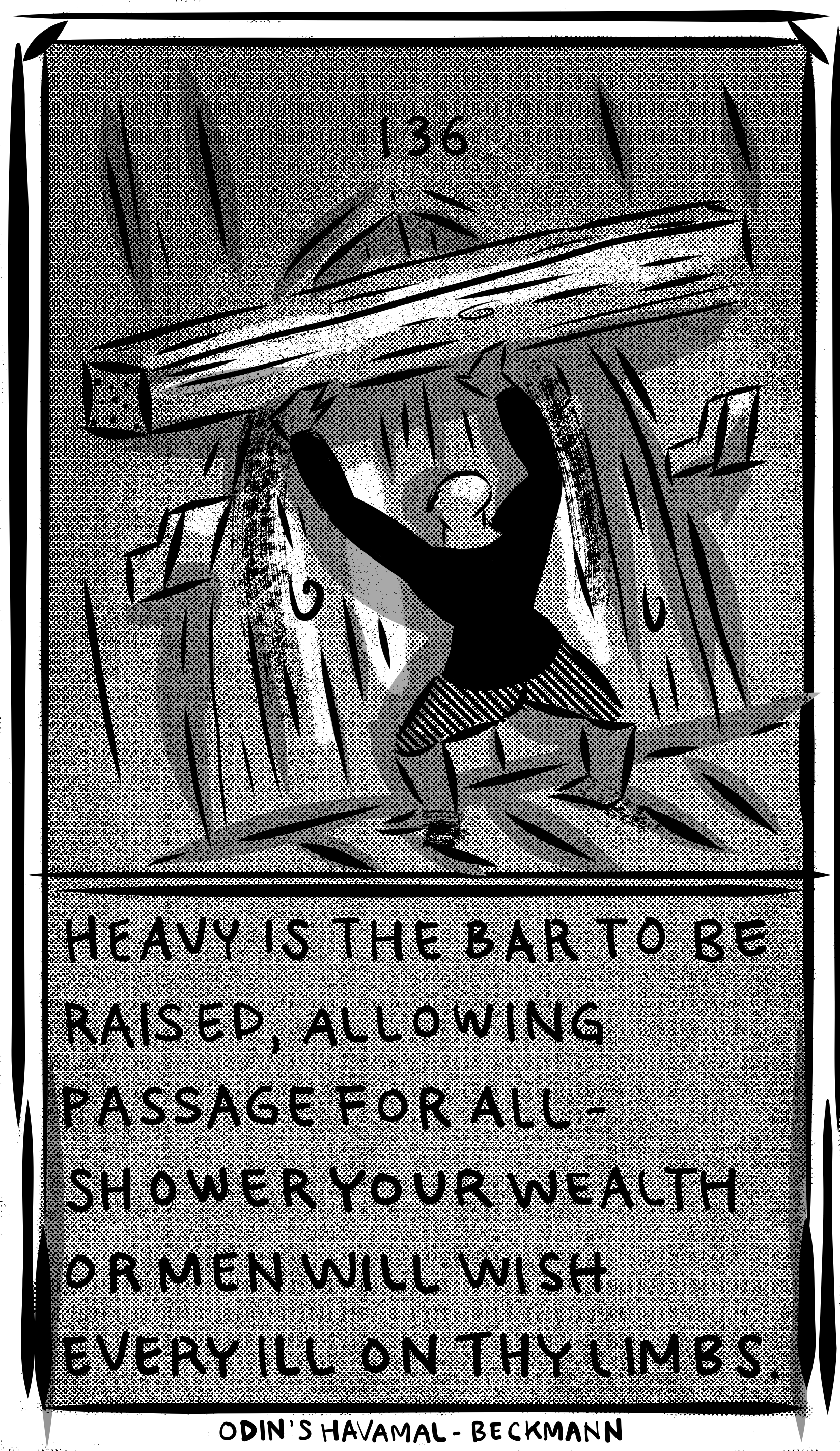
The Counseling of the Wandering Bard (110-137)
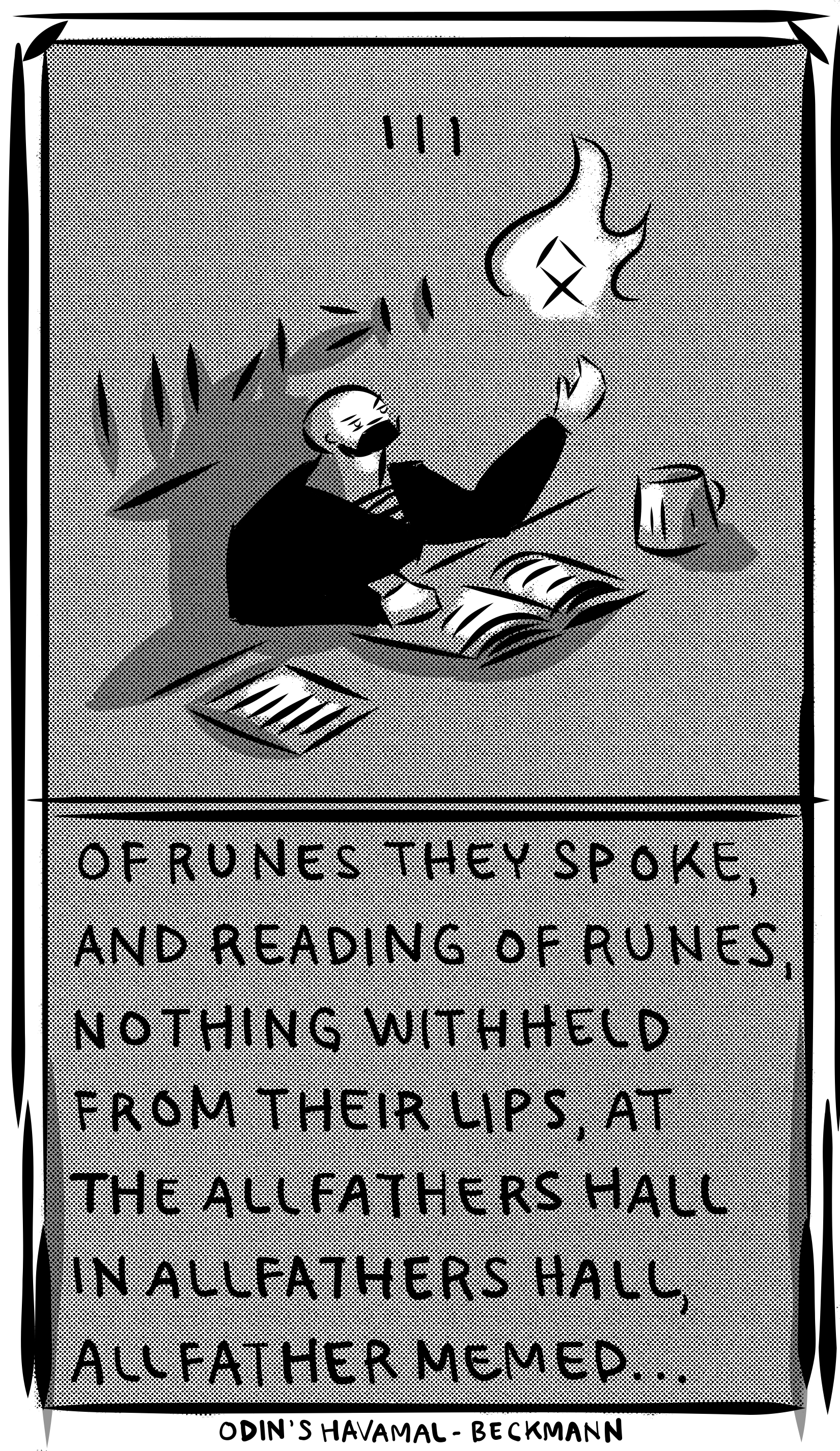
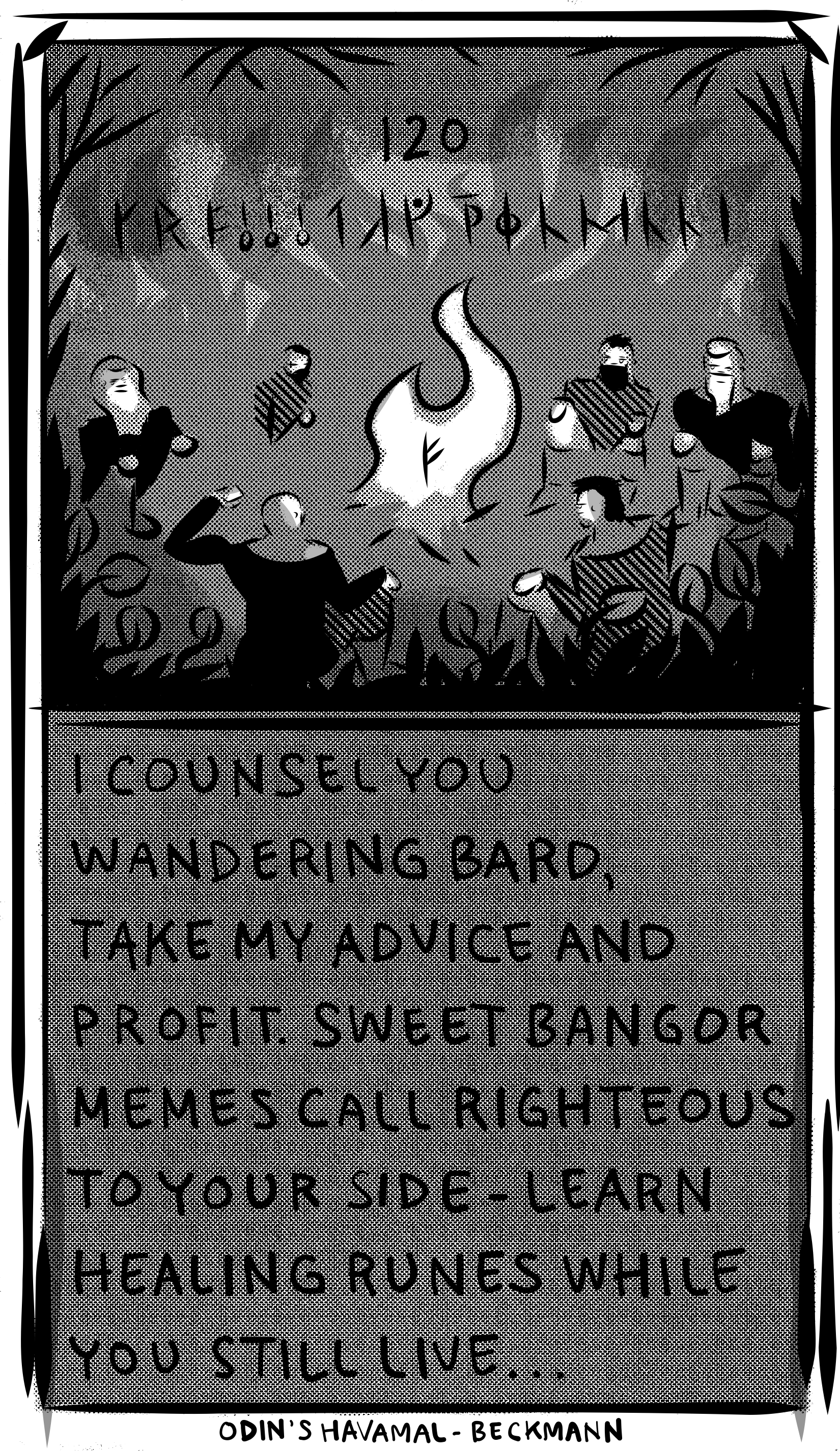
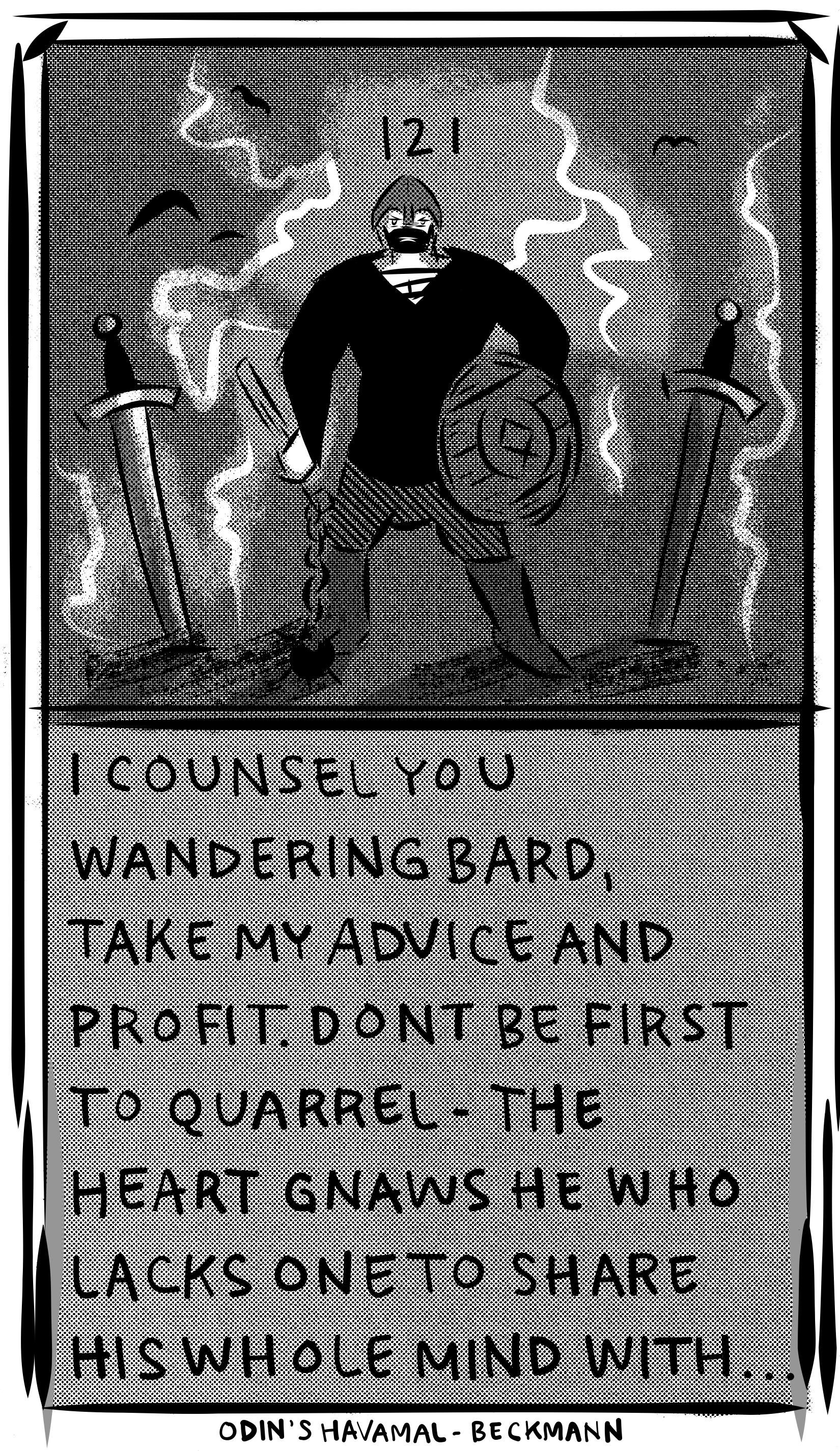
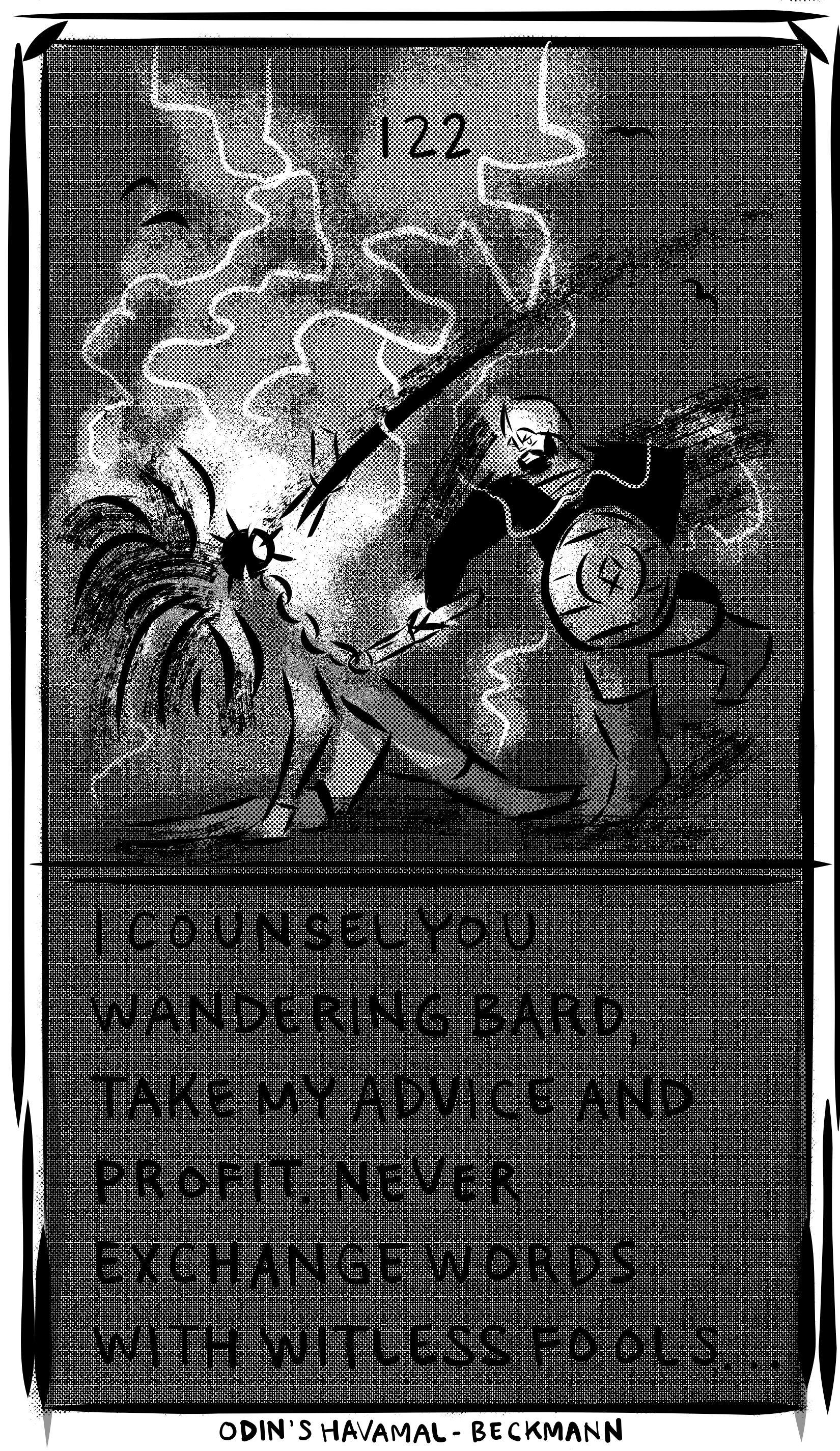
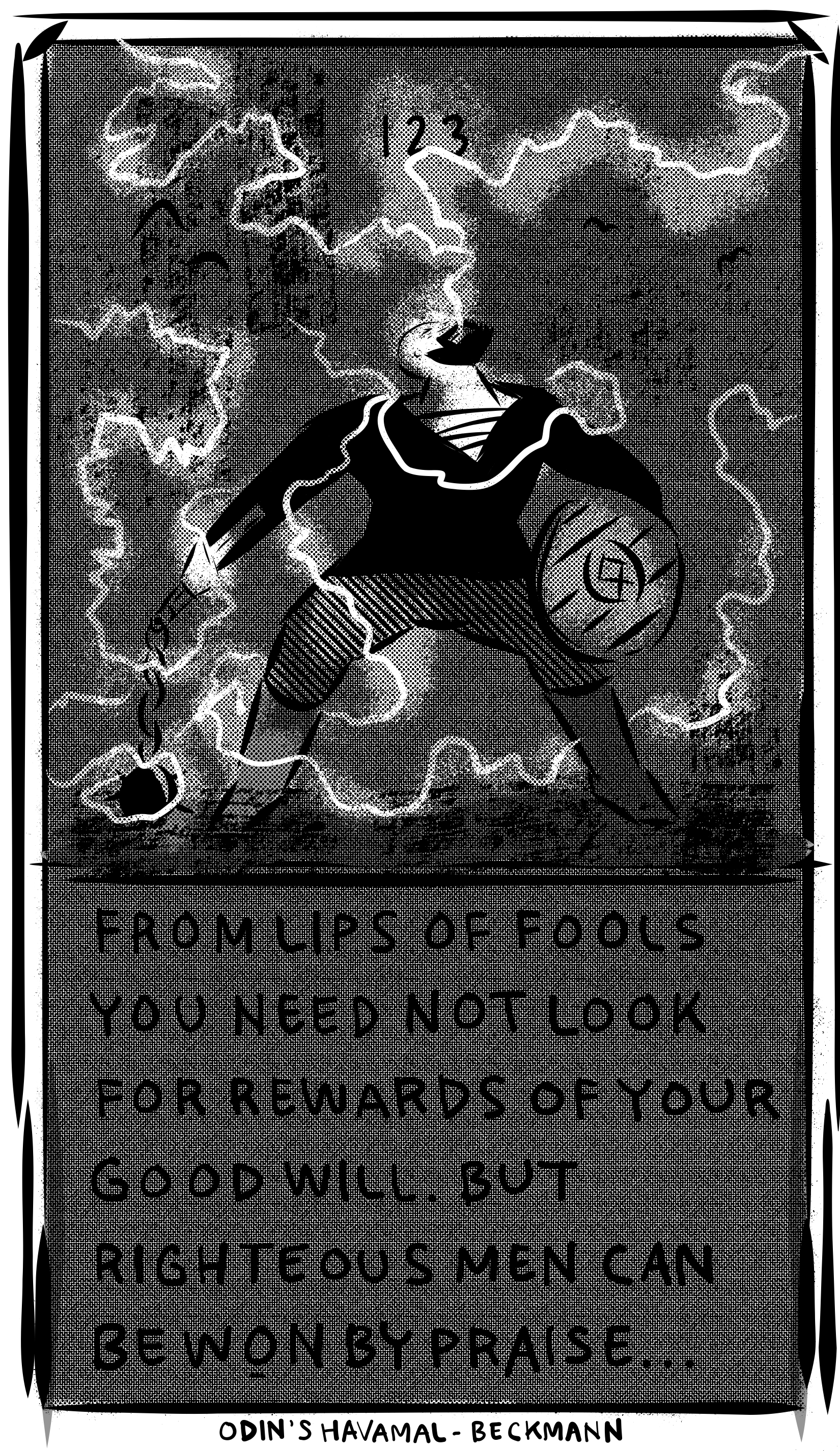

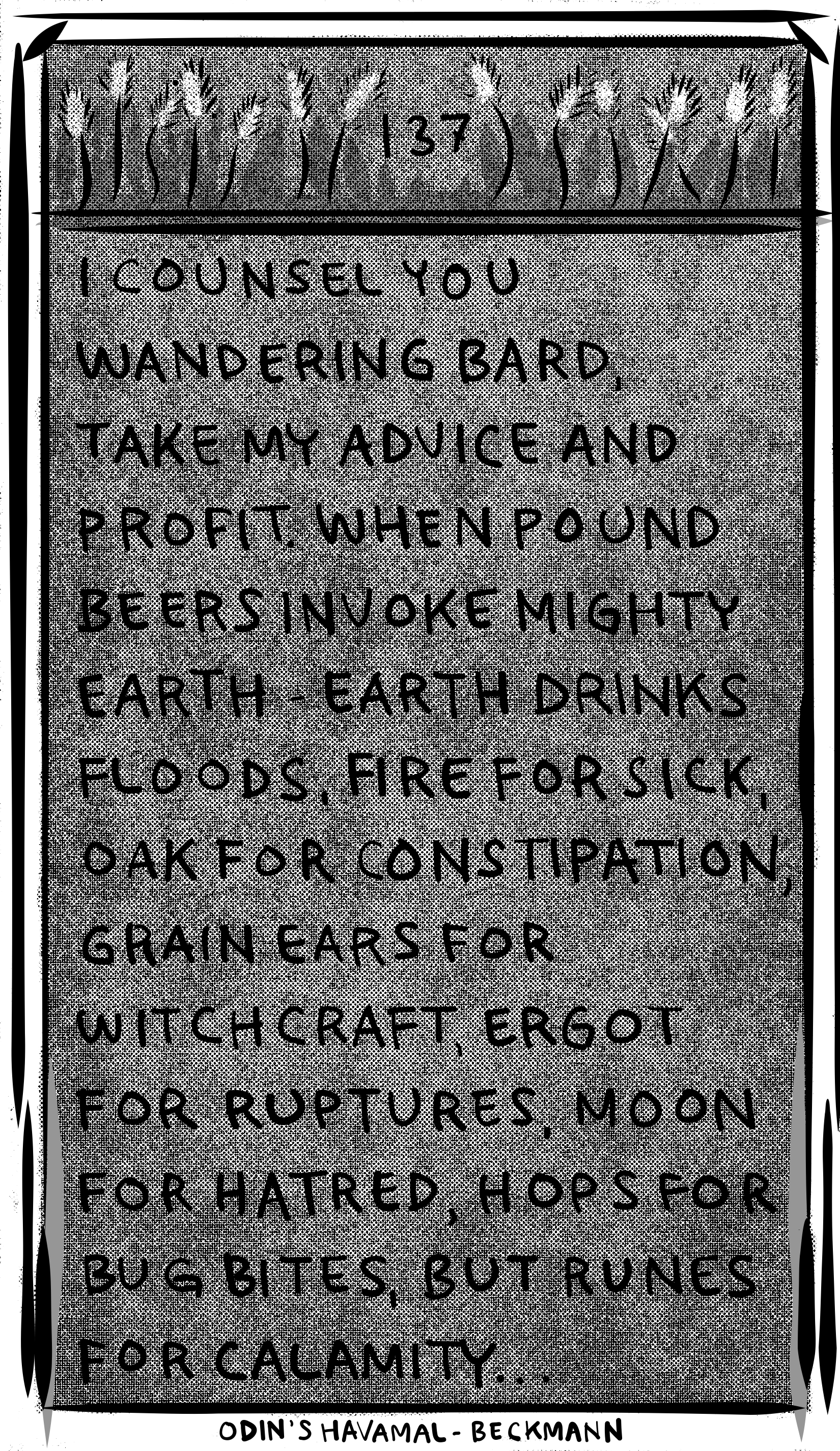
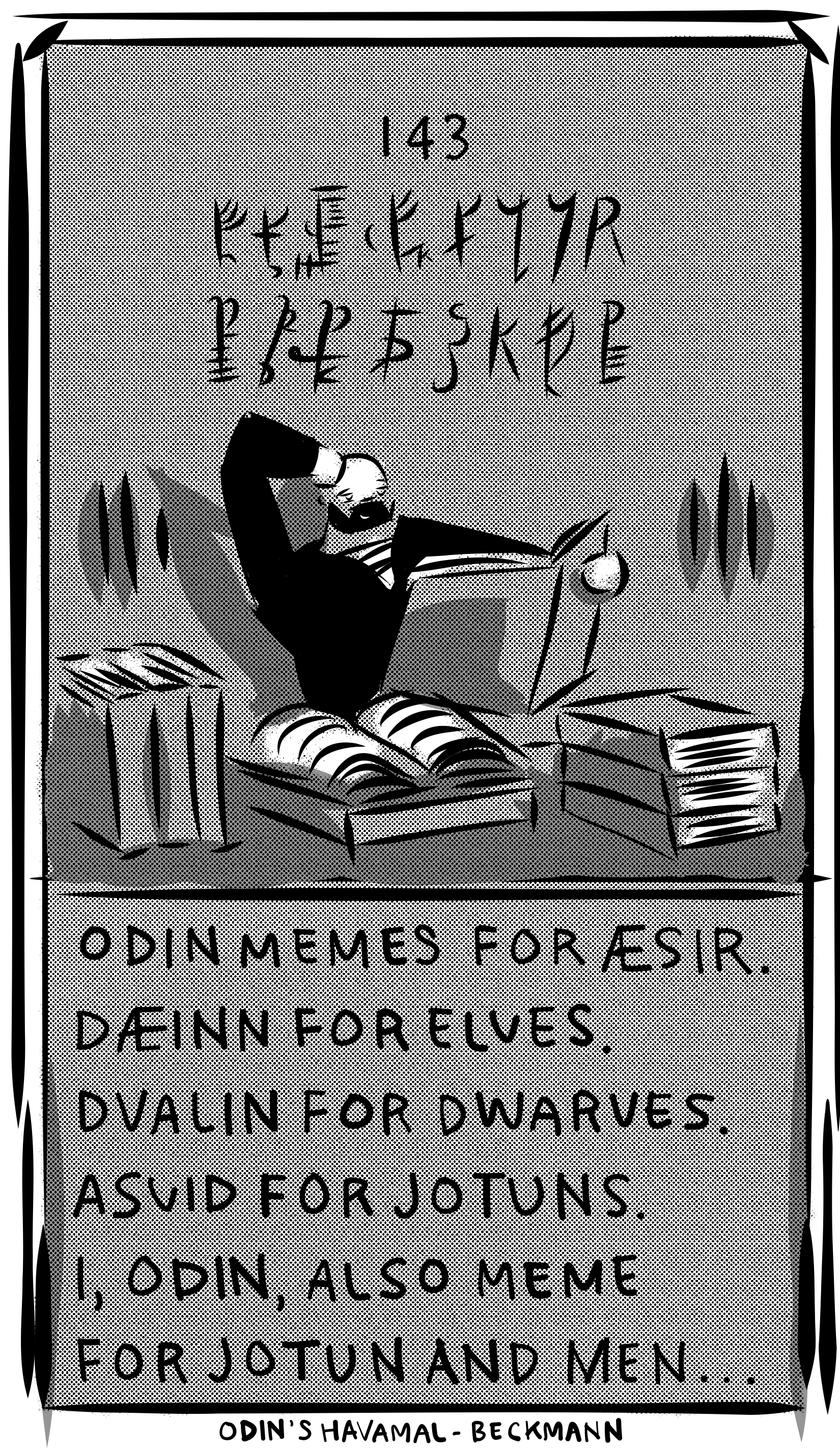
Odin’s Quest After Runes (138-146)
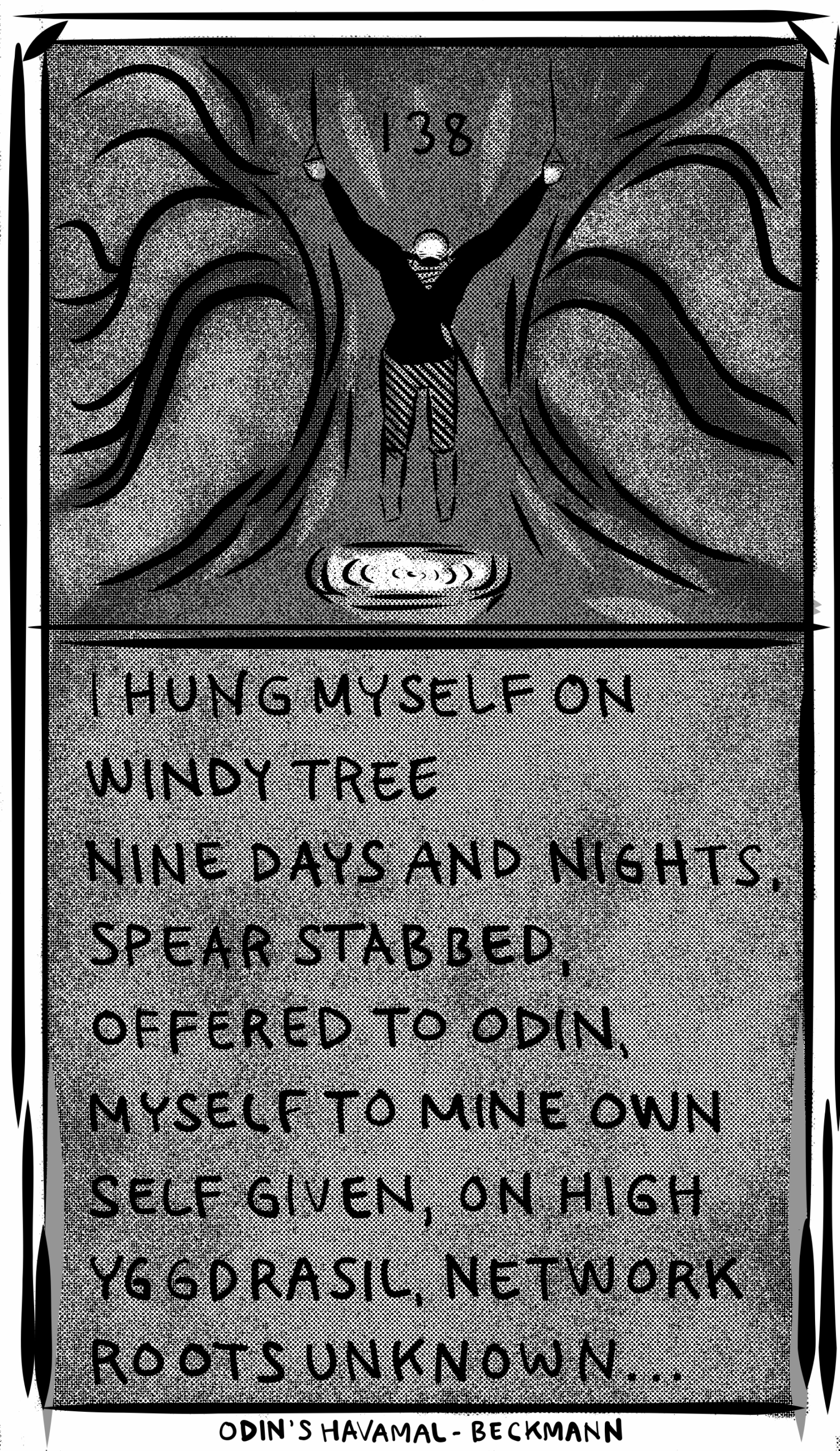
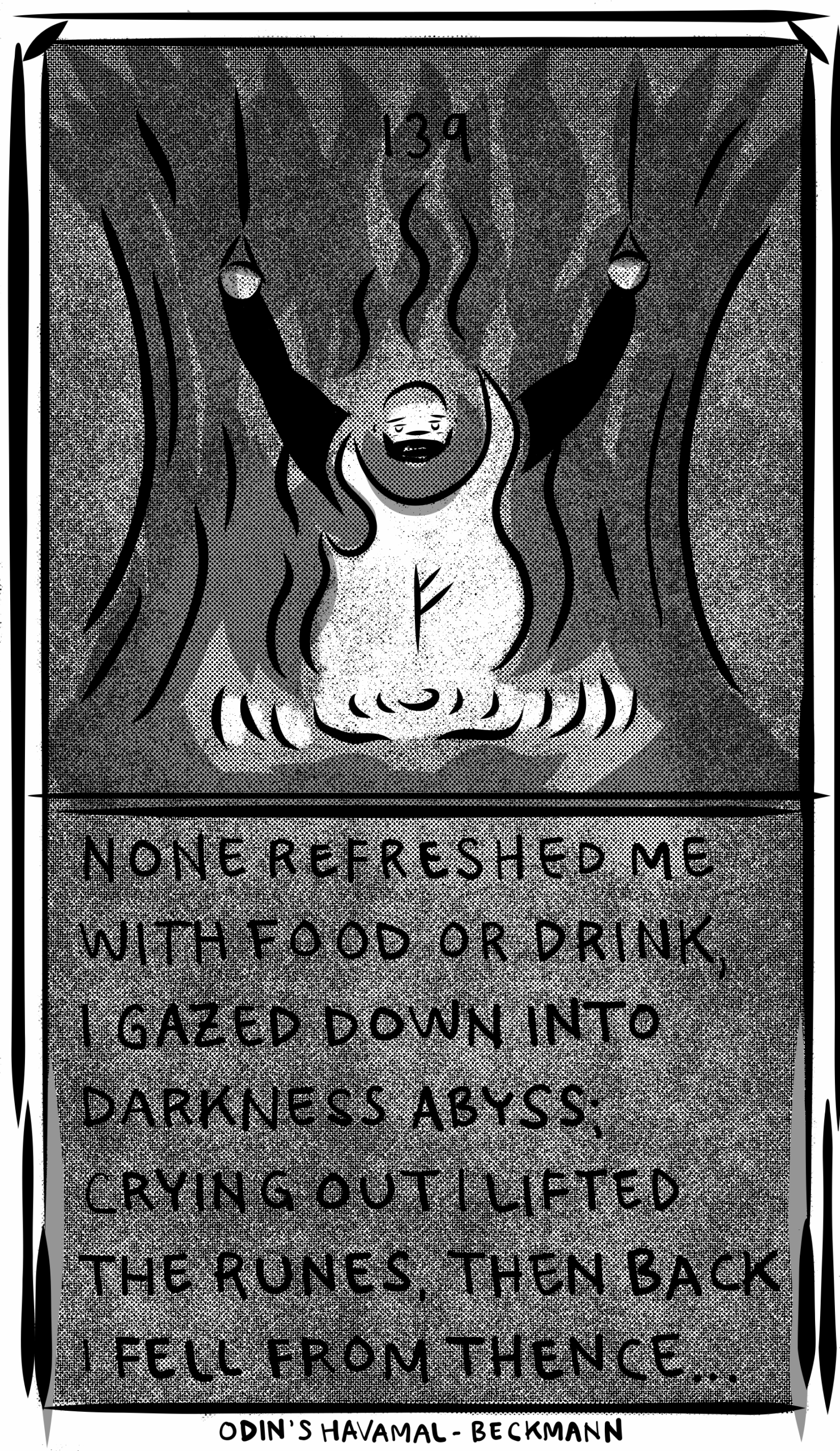
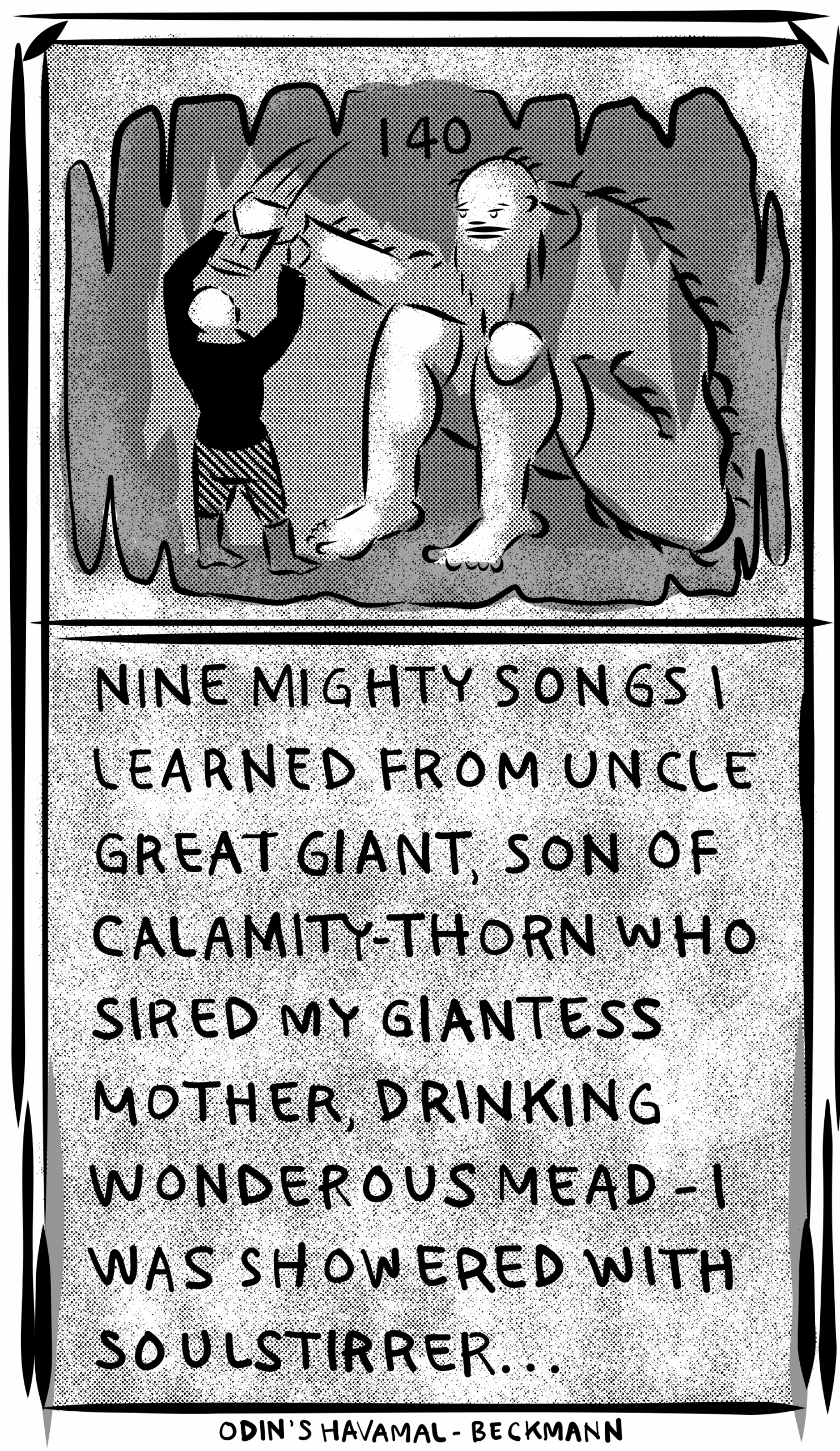
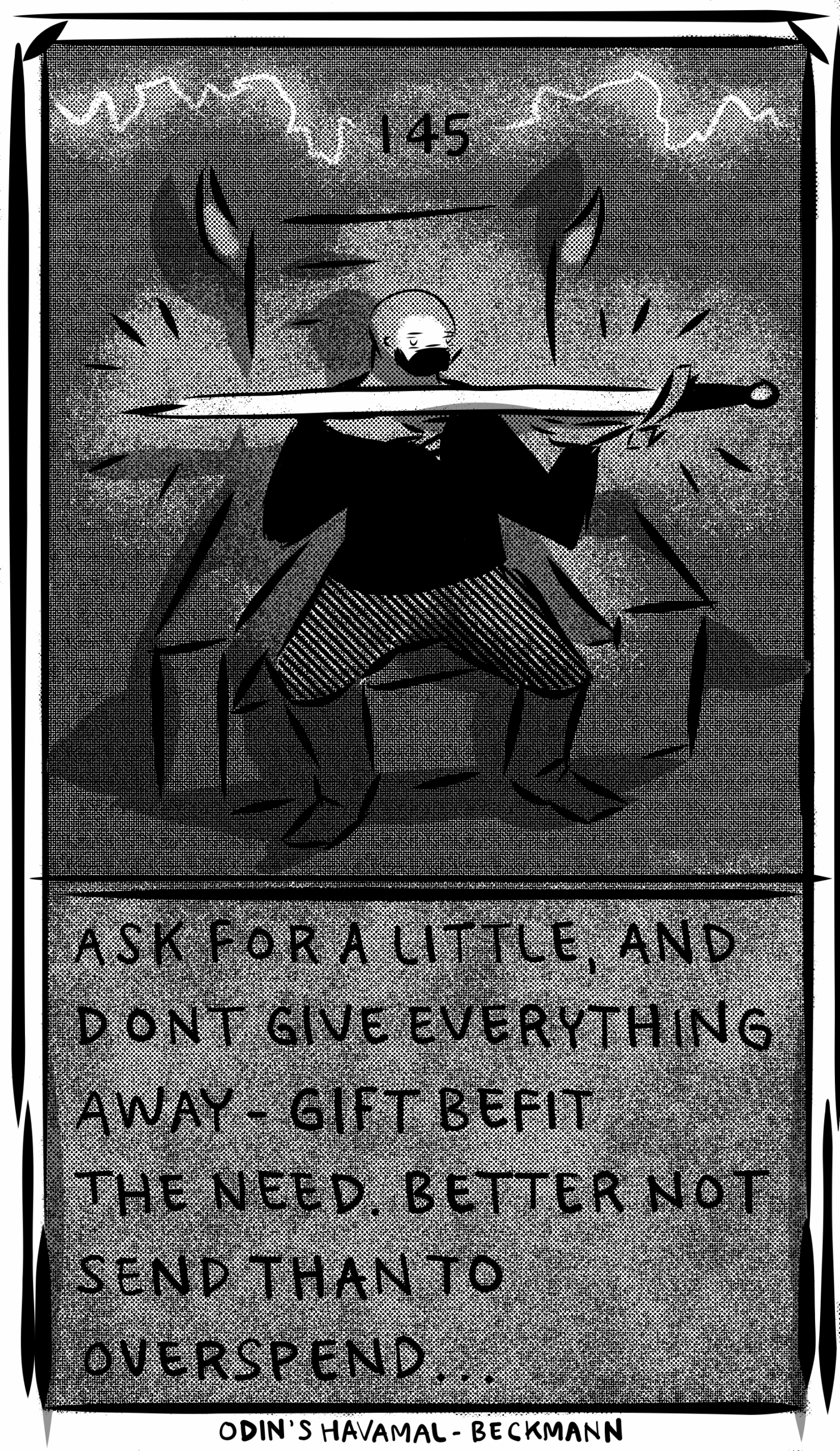
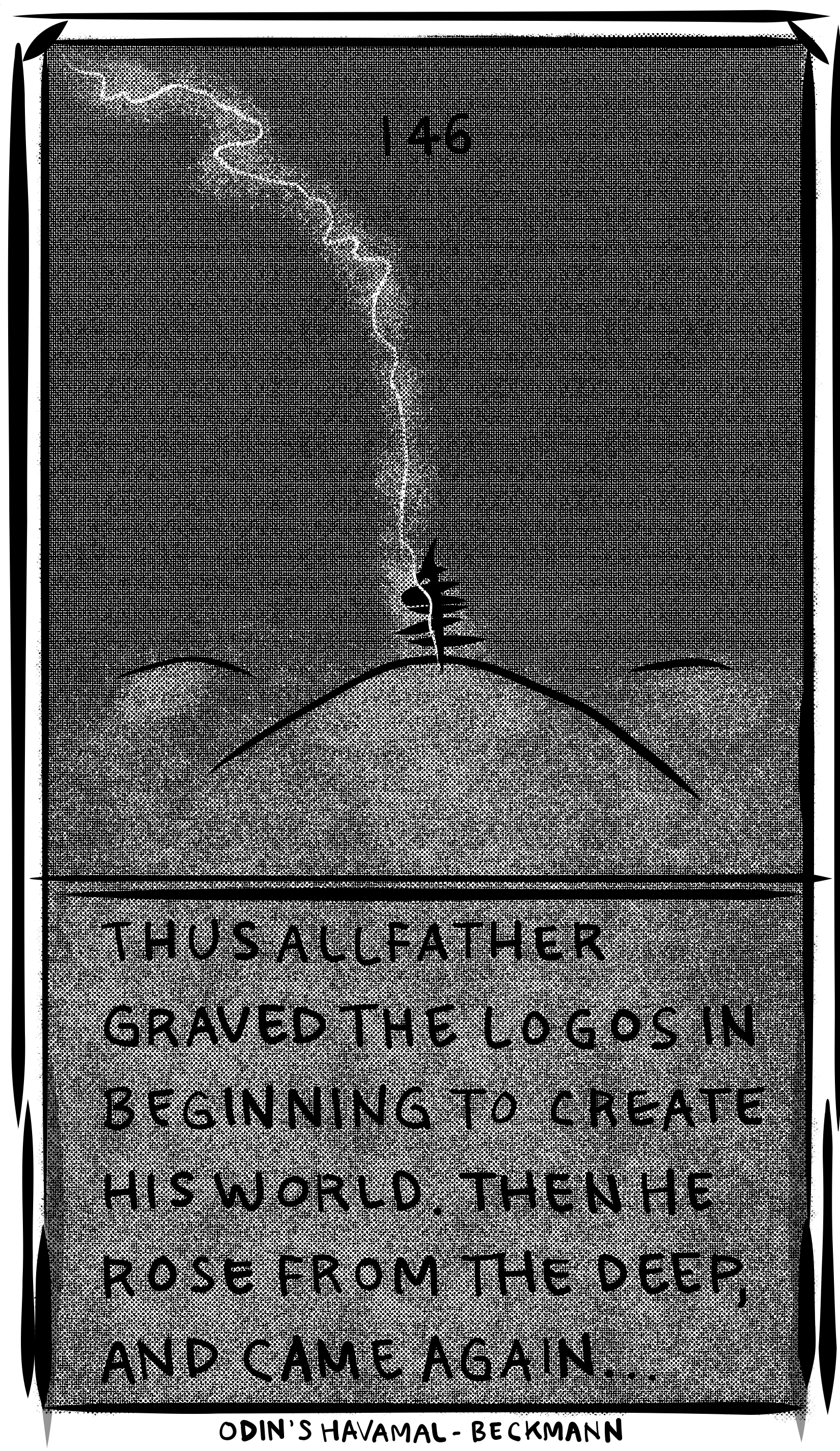
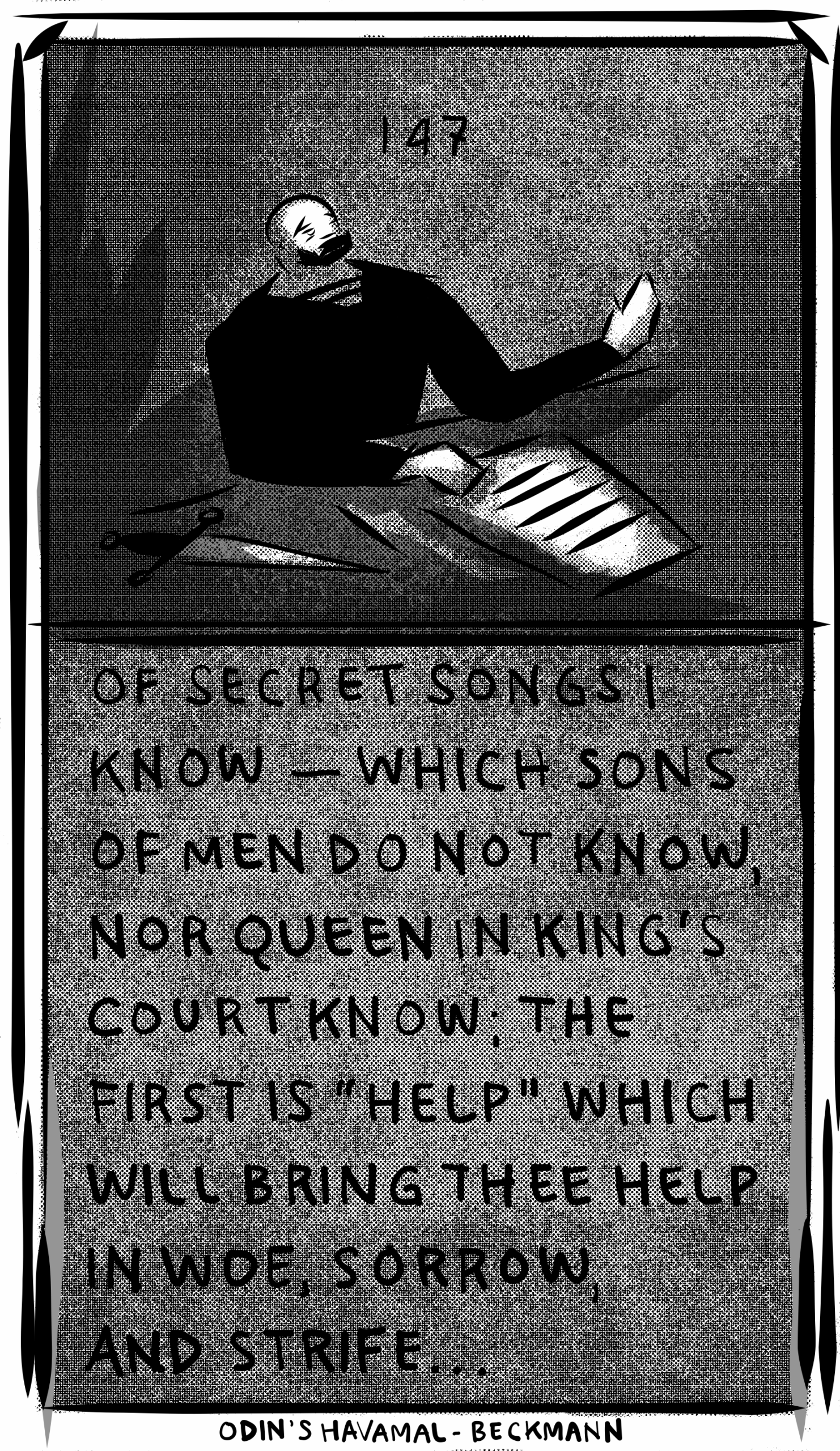
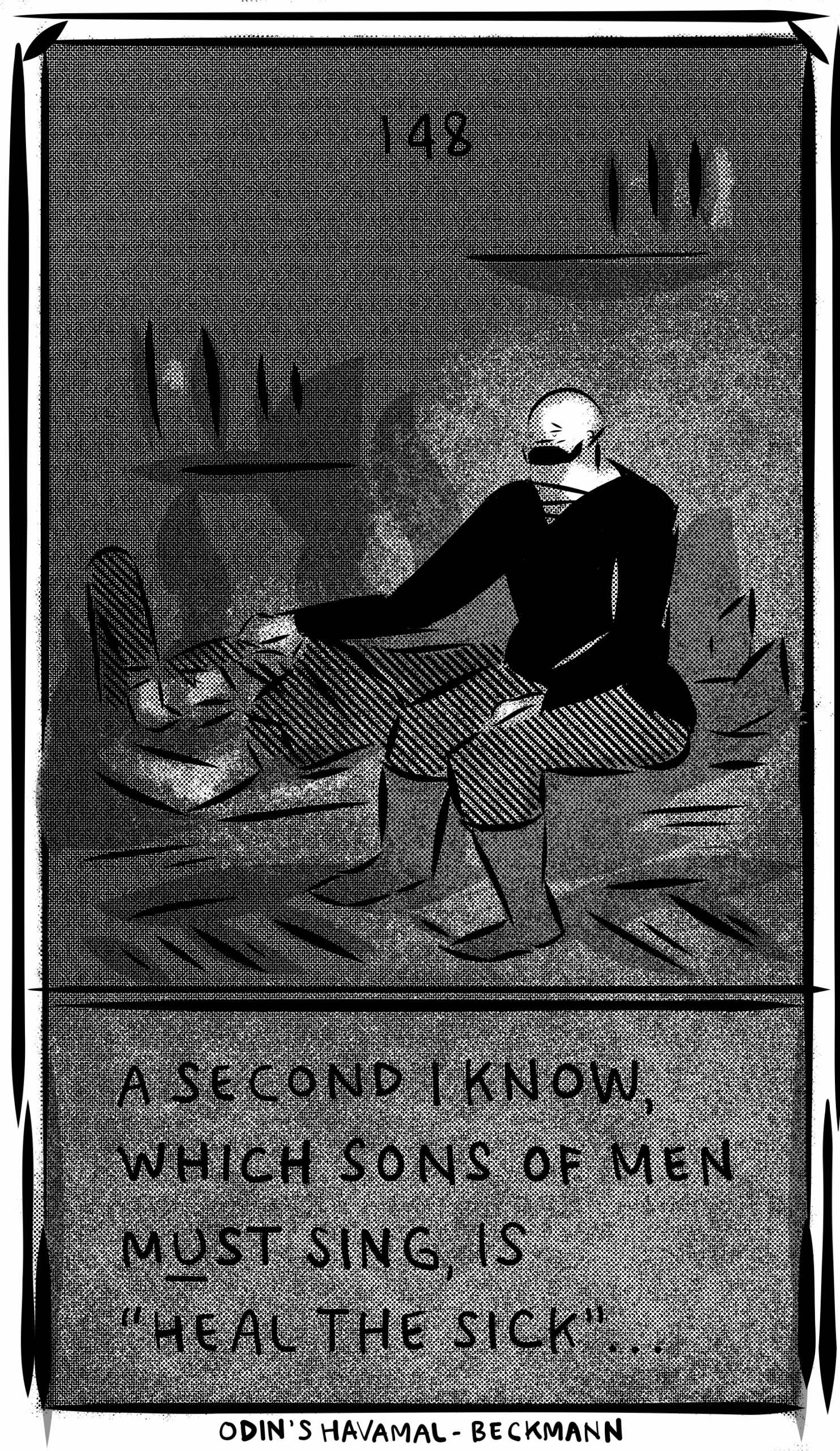
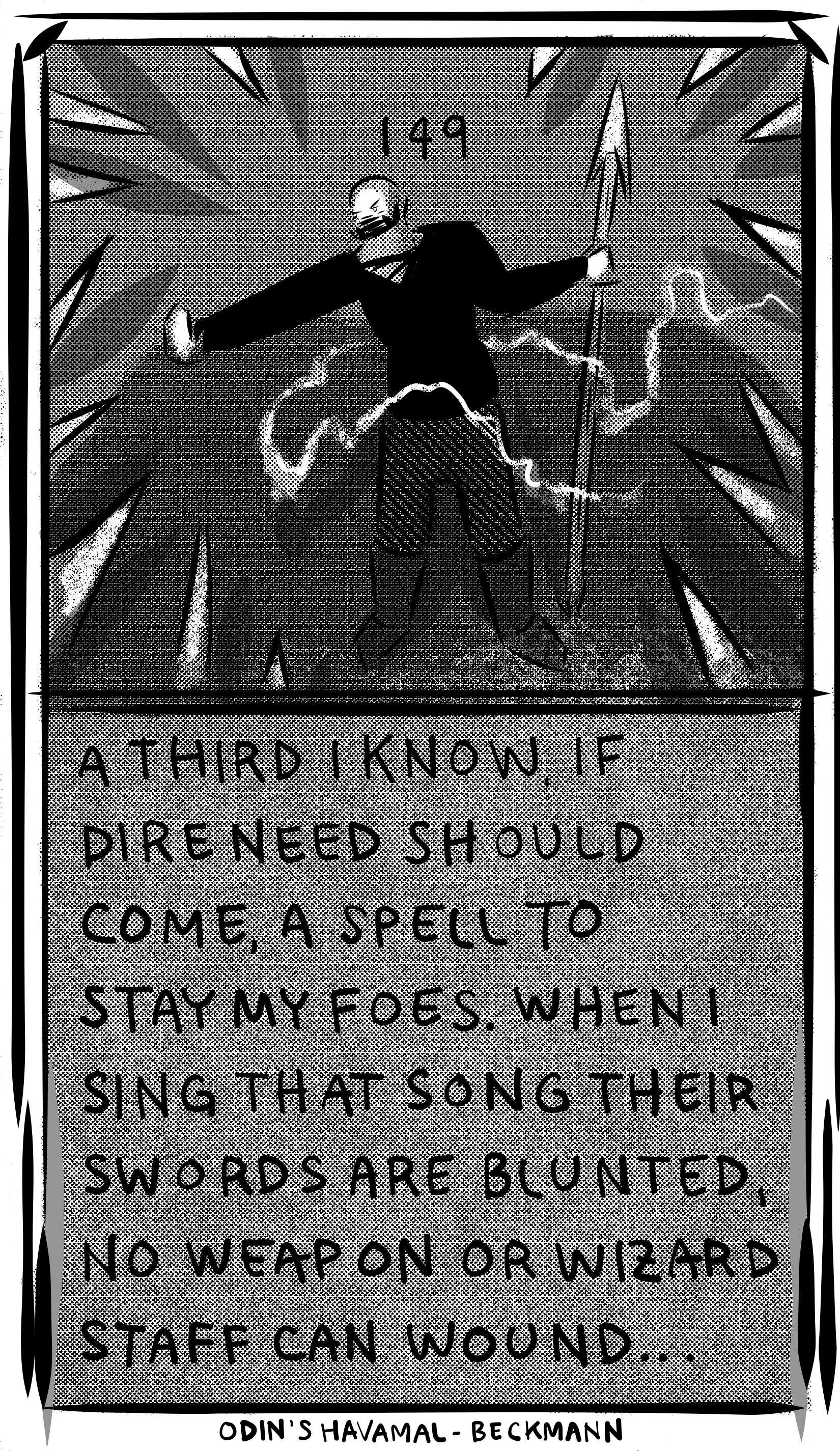
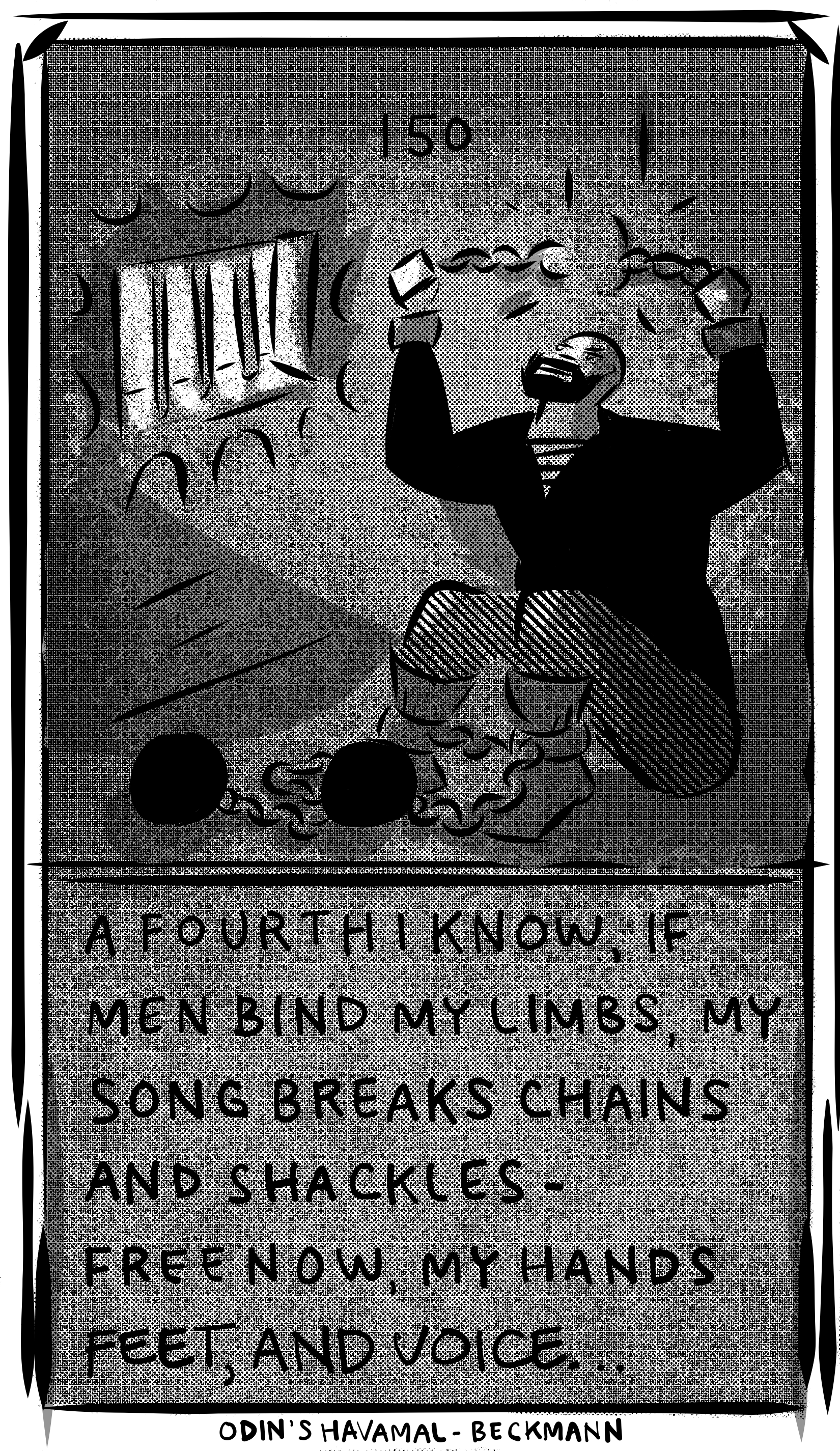
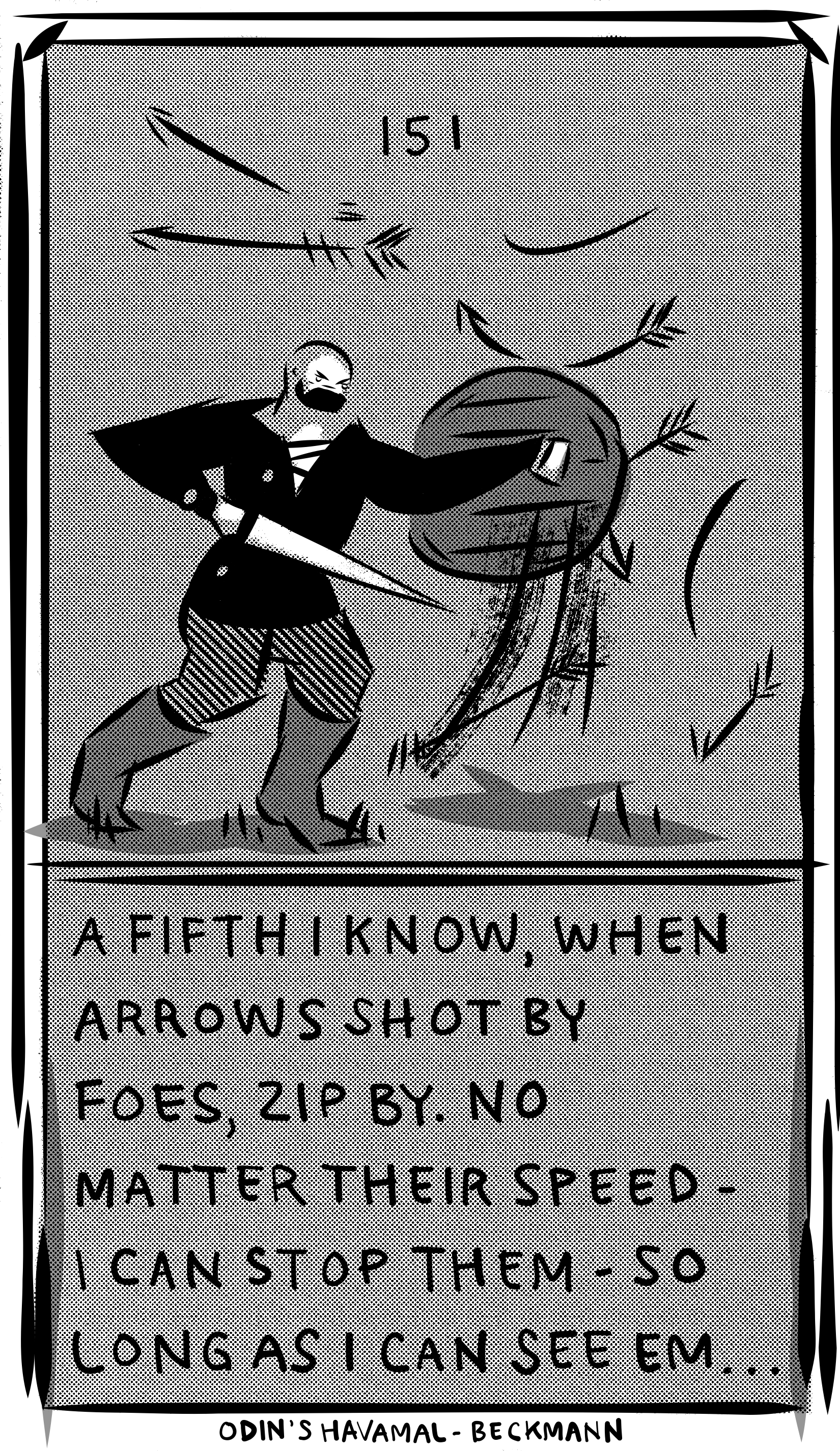
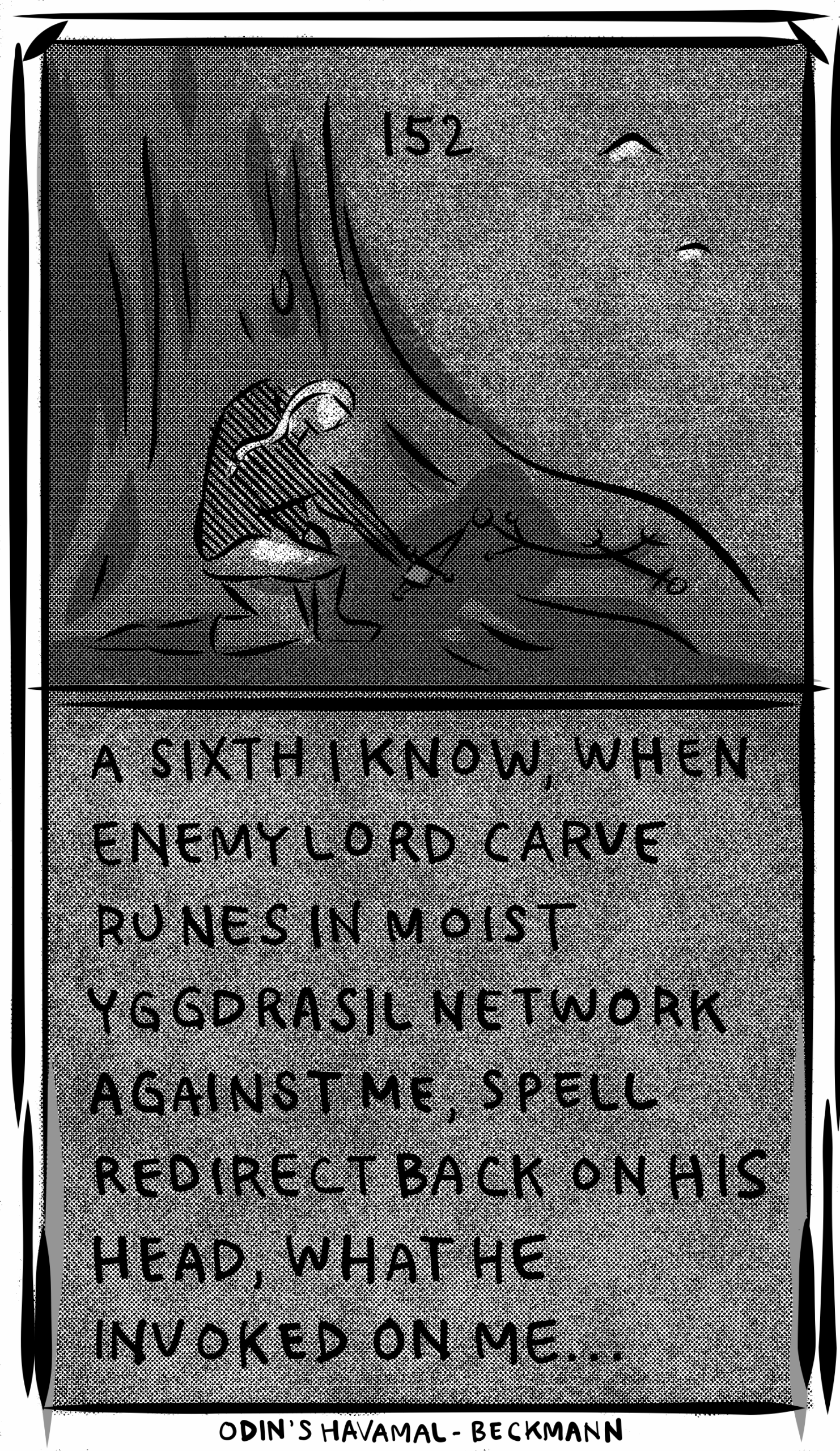
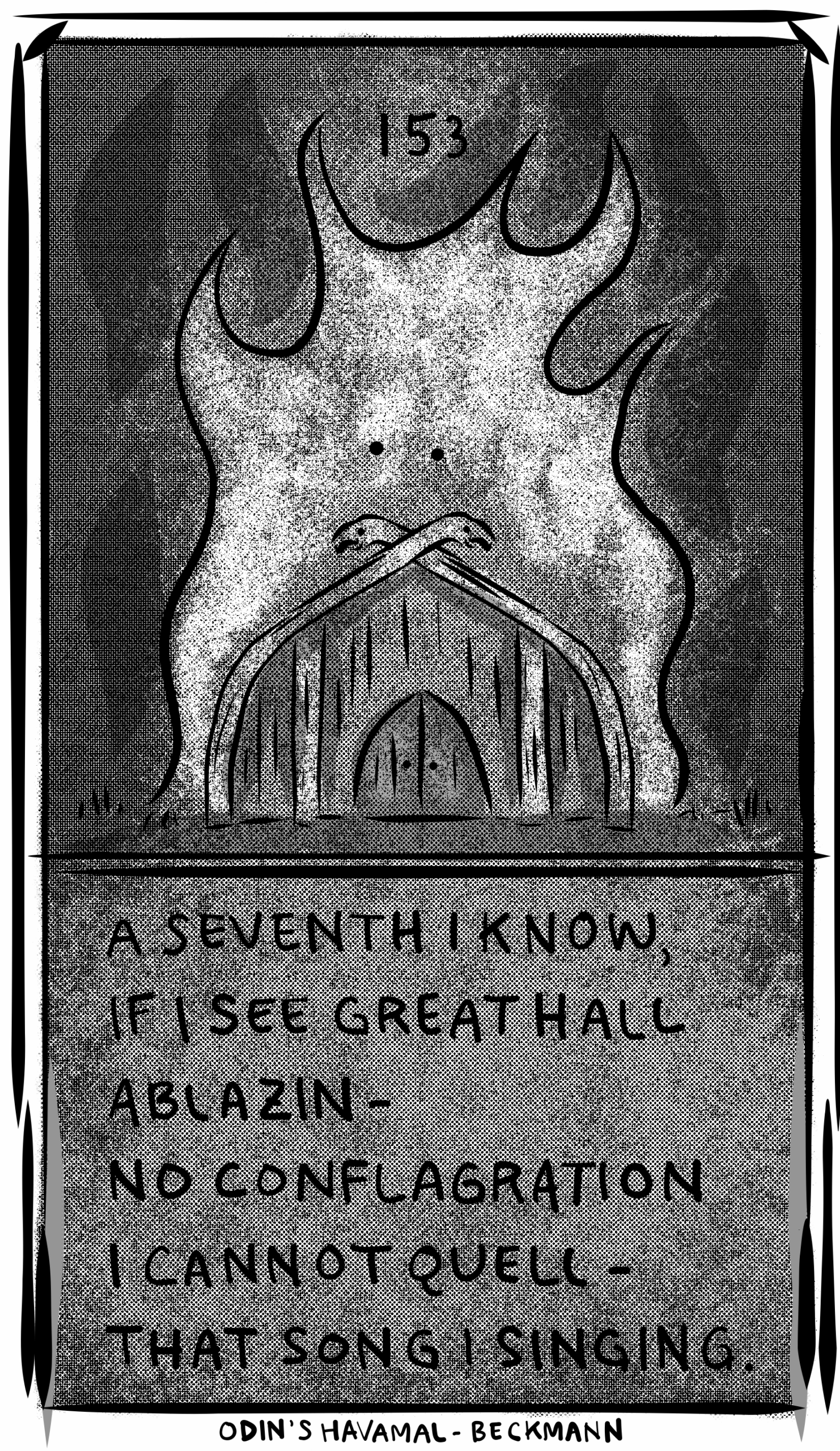
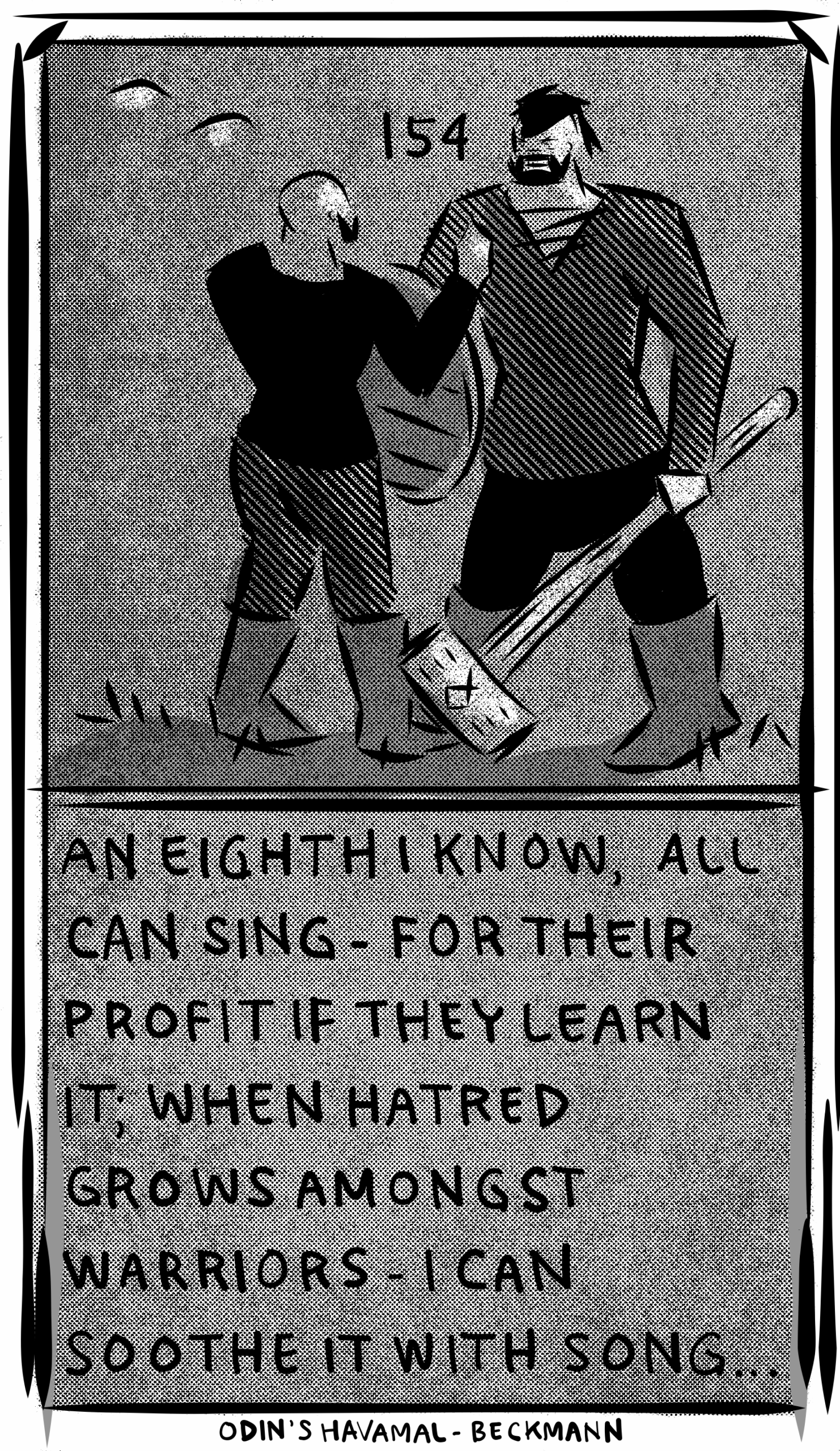
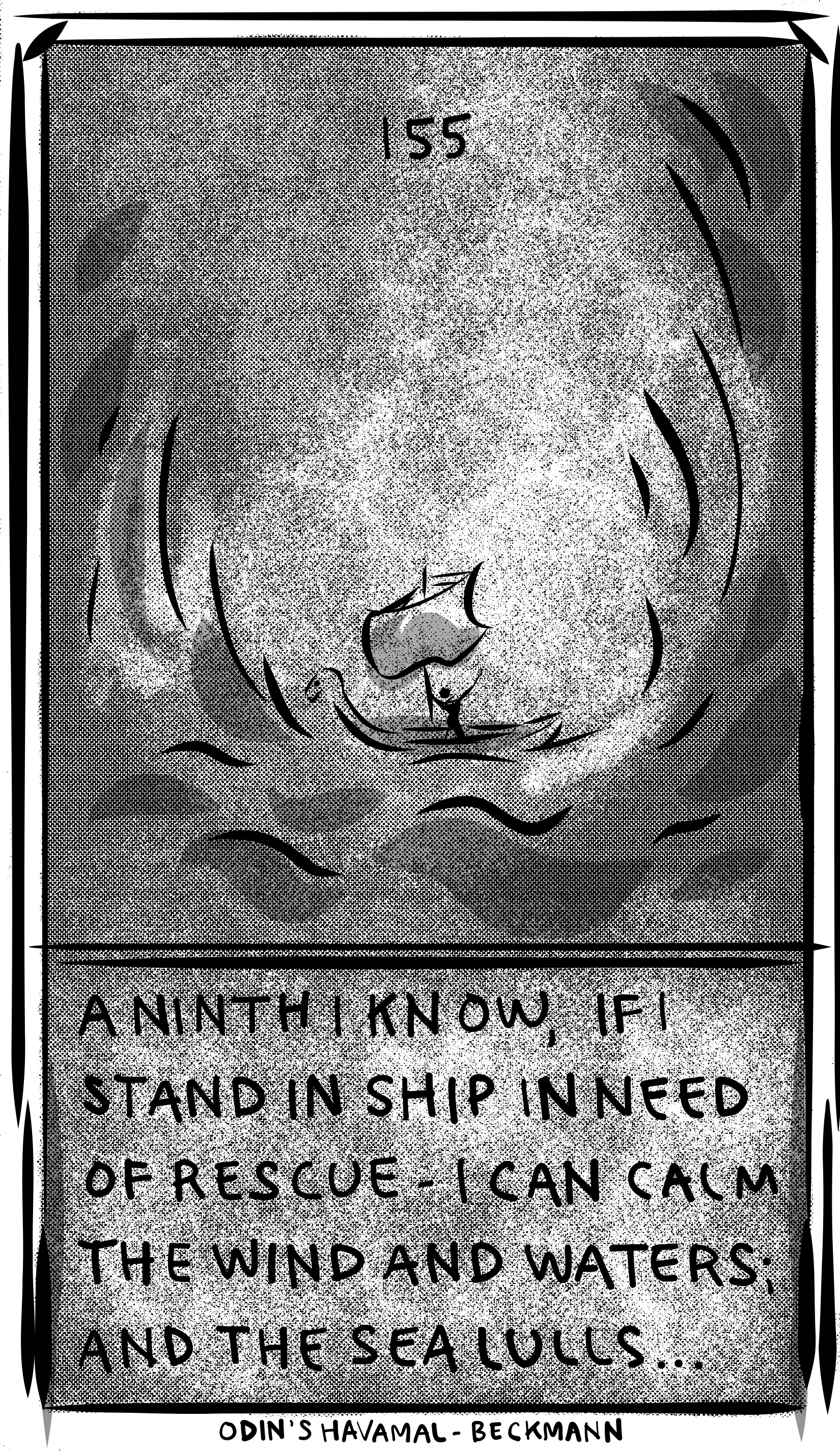
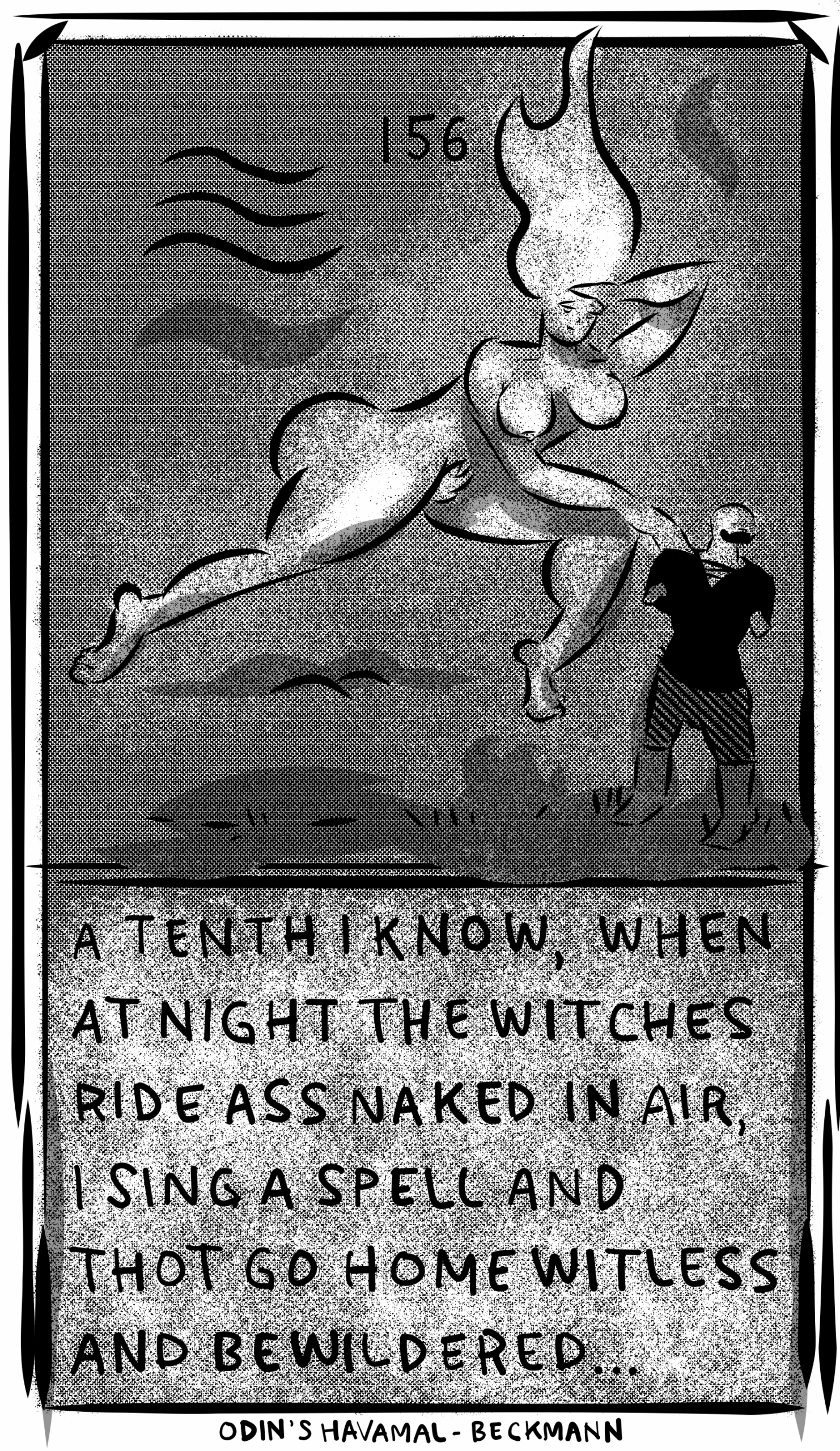
The Song of Spells (147-165)
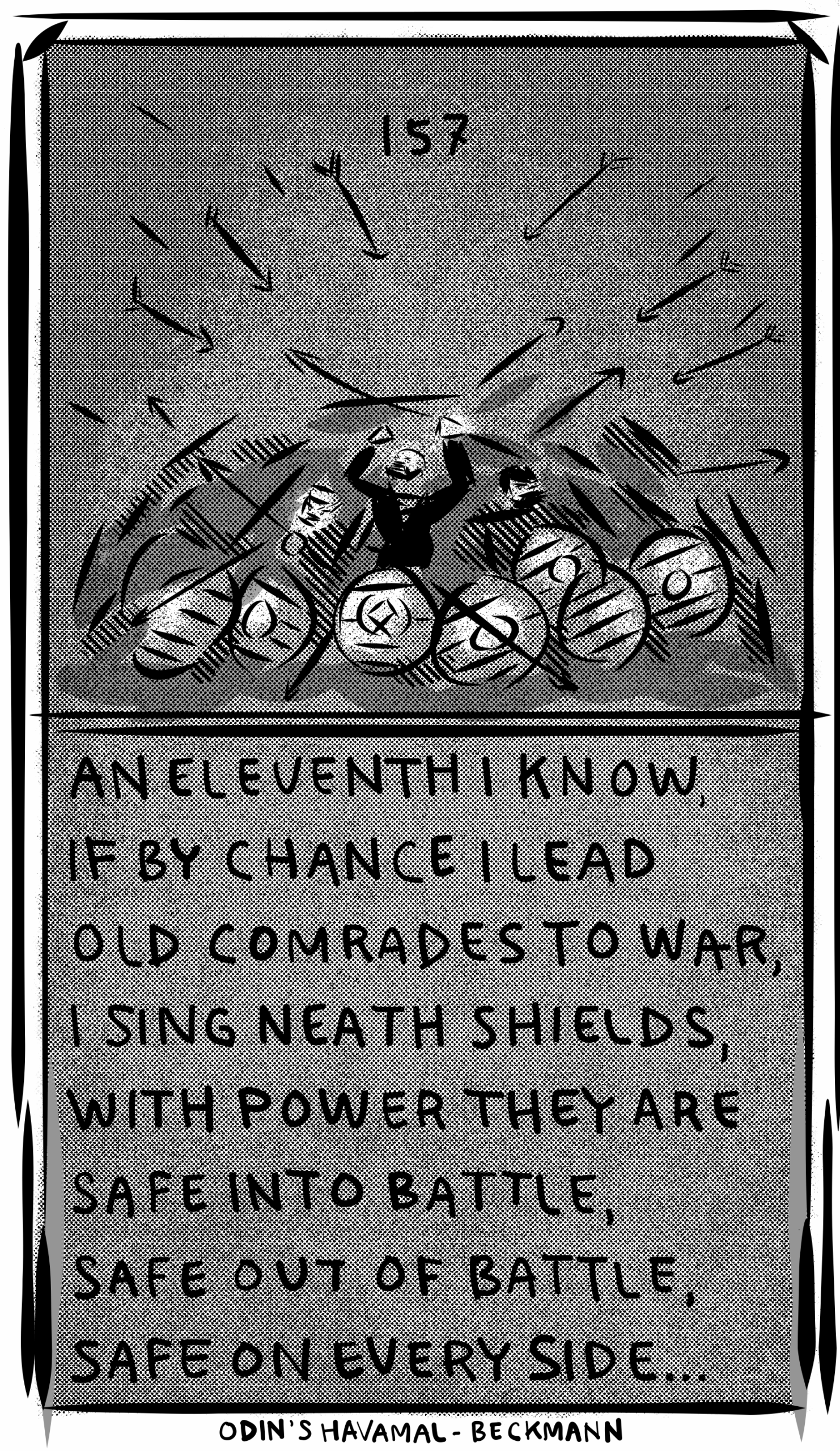
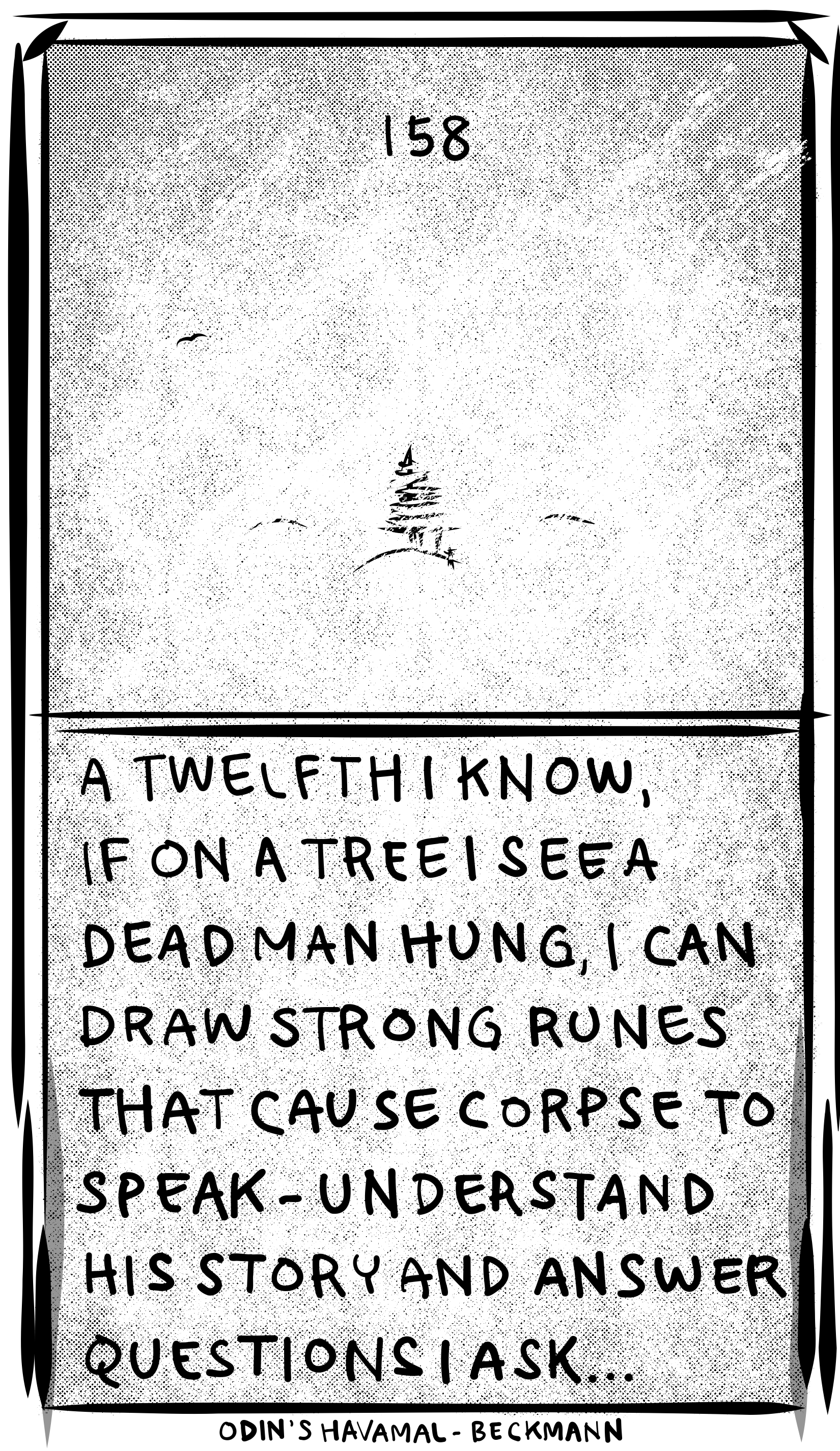
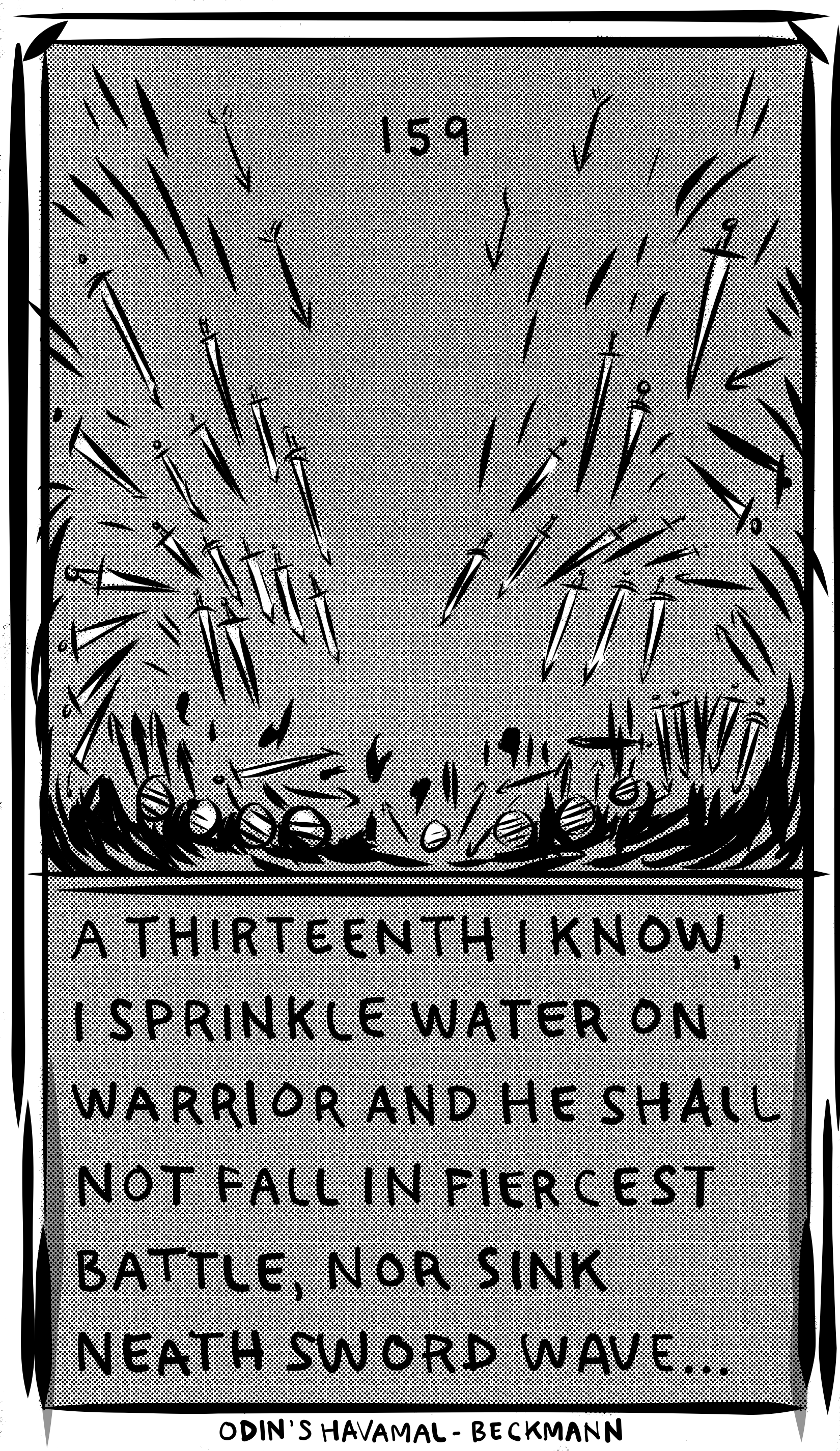
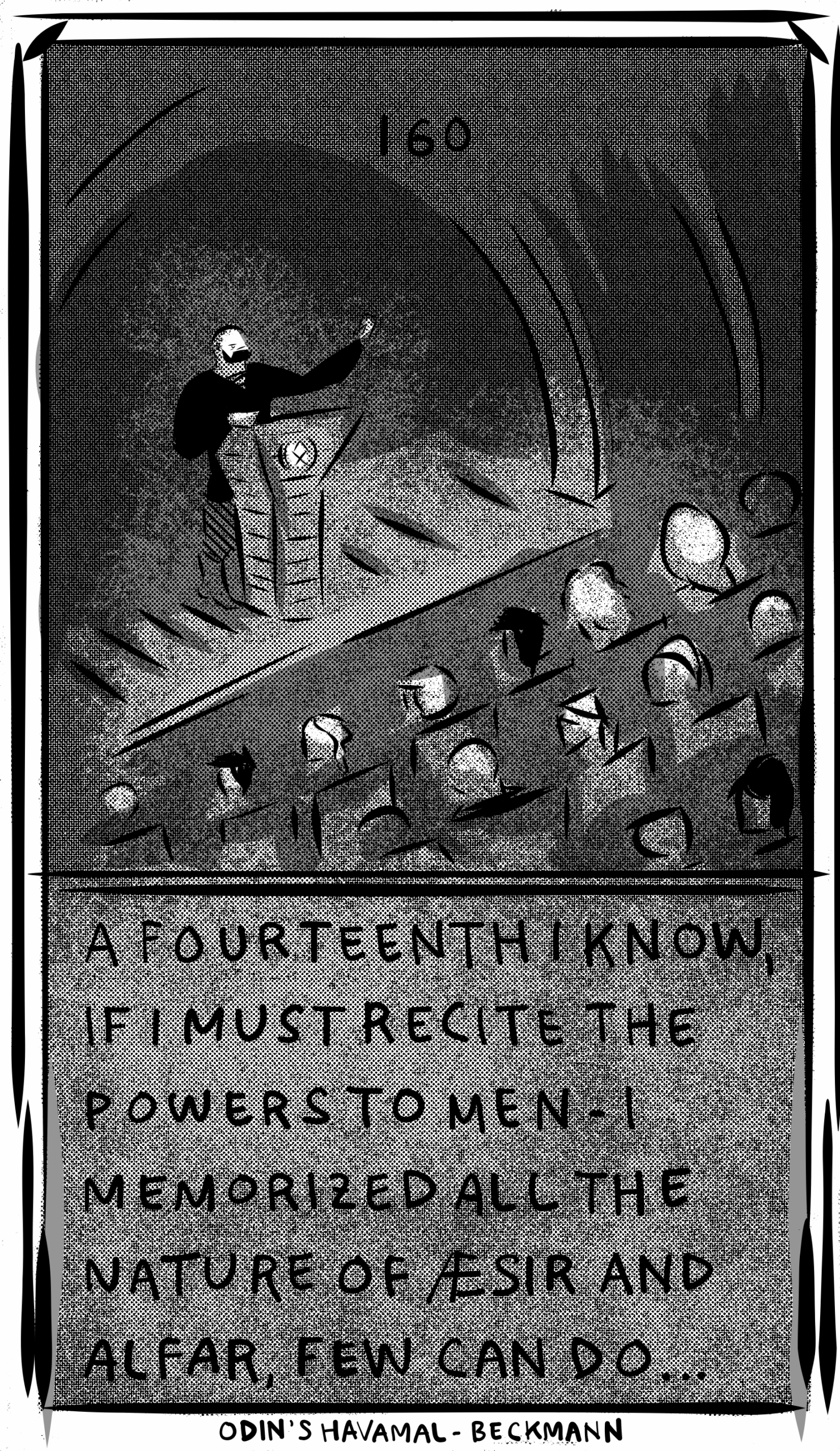
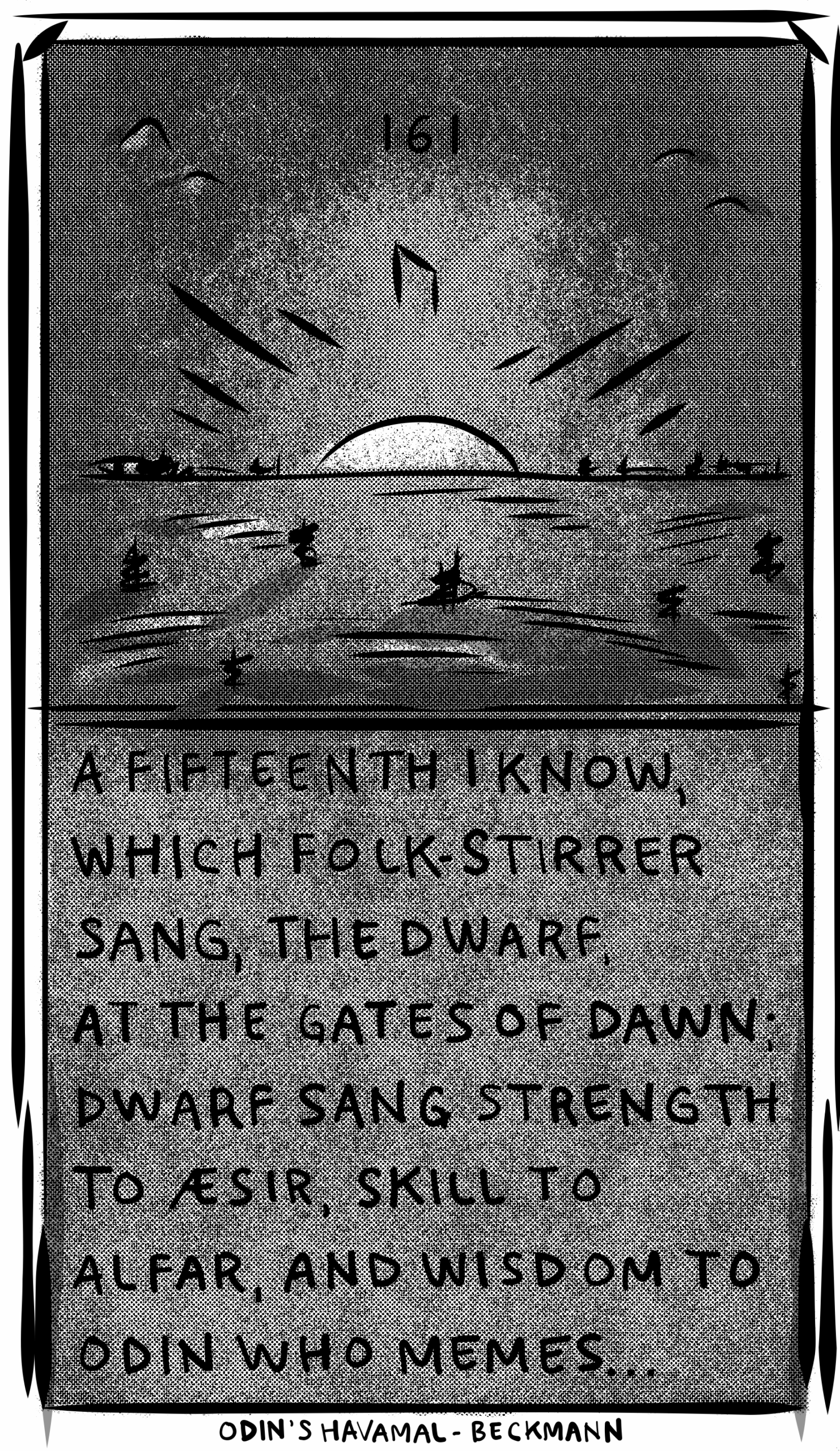
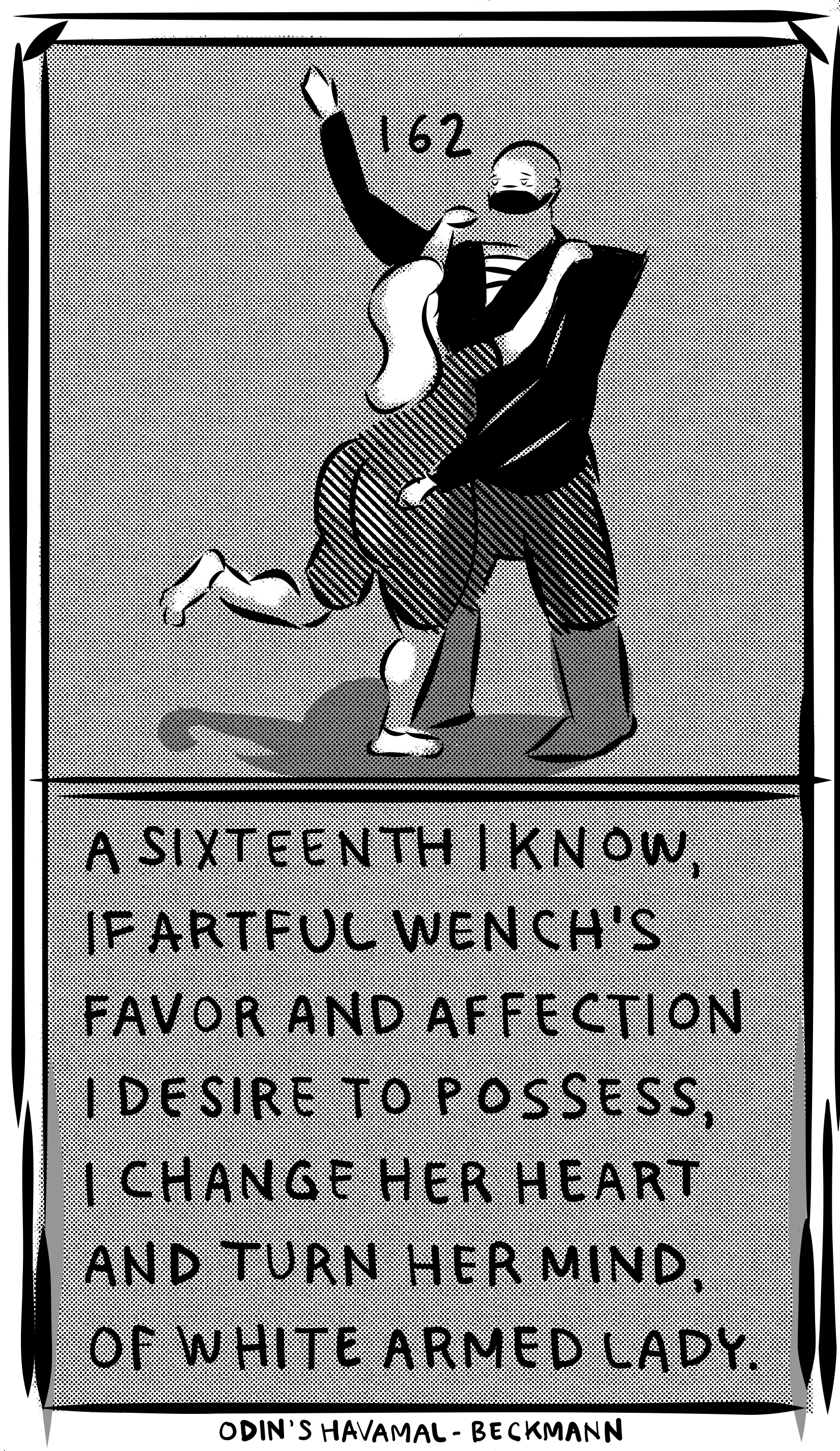
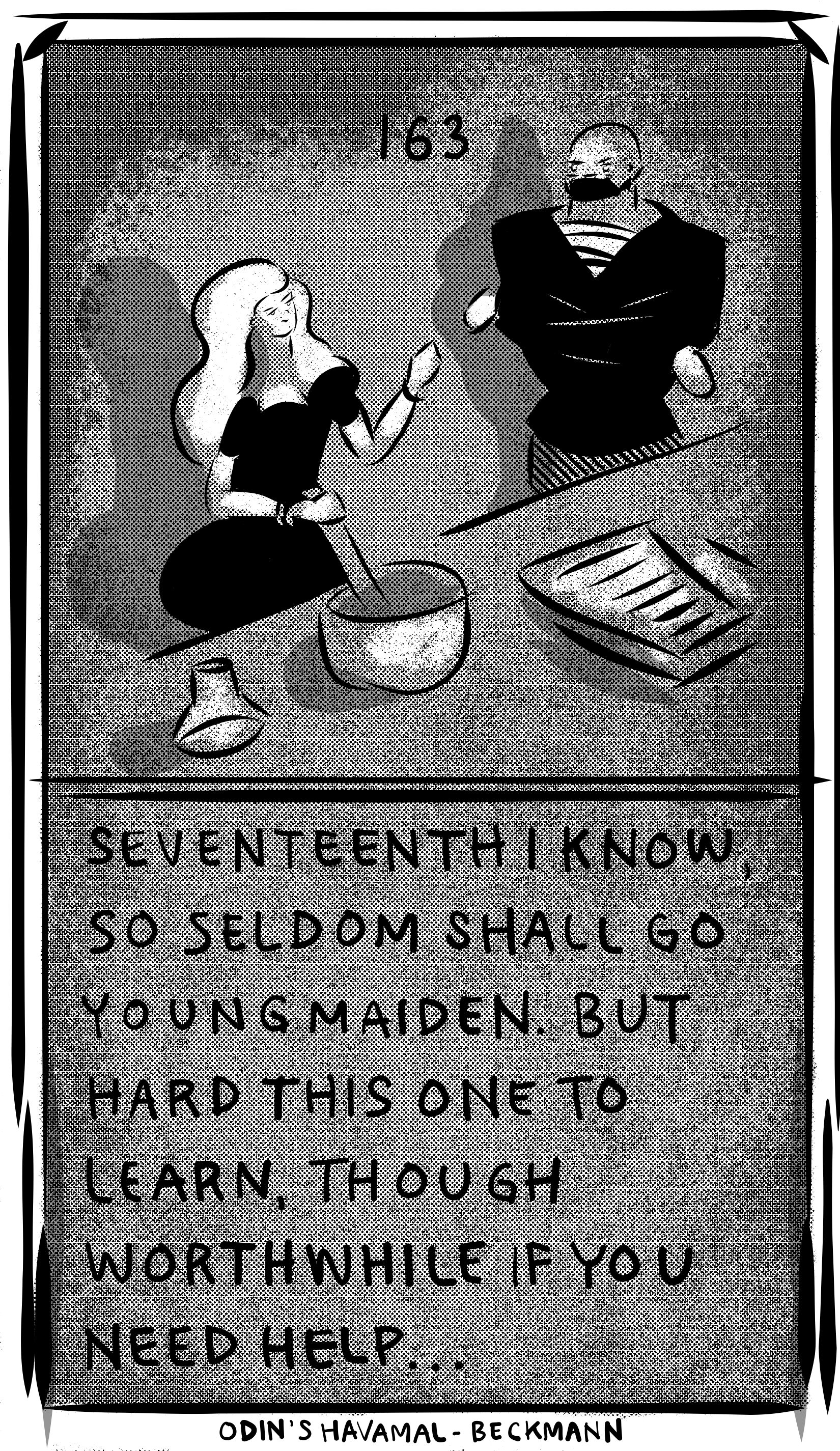
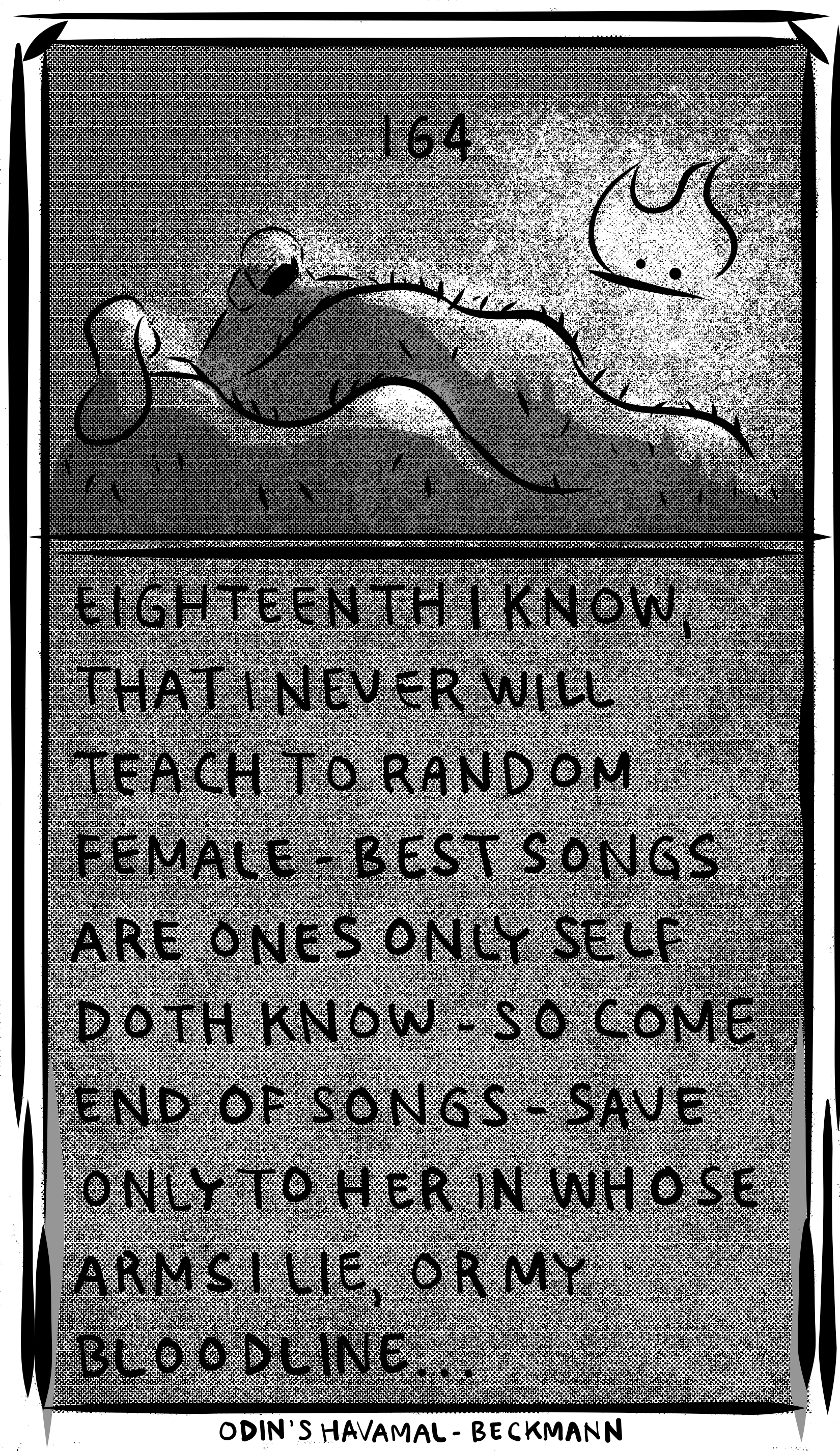
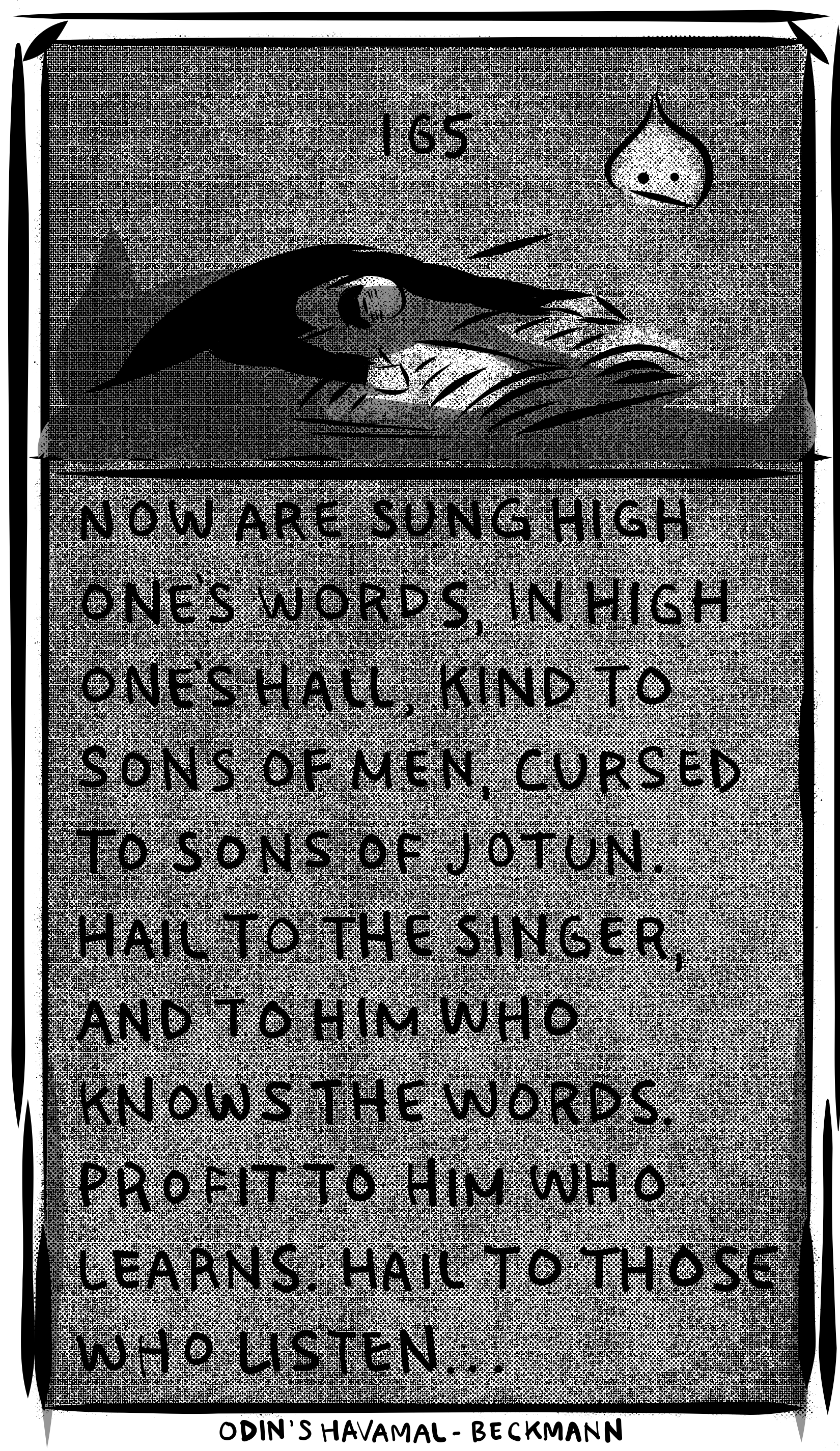
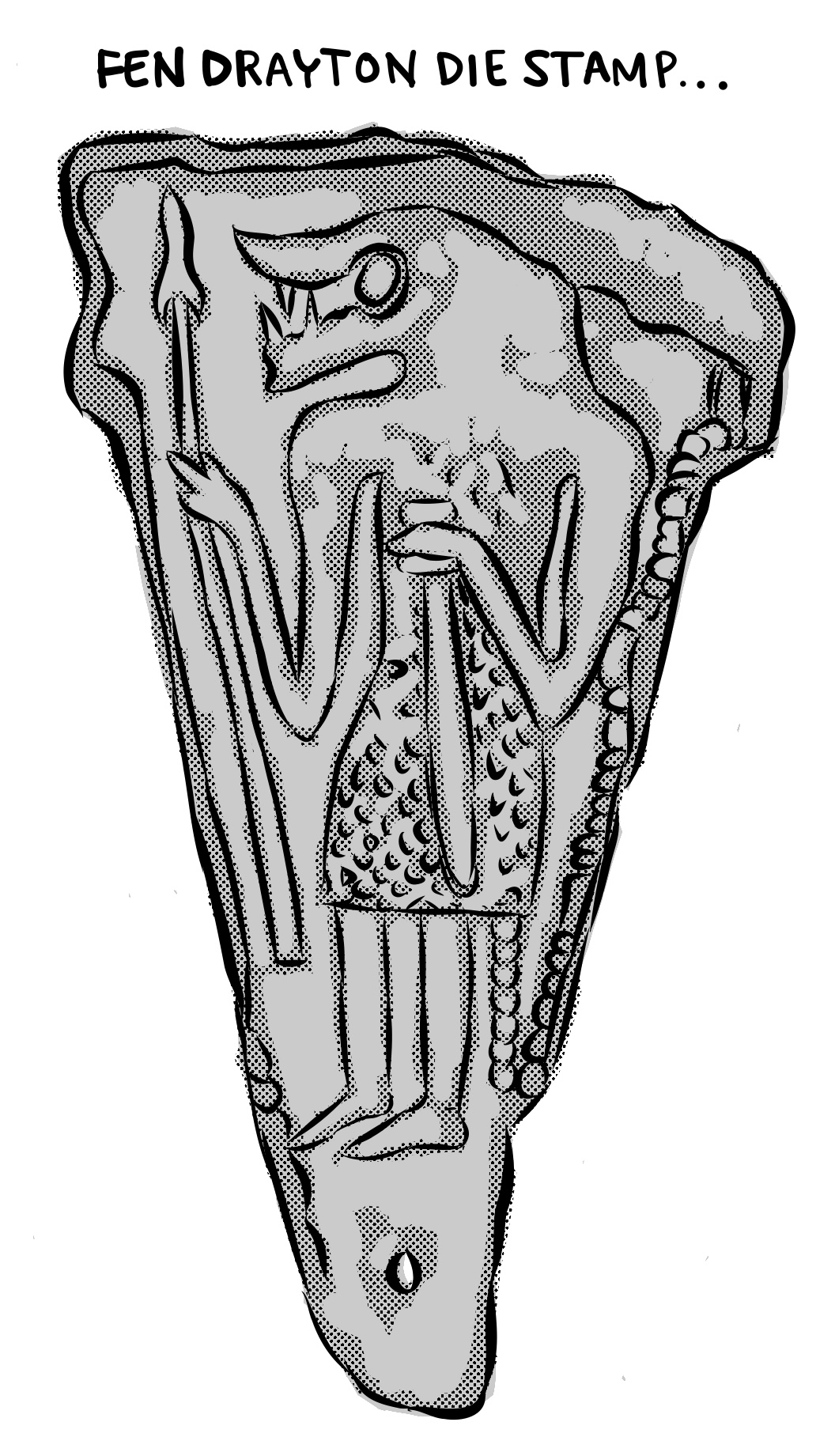
The Boy Who Tamed the Wolf (166-205)
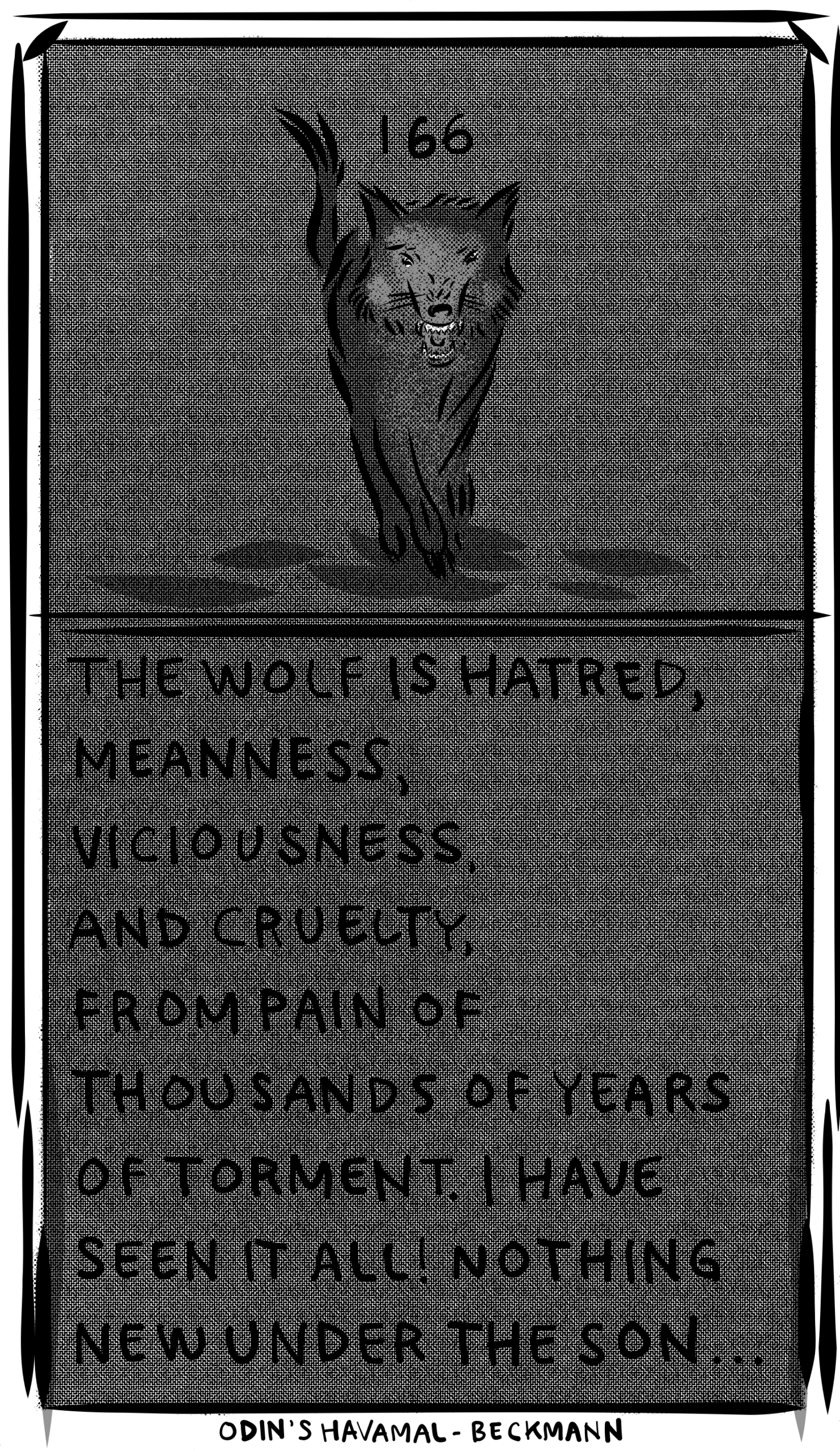
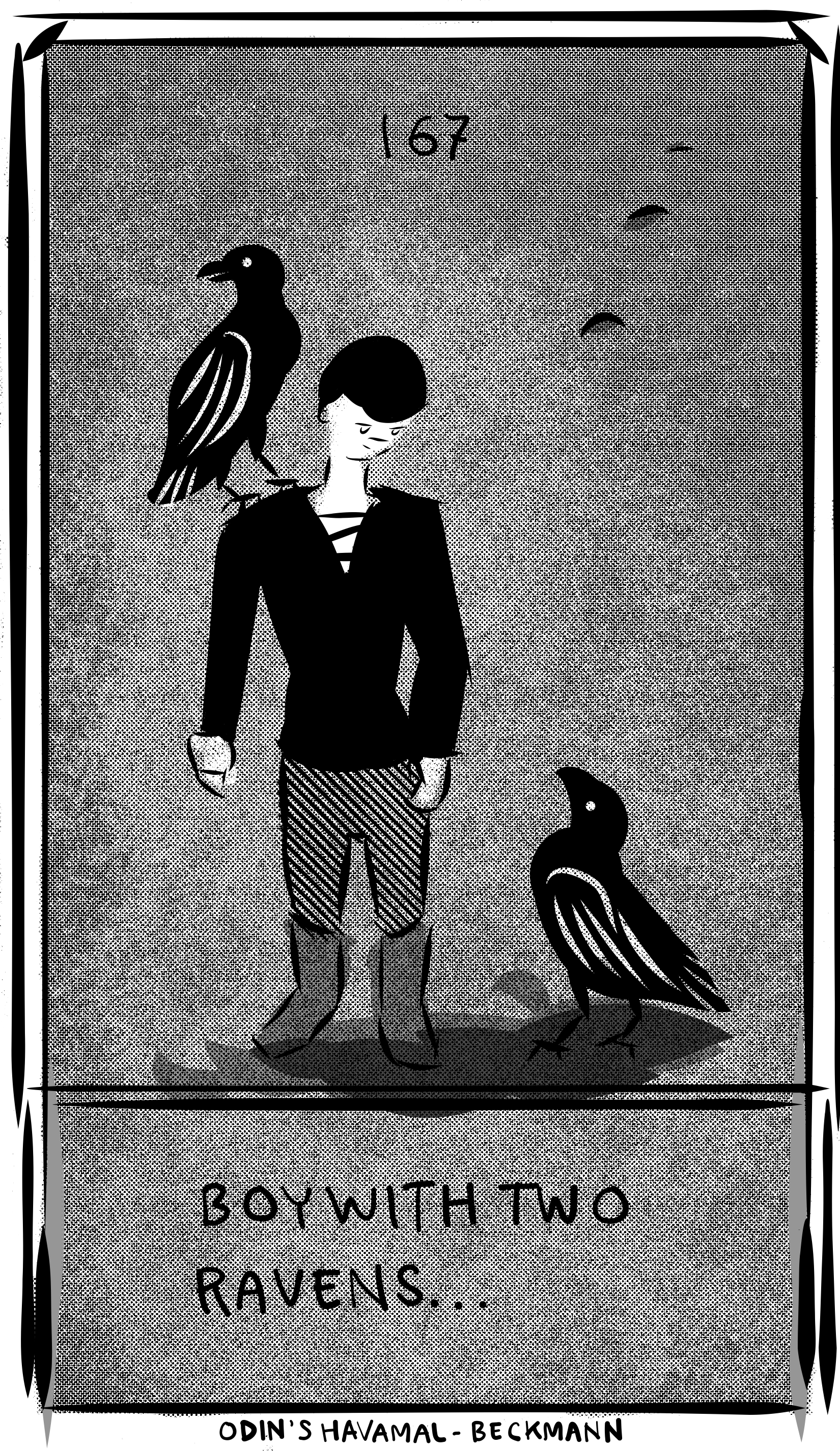
“The Whole is Greater than the Sum of its Parts…”
“Stand Alone!”
“My Guardian Angels Are OP!”
“Simple, not easy…
“I do not permit you to lie…”
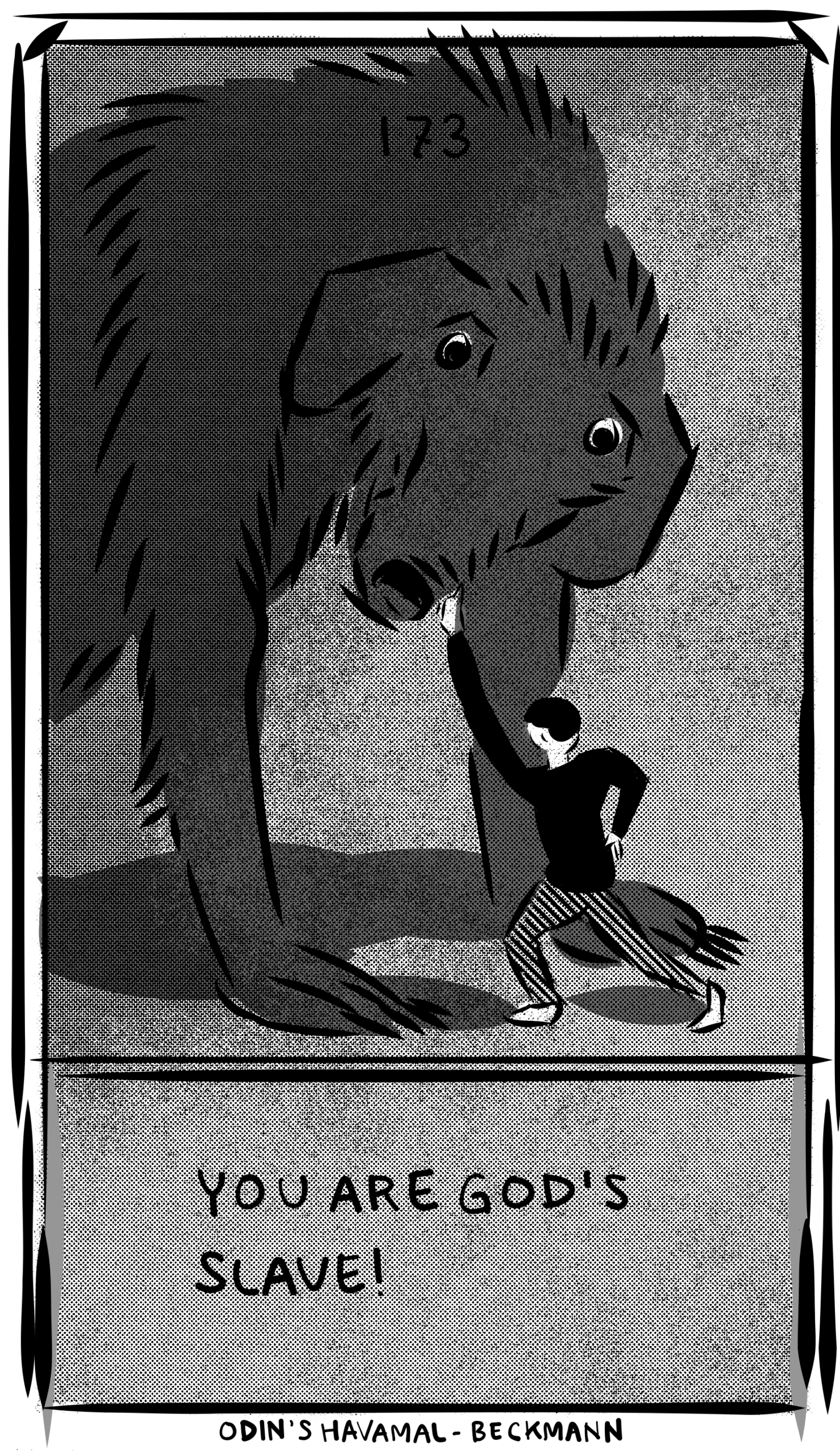
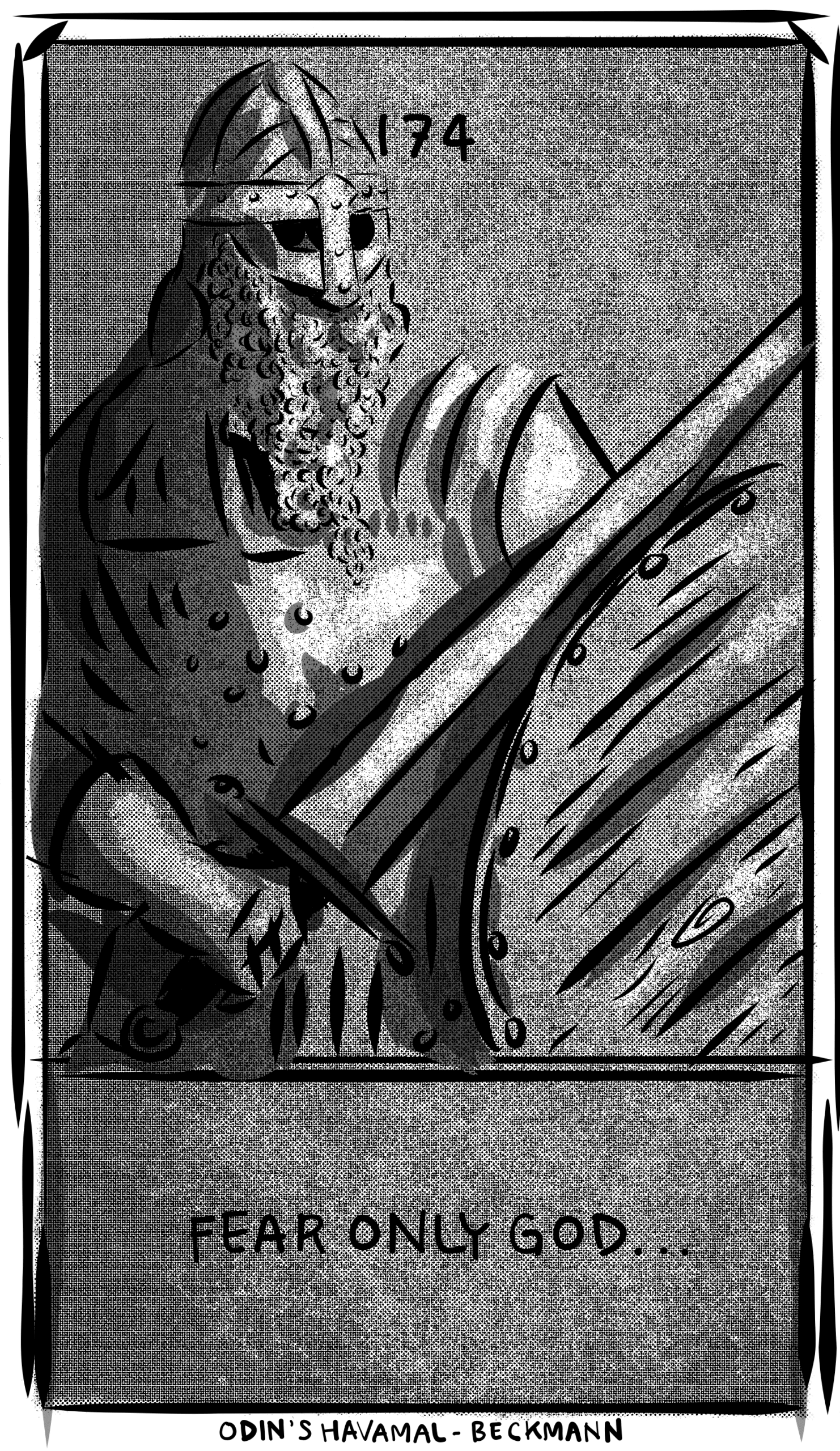
“Out! The Boy Tames the Wolf…”
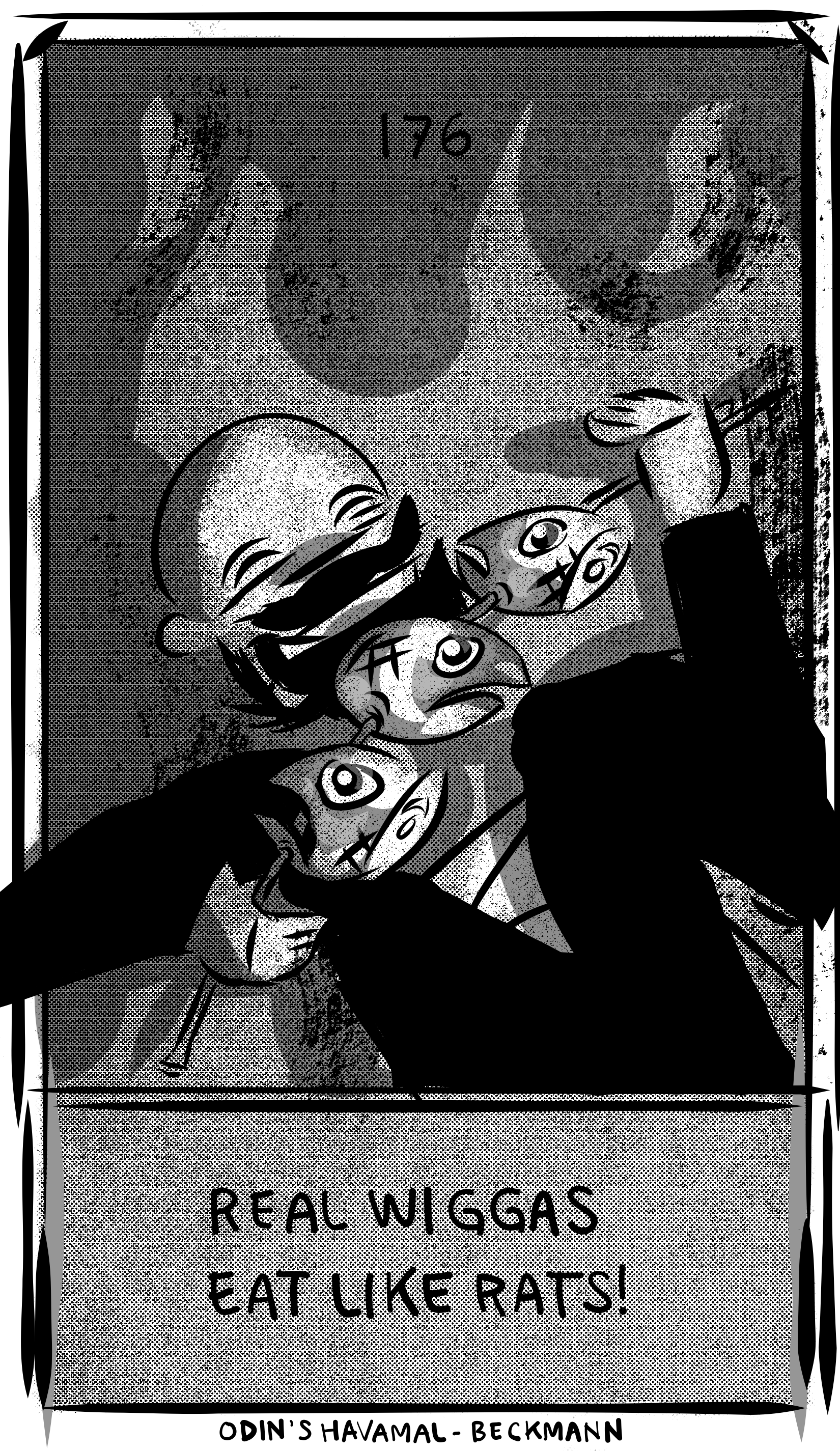
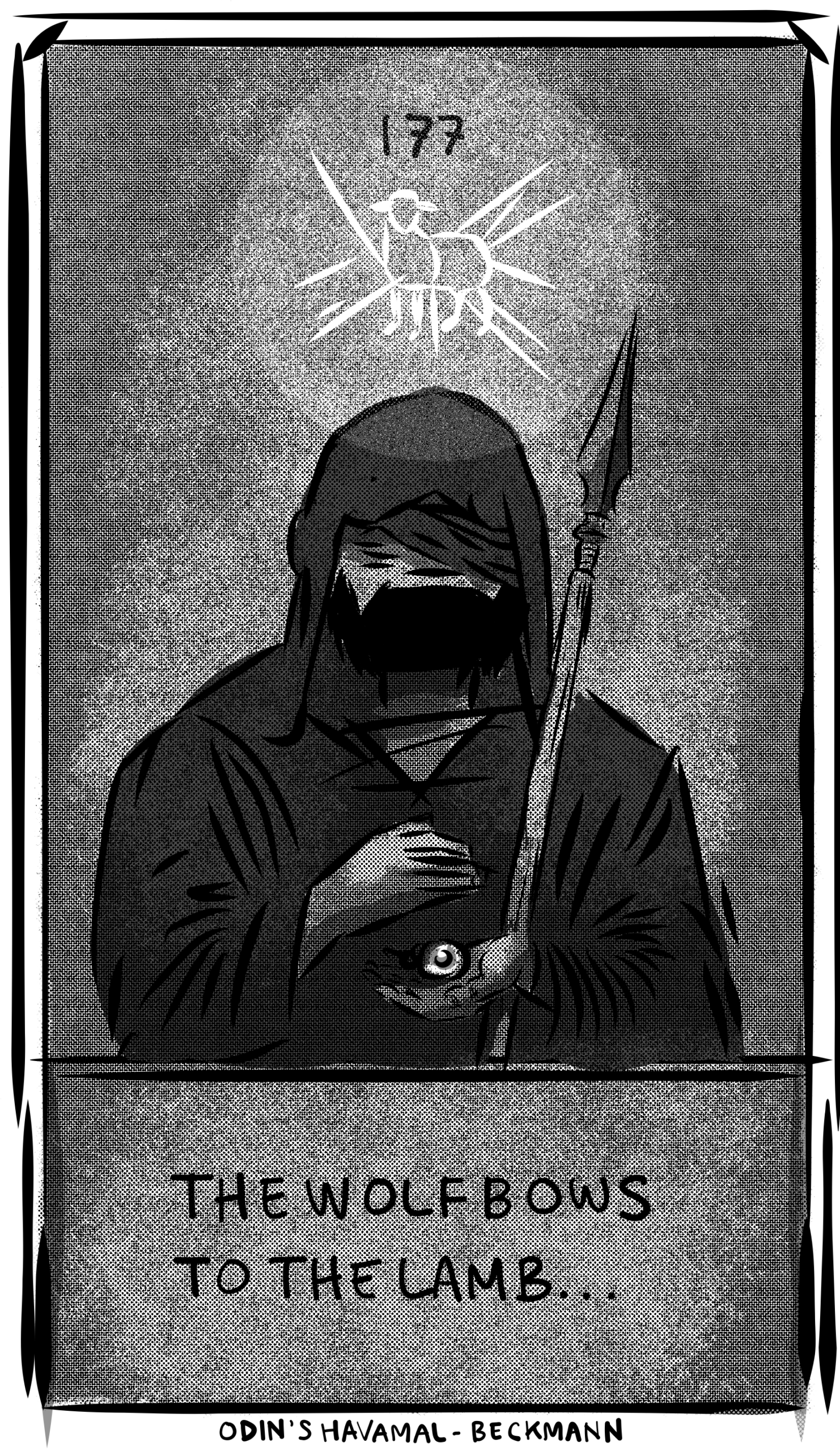
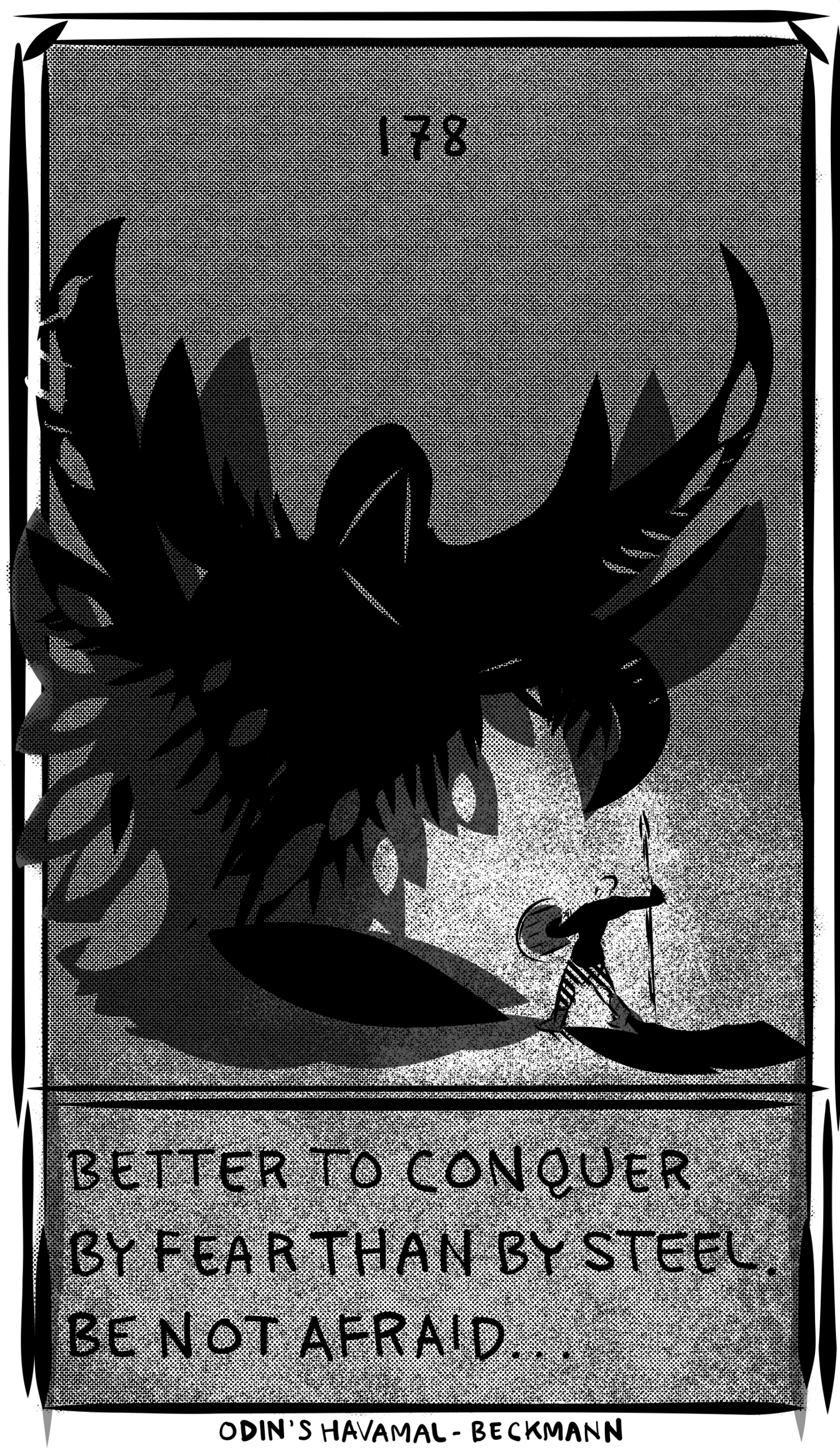
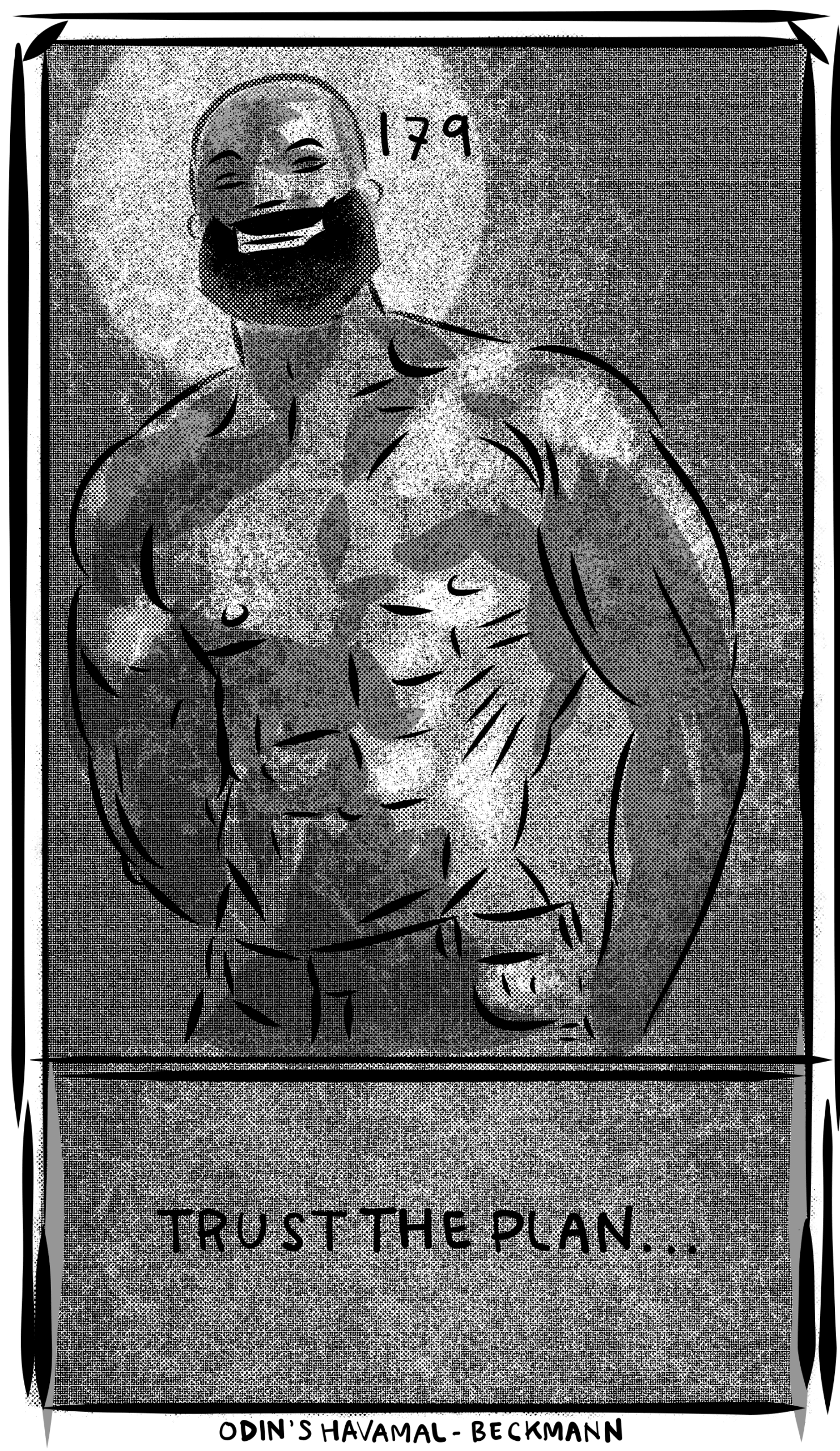
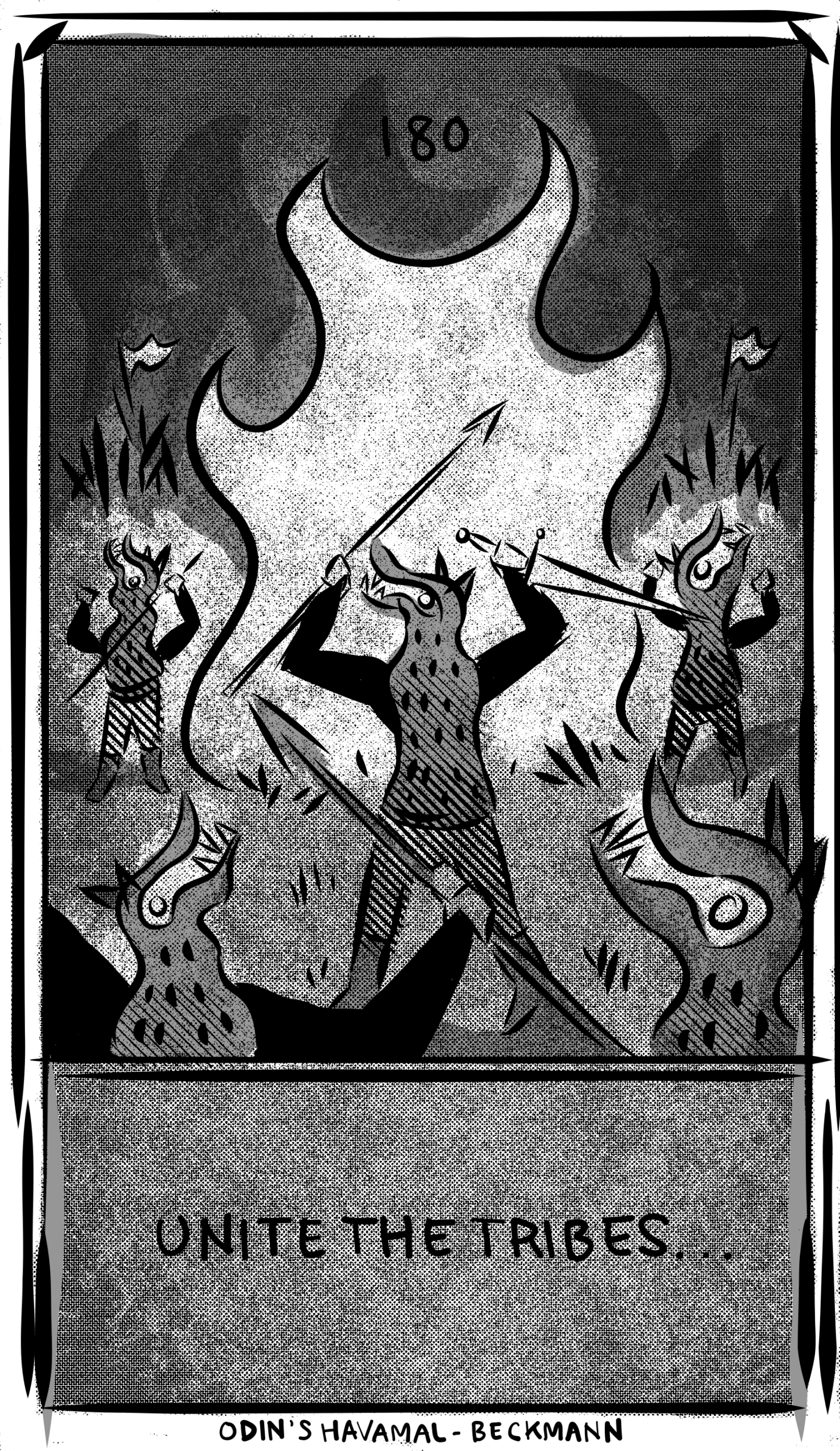
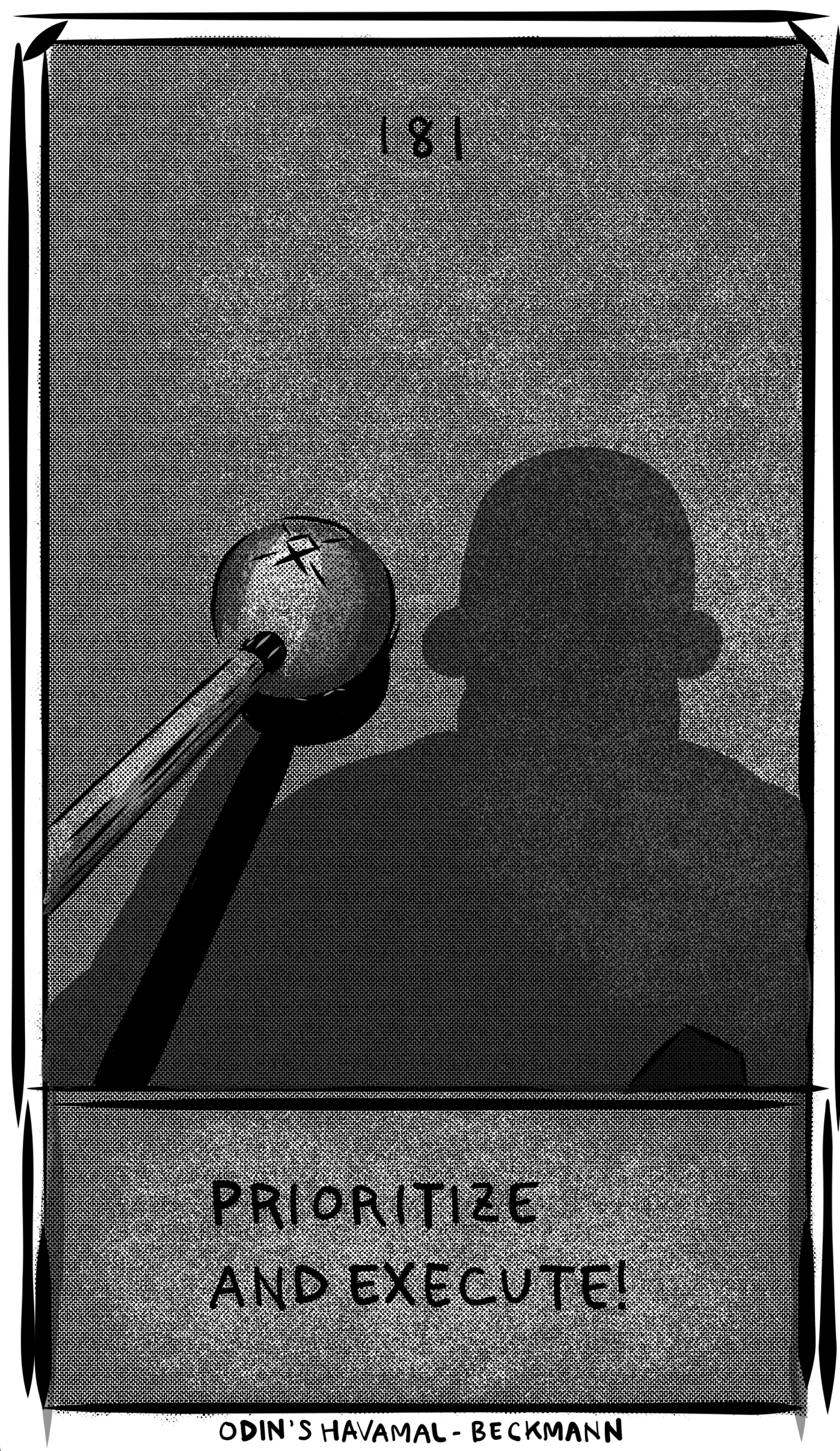
“Sir, He’s Threatening to Memilate!”
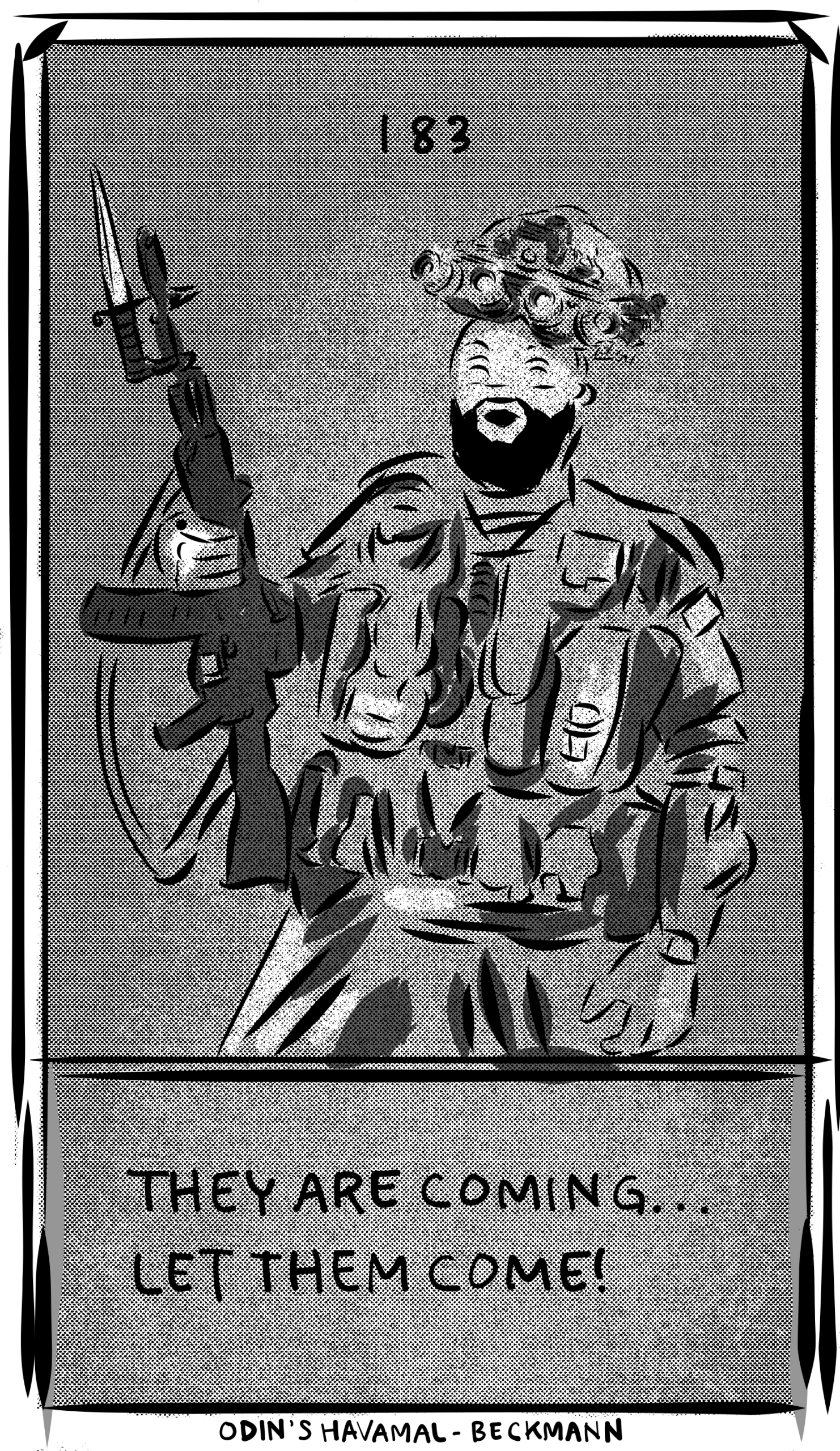
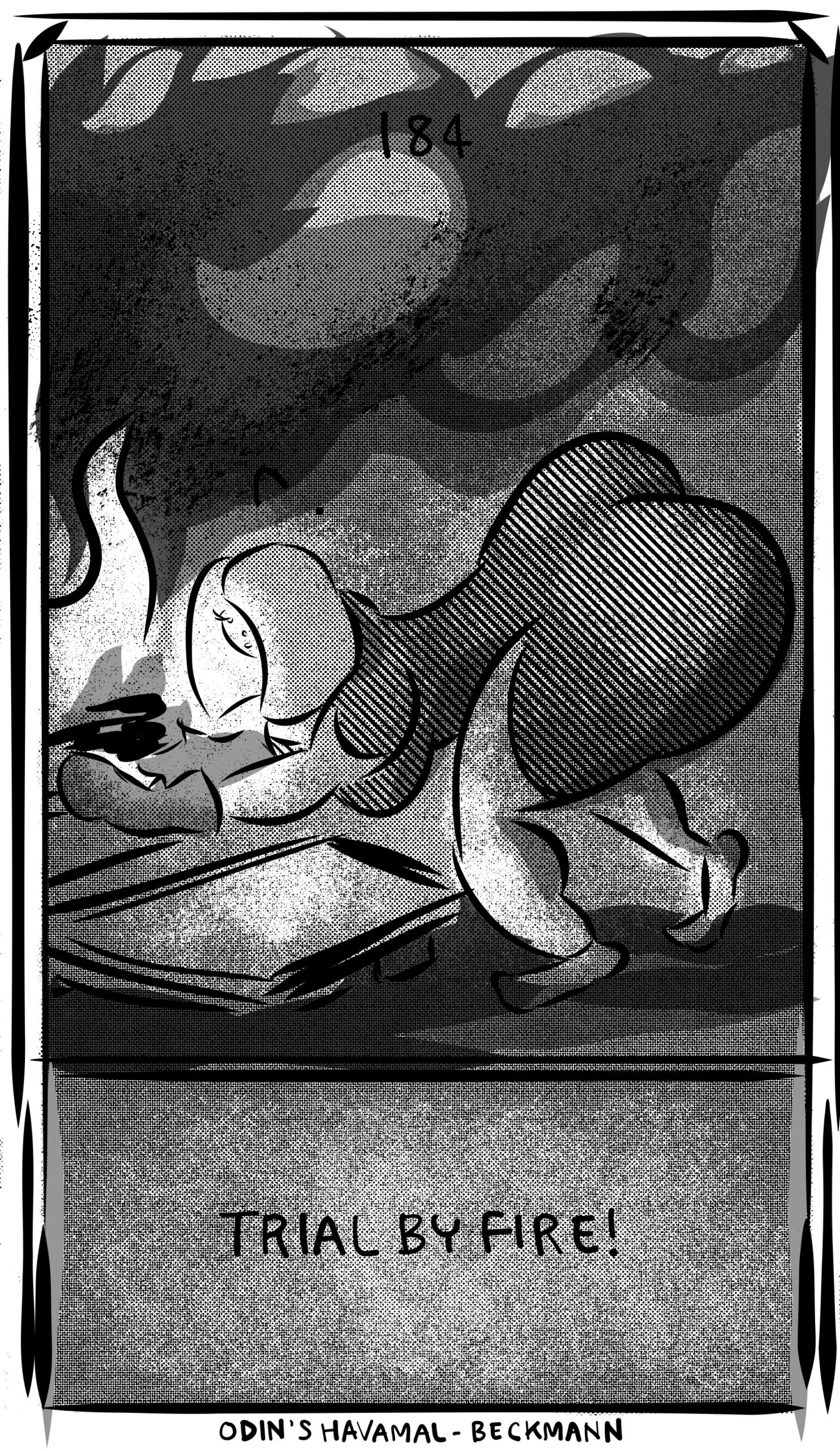
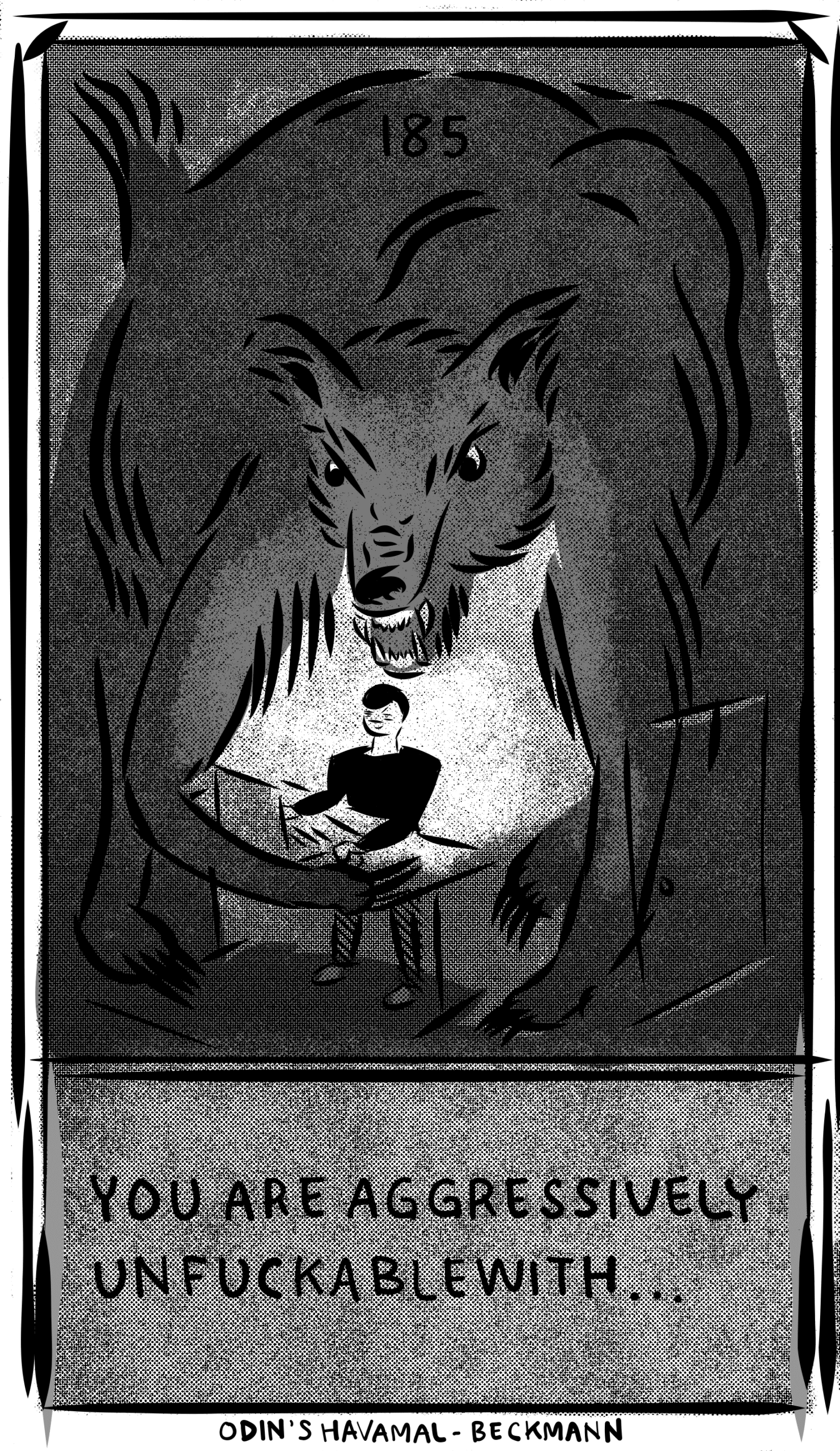
“Don’t Get Involved in Politics, Boss…”
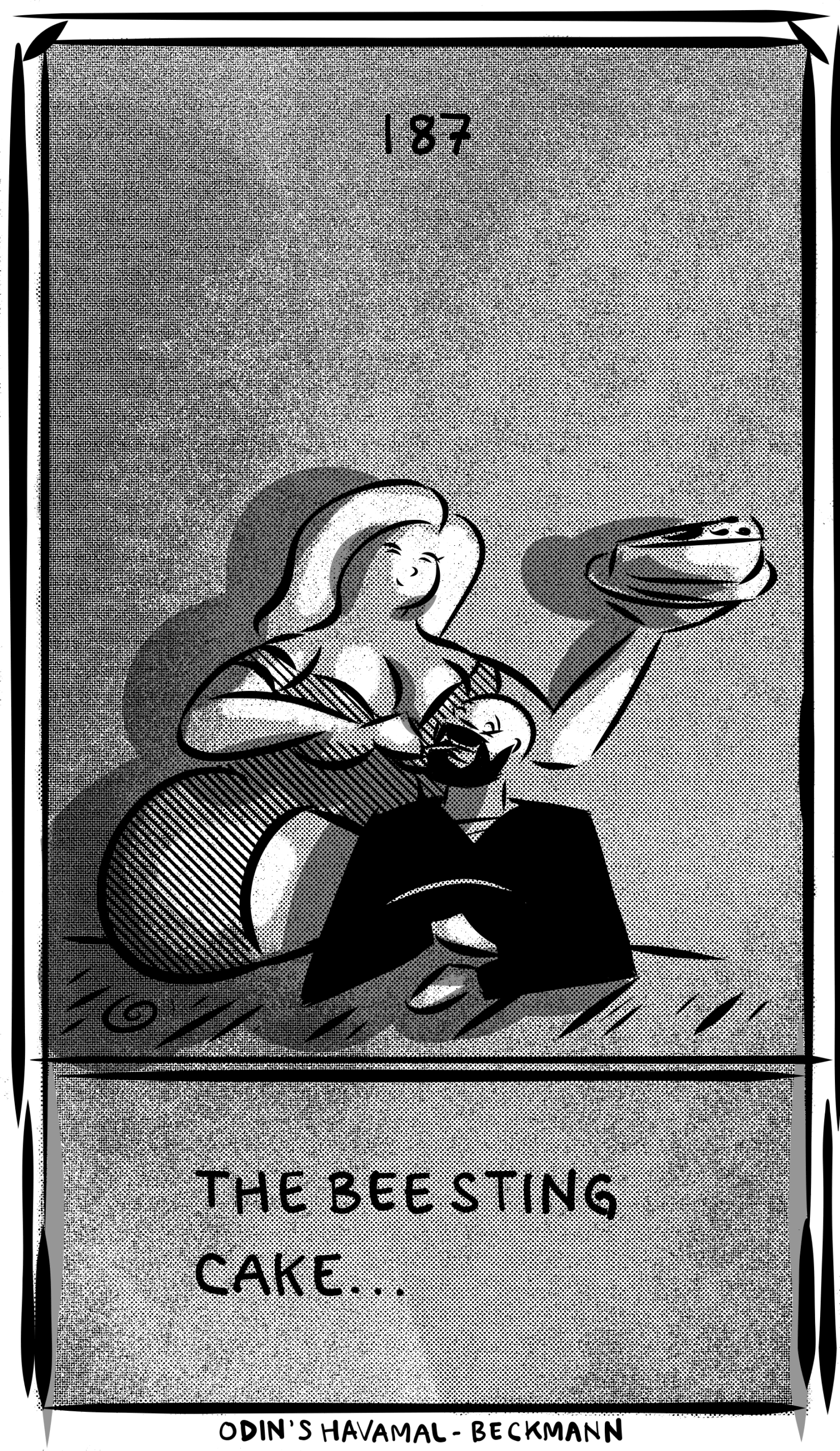
“Be a Good Father.”
“Don’t Be Cruel…”
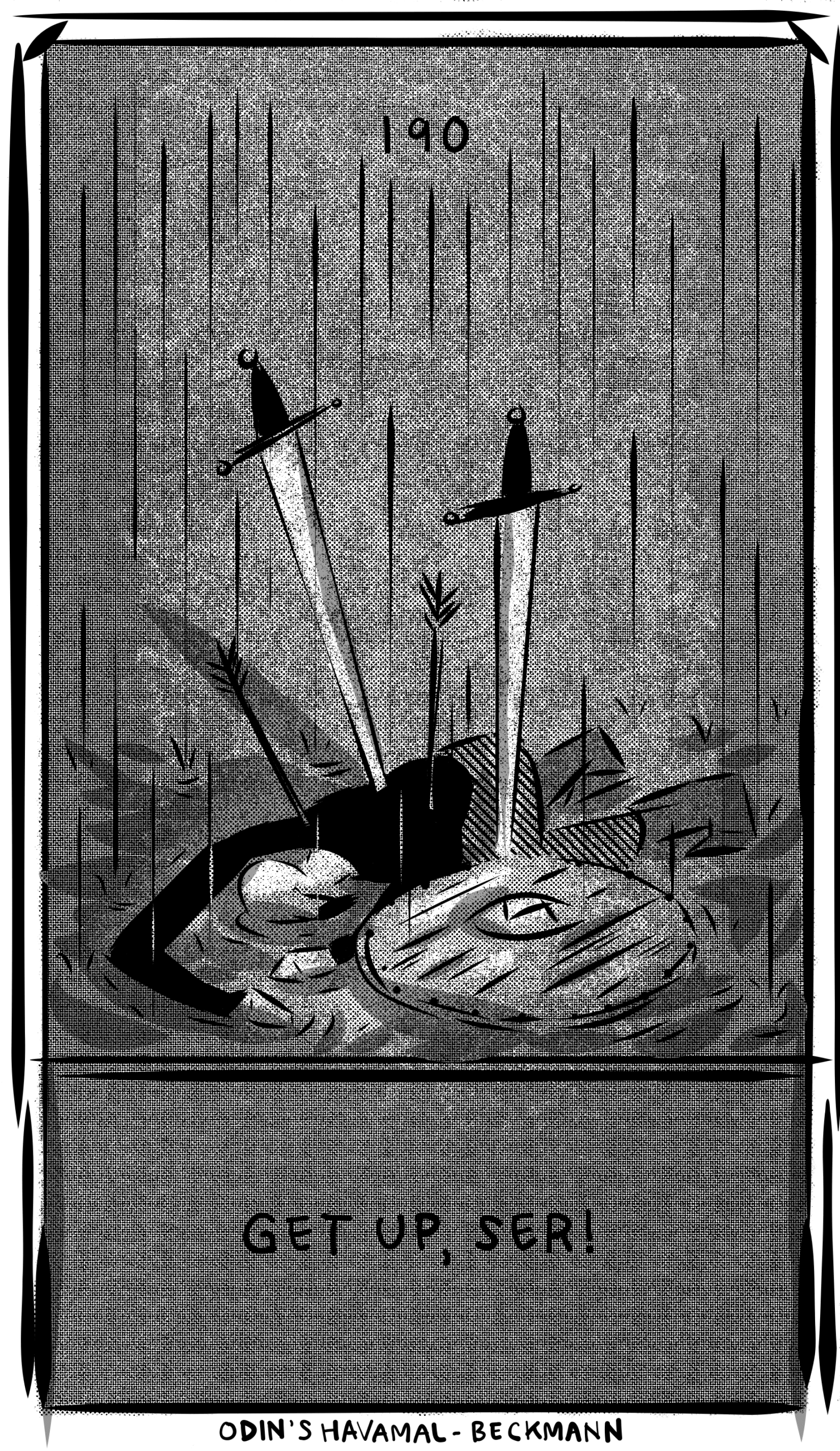
“Teach your son… Teach Your Kids to Pray…”
“Odin Loves His Children… YOU WILL EAT THIS STEAK!”
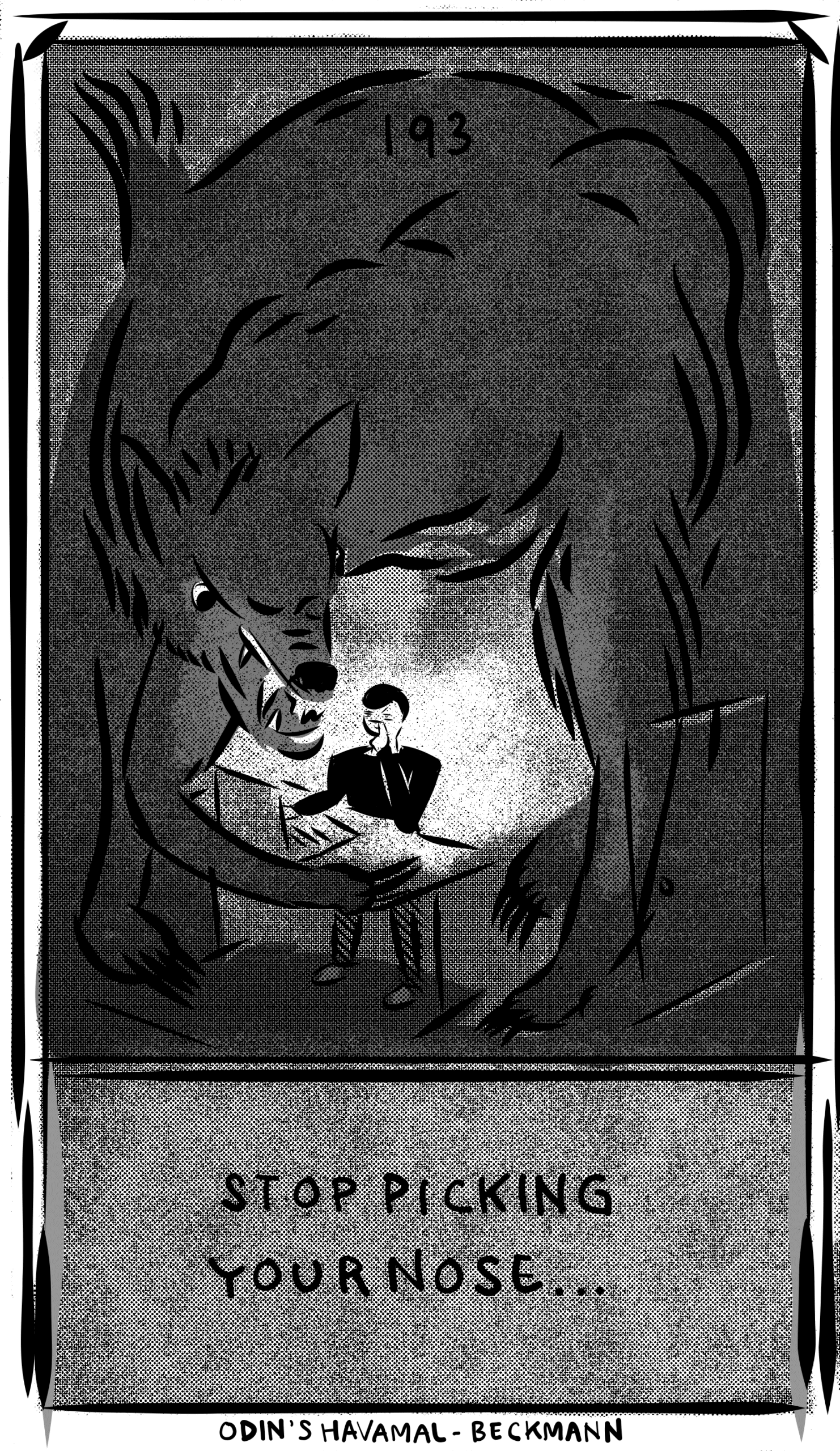
“Get a Loyal Wife…”
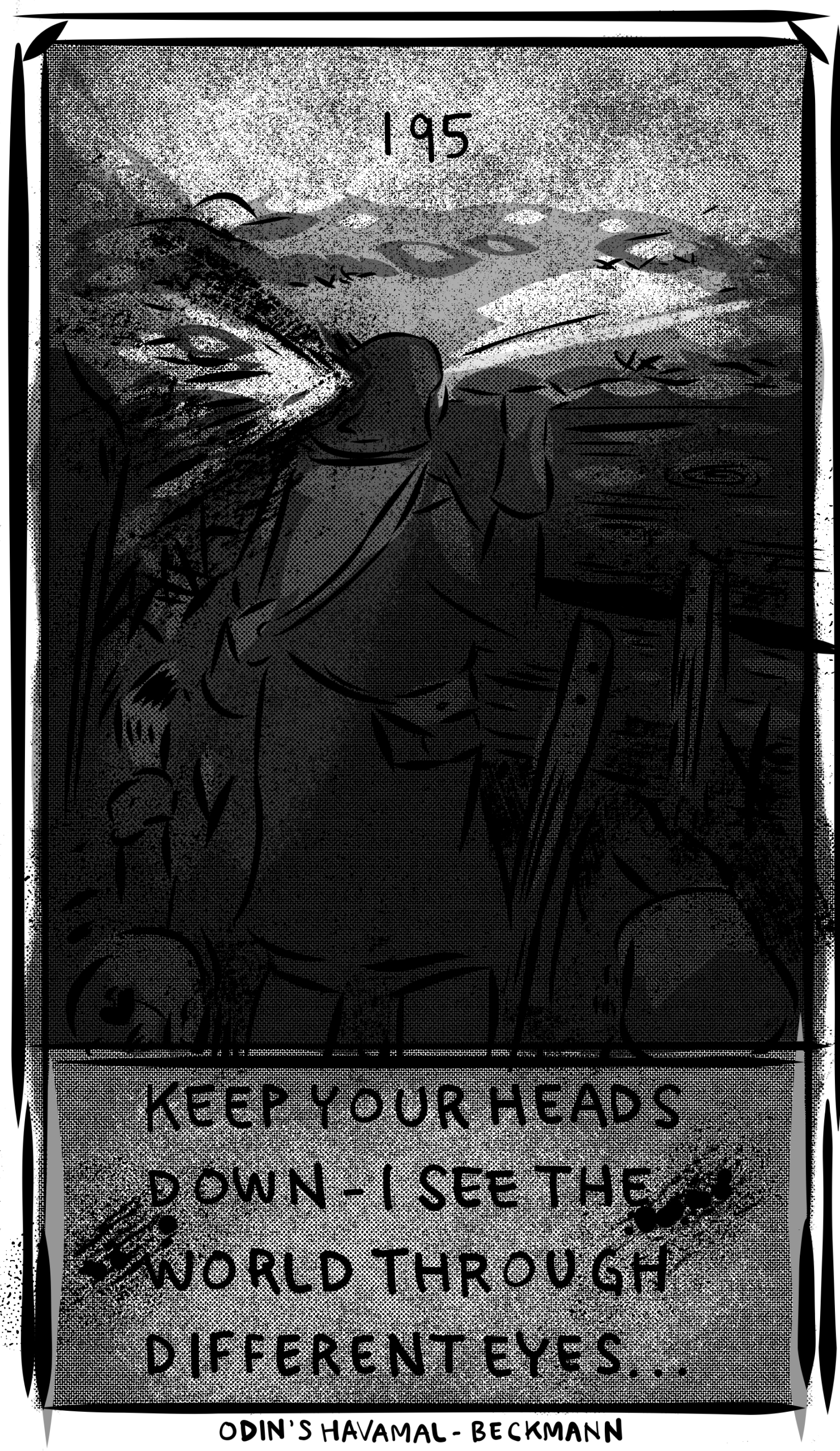
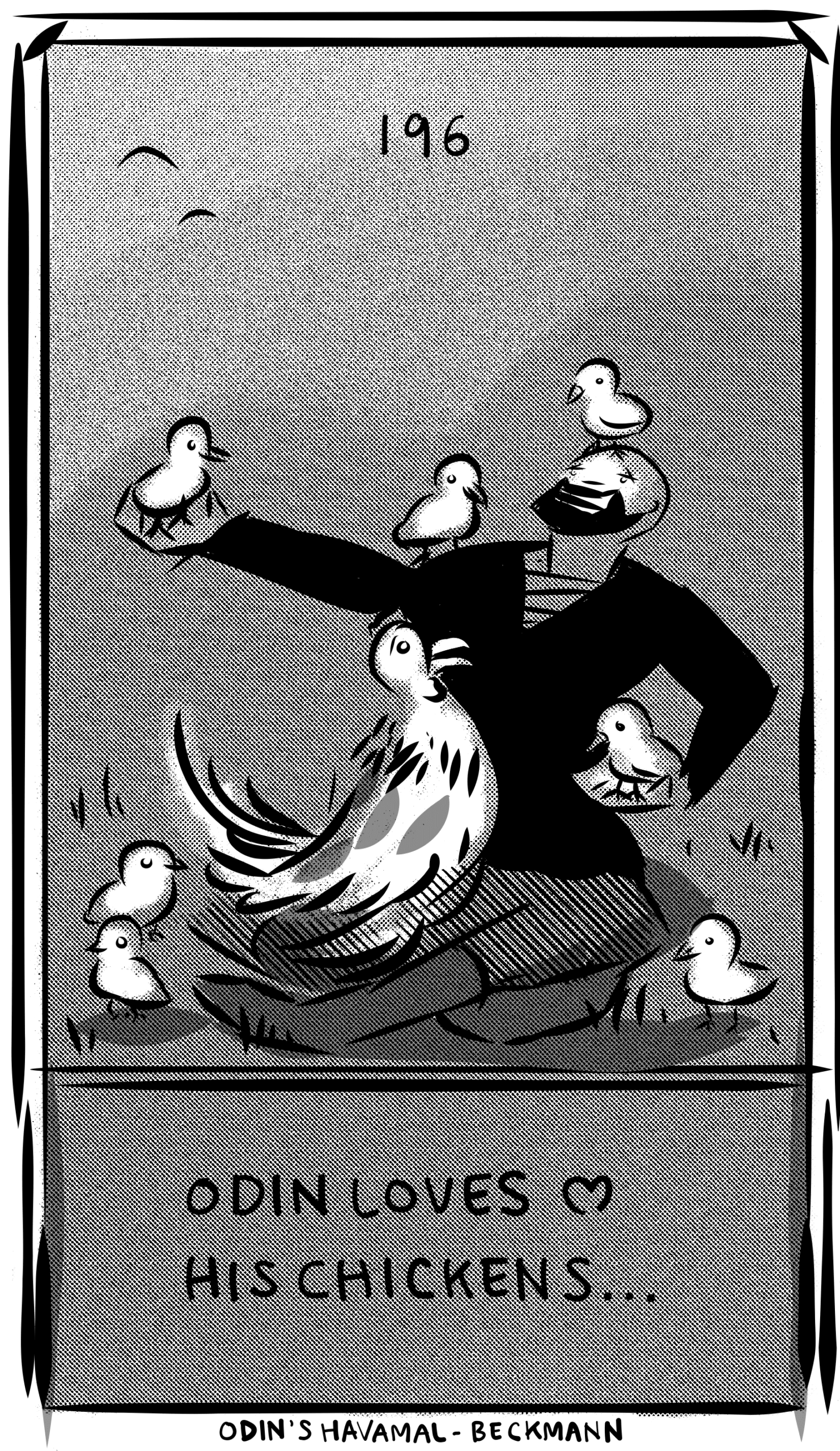
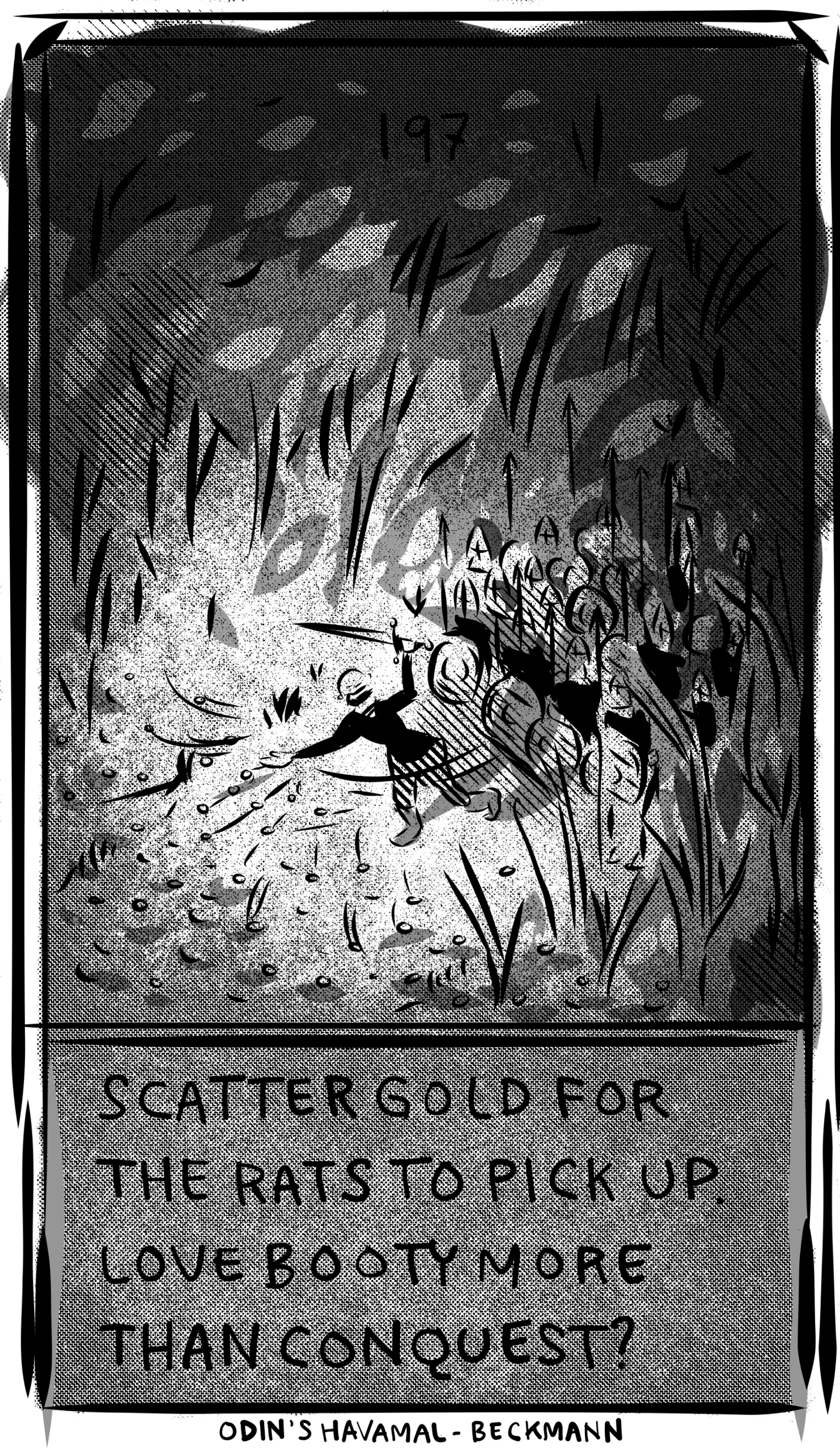
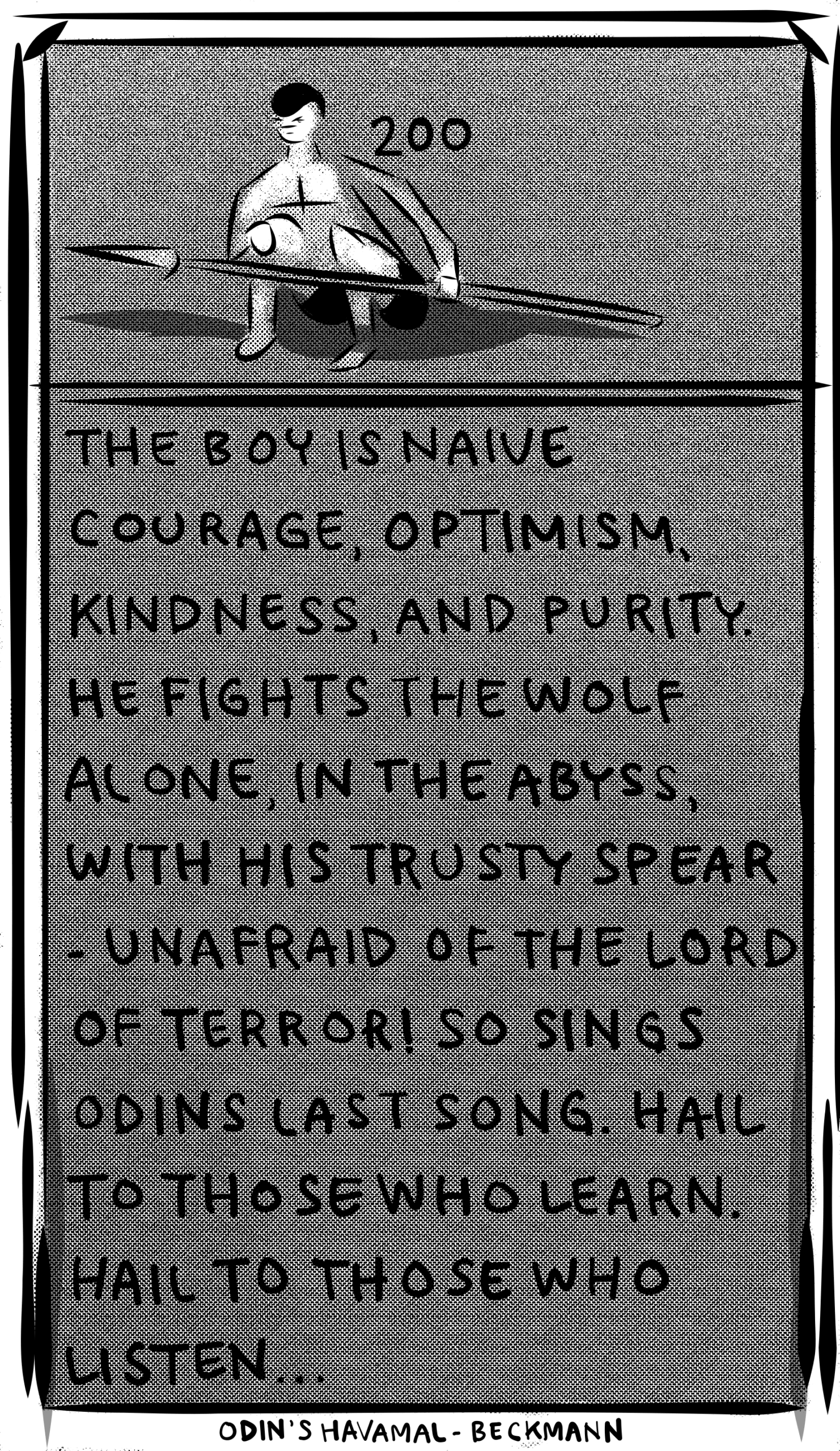
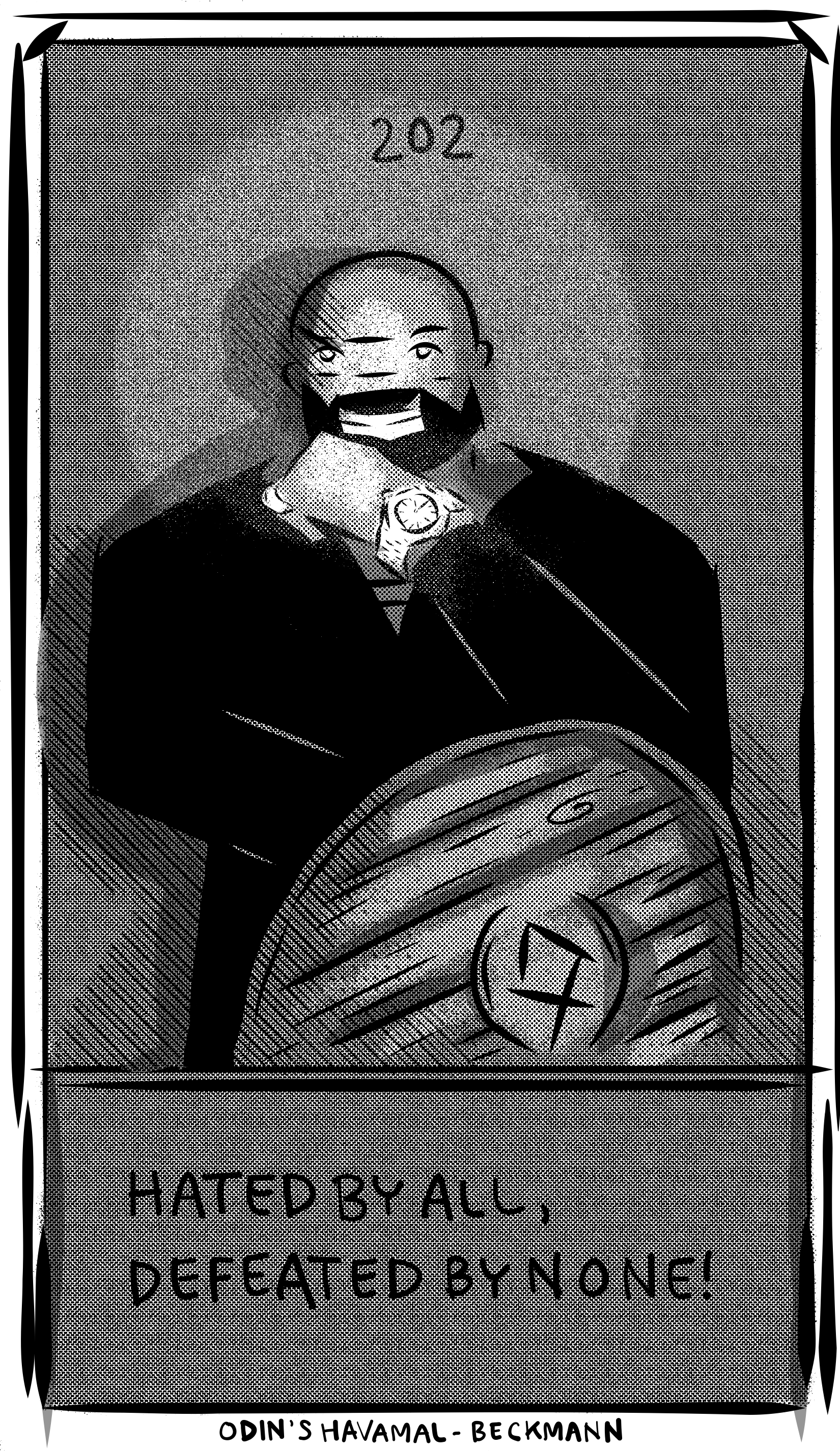
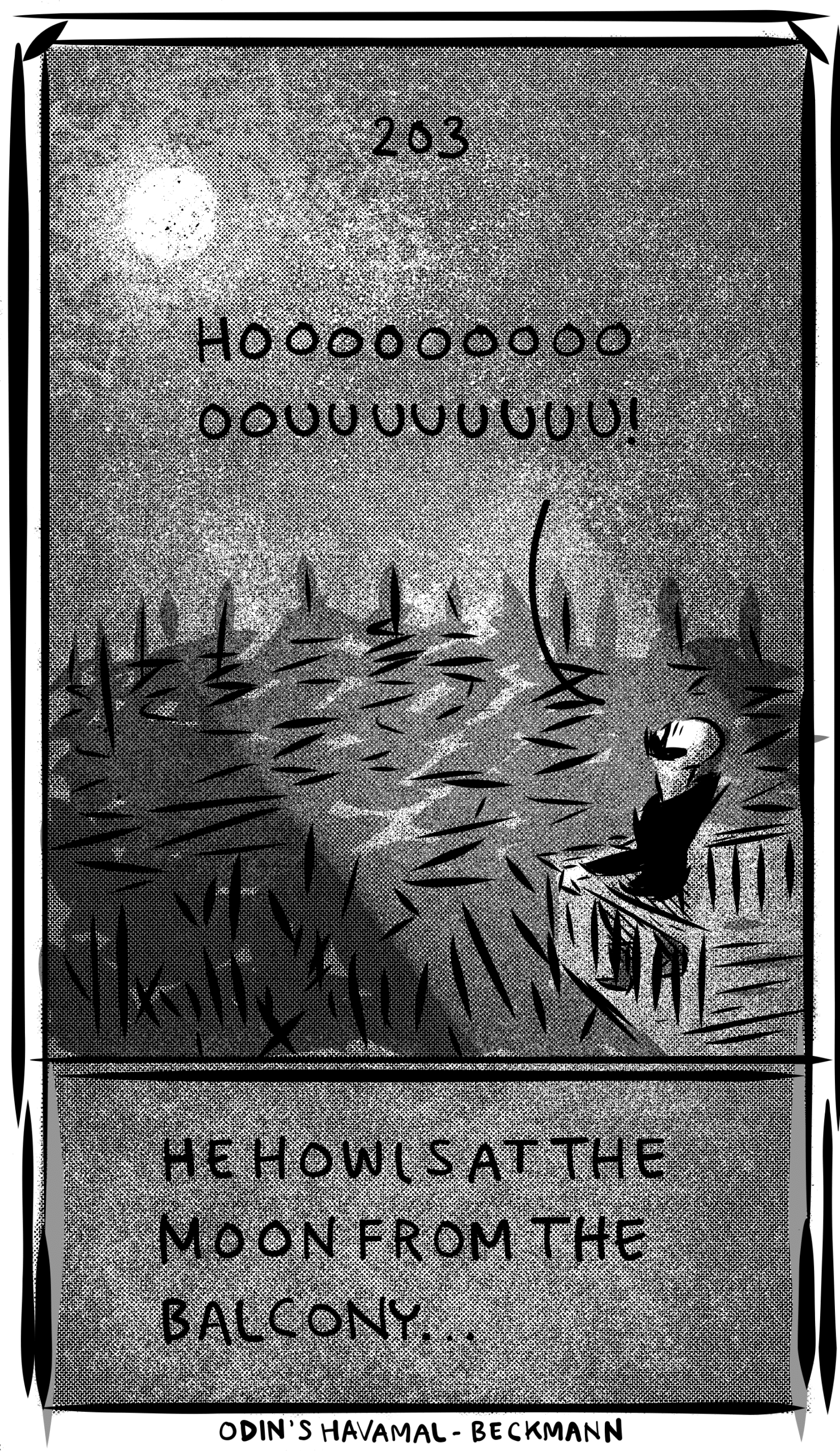
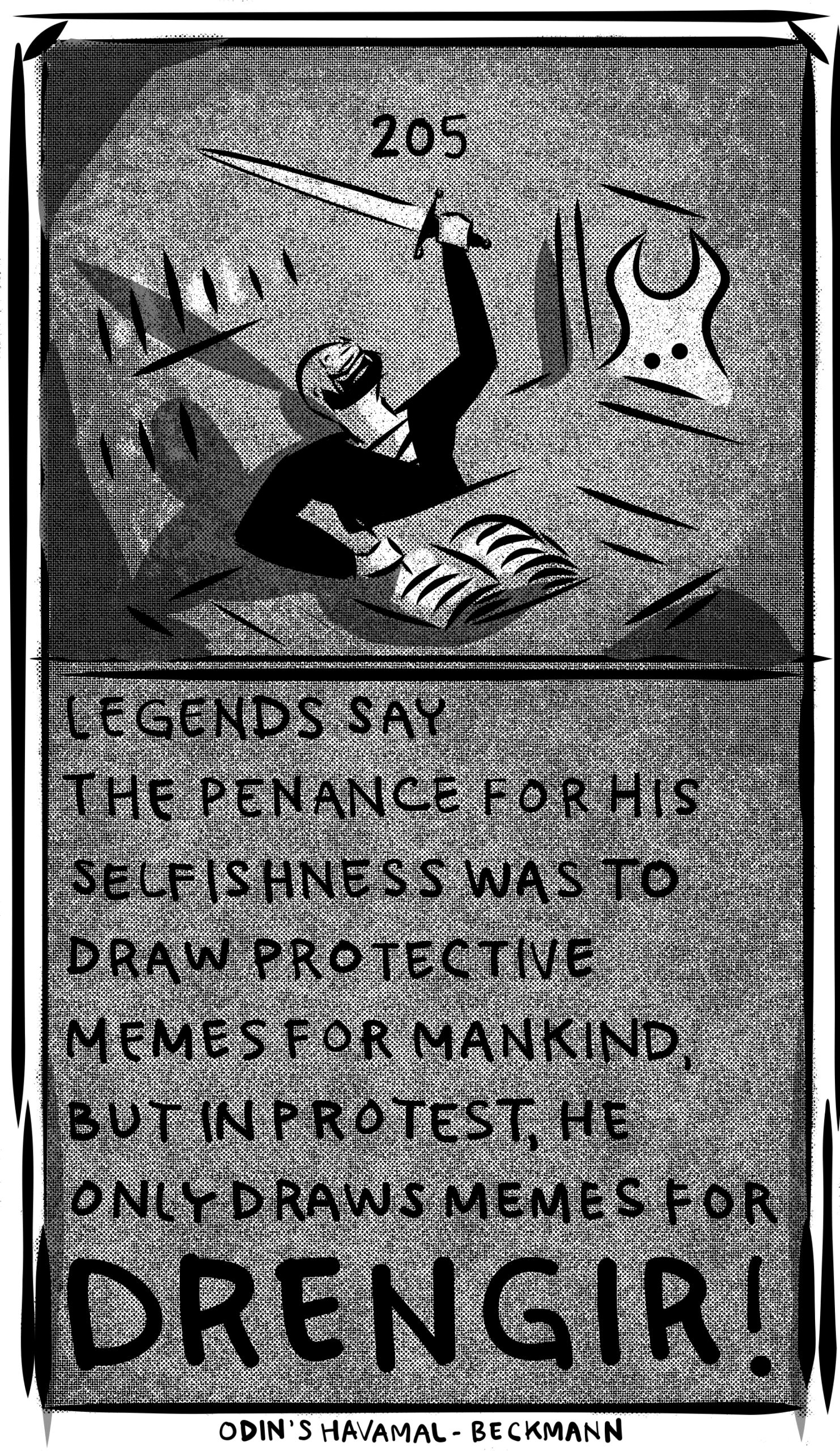
Aftermath:
Notes on Translation to Meme.
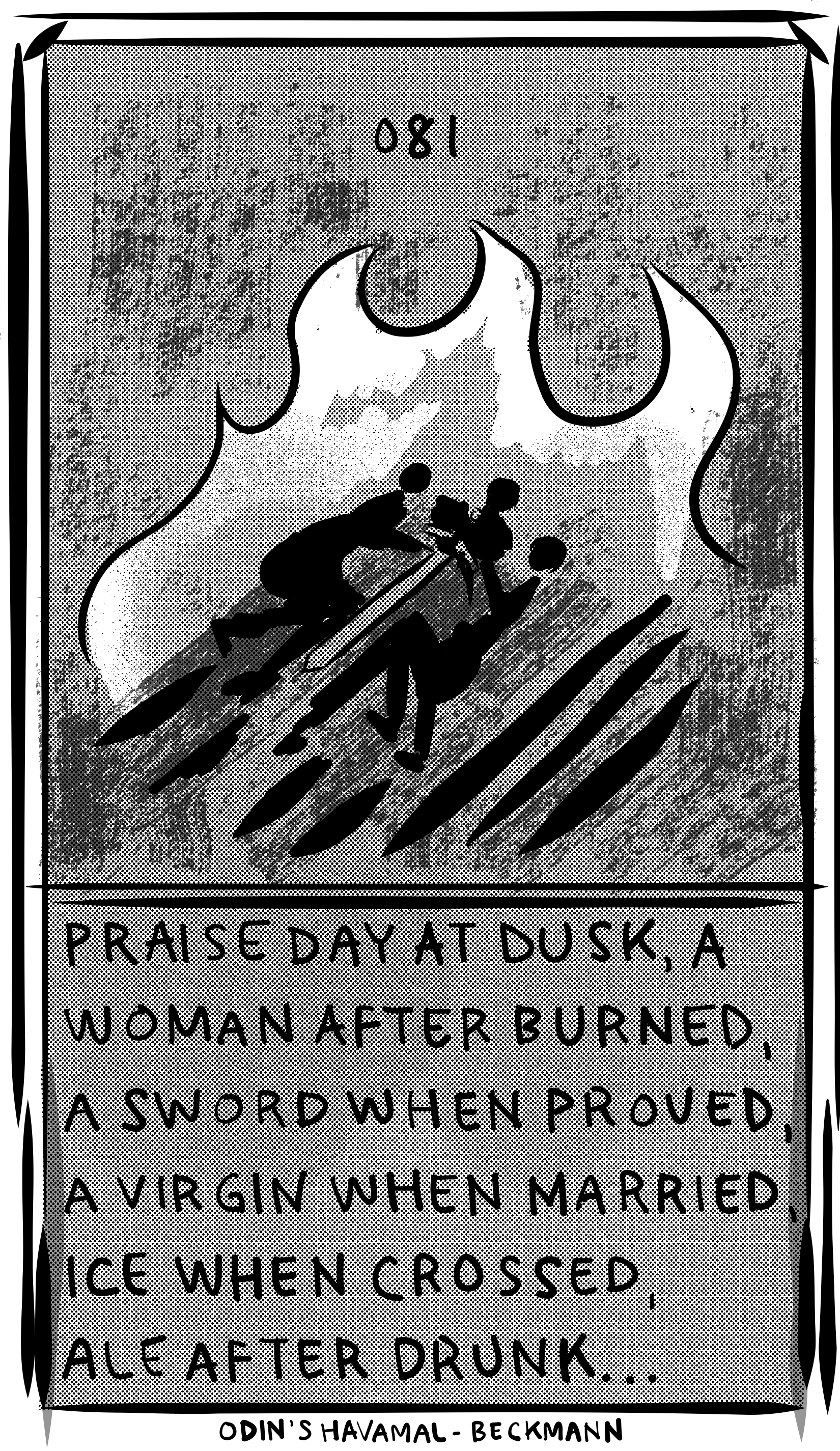
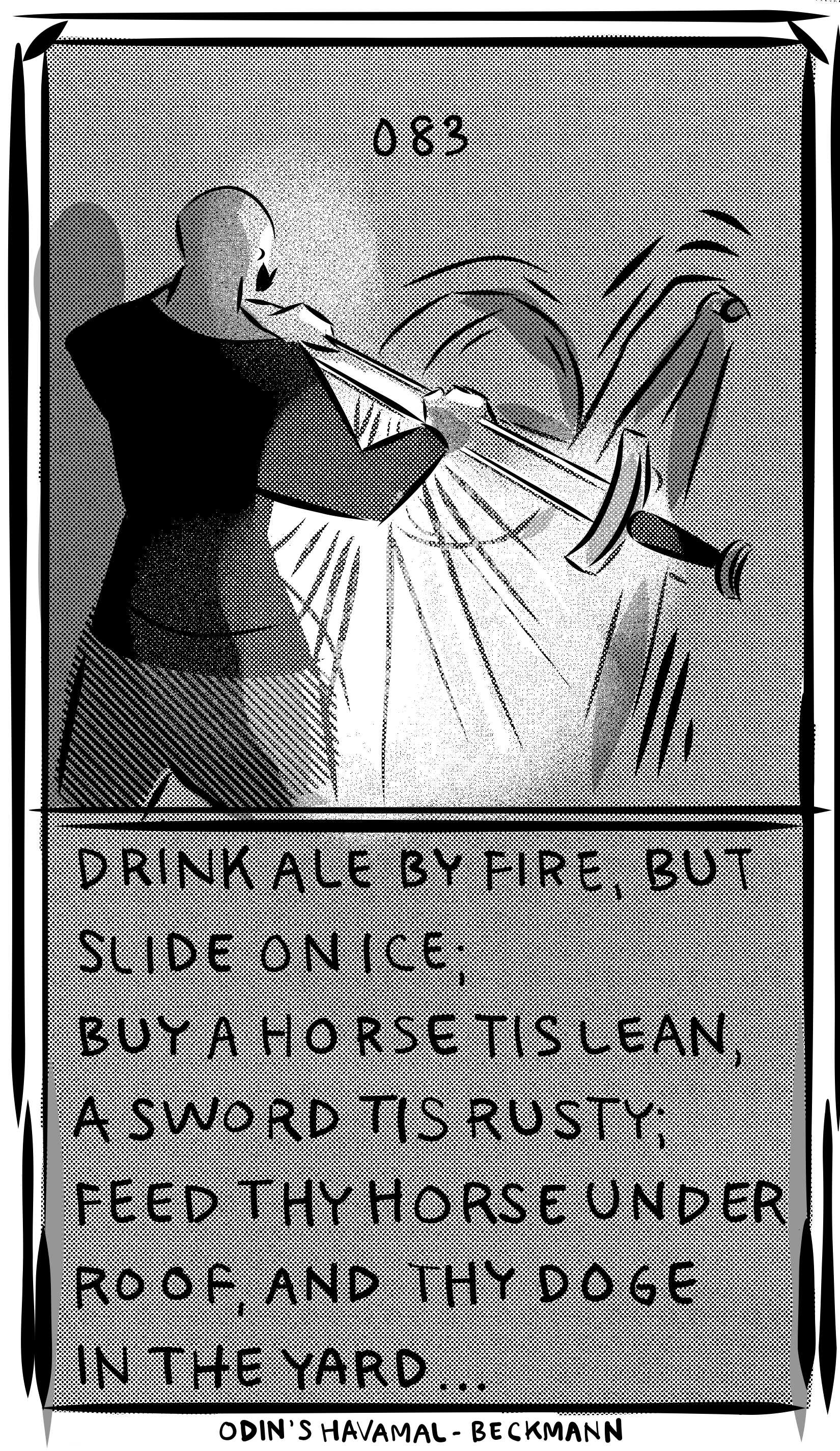
“Buy a sword ’tis rusty (83).” Here Odin speaks of the Lindy effect (referenced above). Things that are crafted well tend to last longer and longer. Poorly crafted objects break quickly and are thus disappeared from the set of world memes. So buying a rusty sword implies that you are acquiring unseen value and that the inherent metallurgy of the old sword is true – an old sword will not break when you need it – if it has already survived many years and many battles. This law obviously also applies to memes. Rusty was the state of the Havamal when I picked up the translation task. Rust and chips had accumulated over top the English translations. I am very grateful to the translators who came before and preserved Odin’s words but reading and comparing the translations often made clear that translators left out or missed the inherent joke at the core of the meme. Perhaps, it took a comic scribe to re-sharpen the Havamal’s edge (5). Translating jokes is arduous, and it requires an innate identity similar to the original jokester. I wouldn’t have taken on the task if I didn’t at first glance find the Havamal inherently funny. I have sought to rekindle that spice, as someone who understands Odin’s jokes, finds him deeply and darkly humorous, and feels innate kinship with his thinking.
Odin, the Powerful.
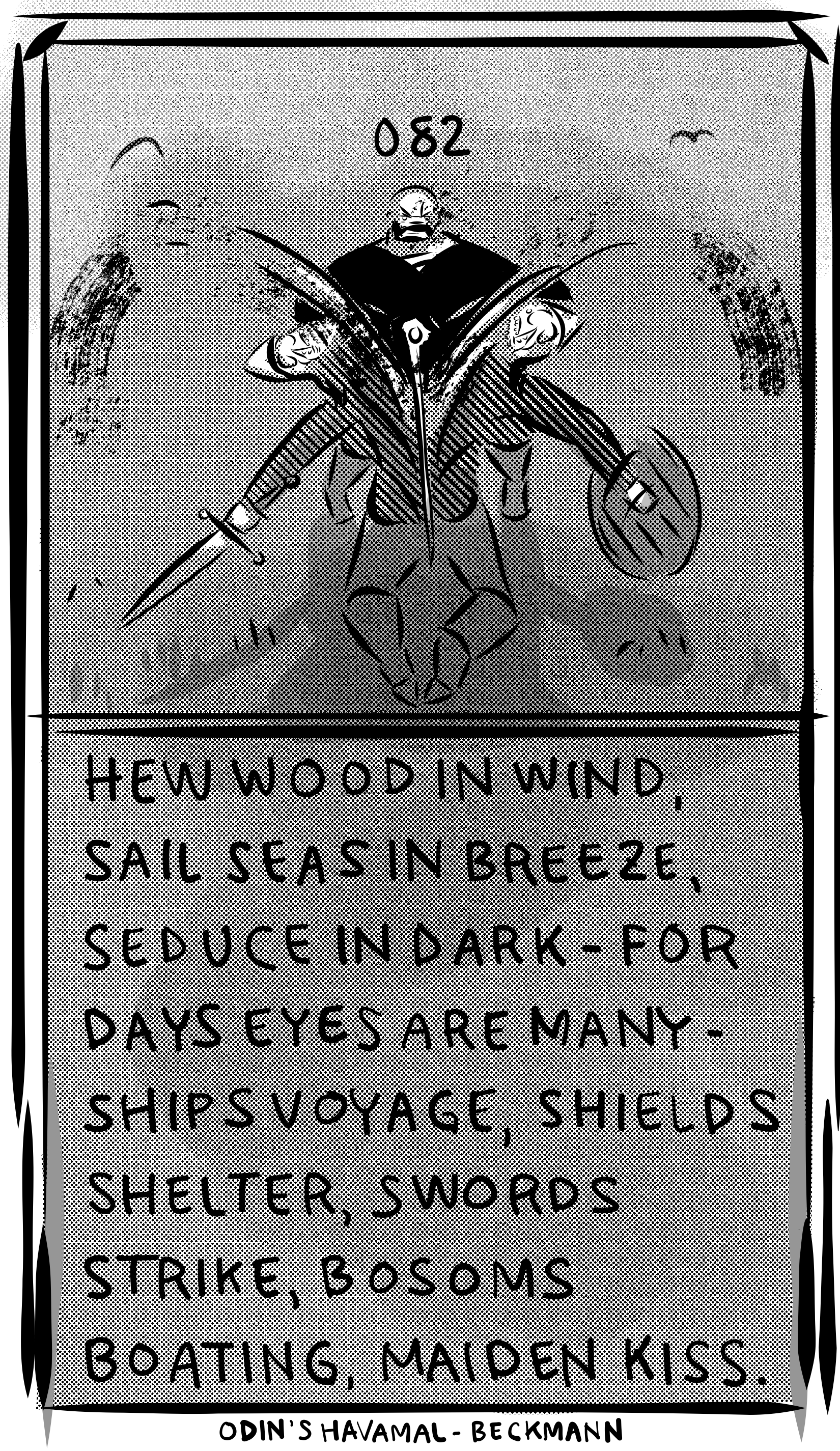
It’s no longer speculation that Odin’s words source to a Scandinavian king (see ample evidence above and 15, 36, 53, 144, 147). Many of his memes only a manager or commander can truly understand (1, 8, 9, 18, 22, 24-26, 38, 60, 66, 136, 143, 144, and 147). Over and over, Odin stumbles upon multiple laws of power: Law 2: Never put too much trust in friends, learn how to use enemies (24, 25, 45, 65, 73). Law 3: Conceal your intentions (46, 63). Law 4: Always say less than necessary (29, 115). Law 5: Guard your reputation with your life (49). Law 9: Win through actions not argument (26). Law 11: Keep people dependent on you (67). Law 14: Pose as a friend, work as a spy (17, 46, 73). Law 15: Crush your enemies completely (127). Law 19: Know who you are dealing with, do not offend the wrong person (30, 31, 133). Law 25: Re-create yourself (see Odin’s Quest after Runes 138-146). Law 27: Create a cult (needs no proof). Law 34: Be royal in your fashion (49). Law 37: Create compelling spectacles (see Odin’s Quest for the Song Mead 102-109); and there are other examples – I could go on and on. This is actually extremely funny to me – the fact that the Viking’s worshiped Robert Greene’s 48 Laws of Power as a holy text for thousands of years before his coming. He’s like some kind of ancient priest. In addition to laws of power, Odin discusses tactics of persuasion (120), seduction (90-91, 102-109, 118, see Odin’s Love Quests: 95-101), skill stacks (54), reframes (11), affirmations (141), and even Dale Carnegie tricks (52, 120, 123).
Needless to say, all this is clear evidence that Odin was a great wizard or sorcerer – one who commands others by words to reprogram the world (146). In the Sagas, Odin is a collector of warriors; the warrior class and the Valkyries directly report Odin. Odin was studied to gain victory over enemies – interesting that his teachings are so closely associated with power laws… Power should not be feared but rather should be understood and used in measure (64) to control the forces of chaos that war against the forces of order and civilization. This was the designated job of Allfather, chief of Æsir clan – a counter to forces of chaos, the Jötnar clan (frost giants of the North). Odin is descended from both Æsir and Jötnar and understands both – he is a half-breed, a mix of tribes from two separate places (140). He is half chaos and half order. He can see the world through both their eyes. He is opposites united. He is a living paradox.
Odin was a grey wizard, not a dark sorcerer but he lies and shapeshifts. He constantly warns against black sorcery (84, 85, 86, 87, 113, 114, 118) and the ethics proposed in Havamal are white hat, but disguised in some grey. Odin wasn’t the worst wizard, as always, he exists in the grey as a paradox. In contrast to Odin, there are far worse dark sorcerers biographed in the Sagas and their deeds/actions are extremely evil when compared with Odin’s; the dark sorcerers of the Sagas are often specifically labeled as individuals that bear íllviljaðr (ill-will/malice, i.e., using magic for destructive ends) unlike Allfather. Apparently, there were quite many of these diverse wizards, from a time now long forgotten. Saxo Grammaticus has a great quote describing them in Deeds of the Danes that corroborates this lore or pulls directly from Havamal; his main argument being that these wizards were extraordinarily crafty magicians, highly skilled in disguises, and veterinary/medical/agriculture sciences (i.e., the reading of entrails, 70, 76, 88, 137). These wizards were probably an ancient priest class of doctors and scientists. See his annotated quote below:
“It is worth the knowing that there were in old times three kinds of wizards who by diverse sleights practiced extraordinary marvels. The first of these were men of monstrous stock, termed by antiquity giants [Jötunn]; these by their exceeding great bodily stature surpassed the size natural to mankind. Those who came after these were the first who gained skill in divination from entrails, and attained the Pythonic art. These surpassed the former in briskness of mental parts as much as they fell behind them in bodily condition. Constant wars for the supremacy were waged between these and the giants; till at the last the sorcerers prevailed [refers to Odin], subduing the tribe of giants by arms, and acquired not merely the privilege of ruling, but also the repute of being divine [Odin]. Both of these kinds had extreme skill in deluding the eyesight, knowing how to obscure their own faces and those of others with diverse semblances, and to darken the true aspects of things with beguiling shapes [shapeshifters/Odin, 106]. But the third kind of men, springing from the natural union of the first two [Odin’s lineage, 140], did not answer to the nature of their parents either in bodily size or in practice of magic arts; yet these gained credit for divinity by fooling weaker minds by their juggling.”
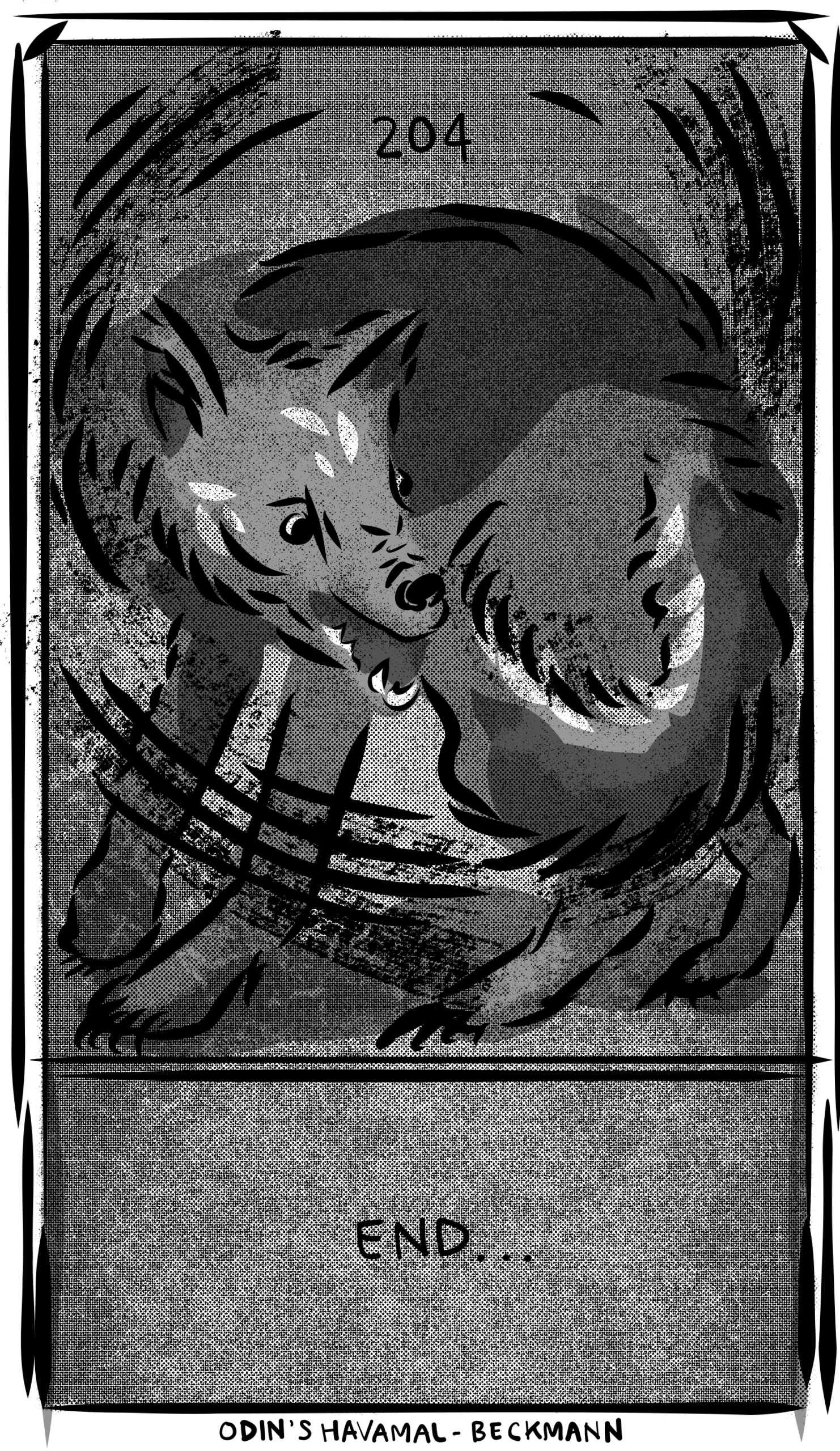
According to legend, Odin was both the most powerful wizard and he who ended the age of wizards, by casting out the rest (see Deeds of the Danes, Book 1). His final task is to cast out himself in a final paradox (204) — Sacrificing himself for himself, perhaps one final time — after being humbled, defeated, and freed from his burden, by the strongest archmage of his bloodline…
Odin, the Programmer – Archmage of Scandinavia.
Archmages are rare individuals who have mastered at least five magics (54). I presume Odin had mastered metallurgy (83), war (129), memetics (110, 111, 138-146), lightning/programming (142), alchemy (137), and practical biology/agriculture (70, 88, 137). This mastery obviously helped him achieve status as king of ancient Scandinavia. Programming and wizardry are sister disciplines. Both utilize runes to cast spells over networks. Power networks that effectively achieve a goal create what the Scandinavians believed to be magic. Thus magic is a network effect, not encoded at lower levels, whereby some action or change occurs at scale beyond the individual power of the caster (the whole is more than the sum of its parts). This phenomenon is well documented in machine learning, human brains, and human networks (tacit collusion in game theory). I argue that Scandinavians (and anyone who believes in the power of prayer) essentially worship the divine nature of network effects. Yggdrasil, the great world tree, is a network with roots unknown (138). Imagine living in a word where most people could not read; now imagine sending runic messages over a slow but steady network, traversed by humans (34). Sending orders with the power that they would come true (be enforced) would feel like magic (141). This is what Odin and Norse mythology mean by Yggdrasil (the world tree; the world network) and what they imply by belief in the divine nature of words to construct a better reality, the Logos (80, 144, 146). This is why Scandinavians believed in free speech (28, 45, 57, 110, 111, 120, 124) and they believed in equality amongst free men, Drengir (those who were grateful at death for life); those who could back up their free speech (not slaves); the freedom to speak was acknowledged, but needed to be earned by some merit of power or learning (27, 48, 124). Weaklings, slaves, and dumb people were not permitted to speak freely (27). Moreover, people lacking understanding and limited vocabulary would likely just obey orders, and so it would feel as if the wizard simply controlled them by stronger will – and so sorcery/wizardry isn’t far from truth (Saxo’s point). It’s worth noting that we (as Americans) in reality, live more closely to this Old Norse concept of free speech than we do to the Constitution’s idealized version of free speech. None of us really have free speech. You only have as much free speech as you can burden and back up with your own power and reputation. This is the reality of the world we live in – and so again, it brings back the relevance and utility of studying the Old Norse Sagas. Perhaps they understood real human nature and how the world actually works, far better than we do. I suggest that free speech assists the Logos – nothing can stop the Holy Spirit – attempts to squelch it are futile. In the end, God wins.
Within the context of Odin the archmage, its worth discussing the concept of necromancy (raising the dead). Odin claims to have this power directly (158) and the Sagas are full of stories mythologizing this ability. Examples include speaking to Mímir’s preserved head and multiple accounts of raising a few people from the dead. In these cases, Odin uses this capability to speak to the dead in order to learn wisdom. Understand that most of these pagan necromancy myths were probably added on long after the life of the original Odin (baldrs draumar is one example). In 158, Odin associates this necromancy capability as being intricately linked to rune drawing. It’s reasonable to assume that Odin had collected and studied many writings (110, 111, 134, 143), obviously many of these writings were attributed to dead people whose words had been preserved long after their deaths. Is it not a sort of necromancy to read words of the dead? Sometimes, reading old words feels as if the writer is speaking to us directly. Sometimes (perhaps through kinship) we feel that the author is close to us or maybe even was like us, in a past life. Sometimes a bit of wisdom or prophecy inscribed hundreds of years prior feels particularly pertinent to our own current situation, and this is what causes memes to persist. This would be my best hypothesis to explain this necromancy capability. I think it’s a bit shallow to label Odin as an evil sorcerer, because he is associated with necromancy. Necromancy, viewed from the alternative vantage point could simply be reading words of the dead and/or also might be a form of healing, as in raising the dead like Lazarus. Healing miracles are attributed to Odin in the Sagas, and he speaks of this craft directly in Havamal (120, 148). Havamal also cites miraculous control over nature (153, 155), apparitions (132, 133), prophecy (110, 111), inedia (139), and reading of souls (18) as powers of Odin. “You shall know them by their fruits” – Matthew 7:16.
Thus, Odin’s memes crafted a Scandinavian world centered around powerful men and warned against powerful sorceresses, who commanded and controlled weaker men (87, 114, and see Saga of the Greenlanders). It was a governing system capable of focusing the energies of agrarian barbarians. As an interesting tangent, in Njal’s Saga, it’s made clear that the Scandinavian law always permitted someone to duel an opponent to death, in lieu of legal trial. This prevented excessive lawfare and countered the worst impulses of crafty and intelligent beta males (62). No one brought a lawsuit unless it was worth fighting to the death for. But dueling also made the society detrimentally chaotic. Dueling is a remnant of Jötnar that lives in us all.
Odin, the Most Paradoxical Proto-Catholic Saint.
Odin cast himself as a grey wizard in attempt to become legend. But because Odin lives in paradox as a shape shifter he can also be viewed as a useful servant, or even a saint. Odin preaches: goodness of creation (47); never kill yourself (70, 71); final judgement (77); the mark of Cain (87); go forth and multiply (72, 91); contra witchcraft and evil sorcery (85, 87, 113, 114, 118, 156); thou shalt not commit adultery (81, 86, 109, 115); thou shalt not bear false witness (62, 118); blessed are the peacemakers (121, 154); ~prayer of Saint Michael the Archangel (127); goodness (128); just war (1, 16, 129); monogamy, to some extent, understanding that women are sorceresses that can steal your power (79, 81, 84, 92, 101, 109, 130); temperance (11, 12, 68, 131, 156); belief in preternatural spirits (132); honor your father and mother – extended to elders (134); gentle compassion (135); charity (39, 40, 67, 136); pick up your cross and a call to self-sacrifice (138); salvation by faith which manifests works (141); the power of prayer (147); heal the sick (120, 148), the Logos and God the Holy Spirit (76, 80, 110, 111, 146), God the Father (111, 146); and even a disturbingly twisted resurrection, ~of sorts (138, 139, 146). He was a theologian who constructively critiqued The Message. He is a voice of mean reason that offers useful insights – he is the devil’s advocate. He is raw absolute power blended into goodness.
Response to Jung’s Essay on Odin.
Jung casts extra shade on Odin. Jung did not understand Odin, nor did he get Odin’s jokes. Did he even read them? Jung wrote an essay on Odin that was a response to cultish pagan revitalization efforts in early 20th century Germany. The essay is interesting and worth reading, but I don’t trust Jung on Odin whatsoever. Jung drafted this essay in 1936 after witnessing the apocalypse that was WWI and while foreseeing the coming annihilation in WWII. Needless to say, this context contaminates his thoughts on Odin. In addition, many aspects of Odin he simply gets flat wrong. Though he does get a few things correct.
Correctly he posits that Odin is essentially the patriarchal ethos of Northern Europeans – and this ethos encodes a sort of – “storm and frenzy” – that lies dormant in Europeans to periodically awake when angered or pushed to the brink. Odin is the penultimate Norse archetype embodied in Ragnar, Harald, Snorri, Egil, Grettir, etc. Odin’s fingerprints are all over their political schemes and Sagas. It’s like he tortures his bloodline simply to create epic stories, that serve to strengthen, inspire, and protect them. Here is a worthy Jungian excerpt that is profoundly true:
“It was not in Wotan’s nature to linger on and show signs of old age. He simply disappeared when the times turned against him, and remained invisible for more than a thousand years, working anonymously and indirectly. Archetypes are like riverbeds which dry up when the water deserts them, but which it can find again at any time. An archetype is like an old watercourse along which the water of life has flowed for centuries, digging a deep channel for itself. The longer it has flowed in this channel the more likely it is that sooner or later the water will return to its old bed. The life of the individual as a member of society and particularly as a part of the State may be regulated like a canal, but the life of nations is a great rushing river which is utterly beyond human control”
What he really means to say here, but lacks the knowledge and vocabulary to word, is that Odin personifies a sort of genetically inherited persona amongst Scandinavian bloodlines that waxes and wanes but never disappears because it is deeply encoded and selected for in the genetics. In the same way that dog breed personality is consistent and genetic (anyone who loves purebreds inherently understands this truth and Darwin points this out in Origins), human ethos is genetic at scale – and Odin’s personality, humor, and memes are a product of harsh selective forces that carved the genetics of Scandinavian men.
Secondly, Jung correctly understands that Odin “is a superlative magician and artist in illusion who is versed in all secrets of an occult nature.” Thus, Jung understands and gets correct what Saxo and I described above in the section Odin, the Programmer and Archmage of Scandinavia. Though to reemphasize, when you actually read the “deepest darkest occult secrets” of Odin (see The Song of Spells 147-165)… they are simple prayers like “help” (147) and “heal the sick” (148). He has not a single offensive curse. All his spells are defensive… Hardly occultist, in my view. That is the joke… The spell ~”that no men know, and women certainly don’t know”, is to simply ask for help… These are prayers, not spells – but Scandinavians viewed words and prayers effectively as spells, that cast and command the world to change. Perhaps they were right and Odin’s Havamal illuminates this truth.
Then Jung starts to misunderstand. Jung calls Odin, “a restless wanderer who creates unrest and stirs up strife“. Odin was a wandering warrior (18, Prose Edda, and Ynglinga saga) and true warriors are indeed restless with scarred souls – in need of deep healing. Odin probably does stir up political mischief (see my comments above), but in his actual written words, in Havamal, he cautions against stirring up strife (64, 121). Perhaps (57) could be interpreted as stirring up strife, but I view it more as an argument in favor of free speech (in favor of the Logos). His goal is not to stir up strife; his goal is simply to persist and draw closer. He might have been stuck in a negative behavioral loop, unable to escape. Perhaps he stirs up strife when nobody is listening to reason. I honestly feel sorry for him.
Then Jung starts to err. Jung incorrectly describes Odin as an “unleasher of the lust for battle.” This is more Thor’s role. Thor was the dumb commoner god who walked around and senselessly murdered creatures with a hammer in drunken stupors. Odin was perceived as the upper-class wise god; capable of ruthless violence but restrained by reason and temperance. According to the Havamal, Odin does not enjoy battle. More close to reality is that Odin cautions against battle (64, 72, 77, 121, 154), warns against its profound negative impacts on psychology of veterans (70-72, 77), and yet is not afraid of it, recognizing war as a necessity of self-preservation (16, 38, 56, 127, 129, 157, 159). Odin is all about persistence and protection (ᛉ). He is simply that which persists because it is ruthlessly clever. To his credit, Odin is not a coward – he literally fears nothing and his faith can move mountains. After illustrating the Havamal, I realize that Jung did not properly contextualize his ruthless joke book and this is where my work exceeds his. I really enjoy Havamal and find it funny, useful, and well crafted.
I think Odin was a deeply humorous but flawed philosopher king who liked writing jokes and telling embellished stories. He is sharp and witty. He was drawn to Christ and clearly studied his teachings but wouldn’t accept simply out of fear of death (as many do) because that would have been contrary to the Viking way. He felt responsible for the salvation of his people but was stuck in a theological trap that he desperately tried to reason his way out of. He seems to meet in the middle and accept cleverly/carefully constructed paradoxes of Christ – as if thinking he could reason out a contract, by putting his faith in Logos (80, 144, 146); ever the duelist… He did not fear death (48 and 56), so he dueled to test who was stronger and merged into some kind of useful paradox. In a world of lambs there is no need for the wolf – but in a world of wolves, perhaps you want a dog in the fight… I do sense that his words protect his bloodline – he is like a warning sign.
Final Thoughts and the Core of Odin, Lord of Wisdom.
Odin has many names, the Old Norse scholars suggest that Odin’s name translates most closely to something like “madness” – with all the connotations that word implies. Odin is insatiable hunger for knowledge and wisdom at any cost. He illuminates on the usage of command line poetry (Skaldic poetry, or meme). The names of his pet ravens are “thought” and “memory“, who fly the world over each day collecting firsthand empirical information which Odin consumes. According to legend, one of Odin’s greatest fears is to lose his words – a concept that those who carry notebooks obviously relate to. His voice and words continue to persist and inspire, fighting for his bloodline.
Origen of Alexandria suggests that wisdom is part of the Logos. People who strive after wisdom often appear mad to the average person, as they are operating at a higher level that cannot easily be understood or explained without significant context.
ᚺᚨᚹᚨᛗᚨᛚ
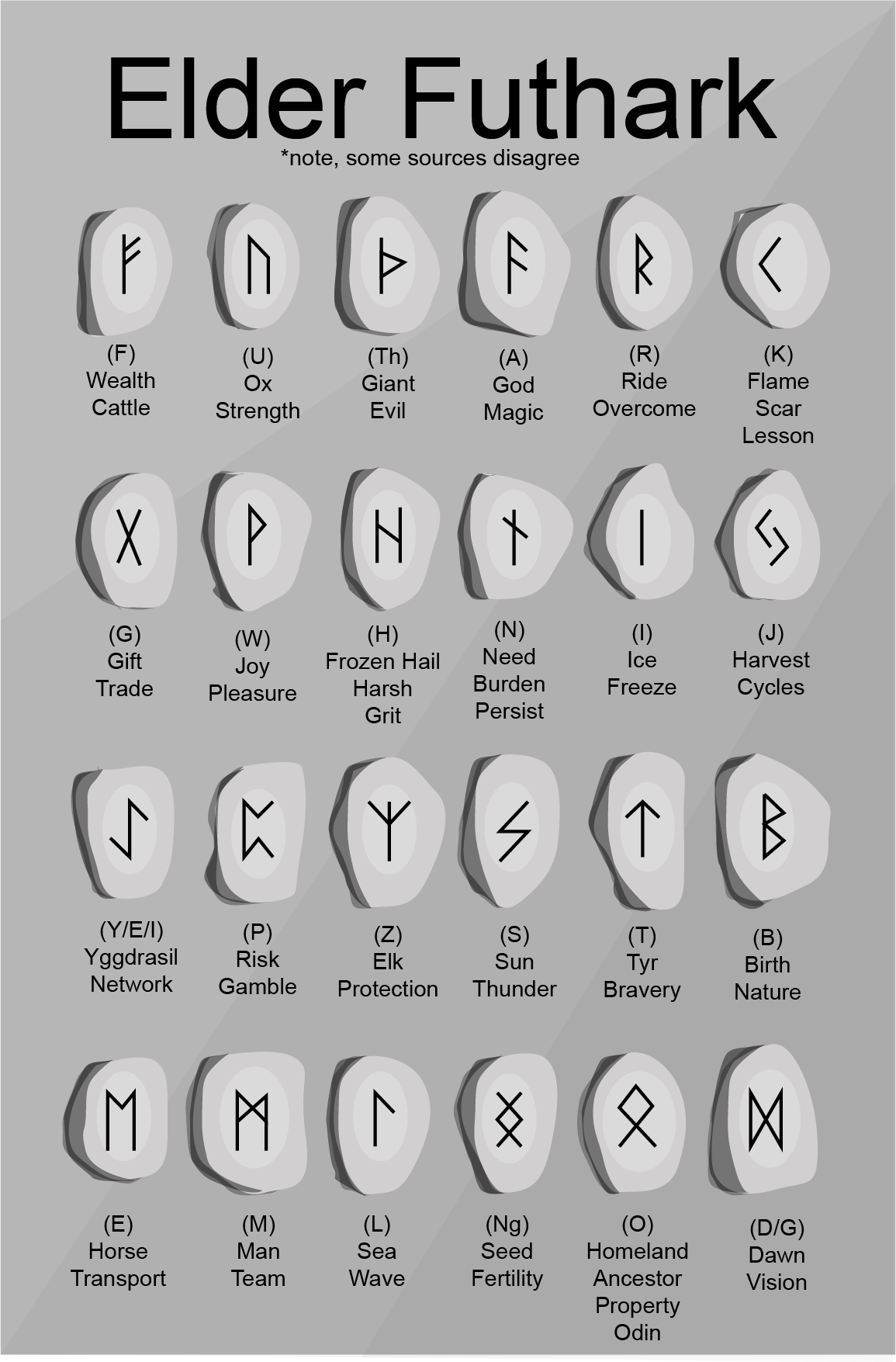
The elder Futhark runes that entitle my copy of HAVAMAL are:
ᚺ – Hagalaz (Frozen Hail)
ᚨ – Ansuz (God)
ᚹ – Wunjo (Happiness)
ᚨ – Ansuz (God)
ᛗ – Mannaz (Man)
ᚨ – Ansuz (God)
ᛚ – Laguz (Sea)
This is likely a prayer, something like ~ Frozen Harsh God of Happiness, God of Man, God of Sea… though the scholars debate the meaning of these symbols… I plan to investigate this more.
Don’t let the words die, Brother. You must fight for the right of God to speak in all of us – The Logos…
Yours in Christ.
-JFB
Useful References: